

"Clinical + Genomic" Integration Drives the Future of Medical Big Data: Life Singularity's Strategic Edge in Hospital Data Asset Monetization
In November 2018, Life Singularity experienced a busy yet joyous harvest month. The company successfully won the bid for the Oncology Precision Medicine Big Data Platform project at Jiangsu Cancer Hospital, leveraging its independently developed VitArk—the first precision medicine big data product in China—to build a big data-driven smart hospital.
On November 19, the company jointly hosted a high-level academic symposium on “Medical Big Data and Clinical Research” with Zhongnan Hospital of Wuhan University. At the conference, Dr. Tong Weiwei, Chief Scientific Officer of Life Singularity, shared clinical research findings from its collaboration with the hospital, which are slated for publication in top-tier international academic journals.
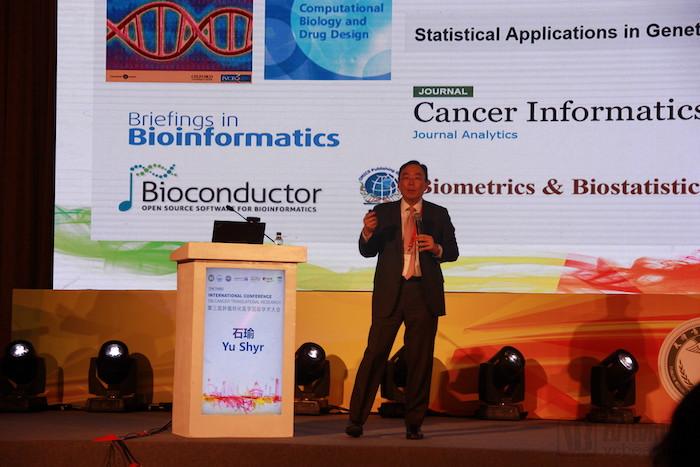
Professor Shi Yu, Chief Advisor to Life Singularity
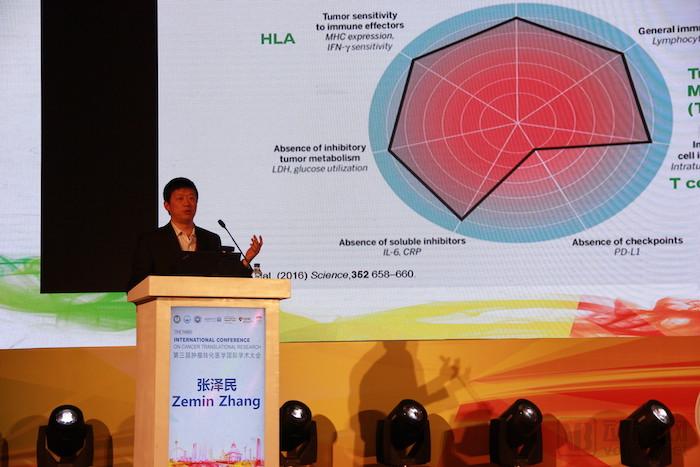
Zhang Zemin, Chief Advisor of Life Singularity
This series of events appears to reflect a significant transformation in the big data industry: large healthcare institutions, long-standing key “players” in the sector, have begun to take action by partnering with specialized medical big data companies to tap into the wealth of medical big data. In particular, the integrated utilization of clinical phenotypic data and genomic data has emerged as a new industry hotspot.
Just prior to this, the largest biobank information resource center in Northwest China was officially established at the First Affiliated Hospital of Xi’an Jiaotong University. According to the overall plan, it will be developed into a new-generation, large-scale biomedical information center that integrates various information resources, including biological samples, clinical electronic medical records, and omics data.
Undoubtedly, this resource center will serve as a treasure trove of biomedical big data, supporting research and translation in precision medicine. The establishment and management of the center require the support of an information management system, as well as a system for integrating and analyzing biomedical data resources. The technical support behind this is provided by Life Singularity’s BioBank 3.0 solution.
Founded in 2015, Life Singularity is one of the few high-tech enterprises in China focused on big data technologies for precision medicine. In addition to its collaboration with the First Affiliated Hospital of Xi’an Jiaotong University, Life Singularity has partnered with over 200 Grade A tertiary hospitals, including Tianjin Medical University Cancer Institute and Hospital, leveraging its core product, VitArk, a big data platform for precision medicine.
BioBank 3.0 is a comprehensive laboratory data management solution proposed by Life Singularity, based on its proprietary precision medicine big data product, VitArk. Previously, conventional biobank management systems were often limited to the collection and management of biological samples, such as BioBank 1.0 for department-level decentralized biobank management and BioBank 2.0 for hospital-wide biobank management.
Products in the first two stages on the market primarily focused on the storage and management of biological samples. In contrast, BioBank 3.0 goes beyond mere biospecimen management to create an integrated research resource platform for healthcare institutions, combining biological samples, clinical data, and genetic information into a unified triad, while also assisting these institutions in the analysis and mining of biomedical information resources.
BioBank 3.0 delivers groundbreaking, comprehensive big data management encompassing sample management, data integration, analysis, and mining. In addition to enabling the mining and sharing of phenotypic and omics data and establishing links between sample information and clinical records, the system supports laboratories and institutions in building biobanks and developing associated omics centers.
In simple terms, BioBank3.0 is a big data platform for precision medicine. Compared with clinical research data capture systems such as Electronic Data Capture (EDC), BioBank3.0 is a precision medicine big data platform that integrates biospecimen information, electronic medical records (EMR) and follow-up data, and bioinformatics, with its core focus being the governance and analysis of multi-omics data.
By integrating the management of biological specimens, omics data, and informatics data into a unified system, Life Singularity offers a new model for managing data and scientific research resources in China.
Next-generation big data resource platforms for biomedical information, similar to BioBank 3.0, represent a developing trend in the healthcare industry. Initiatives such as the U.S. Precision Medicine Initiative and the UK Biobank are practical implementations of this model. China possesses larger-scale and more diverse biological specimen resources and clinical big data resources, presenting significant opportunities for rapid development in the future.
In fact, with the development of precision medicine and healthcare big data in recent years, traditional biobanks focused on managing biological specimen storage have fallen far short of meeting the needs of clinical research and translational medicine. Initiatives such as the U.S. Precision Medicine Initiative, China’s Key R&D Program for Precision Medicine, and the UK Biobank are all grounded in the establishment of biomedical big data platforms that integrate diverse resources, including biological specimens, clinical data, and genomic information.
“One of the challenges in clinical research lies in the scarcity of high-quality research data resources,” Liu Liyu told VCBeat.
Clinical research requires not only clinical data such as electronic medical records, but also increasingly values the role of molecular biology in clinical practice. The integration of clinical data and genomic big data constitutes what truly qualifies as healthcare big data. Real-world studies based on big data and precision medicine supported by molecular biology represent important directions for future clinical research and translation, both of which rely on precision medicine big data.
“Hospitals have abundant data resources, but these are not necessarily directly usable for high-quality clinical research,” he added. Only through systematic integration and governance, ensuring data integrity and continuity, can truly valuable research and translational outcomes be generated.
Roche and Regeneron Enter the Fray, a Unicorn Emerges, and Integrated Data Becomes an International Trend
Not only in China, the integration of phenotypic and multi-omics data is becoming a global trend in healthcare big data.
In 2016, Regeneron Pharmaceuticals partnered with Geisinger Health System to create a similar biomedical big data platform integrating biospecimens, clinical data, and genetic information. Leveraging continuous electronic health records from over 1.1 million patients spanning 14 years and genomic data from 50,000 individuals, the collaboration yielded numerous clinically significant discoveries. These findings, including the identification of ANGPTL4 gene mutations as a therapeutic target for coronary artery disease, were published in Science and The New England Journal of Medicine.
Tempus, co-founded by billionaire Eric Lefkofsky and Groupon, operates in a manner quite similar to Life Singularity. Tempus aims to improve cancer treatment by integrating clinical and molecular testing data. The company collects molecular testing data and clinical data from hospitals across China and analyzes both within a unified database, with the goal of enhancing the standard of care for cancer patients.
In just three years, Tempus has built the most comprehensive database in the industry and secured a cohort of clinical partners to support its operations. Leveraging advanced machine learning, next-generation sequencing, and AI-assisted image recognition technologies, the Tempus platform empowers physicians with deeper insights and a more profound understanding of disease.
To date, Tempus has maintained systematic collaborations with 250 hospitals and collected 2 million clinical cases. Since its inception, Tempus secured $320 million in startup funding. By November 2018, the company had completed three rounds of financing, reaching a unicorn valuation.
In February 2018, Roche announced that it would acquire Flatiron Health, a New York-based healthcare company specializing in medical big data, for $1.9 billion. Flatiron Health’s data are primarily derived from clinical settings, and the company has established partnerships with more than 265 community oncology practices and over 800 academic institutions.
Flatiron Health primarily focuses on the systematic collection of cancer clinical data from oncology centers and other healthcare institutions across the United States, and on building tumor data analysis models. If this company represents Roche’s strategic layout in clinical data, then the addition of Foundation Medicine complements Roche with molecular diagnostic data.
Just four months after announcing the acquisition of Flatiron Health, Roche unveiled another major deal—agreeing to acquire Foundation Medicine for approximately $2.4 billion.
Foundation Medicine is a leading company in the field of cancer diagnosis and treatment, dedicated to helping physicians identify highly personalized innovative treatment regimens by gaining a deep understanding of the genetic alterations within each cancer patient. This marks another major acquisition completed by Roche within just six months following its purchase of Flatiron Health. Many industry experts point out that these acquisitions will further expand Roche’s footprint in precision oncology.
With one hand on clinical data and the other on molecular diagnostics, Roche has filled its gaps in clinical and molecular diagnostic data through the acquisition of two companies. To this end, Roche spent a total of $4.3 billion!
“Roche not only acquired two companies, but more importantly, it provided numerous vivid and concrete examples of how healthcare big data can facilitate drug development and promotion, conducting many highly valuable explorations and practices for the industry,” said Liu Liyu. “This is a significant event in the industry and serves as a bellwether for the development of healthcare big data.”
Integrated, hospital-wide platforms such as the Biobank Information Resource Center at the First Affiliated Hospital of Xi’an Jiaotong University remain rare in China. Beyond this institution, Life Singularity has partnered with numerous other healthcare providers. To date, Life Singularity has participated in the governance and analysis of data covering more than 70 million patients, accumulating extensive expertise in data governance and analytics. Furthermore, Life Singularity’s Precision Medicine Big Data Platform supports several high-caliber, large-scale specialized research networks.
Tianjin Medical University Cancer Institute and Hospital is its earliest benchmark partner and a model for BioBank 3.0 in tumor samples. In 2016, the two parties jointly established China’s first Precision Medicine Big Data Center. Over a period of more than two years, the center built a multi-omics biomedical big data resource platform that integrates clinical and follow-up information from over 1 million cancer patients, data on nearly 100,000 tumor tissue specimens, and whole-exome sequencing data from nearly 1,000 cases. This platform has already yielded high-level academic research outcomes.
Leveraging the jointly developed precision medicine big data platform, Life Singularity and Tianjin Cancer Hospital will soon publish a research paper in a top-tier international journal. This represents a high-level real-world clinical study truly implemented in China, which rigorously tests capabilities in data governance and data analysis. Life Singularity will serve as the co-corresponding author of this paper.
“This may represent the highest-quality real-world evidence study to date involving companies in China’s medical big data sector. We were deeply involved again, serving as co-corresponding authors, and our findings deliver tangible value to clinicians and patients,” Liu Liyu revealed to VCBeat. As a co-corresponding author of the paper, his involvement went far beyond mere data preparation.
In addition to the aforementioned scientific achievements, Life Singularity has also identified potential biomarkers during its research process, with plans for subsequent clinical translation. The company has established high-quality data repositories for its partner hospitals and continues to assist them in improving the quality of both medical data and biological samples.
Wang Yawen, Director of the Biobank Information Resource Center at the First Affiliated Hospital of Xi’an Jiaotong University, stated, “We are currently in the era of biomedical big data.” The biobank information resource platform serves as a critical strategic infrastructure for the translation of clinical research within the hospital. They aim to develop the platform into an integrated clinical research and translational service hub that combines biospecimens, clinical phenotypes, and omics data, thereby providing substantial support and impetus for clinical exploration and translation, ultimately benefiting clinical patients.
“This is also an era of win-win cooperation. We hope to collaborate with academic research institutions and professional biomedical big data industry organizations, working together to deliver tangible results for medical research and translation,” he added.
Dr. Ye Yang, a committee member of the Biobank Branch of the Chinese Society for Biotechnology in Medicine, previously worked at the UK Biobank. He stated, “After years of development, biobanks in China must now closely integrate with clinical information resources and omics data resources, transitioning toward integrated biomedical big data repositories to unlock their true value. This is a key direction that the Biobank Association has been vigorously promoting in recent years.”
Liu Liyu believes that, with the increasing construction of new biomedical information resource platforms by large medical institutions in China and the continuous technological accumulation by tech companies such as Life Singularity, China will also see the emergence of high-quality, large-scale biomedical big data resource platforms capable of consistently producing research and translational outcomes.
He believes that big data in precision medicine will become the next-generation data energy industry in the future, providing a significant boost to the research and development of innovative drugs and medical devices, as well as the development of clinical diagnosis and treatment methods in China.
“We hope to contribute our share to this industry,” he added.