

Withings Reemerges as an Independent Health Tech Innovator, Files for IPO to Accelerate Medical-Grade Consumer Ecosystem
According to the latest reports from foreign media, Withings is moving to expand into the healthcare sector. VCBeat (WeChat Official Account: vcbeat) has compiled the main content of the report for you:
In Nokia’s earnings report released in October 2017, one item indicated that the company was undertaking a $164 million reduction in its digital health division, effectively writing down nearly the entire value of its business in this sector.
This marks the end of Nokia’s efforts to revitalize its consumer technology business. Once the leading manufacturer of candy-bar mobile phones, the company sought to carve out a new path for innovation in digital health after gradually losing market share to Apple and Android.
The highlight of this transition was arguably the acquisition of the French smart hardware company Withings. However, less than two years after the $192 million deal was completed, the executive who spearheaded the transaction was dismissed. In a statement released this February, the company indicated that Nokia “has begun to assess strategic options for its digital health business.”
Nokia’s Chief Strategy Officer, Kathrin Buvac, wrote in an internal memo: “We must be honest with ourselves and not simply fall in love with our technology. At present, we do not see the digital health business becoming a significant component of a large company like Nokia.”
Withings’ savior is Eric Carreel, one of the company’s co-founders. According to the sales announcement, he repurchased Withings and its brand from Nokia to “push the boundaries of internet health.”
The road ahead is arduous, particularly given that Withings’ product lineup remained largely stagnant during Nokia’s stewardship. Consequently, Nokia faced severe criticism from customers who found Withings devices lacking in technical support and software features.
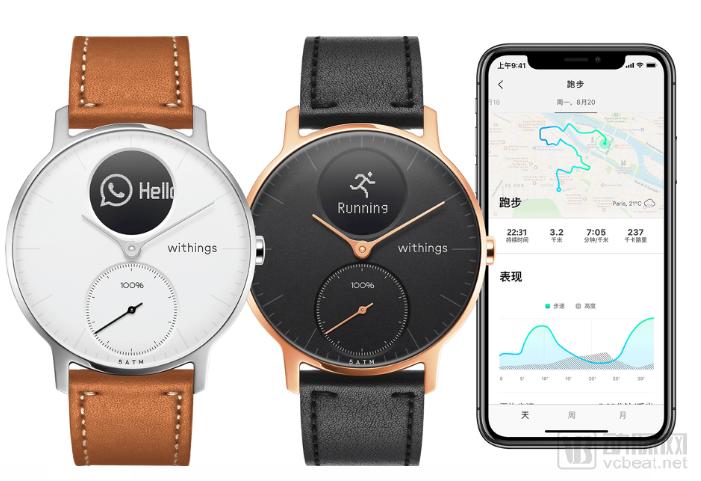
Image from the official Withings website
But with Eric Carreel returning to lead Withings, the company is also expected to continue focusing on health and disease prevention.
In a phone interview, Carreel said, “By relaunching Withings, what we aim to do is position ourselves as a preventive health assistant, demonstrating that we are part of this health revolution, in which each of us plays a central role.”
He added that the company hopes to leverage the collected data to provide personalized, advanced user feedback—employing technologies such as AI-powered chatbots—to play a more proactive role in users’ health. Although this may sound little different from the messaging of similar companies, Carreel stated that it represents an opportunity for the firm.
“We have to admit that we are at the very beginning of this new scientific and technological era. We must also acknowledge that no one is currently dominant in this field, and I have yet to see any applications or services that we consider sufficiently promising for the future.”
Withings’ roadmap also includes advancements in the medical field, such as chronic disease management. Like many digital health startups that began with a consumer-focused strategy, Withings recognizes that success inevitably depends on a robust B2B model.
Alexis Normand, Vice President of Healthcare at Withings, stated that the key to the company’s strategy is developing devices suitable for healthcare applications while remaining true to its roots in consumer technology. Normand said, “What we aim to do is create medical-grade devices that appeal to consumers. Past experience has shown that even if you provide people with information that could save their lives, they will not pay attention if it is not engaging.”
One area of particular interest to Normand is diabetes prevention programs for patients with prediabetes. Such programs can integrate health coaching with Withings’ digital technologies. He noted that commercial payers are covering the cost of digital scales, which are provided to online health coaches to monitor the weight of individuals at risk of developing type 2 diabetes.
Another growth area for Withings is remote monitoring of patients with hypertension and congestive heart failure. However, countless other companies offer similar services, some of which have clinical-grade products.
It remains to be determined from which aspects Withings will enter the healthcare ecosystem. Carreel also revealed that Withings is targeting patients, service providers, and payers, with the aim of gaining a foothold in this industry.
Despite the challenges, Withings does possess several key competitive advantages.
It is worth noting that the company has never fully followed the smartwatch trend, instead choosing to make the analog feel and design of wearable devices the core of its brand. This sets Withings’ products apart and makes them more appealing to traditional consumers who are not fond of trendy gadgets.
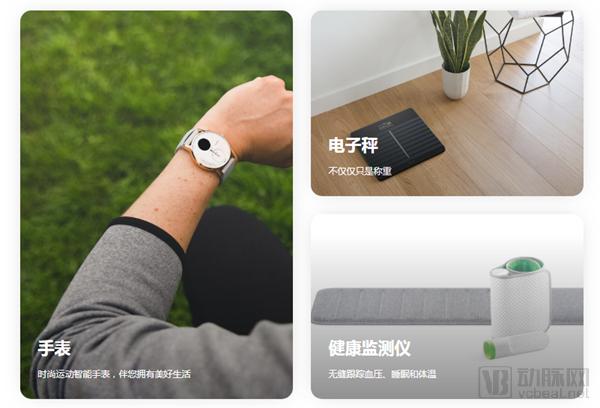
Image from the Withings official website
Normand stated that Withings would not be affected by the bureaucratic red tape typical of large multinational corporations like Nokia, and would launch new products at a faster pace following its spin-off. Normand said, “Returning to our startup roots essentially means that Withings is pinning all its hopes on device R&D. This is not merely a matter of survival; the message we want to convey is one of greater innovation, accelerated speed, and a spirit of adventure.”
As of 2018, Withings maintained a relatively low risk profile. Following its independence from Nokia, Withings launched two products: the Steel HR, a fitness tracker with limited smartwatch functionalities, and the Pulse HR, an upgraded version of its fitness-tracking smart band originally introduced in 2013.
It remains unclear what will become of the company as it seeks to control its own destiny. “Withings has the potential to build a comprehensive ecosystem of home-based devices, which will grow increasingly important as the U.S. population ages,” Adam Powell, president of healthcare consulting firm Payer + Provider Syndicate, wrote in an email. He added, “Focusing on classic design and addressing issues such as sleep deprivation and hypertension will help Withings expand its market presence.”
But this may not be enough. Brian Chapman, a leader at consulting firm ZS Associates, stated that for companies like Withings, robust clinical validation and regulatory approval are necessary to introduce consumer-focused products into the healthcare ecosystem. However, as the medical industry evolves toward greater patience and consumer-friendliness, consumer device manufacturers with medical-grade hardware may serve as a bridge to the healthcare system.
Withings is well aware that it needs to obtain regulatory approval. The company has already been seeking pre-FDA clearance for some of its more medically oriented devices. Meanwhile, the company’s relaunch has elicited a positive response from online users and has thoroughly shed some of the issues that arose during its tenure under Nokia.
In this new environment, severing ties with Nokia indeed offers Withings many potential benefits, and its independent status will also help improve its relationship with Apple. Currently, Withings is integrated with Apple’s HealthKit and Google’s Google Fit platforms. Previously, legal disputes between Nokia and Apple resulted in the removal of Withings’ products from the Apple App Store.
Therefore, on balance, moving forward as an independent company is beneficial for Withings.