Yunyaoku and Yaopin Zhongduanwang Forge Strategic Partnership to Advance the 'Chronic Disease Rehabilitation Initiative' in Grassroots Healthcare
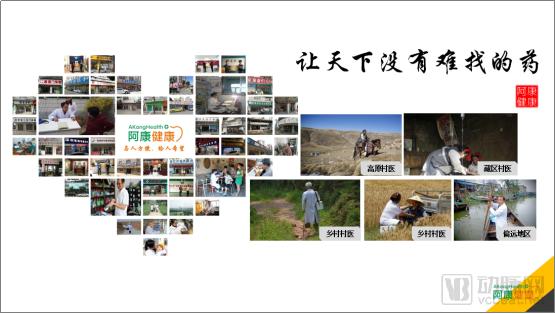
In the southern part of Luding County, Garzê Tibetan Autonomous Prefecture, Sichuan Province, lies an ancient town known as Moxi. Once a major hub on the Sichuan-Tibet Tea Horse Road, its treacherous terrain and poor accessibility have left it more isolated from the outside world than other towns and villages. “Before I went to college, Moxi was still a relatively closed-off town with limited medical resources; there wasn’t a single decent clinic in town, so anyone seeking medical care or purchasing medication had to travel 50 kilometers to Luding County,” recalls Ma Xiangdong, one of the earliest registered users of Drug Terminal Network. Determined to improve healthcare conditions in his hometown, he returned to Moxi after graduating from medical university and opened a clinic.
As a firsthand witness to the rise of the internet, Ma Xiangdong says that in just a few short years, the internet has transformed his life and that of the entire Moxi community. “With the internet, I no longer need to rush around worrying about sourcing medicinal varieties. Procurement is now more efficient, and our product range is more comprehensive. Our inventory can basically meet the medication needs of dozens of local households and tourists in the town.” However, viewed from a national perspective, the story of Ma Xiangdong and Moxi Town may merely be a microcosm of numerous villages and towns in China with underdeveloped medical conditions. There are still tens of millions of such healthcare endpoints across the country, grappling with information isolation, underdeveloped economies, and significant difficulties for residents in accessing medical care and purchasing medications.
To better address the basic healthcare needs of populations in remote townships and rural areas across China, Chengdu Yaowang Technology Co., Ltd. (hereinafter referred to as “Drug Terminal Network”) and Guangdong Akang Health Technology Group Co., Ltd. (hereinafter referred to as “Cloud Drug Repository”) recently signed the Strategic Cooperation Agreement on Primary Care Chronic Disease Rehabilitation Project in Sichuan Province. The two parties aim to empower primary care diagnosis and treatment through chronic disease rehabilitation and academic training for grassroots physicians, thereby leveraging the internet to enhance the level of medical services in rural areas.
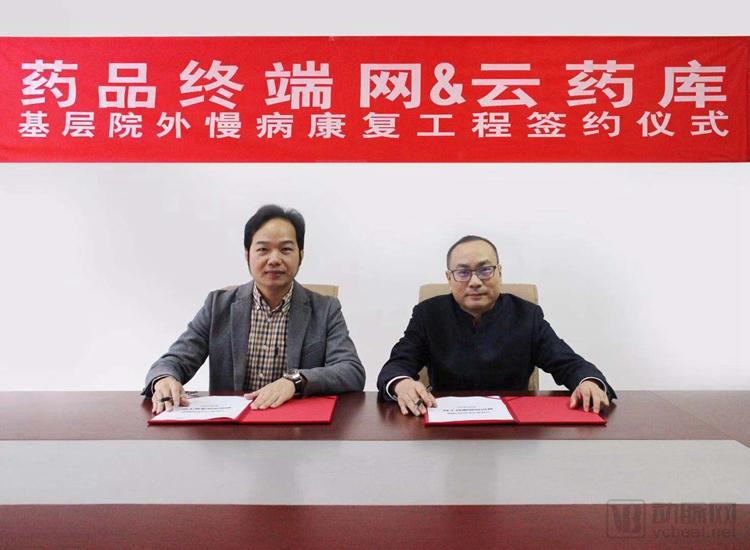
Drug Terminal Network & Cloud Pharmacy Signing Ceremony
“Business Opportunities and Social Value Behind a ‘Tough Nut to Crack’”
Currently, China’s rural population stands at nearly 700 million. However, primary healthcare services are characterized by inadequate and unbalanced provision of medical facilities. Structural contradictions on the supply side have driven up healthcare costs for local residents, further exacerbating the difficulties and high expenses faced by rural populations in accessing medical care.
“Within the entire pharmaceutical distribution chain, terminal markets such as townships and rural areas are often viewed as ‘a hard nut to crack.’ Due to their large number and scattered distribution, these segments have long remained undeveloped, exacerbating the shortage of medical services and medicines for grassroots populations,” said Wang Lijue, Chairman of Akang Health Group. He explained that it was precisely based on the philosophy of “making no medicine hard to find” that Akang Health first proposed the “Chronic Disease Rehabilitation Project” this July.
Against the backdrop of building a Healthy China, and particularly driven by the establishment of a high-quality and efficient healthcare service system, the focus of the “New Three-Year Plan” will center on tiered diagnosis and treatment, medical consortia, and internet-based healthcare. The aim is to break down barriers between different levels of care, establish mechanisms for resource flow from in-hospital to out-of-hospital settings and from urban areas to townships, thereby optimizing the traditional healthcare commercial chain and improving healthcare production relations. This undoubtedly presents favorable business opportunities for suppliers, payers, and various service providers operating on the periphery of medical institutions. However, as we enter the phase of establishing a primary healthcare ecosystem, all stakeholders face significant challenges in exploring innovative business models to facilitate the downward allocation of resources.
The Sense of Mission Among Pharmaceutical Professionals: Pressing Forward Under Heavy Burdens, No Matter How Difficult
As a cutting-edge new pharmaceutical distribution enterprise in China, Akang Health is deeply committed to empowering primary healthcare. Leveraging its Cloud Pharmacy’s integrated supply chain services and disease-specific treatment capabilities for chronic, critical, and rare diseases, the company extends its reach into primary care by deepening empowerment for partner clients. Through multi-pronged collaborative efforts, it is building the “Chronic Disease Rehabilitation Project,” creating a closed-loop system that shares and complements resources across “medical care, pharmaceuticals, rehabilitation, testing, and information technology platforms,” thereby enhancing primary healthcare supply and diagnostic and treatment capabilities.
It is reported that Aikang Health has currently established comprehensive strategic partnerships with enterprises specializing in various sectors: diagnostic and treatment information systems focused on primary healthcare development, including Xikang Medical, Yihao Guan, and Mingyi Zhonghe; inspection and testing services, such as Kuaiyijian and Yunhu Medical; and pharmaceutical information systems, represented by Haidian Software and Qianfang Baiji. Regarding this strong alliance with Drug Terminal Network, Wang Lijue stated that the participation of a leading domestic pharmaceutical e-commerce platform will further promote the nationwide implementation and in-depth advancement of the “Chronic Disease Rehabilitation Project.”
“Drug Terminal Network’s business operations span across China, serving over 130,000 end-users, many of whom are located at the grassroots level. By leveraging the platform’s efficient information dissemination and data analytics capabilities, we can empower primary healthcare institutions to enhance their diagnostic and treatment capacities, thereby extending coverage to a broader population in townships and rural areas,” Wang Lijue stated candidly. He attributed the consensus reached between the two parties to a shared original aspiration and a strong sense of social responsibility. “Achieving this goal is challenging, but collaborating with Drug Terminal Network has increased our chances of realizing this vision.”
He Side, founder of Drug Terminal Network, also stated that the in-depth collaboration with Akang Health on the “Chronic Disease Rehabilitation Project” is of great significance. “I believe the significance of this partnership lies not only in boosting Drug Terminal Network’s offline expansion in 2019, but more importantly, it serves the public welfare. Since its establishment, Drug Terminal Network has been committed to ensuring that quality medicines reach end-users more quickly. Through this collaboration with Akang Health, we aim to leverage the internet and cloud-based pharmaceutical warehouses to alleviate the difficulties grassroots populations face in accessing and purchasing medications. Therefore, no matter how challenging the process may be, we remain determined to press forward under this heavy responsibility.”
It is reported that Yunyaoku and Drug Terminal Network have joined forces to leverage their respective strengths. In 2019, they will use Sichuan as a foothold to expand into the Southwest region, establishing chronic disease rehabilitation service stations primarily targeting township clinics and village doctors. Centered on “over 12,000 products focused on chronic diseases, critical illnesses, and rare diseases, covering therapeutic solutions for 1,300 conditions across 17 medical specialties,” they will provide medication procurement services on behalf of clients and empower end-terminals with modern information management capabilities. Additionally, in 2019, they will launch a nationwide academic training tour comprising 100 sessions on chronic disease rehabilitation projects, thereby delivering greater value by equipping physicians and pharmacists with chronic disease management skills. This initiative aims to empower the “last-mile” health gatekeepers, build the first line of defense for grassroots chronic disease rehabilitation, prevention, and control in China, foster an environment of rational drug use, and ensure that no patient struggles to find needed medications.
Data shows that China has 360 million patients with chronic diseases, 80% of whom live in grassroots communities. Our shared vision is to enable this population to maintain pharmacological treatment at home while gradually gaining access to high-quality consultation resources and medical technical services. This represents a sustainable response to the national policy call of “initial diagnosis at hospitals, rehabilitation at the grassroots level,” constituting a health initiative that truly benefits the public.