

KangYiHeng Showcases AI+Elderly Care Solutions at High-Tech Fair, Files for IPO
VCBeat (WeChat ID: vcbeat) has learned that the 20th China Hi-Tech Fair was held in Shenzhen, Guangdong, from November 14 to 18, 2018. Comprising exhibitions of scientific and technological achievements, high-level forums, and project cooperation activities, the fair showcased a wide array of cutting-edge technology products. Shenzhen Kangyiheng Technology Co., Ltd. participated with its health service robot “Kangyi Xiaobao” and its innovative “Smart Community Health Integrated Service Platform for Robots,” sparking deep reflection among attendees on “smart elderly care.”
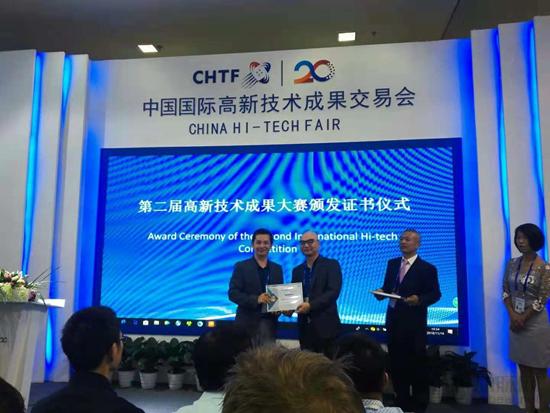
Kangyiheng Project Ranks Among Top Five in the 2nd High-Tech Achievement Competition
Accelerating Population Aging: Elderly Care Strategies for 300 Million Seniors Need Innovation
According to statistics from the Ministry of Civil Affairs, China’s population aged 60 and above reached 247 million by the end of 2017. This figure is projected to rise to 300 million by 2025. In China, 97% of elderly individuals rely on community-based and home-based care. However, significant pain points remain in these care models.
On one hand, due to various reasons, most children are unable to personally care for their elderly parents. Meanwhile, there is a scarcity of professional health and eldercare companions, and the cost of hiring them is relatively high. With children living far away and neighbors having little interaction, elderly individuals who experience accidents or emergencies will find it difficult to help themselves. On the other hand, China implemented its one-child policy starting in 1978, which lasted for 38 years. Today, there are 176 million only-children in China, each of whom on average needs to support four to eight elderly relatives. This undoubtedly poses severe challenges to the quality of life for these only-children.
Huang Jianfeng, founder of Kangyiheng, pointed out that the greatest challenge facing the elderly is loneliness, followed by multiple chronic conditions; their daily lives require caregiving support. However, it is unrealistic to place the entire burden of caring for nearly 300 million older adults solely on one-child families or to shift this responsibility entirely onto the government and society. Huang believes that applying artificial intelligence technologies to home-based elder care scenarios can alleviate the burden on children and enable older adults to enjoy a higher quality of life.
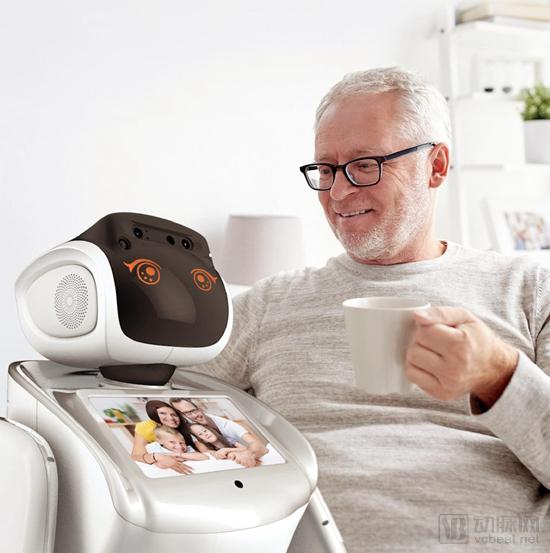
Driven by Commitment, Kangyiheng Technology Launches a New “Smart Elderly Care” Model
After extensive exploration, the Kang Yiheng project was launched. Kang Yiheng has specifically developed health and elderly care companion robots tailored to the needs of China’s aging population. By integrating artificial intelligence, the internet, big data, medical healthcare, and elderly care services, the project empowers real estate communities, enabling households within these communities to enjoy 365 days of continuous health and care services. Additionally, the hospital triage robots developed by Kang Yiheng have been piloted in 17 hospitals across China, earning recognition and praise from clients.
Kang Yiheng has aligned its development strategy with the intelligent health sector, with a particular focus on smart elderly care. It has pioneered the “Robot-Based Smart Community Health Integrated Service Platform” model in China, facilitating the practical application of artificial intelligence technologies in health management and the elderly care industry.
“On the one hand, China’s silver economy is in the ascendant, and the elderly care industry boasts immense market potential. On the other hand, traditional elderly care models can no longer meet the growing demand for such services. We believe that artificial intelligence technology can help resolve this contradiction, which is why we are focusing our development efforts in this direction,” said Huang Jianfeng. Kangyiheng places significant emphasis on R&D investment, conducting in-depth development of the software system for its health service robot, “Kangyi Xiaobao.” In addition to basic service functions, the system places greater emphasis on human-computer interaction capabilities.
Kangyi Xiaobao’s human-computer interaction capabilities are powered by artificial intelligence deep learning algorithms, which will play a more significant role in enhancing in-depth health management services and smart elderly care. Huang Jianfeng told VCBeat that Kangyiheng is one of the few technology companies in China currently developing a “Robot-based Smart Community Health Integrated Service Platform,” boasting a relatively mature technical system, team, and market resources. Kangyiheng aims to gradually become a leading enterprise in this field in China through precise market positioning and strong capabilities.
Aggregating Multi-Party Resources to Build a Full Industry Chain Platform: Kangyiheng Has Served Over 130,000 Elderly Individuals
The robotic smart community health integrated service platform developed by Kangyiheng is distinguished primarily by its application of AI technology in community services: By deploying AI robots into households, the platform can collect health data from the elderly and leverage big data analytics to facilitate health management and chronic disease prevention. Furthermore, these home-based care and companion robots are equipped with capabilities such as basic voice interaction, home security monitoring, and two-way video communication, making them fully capable of serving as household assistants.
In addition, Kang Yiheng’s robust smart cloud platform can assist the elderly in seeking medical consultations and scheduling appointments with family doctors; it also enables one-touch emergency calls to connect seniors with community service centers during crises, and even facilitates remote diagnosis and treatment for physicians.
Meanwhile, Kangyiheng Technology has partnered with real estate enterprises to establish five-star community service clubs in neighborhoods equipped with robotic services. By integrating high-quality medical, elderly care, and health management resources, these clubs provide comprehensive services including elderly care and health management. As a highlight of the 40th anniversary of Shenzhen’s reform and opening-up, the 20th China Hi-Tech Fair (CHTF), held in Shenzhen from November 14 to 18, featured the Kangyiheng project as a key innovation outcome cultivated by the China National Intellectual Property Administration and the State Administration for Market Regulation, garnering significant acclaim.
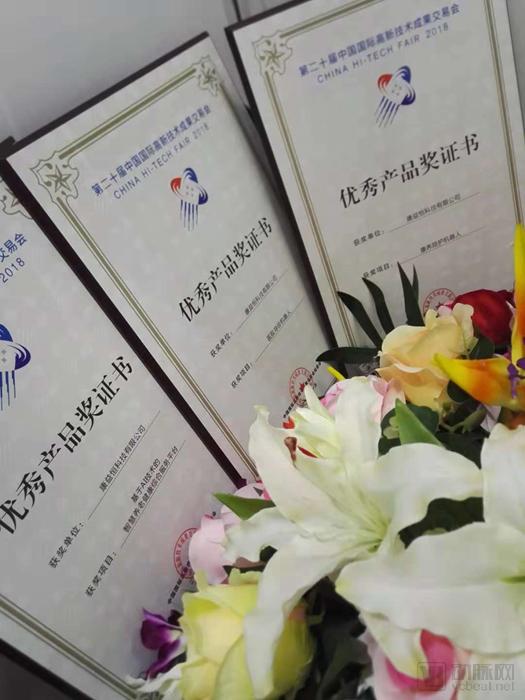
Kangyiheng Project Wins Three Excellent Product Awards at the 20th China Hi-Tech Fair
Kang Yiheng relies on its pioneering business model and team in China, leveraging profound technical expertise and an extensive customer base across BAT tech giants, healthcare, smart communities, elderly-care real estate, and artificial intelligence. Guided by the strategic frameworks of “Made in China 2025” and “Healthy China 2030,” Kang Yiheng drives innovative development in robot applications and the health-and-wellness service industry. Currently, Kang Yiheng has established strategic partnerships with Zhongzhu Holdings’ Yiti Medical, H&T, CITIC Industrial Fund’s Zhongtian Yixin, Country Garden, Agile Property, Wannian Jiye Group, Qihan Technology, TPP (UK), Aimeijia, Pure Care Group, Hualing Elderly Service Center, Yi Ling Hou, Ruisheng Hospital Investment Group, IDG Design Alliance, and the Canadian International Nursing Group.
The company has signed strategic partnerships with more than 30 partners, establishing a full-industry-chain platform that provides community- and home-based elderly care services powered by health and wellness robots to 250 million seniors and 400 million households across China. To date, it has served over 149,000 senior individuals, and future project expansion is expected to benefit tens of millions of elderly people.