

EndoPicasso: China's First Flexible-Arm Endoscopic Surgical Robot Makes Global Debut in Germany
From November 10 to 11, the 3rd World Medical Robotics Conference was held at the Technical University of Munich in Germany.
At the conference, internationally renowned brands such as KUKA and STRYKER showcased their latest products. Among them, a product from China drew particular attention: EndoPicasso, a digestive endoscopy-assisted surgical robot jointly developed by Professor Li Yanqing’s team at Qilu Hospital and ROBO Medical.
VCBeat has learned that the global debut of EndoPicasso in Germany is of extraordinary significance—it is not only China’s first robotic system for digestive endoscopic surgery, but also marks the first time a Chinese medical enterprise has launched a high-tech product in Europe and the United States.
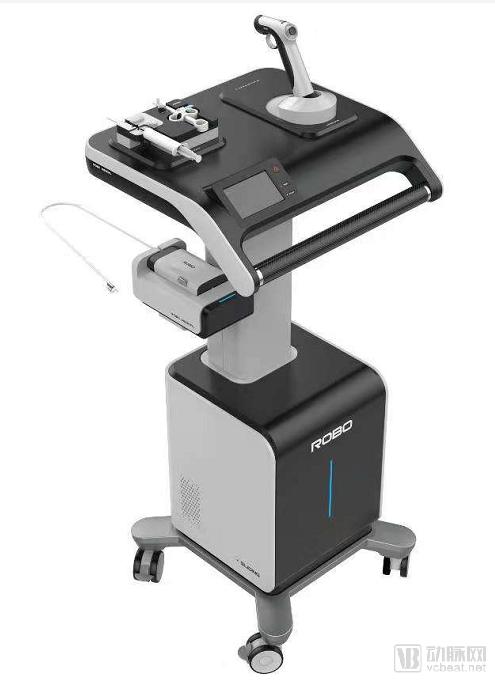
EndoPicasso Surgical Robot
The Robo Medical team was initially established in Switzerland. In 2014, ROBO Medical (US) was founded in Silicon Valley, USA, and in 2015, Robo Medical established its presence in Shenzhen, China.
RoboMedical specializes in the research, development, and global promotion of medical robots. With surgical robots, rehabilitation robots, and medical service robots as its core offerings, the company has assembled a team of world-class robotics engineers and medical professionals. Currently, RoboMedical operates R&D centers in Shenzhen, China, and Zurich, Switzerland. Through years of accumulation, it has mastered multiple core technologies. Notably, China’s first ultrasound-guided robotic system was developed in RoboMedical’s laboratory.
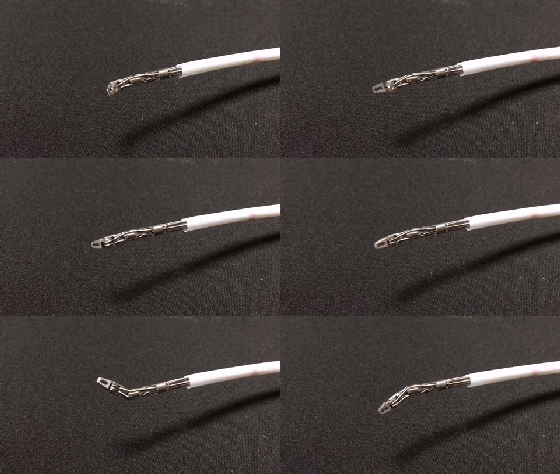
Robo Medical is the first enterprise in China to engage in research on flexible-arm surgical robots. Over four years, it has iterated flexible arms of varying diameters and diverse structures, which can be flexibly controlled by physicians from outside the body. According to experts at the conference, the ability to commercialize flexible arms with a diameter of less than 3 mm beyond the laboratory setting represents the highest level globally in the field of surgical robotics. Both types of flexible-arm structures developed by ROBO Medical currently have diameters under 3 mm, making them the only ultra-thin flexible arms in China capable of commercialization. EndoPicasso is China’s first mature flexible-arm surgical robot eligible for submission to the China Food and Drug Administration (CFDA) approval process.
LuoBo Medical also serves as a vice-chairman unit of the “National Alliance for Early Diagnosis and Treatment of Gastrointestinal Cancer,” an initiative advocated by Academician Fan Daiming and Academician Li Zhaoshen, and is the only surgical robotics company among the alliance members. EndoPicasso is China’s first digestive endoscopic surgical robotics project, primarily used for the treatment of early-stage gastrointestinal cancers, with the following advantages: it does not alter the traditional endoscope structure, does not change physicians’ operational habits, and offers universal compatibility with conventional endoscopes.
This project was developed in collaboration with Robo Medical under the medical guidance of Professor Li Yanqing’s team at Qilu Hospital of Shandong University. Professor Li serves as Vice Chairman of the Gastroenterology Branch of the Chinese Medical Association and Chairman of the Shandong Society of Gastroenterology. The Department of Gastroenterology at Qilu Hospital, under his leadership, is among the first batch of National Key Clinical Specialty Construction Projects, serves as a vice-chairman unit of the Gastroenterology Branch of the Chinese Medical Association, and is a key discipline under the “985 Project” for enhanced development. Its Digestive Endoscopy Center is capable of performing all Level IV endoscopic procedures, with treatment volumes ranking among the highest nationwide. It has established itself as a regional clinical center for digestive diseases, featuring microscopic endoscopy as its flagship and comprehensive development across all subspecialties. The team’s extensive experience in clinical practice, scientific research, and teaching has provided clear direction and a solid research foundation for the successful development of this project.
East Asian countries such as China, Japan, and South Korea are high-incidence regions for gastrointestinal tumors. Among cancer patients in China, gastrointestinal cancers are characterized by high prevalence, high incidence, and high mortality. Gastric cancer, esophageal cancer, and colorectal cancer account for approximately 1.5 million new cases and 1 million deaths annually, making them among the cancers with the highest incidence and case fatality rates in China. New cases and deaths from gastric cancer in China constitute approximately 42.6% and 45% of the global totals, respectively.
The direct consequence of the “three highs” associated with gastrointestinal cancers is enormous treatment costs and a severe societal burden: colorectal cancer treatment costs amount to RMB 40 billion, gastric cancer to RMB 15 billion, and esophageal cancer to RMB 5–7 billion. When other expenses are included, the total cost reaches approximately RMB 180 billion.
The low early detection rate of gastrointestinal tumors is a major obstacle to extending patient survival. Compared with advanced-stage gastrointestinal cancers, early-stage gastrointestinal tumors have a significantly higher five-year survival rate following standardized treatment, exceeding 90%.
Taking gastric cancer as an example, the 5-year survival rate for early-stage gastric cancer exceeds 70% in Europe and the United States, and reaches as high as 90% in countries such as Japan and South Korea, whereas the 5-year survival rate for advanced gastric cancer is less than 10%.
Endoscopic Submucosal Dissection (ESD) can be applied to the endoscopic resection of early gastrointestinal tumors, expanding the indications for endoscopic resection. It is minimally invasive, leaves no surgical incisions on the body surface, and allows for rapid postoperative recovery.
Unfortunately, there are only a few hundred qualified physicians in China capable of performing endoscopic submucosal dissection (ESD) procedures, while the demand is projected to reach 500,000 cases by 2020, resulting in a severe supply shortage.
In conventional endoscopic submucosal dissection (ESD), the use of a single instrument leads to prolonged operative times and an increased risk of complications, such as perforation. Furthermore, the high technical demands placed on operators have hindered the widespread adoption of ESD in primary healthcare settings.
This creates ample opportunities for next-generation devices such as EndoPicasso. Its technical advantages—“no alteration to the traditional endoscope structure, no change in physicians’ operational habits, and broad compatibility with conventional endoscopes”—will further serve as a strong selling point in market promotion.
Currently, there are no more than two companies worldwide developing ESD-assisted surgical robots.