

F-Prime Capital's Lin Rui: In Healthcare Investment, There Are No Trends—Only Real Pain Points
Among numerous healthcare investment firms, F-Prime Capital stands out as “distinctive.” First, it does not raise external capital and has only one limited partner (LP)—Fidelity International Limited. Second, it favors long-term investments, even co-founding companies with project founders and accompanying them through sustained growth. Under this investment philosophy, F-Prime has achieved remarkable success, nurturing unicorns such as Innovent Biologics, Hua Medicine, and Gushengtang.
VCBeat (WeChat ID: vcbeat) interviewed Ms. Lin Rui, Partner at F-Prime Capital, to provide an in-depth look at the story behind this low-profile yet remarkable investment firm.
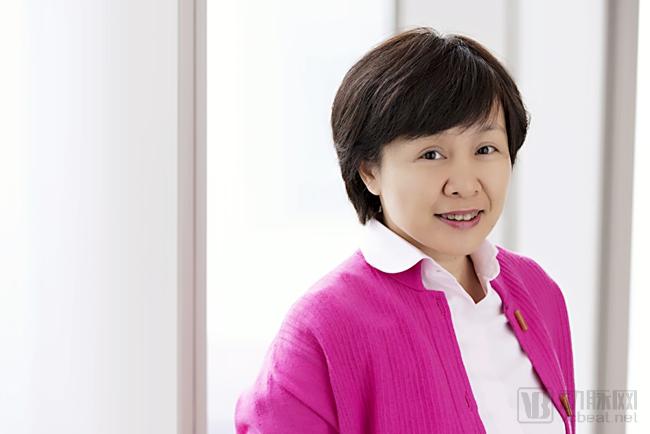
Ms. Lin Rui, Partner at STOA Capital
Fidelity Capital’s historical roots can be traced back to the dawn of venture capital. In 1969, Fidelity Ventures was established to conduct global investment operations, deploying its own capital in a series of early-stage companies, including MCI, a global telecommunications leader; Continental Cablevision, one of the world’s first cable network companies; and Atari, a video game producer. In the 1990s, Fidelity Ventures launched its Asian subsidiary, Fidelity Asia Ventures, which is the predecessor of Fidelity Capital.
Fidelity Street Capital is the proprietary investment arm of Fidelity International Limited (Fidelity Group), investing in startups using Fidelity Group’s U.S. dollar funds. It does not raise capital from external sources, nor does it offer any investment or wealth management products, and it does not accept investments from individuals.
Driven by globalization, companies often have a need for cross-border operations. Leveraging Fidelity’s global network, and in collaboration with its sister fund F-PRIME Capital and other affiliated funds, Stodge Capital provides entrepreneurs with expertise and insights to help them expand globally.
Over the past decade alone, Vestra Capital has invested a total of $6 billion in rapidly growing technology and healthcare companies worldwide.
Ms. Lin Rui summarized to VCBeat that F-Prime Capital has three key advantages: first, its long-term investment horizon. As F-Prime invests using Fidelity’s own capital, it takes a long-term perspective rather than a short-sighted one, focusing on the industry’s long-term development trends. In the healthcare sector, investment patience is crucial, which is precisely what F-Prime Capital adheres to.
Second, Stroad Capital possesses a global perspective, with professional investment teams stationed in major regions worldwide, thereby constructing a globally covering investment ecosystem. For instance, when investing in the Chinese market, it aligns strategies with global industry development experience to make forward-looking arrangements.
Third, FountainVest Partners is not limited to “investment.” In addition to supporting outstanding entrepreneurs, it also personally “gets involved” by selecting investment themes, scouting talent to build teams, and creating enterprises from the ground up. This is particularly relevant in the healthcare sector, which has long development cycles; FountainVest’s proprietary capital can provide a long-term commitment to business growth.
Ms. Lin Rui is also a seasoned investor in the healthcare investment sector. She holds an MBA from the Wharton School and a Bachelor’s degree in Economics from Shenzhen University. She previously worked at investment firms such as Vision Capital China and CMT China. In 2007, she joined STI Capital, focusing on investments in the healthcare industry.
During the interview, we discussed the evolving trends in healthcare investment over the past decade, F-Prime Capital’s investment thesis in the healthcare sector, the most promising areas for future investment, and our perspectives on cutting-edge technologies such as artificial intelligence and big data.
VCBeat: You have years of experience in healthcare investment. Based on your observations, how have the hotspots in medical investment changed in recent years?
Ms. Lin Rui: We believe that there are no “hot spots” in healthcare investment, only “pain points.” One approach to identifying investment directions is to start from these pain points, drawing insights from the direction of healthcare reform and aligning strategic layouts with the global trends and development patterns of the healthcare industry.
The shifting focus of the industry has followed the trajectory of production → services → payment. It began with the R&D, manufacturing, and sales of products on the supply side, followed by state investment in healthcare infrastructure, and then the evolution of healthcare service models aimed at improving efficiency. Subsequently, attention turned to cost containment, hospital operational management, and the equalization and accessibility of high-quality healthcare services.
Sto Capital has always been forward-looking, having begun to focus on biopharmaceuticals as early as 2008. We firmly believe that with the return of overseas-educated talent, China is destined to become one of the global R&D hubs for biopharmaceuticals. The rapidly growing number and quality of Chinese scientists constitute highly favorable factors.
Before 2012, the healthcare industry was not a sought-after investment hotspot, and professional healthcare investors were so few that we often joked we couldn’t even gather enough people for a game of mahjong. At that time, the more promising sectors included vaccines, women’s health, and active pharmaceutical ingredients (APIs).
After 2012, healthcare investment heated up, with more opportunities emerging in areas such as medical devices and internet-based healthcare. At that time, F-Prime Capital conducted strategic reflections on the direction of healthcare reform—namely, the alignment between medical resources and patient demand. Given the already high coverage rate of social health insurance, we focused our attention on healthcare services and identified private healthcare as a highly promising sector.
"We identify trends but do not chase hotspots. For instance, while everyone was investing in new drugs over the past two years, we had already strategically positioned ourselves well in advance."
VCBeat: Investment is a process of comprehensive decision-making, with many factors to consider, such as the sector, founders, team, and core competitiveness. What is Stone Capital’s decision-making process?
Ms. Lin Rui: This actually involves two different investment models of ours. The first pertains to projects already available in the market, for which we conduct a comprehensive evaluation process. This includes assessing various factors such as market conditions and team capabilities, as well as consulting industry experts.
The second category comprises projects that address clear market pain points but lack existing solutions. We dedicate substantial time to conducting research and due diligence, refining requirements, developing business plans, and then recruiting a team to jointly execute the project. This approach is driven by our alignment with the long-term development trends in a specific sector, our forward-looking judgments, and our deep commitment to immersing ourselves in the field.
Just as President Kennedy famously declared when announcing the moon landing program, “We choose to go to the moon not because it is easy, but because it is hard.” Indeed, in China, most people tend to pursue follow-on investments, but Stryve does not. We believe that only difficult endeavors are truly interesting and meaningful.
FountainVest Partners’ investment in Innovent Biologics serves as a typical example. After investing in WuXi AppTec, we recognized the immense potential of China’s biopharmaceutical industry; however, there were no high-quality innovative drug investment targets available in the market at that time. Consequently, we formulated a long-term development plan and collaborated with Dr. Yu Dechao to co-found Innovent.
In 2011, F-Prime Capital led Innovent Biologics’ $5 million Series A financing round, and we also participated in its $30 million Series B round. Beyond capital support, we assisted Innovent Biologics in establishing its presence at the Suzhou BioBAY. At that time, we evaluated five cities before securing the most suitable land, talent pool, and infrastructure conditions. Furthermore, F-Prime Capital played a role in facilitating Innovent’s collaboration with Eli Lilly, negotiating product in-licensing deals with U.S. companies, and recruiting internal R&D talent.
We still have the photos from our earliest visit to the Suzhou BioBay with Dr. Yu. At that time, the selected site was relatively barren and overgrown with weeds; today, it has been developed into a modern manufacturing facility that serves as Innovent Biologics’ production base.
Innovent Biologics recently listed on the Hong Kong Stock Exchange, with Mr. Albert Au, Senior Managing Partner at F-Prime Capital, participating in the bell-ringing ceremony on site. From conceiving the idea in 2010, to collaborating with Dr. Yu to bring the vision to fruition, the IPO marks a milestone achievement. The process of selecting a direction, executing it, and achieving results offers a distinctly different experience for an investment firm when it is directly involved in these endeavors.
In the field of innovative drugs, we firmly believe that China will inevitably produce First-in-class therapies. This conviction was precisely what persuaded Dr. Chen Li to relinquish his position as Chief Scientific Officer at Roche R&D Center (China) Ltd. to pioneer innovative drug development and found Hua Medicine. It was likewise the driving force behind Dr. Luo Peizhi’s decision to establish Adagene Inc., following his remarkable achievements abroad.
Moreover, many successful entrepreneurs we have previously invested in choose to partner with F-Prime Capital to co-create new ventures when they embark on subsequent entrepreneurial endeavors.
Stone Capital places significant emphasis on post-investment management, providing targeted services tailored to the developmental needs of its portfolio companies at various stages. This support extends beyond financial assistance to include help with internal personnel and management, as well as external market access and resources.
VCBeat: In the coming years, what breakthroughs and significant changes do you anticipate in the healthcare sector?
Ms. Lin Rui: We believe that the current pain point should focus on unmet needs, namely healthcare accessibility, specifically the issue of healthcare affordability. We observe that while the basic medical insurance system has become highly comprehensive and covers nearly the entire population, it only provides “basic coverage.” Beyond this, the out-of-pocket financial burden on individuals remains substantial. The widespread discussion and social resonance sparked by films such as Dying to Survive underscore the persistent phenomenon of poverty caused or exacerbated by medical expenses.
A multi-tiered and diversified healthcare payment security system should consist of social insurance, commercial insurance, and out-of-pocket payments. Social medical insurance provides basic coverage, commercial insurance serves as a supplement, and individuals bear the costs exceeding the scope of coverage. The burden should be balanced and dispersed, with social and commercial insurance playing primary roles. Individual financial burdens should not be excessive, and consideration must be given to ensuring accessibility to high-quality medical services and high-cost drugs for those paying out-of-pocket.
Guided by this logic, STOA Capital has made strategic investments in healthcare cost containment and the accessibility of medical services. These include Wanhu Liangfang, which is exploring a localized PBM (Pharmacy Benefit Management) model; Sipei Network, a company specializing in medical big data and artificial intelligence; and Medbanks Health, which is dedicated to improving drug accessibility.
Professor Fang Zhiwu, founder of Wanhuliangfang, served for many years at Express Scripts (ESI), the largest independent pharmacy benefit manager (PBM) in the United States, and identified a PBM model suited to China’s specific conditions. SiPi has established China’s largest oncologist network and a high-quality clinical oncology database; building on this foundation, it has developed businesses such as site management organizations (SMOs) and direct-to-patient (DTP) pharmacies, while also exploring the preferred provider organization (PPO) model in China. Medbanks Health focuses on self-pay patients by providing payment solutions for high-cost medications (including installment plans and efficacy insurance) and a DTP pharmacy service network, thereby improving access to high-quality drugs.
Certainly, we also focus on medical big data and artificial intelligence. We believe that the most critical aspects of this industry are the legality of data sources and data quality. Medical big data is a national strategy, and data security is of paramount importance. There is a world of difference between medical data and consumer data; currently, there is a vast amount of low-quality medical data, much of which results in “garbage in, garbage out.” Without solidifying these two foundations, it will be difficult for big data and artificial intelligence to develop.
Another issue concerns application scenarios. Many enterprises focus solely on product development, without considering who will use the product and in what contexts. As a result, many products fail to find a market. The underlying reality is that if core problems remain unsolved, users have little incentive to pay. Therefore, product development should be driven by user needs to identify breakthrough solutions.
Adhering to a long-term, sustainable investment philosophy, FSD Capital has made “precise” investments over the past decade plus, backing unicorns such as Innovent Biologics, Hua Medicine, and Gushengtang. Looking ahead, FSD Capital will continue to uphold its investment logic of partnering with companies through their growth journeys and prioritizing long-term value.
At the end of the interview, Ms. Lin Rui told VCBeat that, from a technological perspective, F-Prime Capital firmly believes China will produce globally innovative products, while from a business model perspective, China will see unique innovations. F-Prime Capital will adhere to its long-term investment strategy, aiming to invest in and foster more leading enterprises that have a profound impact on the industry.