

Tencent's Ambition in Healthcare AI: Expanding Beyond Traditional Scenarios to Redefine the Medical Landscape
In China’s medical AI sector, numerous corporate giants are active. Among them, Tencent stands out for its highly distinctive “strategy.”
Huawei and Alibaba adhere to an ecosystem philosophy, striving to build PaaS platforms while delegating breakthroughs in specific disease areas to downstream enterprises, aiming to enable their proprietary cloud platforms to serve a broader range of projects. Baidu, with its strong AI research capabilities, is still in the early stages of the medical AI sector; at the Baidu World Conference, it unveiled an AI-powered fundus screening device. iFlytek focuses on natural language processing (NLP) and has made notable achievements in pulmonary nodule detection and smart hospital development.
In contrast, Tencent clearly places greater emphasis on the practical application of medical AI, with a dense and robust portfolio of disease indications and lightning-fast implementation speed.
From November 16 to November 18, Tencent’s Medical AI Division deployed three teams to launch three AI projects in Guiyang, Hangzhou, and Shenzhen, holding three separate events over the three-day period.
In Guiyang, Tencent partnered with Professor Wang Ningli’s team at Tongren Hospital to launch an AI-based early screening project for glaucoma. In Hangzhou, Tencent participated in the establishment of the Artificial Intelligence Committee for Digestive Endoscopy, standardizing the auxiliary diagnostic functions of AI in clinical practice. In Shenzhen, Tencent initiated a National Key R&D Program project to develop innovative service model solutions for AI-driven clinical decision support systems.
A careful analysis reveals a strong correlation between glaucoma and digestive endoscopy within Tencent Miying’s existing AI product portfolio, whereas the Clinical Decision Support System (CDSS) represents a novel component that fills a gap in Tencent’s overall AI strategic layout. Furthermore, at the kickoff meeting for this National Key R&D Program project, Fan Wei, Director of Tencent’s Medical AI Laboratory, disclosed Tencent’s research into conditions such as psoriasis, benign paroxysmal positional vertigo (BPPV), and cardiovascular and cerebrovascular diseases, thereby enriching its comprehensive healthcare ecosystem.
Why Has Tencent’s Healthcare Journey Been So Meticulous? So Meticulous That It Personally Developed a CDSS System and Mobilized Team Resources to Delve into Research on Every Subspecialty of Medical Conditions? The Logic Behind This Strategy Is Thought-Provoking.
This article consists of four parts, namely:
What New Moves Has Tencent Made After Participating in National-Level Projects?
What Healthcare Development Trends Are Implied by Tencent’s Strategic Layout?
Under the collaboration, which new scenarios has Tencent participated in?
Grounded in Reality, Reaching for the Stars: Tencent’s Path to Inclusive AI.
From these four perspectives, VCBeat attempts to clarify Tencent’s new strategic layout in the field of medical AI.
The “Research and Development of Digital Diagnostic and Therapeutic Equipment” Key Special Project was one of the first six pilot special projects launched under the National Key R&D Program in 2017. The AI-assisted diagnosis project under this special project, led by Tencent, aims to research artificial intelligence-based clinical decision support technologies and their service model solutions.
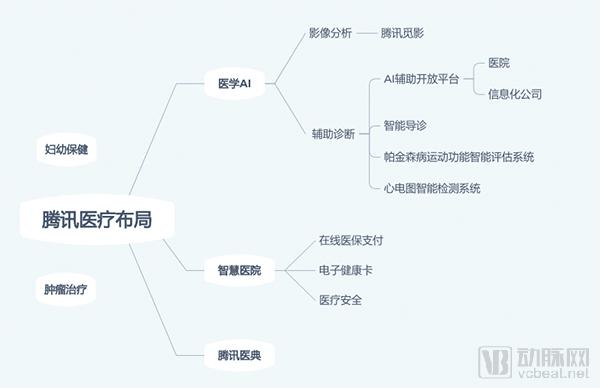
A Comprehensive Overview of Tencent’s Healthcare Ecosystem: With a Core Focus on Maternal and Child Health and Oncology Treatment, Tencent Has Nearly Covered the Entire Medical Process. The Intelligent Triage System Provides Smart Guidance and Triage Services to Patients Through Multiple Channels; Subsequently, Tencent Miying Handles Screening for Common Diseases; In Smart Hospitals, WeChat Medical Insurance Payment and Electronic Health Cards Offer Patients Functions for Medical Insurance Payments and Electronic Medical Record Storage.
However, the aforementioned layout lacks a clinical workflow. This systemic gap not only makes it difficult for Tencent to acquire clinical patient data but also limits the diagnostic efficacy of its AI. In an interview, Fan Wei stated, “It is not that Tencent must build this system; rather, to address cardiovascular diseases in depth, we need to develop this system as an aid.”
As stated in the task assignment of the National Key R&D Program, this project aims to address scientific challenges in information extraction, semantic analysis, and knowledge discovery from big healthcare data (including multi-source, multi-modal data such as hospital information systems, electronic medical records, health records, chief complaints, and medical case files) within Artificial Intelligence-Assisted Clinical Decision Support Systems (AIACDSS). The third, fourth, and fifth technological development directions outlined therein implicitly reflect Tencent Healthcare’s future development trends.
These three plans are respectively: “TargetingAcute and chronic conditions such as acute coronary syndrome, stroke, and dermatological diseases, corresponding to symptoms like chest pain, headache, and pruritus, develop precise diagnosis and treatment decision support technologies oriented toward clinical pathways and technical specifications, and construct an intelligent multidisciplinary consultation system that integrates general practice and specialty care decision-making”; “apply natural language processing and knowledge discovery technologies, with a focus on developingConstruction and Self-Evolving Update Technology for a Clinical Decision Support Knowledge Base Based on Multi-Source, Multi-Modal Data Including Hospital Information Systems, Electronic Medical Records, Health Archives, Patient Chief Complaints, Clinical Pathways, Diagnosis and Treatment Guidelines, and Medical Literature, establish and update in real time a structured clinical decision support knowledge base"; "Prioritize the establishment of a cloud platform for medical and health data, and create electronic health records under the premise of ensuring data security and personal privacy.providing consultation services to patients, decision support to physicians, knowledge services and data support to researchers, and information support for the formulation of national healthcare policies.”
At the conference, Fan Wei broke down the entire plan into five topics, which were assigned to Tencent, partner hospitals, and partner enterprises for joint resolution. These five topics cover pre-diagnosis, intra-diagnosis, and post-diagnosis decision-making systems and knowledge bases, as specifically illustrated in the figure below:
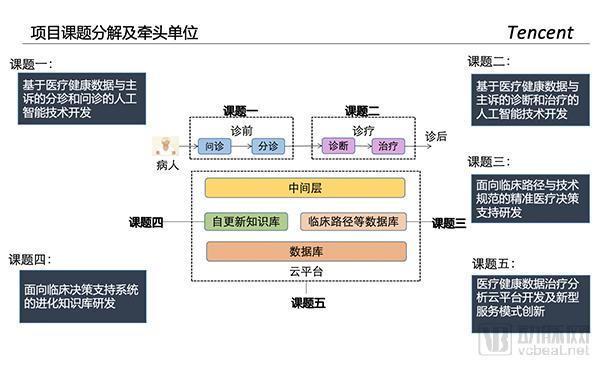
Five Major Topics of the National Special Program
At the conference, Dr. Fan Wei only discussed the application of CDSS across multiple disease types and did not mention future trends in medical informatics. Nevertheless, it is undeniable that AI-powered CDSS is currently at the forefront of innovation, with numerous health IT software solutions transitioning from traditional expert systems to AI-driven CDSS platforms.
Compared with traditional CDSS systems, AI empowerment not only enables the system to integrate with authoritative knowledge bases but also assists physicians in clinical decision-making. In ICU settings, it will further expand applications such as mortality prediction and ventilator alerts. Furthermore, in the realm of scientific research, Tencent will collaborate with top-tier Grade 3A hospitals to generate high-value clinical data beyond routine examinations. This data will be fully leveraged to uncover its value, while strictly adhering to medical data usage regulations and data security standards.
In fact, Tencent has not been inactive in the field of healthcare informatization. Since 2014, it has invested in multiple health IT companies. With the maturation of Clinical Decision Support Systems (CDSS), Tencent has inevitably accumulated a certain level of informatization capability, positioning it well to take further steps by leveraging AI to enhance systems such as Hospital Information Systems (HIS) and Picture Archiving and Communication Systems (PACS).
Tencent Vice President Chen Guangyu stated, “The training cycle for medical professionals is long and costly, leading to a shortage of high-quality physician resources. Moreover, the public-welfare nature of China’s healthcare industry precludes the use of price and market mechanisms for supply management. Technology can alleviate the supply-demand imbalance in a relatively short period.” Thus, addressing the insufficient supply of medical resources is the fundamental driver behind the integration of artificial intelligence into healthcare.
Looking back at Guiyang and Hangzhou, Tencent has focused its attention on glaucoma and digestive endoscopy precisely to address the shortage of medical resources. Early screening for glaucoma is an extension of Miying’s diabetic retinopathy screening product, while digestive endoscopy extends Miying’s capabilities in gastrointestinal cancer screening. Today, as these AI-assisted screening products have matured, a major direction for the Medical AI Laboratory is to expand their functionalities and adapt them to more diverse clinical environments.
Meanwhile, this two-step plan reflects a major trend in AI imaging: shifting focus from comprehensive image analysis to early screening, accelerating the deployment of AI products to primary care settings, and addressing the high prevalence of diseases in China at the upstream level.
For a long time, imaging AI has focused on images such as DR and MRI, with training data often encompassing various stages of patient disease. While such AI products have indeed alleviated the workload for physicians in tertiary hospitals, the more profound value of AI lies in enhancing the service capabilities of primary care physicians and promoting early disease screening.
Taking gastrointestinal tumors as an example. Currently, the incidence of gastrointestinal tumors in China accounts for 43.5% of all cancer cases. If detected early, the cure rate for these tumors can be as high as 95%. If AI technology can be integrated into the screening process for gastrointestinal diseases, the mortality rate from malignant gastrointestinal tumors will be significantly reduced.
Professor Wang Ningli told VCBeat, “Deploying this AI at the primary care level is equivalent to sending doctors from large hospitals down to grassroots facilities. In the past, treatment required either patients to travel to major hospitals or doctors from those hospitals to visit primary care settings. Now, the flow of information can replace the need for physical movement of personnel, thereby saving substantial labor costs. It is estimated that current AI technologies can save 30% of physician resources, and this figure is expected to rise further as AI technology continues to advance.”
That said, medical AI still has a long way to go before it can replace physicians. Healthcare is highly complex, and such complexity calls for greater involvement of medical experts. Another key agenda item at the Hangzhou conference—“Strengthening Academic Collaboration to Unlock the Potential Value of Medical AI”—addresses this issue from precisely that perspective.
The availability of data samples for AI learning is a significant challenge. Chang Jia, General Manager of Tencent’s Smart Healthcare Product Center, pointed out that while fields such as Go and facial recognition have hundreds of millions of data points available for training, the medical sector imposes higher requirements on data quality. “When multiple physicians annotate the same medical imaging data, inter-rater consistency is relatively low; furthermore, the same physician may reach inconsistent conclusions when interpreting the same image at different times.”
Gastrointestinal cancers encompass a wide variety of types, and physicians have different areas of expertise. Accurately assessing gastrointestinal conditions during digestive endoscopy requires collaboration among multiple specialists. However, healthcare resources do not permit such resource allocation, whereas AI holds the potential to address this challenge.
This requires finding more and better “teachers” for AI. The participation and assistance of physicians and medical experts can help train AI and establish higher-quality training standards. Chang Jia stated, “Machines cannot replicate human learning exactly, but they can aggregate the best aspects of human expertise. Through collaborative research with top-tier hospitals and experts, AI is expected to break through the bottlenecks that physicians currently face in certain fields.” Chen Guangyu also pointed out, “The development prospects of medical AI entirely depend on the openness and supportive policies of the medical community to cultivate valuable artificial intelligence.”
It is undeniable that AI remains in its nascent stage. Its integration into healthcare is neither broad, deep, nor extensive enough. Consequently, Tencent has prioritized the joint development of disease-specific solutions with hospitals. These initiatives typically benefit from expert endorsement, data support, and alignment with national policy directives. Currently, Tencent has expanded its applications into the following areas.
Psoriasis, also known as “niupixuan,” is a skin condition that cannot be completely cured. Nearly every patient faces a risk of relapse after remission, which can lead to complications such as metabolic syndrome, cardiovascular and cerebrovascular diseases, and diabetes. Generally, appropriate treatment can effectively alleviate the condition, but the annual cost can reach RMB 30,000–50,000.
Can AI be applied in this scenario? The answer is yes. Dr. Wu Xian, an expert researcher at the Tencent Medical AI Laboratory, has proposed a comprehensive solution for this purpose.
The first component is an offline self-assessment system designed for pre-consultation use. Given that dermatologists have varying areas of expertise—with some specializing in psoriasis and others in rosacea, for example—it is crucial to refer patients to the most appropriate specialist. This system supports patient interactions, image uploads, initial offline screening, and online referrals, while also enabling precise triage to significantly reduce consultation time. Within just 2–3 minutes, the system can complete the patient’s chief complaint, allowing physicians to make rapid clinical judgments.
The core of Part II is the psoriasis diagnosis and prediction system, which can diagnose psoriasis subtypes and predict associated complications and recurrence. If physicians can identify a patient as having psoriatic arthritis in advance through this system, they can initiate biologic therapy preemptively; for other types of psoriasis, it also facilitates the early formulation of personalized treatment plans, thereby improving diagnostic efficiency and reducing treatment costs.
Part III focuses on post-diagnosis care. Tencent has attempted to simulate the Psoriasis Area and Severity Index (PASI) score and improve its consistency. The revised PASI scoring system will be integrated into a WeChat Mini Program to facilitate patient self-assessment, enabling continuous prognostic tracking of patients.
Under normal circumstances, otoconia are attached to the otolithic membrane. When certain pathogenic factors cause the otoconia to detach, they float within the endolymphatic fluid in the inner ear, triggering severe vertigo in patients. This condition is known as benign paroxysmal positional vertigo (BPPV), commonly referred to as otoconiasis.
Benign Paroxysmal Positional Vertigo (BPPV) research was conducted collaboratively by the Tencent Medical AI Laboratory and Professor Li Huawei from the Department of Otorhinolaryngology at Shenzhen Second People's Hospital. According to Dr. Fan Wei, the Tencent Medical AI Laboratory employs deep learning networks that use the black central portion of the eye (pupil) as key points for detection, thereby improving diagnostic accuracy. Currently, this AI project remains in the research and development phase.
Cerebral Palsy and Scoliosis: Commonalities, Impacts, and the Importance of Early InterventionCerebral palsy and scoliosis share the commonality of causing motor impairments in patients. Both conditions predominantly affect children and significantly impact their physical appearance and gait. Although neither condition can be cured, earlier detection and correction increase the likelihood of achieving normal motor function in affected children.
Tencent’s efforts in this field primarily involve assisting physicians at The University of Hong Kong-Shenzhen Hospital in uploading patient and device data to Tencent Cloud. This approach enables faster diagnostic assessments, facilitating the timely referral of affected children to hospitals for treatment and allowing for early intervention in cases of scoliosis and cerebral palsy.
Compared with other AI scenarios, the development of this AI aligns more closely with Miying’s original mission to focus on maternal and child health, and better demonstrates Tencent’s social responsibility and value as an industry leader.
Unlike cerebral palsy, Parkinson’s disease is a neurological disorder. Research into neurological disorders is more complex than that into motor control-related conditions such as cerebral palsy, but scientific and technological advances continue to yield breakthroughs. In 2017, researchers at the University of North Carolina developed a deep learning algorithm capable of predicting autism in infants. This predictive method achieved an accuracy of 81% and a sensitivity of 88%, representing a substantial improvement in reliability compared with the 50% accuracy of behavioral questionnaires.
Progress has also been made in Parkinson’s disease research. The Intelligent Assessment System for Motor Function in Parkinson’s Disease, jointly developed by Tencent Medical AI Lab and Professor Wang Jian from the Department of Neurology at Huashan Hospital, is attempting to evaluate the condition of Parkinson’s patients through video analysis.
Researchers automatically mark 21 nodes on patients' hands through computer vision to capture the movement status of their hands. During walking and performing specified actions, AI can conduct quantitative analysis of patients' movements. What makes this technology special is that measurements are taken without patients wearing any sensors, reducing examination time from over 30 minutes in the past to just 3 minutes, while also allowing patients with mobility issues to receive medical consultations without visiting a hospital. Compared to existing auxiliary diagnostic products, patients can directly feel how AI has changed their way of seeking medical care.
Professor Wang Jian stated, “We conducted a pilot study in which more than 1,000 video clips from nearly 200 patients were first scored by an expert panel and then used to train a machine learning model. The trained model subsequently scored the test set, and its results were compared with the expert scores. The preliminary concordance rate reached 81.3%. Although there is considerable room for improvement in this scoring system, achieving a success rate of over 80% in the first phase can be regarded as a modest success.”
Electrocardiogram (ECG) is a potential application scenario for future AI. Recently, Lepu Medical’s AI-powered ECG product received approval from the U.S. FDA, further underscoring the potential of this application.
According to Dr. Du Nan, Expert Researcher at Tencent’s Medical AI Laboratory, the applications of AI in electrocardiography (ECG) primarily encompass the following three areas:
1. Clinical Monitoring. In emergency departments and nursing homes, physicians are required to perform 24-hour electrocardiogram (ECG) monitoring on patients. AI is capable of undertaking this monitoring task by transmitting data from patients with ECG abnormalities to physicians.
2. Diagnostic and Treatment Assistance. An increasing number of home-based patients are collecting data via home ECG devices and uploading it to cloud platforms, where remote experts annotate the data. However, prolonged repetitive work can lead to expert fatigue, making misdiagnoses and missed diagnoses inevitable. Artificial intelligence can assist physicians in reducing such errors.
3. Risk Prediction. For post-operative and discharged patients, physicians aim to monitor electrocardiogram (ECG) changes via home-based devices. If AI detects abnormal ECG patterns at the patient’s home, it will automatically send notifications requesting the patient to return to the hospital for follow-up visits and alerting family members to closely monitor the patient’s health status.
By implementing these features, AI-powered ECG analysis not only alleviates physicians’ workload but also enables timely detection of patients’ conditions, thereby improving diagnostic efficiency and preventing adverse outcomes from sudden clinical deterioration.
Cardiovascular diseases are among the leading threats to the health of the Chinese population and represent one of the key motivations for Tencent’s development of its Clinical Decision Support System (CDSS).
Acute Coronary Syndrome (ACS), also known as myocardial infarction, presents a challenge for both patients and physicians in assessing the patient’s condition when atypical symptoms such as fatigue, sore throat, and palpitations occur. This often leads to incorrect department registration and misdiagnosis. This scenario represents another area of collaboration between Tencent and Professor Sun Ningling from Peking University People’s Hospital.
Professor Sun Ningling aims to address this issue through intelligent consultation, which involves maximizing the collection of patient information to more accurately assess the nature of the disease. This approach helps answer critical questions such as whether the patient’s condition is acute or subacute, whether it is treatable, and whether interventional therapy is required.
“We compared arrhythmia diagnostic data from our hospital with Tencent AI’s recognition results and found that the AI outperformed both hospital equipment and manual diagnosis in terms of positive predictive value and sensitivity. Therefore, I believe that employing AI for early diagnosis of abnormal electrocardiograms can significantly enhance clinical patient management.”
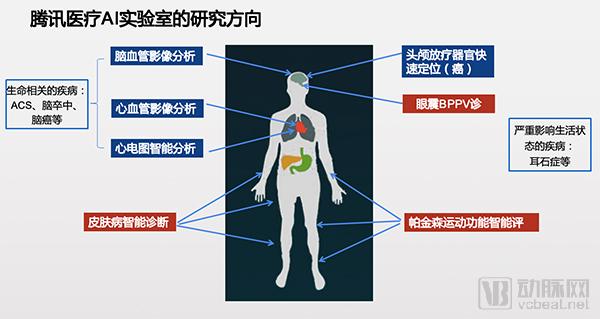
Research Directions of Tencent Medical AI Laboratory
From an overall strategic perspective, Tencent initially focused on AI scenarios with substantial demand, then continued to conduct in-depth research on related diseases along its existing product lines. After establishing this foundational layout, Tencent began strengthening collaborations with hospitals and government entities, seeking to carve out niches in more specialized segments and develop innovative AI applications.
Under this framework, we can categorize Tencent’s disease selection into the following three scenarios.
# Main Application Scenarios
At present, Tencent Miying’s products cover six clinical scenarios: early screening for esophageal cancer, lung cancer, diabetic retinopathy, breast cancer, colorectal cancer, and cervical cancer. These six solutions share a common context: the patient volume far exceeds physicians’ capacity, with large numbers of patients concentrated in tertiary hospitals rather than being managed at primary care levels; meanwhile, the high cost of cancer treatment places a substantial burden on both families and the state. In this setting, AI plays multiple roles, including enhancing early-screening capabilities among primary-care physicians, alleviating the workload of tertiary hospitals and their staff, freeing up physicians’ time, and reducing healthcare expenditures. Each of these scenarios presents clear commercialization potential: once National Medical Products Administration (NMPA) approval is obtained, companies can rapidly recoup their R&D investments.
Potential Application Scenarios
Conditions such as glaucoma, electrocardiogram (ECG) interpretation, and acute coronary syndrome (ACS) represent potential application scenarios. The adoption of AI in these areas is constrained by one or more factors, including a relatively small market size, limited data availability, and high technical barriers; nevertheless, commercialization opportunities remain. These scenarios are poised for rapid development following the commercial launch of the first wave of AI products.
Research Application Scenarios
AI applications for conditions such as cerebral palsy, psoriasis, benign paroxysmal positional vertigo (BPPV), and Parkinson’s disease not only fulfill national research requirements for certain special diseases but also hold pioneering significance in their own right. Research on psoriasis aligns with Item 3 of the project, which calls for “the development of precise diagnostic and therapeutic decision-support technologies oriented toward clinical pathways and technical specifications for acute and chronic diseases—such as acute coronary syndrome, stroke, and dermatological conditions—corresponding to symptoms like chest pain, headache, and pruritus.” Meanwhile, the intelligent motor function assessment system for Parkinson’s disease employs visual capture technology to analyze patients’ movements without the need for wearable sensors. This approach not only significantly reduces examination time but also enables offline consultations, demonstrating substantial innovative value.
However, regardless of the model adopted, it signifies that Tencent is taking another step deeper into its B2B business. Meanwhile, Tencent will gain substantial training data and AI development expertise through research collaborations, enabling Tencent Cloud to play a more profound role in AI-driven healthcare.
However, the protracted journey of medical research and development is akin to a long-distance race; participants must resist the temptation to sprint, allocate their stamina wisely, and thereby strive for superior performance throughout the competition.