

Multi-Omics Study Reveals the Role of Tumoral Bacteria with Immune Environment in Gastric Carcinogenesis

Xbiome
AI Drug Developer for Gut Microbiota

Xellar Biosystems
Drug Discovery Service Provider

Recently, byThe Fifth Affiliated Hospital of Zhengzhou University, Xbiome, Xellar BiosystemsThe joint research team, published in an internationally renowned journalGenomics, Proteomics & Bioinformatics(GPB, with an average impact factor of 9.1 over five years, JCR Q1 zone) published the latest collaborative research findings.
In the article titled "Multi-Omics Study Reveals the Role of Tumoral Bacteria with Immune Environment in Gastric Carcinogenesis," the tripartite team integrated multi-omics features of microbiology/metabolism/proteins, revealing the complex interaction network formed by intratumoral bacterial communities, metabolites, and proteins in the occurrence and development of gastric cancer.Provides a new perspective for understanding the synergistic pathogenic mechanisms of the tumor microenvironment and the microbiome.
Gastric cancer (GC) is a multifactorial disease, with causes involving genetic background, dietary habits, immune function, chronic gastritis, and other factors. The 5-year survival rate for patients is only about 25%, and if peritoneal metastasis occurs, the survival rate drops to less than 5%. Existing studies have found,Specific bacteria within tumor tissues (intratumoral bacteria) are significantly associated with carcinogenesis.Some of these pathogens have been proven to be pro-cancer factors in various cancers, including stomach cancer. At the same time, the tumor microenvironment, with weakened immune surveillance and enriched nutrients, also provides an ideal "habitat" for the colonization of specific bacteria. Therefore,In-depth research on the function of intratumoral bacteria and their interaction mechanisms with the microenvironment is of great significance for developing targeted treatment strategies and constructing anti-cancer engineered strains.
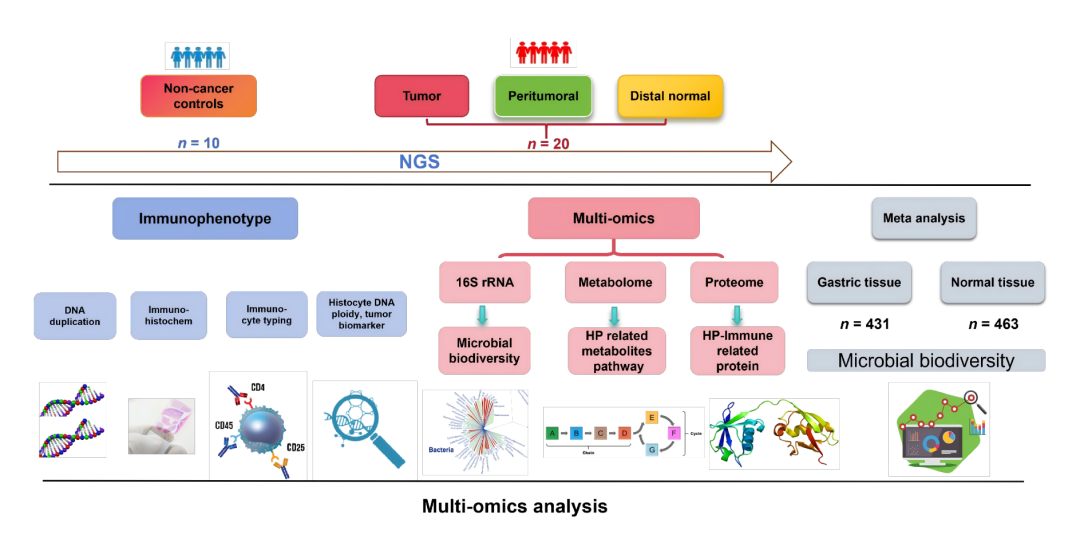
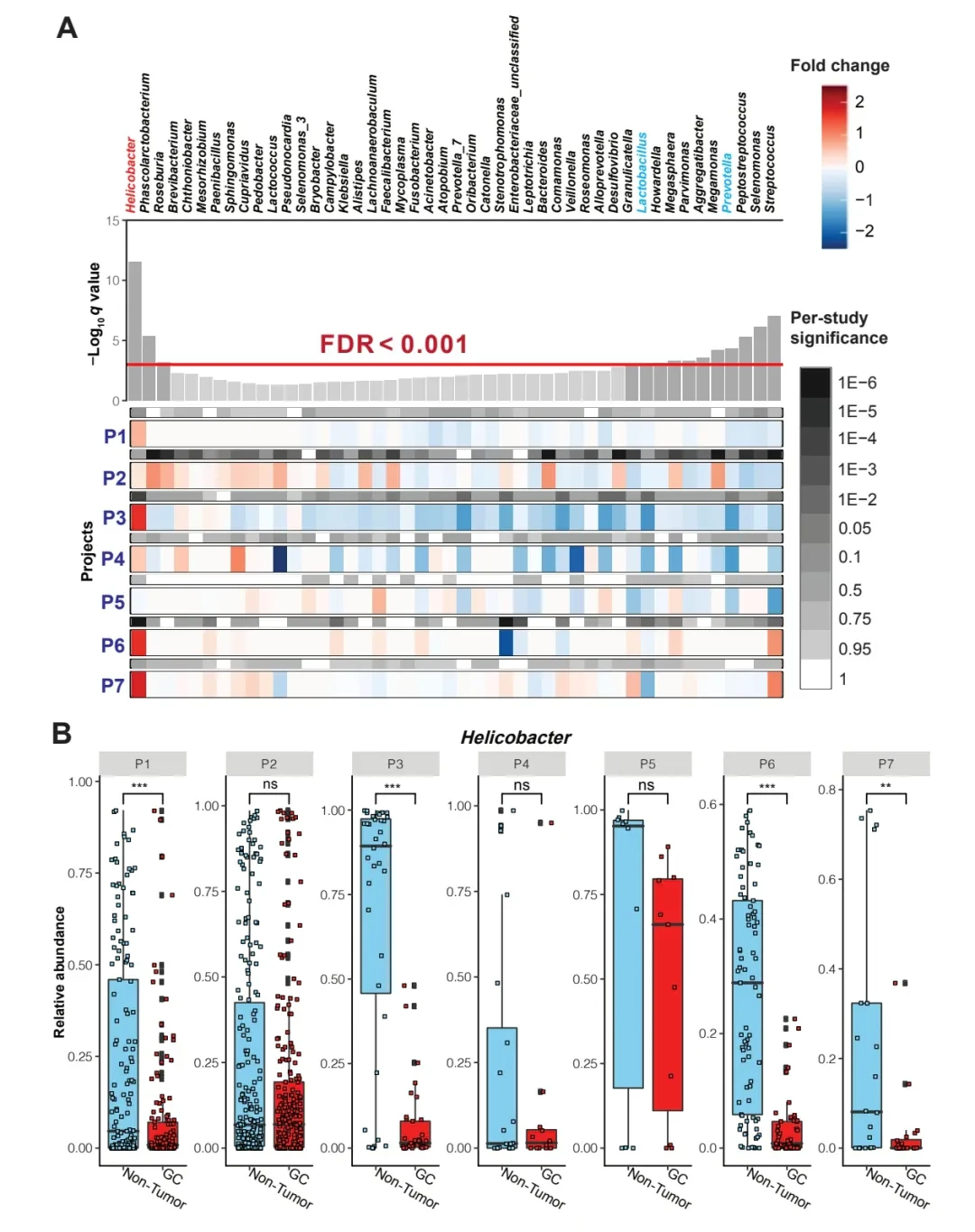
In the study published this time, the research team adopted a multi-omics integration strategy involving microbiome, metabolome, and proteome to systematically analyze tumor/non-tumor paired samples from gastric cancer patients. First, to investigate the composition of intratumoral microbiota in different gastric tumor microenvironments, the researchers performed third-generation high-throughput sequencing based on full-length 16S rRNA for cancer tissue, adjacent tissue, and non-cancerous tissue samples. To validate and characterize the differences in microbiota across various samples, the researchers also conducted a meta-analysis using six public datasets to extract more robust microbial signals. The study found that bacterial diversity within gastric cancer tumor tissues was significantly higher than in adjacent and healthy tissues. Notably, bacteria such as Lactobacillus and Prevotella were markedly increased in tumor tissues, while Helicobacter pylori (Hp), a recognized risk factor for gastric cancer, was more enriched in adjacent and non-cancerous tissues.This suggests that the tumor microenvironment may "select" specific microbial communities.
Due to the differences in bacterial composition between tumor and non-tumor tissues, and the distinct metabolic states of these tissues, the research team further examined the metabolic and proteomic information of these tissues using mass spectrometry. The results showed that, compared with other tissues,The metabolite kynurenine is significantly enriched in tumor tissues. Previous studies have found that kynurenine is associated with immunosuppression, and its accumulation may help tumors evade attacks from the immune system.In terms of proteins, the researchers identified a total of 39 proteins related to host immunity, particularly those enriched in the tryptophan metabolism pathway in tumor tissues. Through further in-depth functional analysis of the differential proteins between groups and metabolic pathway network mapping, the researchers proposed the following hypothesis:Differences in bacterial communities between tumor and non-tumor tissues may influence tryptophan metabolism in the host immune system, leading to changes in related metabolites, which could be associated with tumor initiation and progression.
Subsequently, the research team integrated various omics data to construct a complex regulatory network, identifying potential relationships between intratumoral microbiota, proteins, and metabolites in gastric cancer. For instance, certain bacteria enriched in tumors (such as Brevundimonas nasdae, Brevundimonas vesicularis, Bacteroides thetaiotaomicron) were associated with elevated kynurenine levels and the expression of immunosuppressive proteins. In contrast, Helicobacter pylori was linked to an increase in regulatory T cells (Tregs).These provide a theoretical basis for the development of new biomarkers and therapeutic targets.
The significance of this study lies in systematically elucidating the complex interactions among the bacterial community within gastric tumors, host metabolic reprogramming (particularly the tryptophan-kynurenine pathway), and the immunosuppressive microenvironment.Providing a more comprehensive microbiological perspective for understanding the occurrence of gastric cancer;The identified differential flora, key metabolites (such as kynurenine), and immune-related proteins,Lays an important foundation for the future development of early diagnostic biomarkers and novel therapeutic targets for gastric cancer (such as modulating microbiota, blocking the kynurenine pathway);Specific strains identified in the study as having potential associations,In the future, it is possible to be developed into a new generation of probiotic preparations or microbiota-based innovative drugs for the prevention or adjuvant treatment of gastric cancer.
The success of this research is due to the deep integration of the core advantages of the three parties, among which,Marshall Medical Research Center, Fifth Affiliated Hospital of Zhengzhou UniversityWith its profound clinical experience and scientific research strength in the field of gastric cancer, it has provided a solid medical foundation for the research;Xbiomehas contributed its massive proprietary data and cutting-edge research accumulation in the field of human symbiotic microbiota, precisely identifying the research direction, andXellar BiosystemsThey jointly undertook the crucial multi-omics analysis of clinical data, with the latter leveraging its robust bioinformatics capabilities to transform complex biological data into profound insights.
This achievement not only deepens the scientific community's understanding of the microbial etiology of gastric cancer, but alsoProvided important theoretical basis and translational directions for researchers and enterprises in the global microbial pharmaceuticals field to screen functional strains with therapeutic potential and develop innovative diagnosis and treatment solutions for gastric cancer.
Click "Read Original" at the end of the article to view the full text.
-End-
About Xbiome
Xbiome Co. Ltd., founded in 2017, owns a leading AI microbiome research and industrial transformation platform, strategically focusing on FMT, drug discovery, and probiotics. In drug discovery, the team has completed layouts in fields such as oncology, digestive diseases, immune-related diseases, and urinary system diseases, with four pipelines entering clinical stages, two of which have progressed to phase II clinical trials. Regarding FMT, Xbiome has collaborated with nearly 20 well-known tertiary hospitals in China, including Peking University Cancer Hospital and Peking Union Medical College Hospital, on gut microbiome clinical research across various indications. Additionally, they have developed the AI-FMT personalized precision gut microbiome treatment project, targeting the broader health market to benefit patients with chronic diseases and suboptimal health conditions. In the field of probiotics, Xbiome has successfully completed commercial collaborations and transformations with multiple top-tier domestic and international health companies while continuing to advance the development of proprietary strains.