

CVS Health Nears Completion of $69 Billion Aetna Acquisition After Year-Long Regulatory Hurdles
Recently, VCBeat (WeChat Official Account: vcbeat) learned from foreign media reports that U.S. pharmaceutical retail giant CVS Health has announced it will delay the closing of its acquisition of health insurer Aetna until after Thanksgiving (November 22).
Announced in December 2017, this $69 billion deal was not only the largest transaction in the history of the U.S. pharmaceutical retail industry but also the biggest merger and acquisition event in the global pharmaceutical sector in 2017.
Since the announcement of the CVS-Aetna deal, CVS’s journey to acquire Aetna has been fraught with difficulties.
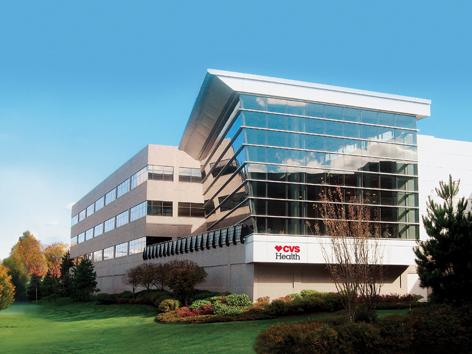
Image from the CVS Health official website
When the deal was announced in early December 2017, CVS stated that it was expected to close in the second half of 2018. Of course, the transaction must pass antitrust review by U.S. regulatory authorities to confirm that it will not harm industry and consumer interests. As 2018 draws to a close, the deal has yet to be finalized.
In October 2018, the U.S. Department of Justice (DOJ) “conditionally” approved the merger between CVS and Aetna, allowing Aetna to complete its merger with CVS after selling its Medicare Part D business to WellCare. At the time, foreign media described the CVS-Aetna deal as a “controversial merger.” The American Medical Association (AMA) even stated that it was disappointed with the DOJ’s decision, maintaining that the transaction would harm consumer interests.
Although executives from Aetna and CVS have repeatedly stated that they will benefit consumers by creating more localized care options and aggregating vast amounts of data, the industry still believes that the merger between CVS and Aetna will further exacerbate the oligopolistic landscape in the U.S. pharmaceutical retail and health insurance sectors. Robert Weissman, president of Public Citizen, even stated that the merger is “unlikely to make drugs cheaper or improve healthcare terms.”
Earlier this month, California regulators approved the transaction but imposed certain conditions.
As part of the California Department of Managed Health Care (DMHC) requirements, CVS and Aetna are to invest nearly $240 million in the state’s healthcare system. Furthermore, CVS and Aetna have committed to not increasing premiums in California due to acquisition costs and to maintaining premium rates at the lowest possible level. The two companies have jointly guaranteed that the ratio of administrative costs to premium revenue will not exceed 15% annually. Should premiums surpass this threshold, Aetna and CVS will submit a report to the relevant California authorities explaining the reasons.
California Insurance Commissioner Dave Jones had previously urged the Department of Justice to block the CVS-Aetna deal. However, the transaction received approval from federal antitrust regulators after Aetna agreed to sell its Medicare Part D business to WellCare.
Earlier this month, CVS executives stated that they expected the CVS-Aetna deal to close on November 22 local time. However, in a recent financial report, CVS indicated that it is still awaiting final approval from two states. To date, CVS has obtained approvals from 26 of the 28 states required. New York and New Jersey are the last two states whose approvals are necessary for the transaction to be completed.
“CVS Health’s acquisition of Aetna has made significant progress and is in the final stages of the approval process in the last two states. We are confident that we will obtain approval from these remaining two states,” the company stated in its filing.
Following the Department of Justice’s approval of the transaction, securing New York’s approval represents the final major regulatory hurdle. Maria Vullo, Superintendent of the New York State Department of Financial Services, has raised concerns that the deal could lead to higher drug costs, reduced transparency, and data privacy issues. Additionally, questions have been posed as to whether the substantial debt CVS incurred from its acquisition of Aetna would exacerbate its financial pressures, thereby driving up premiums.
The deal has also sparked outrage among independent pharmacists in New York, who claim that CVS Caremark is coercing them with unpredictable pricing. One pharmacy owner told the New York Post, “It’s like dealing with mobsters.”
If the transaction is successfully completed after Thanksgiving, under the agreement reached between CVS and Aetna, CVS will pay Aetna shareholders $207 per share for their stock, comprising $145 in cash and $62 in CVS stock. Including Aetna’s debt, the total value of the deal will amount to $77 billion.