

Lianxin Medical's Scientific Advisor Dr. Steve Jiang of MAIA Lab: Advancing AI-Driven Radiotherapy in the Era of Narrow AI to Enhance Treatment Outcomes
AI’s application in healthcare is widely recognized for the surge of companies offering AI-assisted imaging diagnostics. Beyond imaging, however, there exists a more high-barrier niche that penetrates the core of medical care—the treatment phase. This niche is “AI + Radiotherapy.”
In the field of adjuvant tumor therapy, artificial intelligence can assist radiation oncologists in delivering more precise, intelligent, and efficient personalized clinical radiotherapy plans, thereby improving the cure rate of cancer with radiotherapy, reducing radiation-induced damage to normal tissues, and ultimately extending the survival of cancer patients.
At the 2018 CSTRO Satellite Symposium hosted by Defiled Medical, VCBeat interviewed Professor Bin Jiang from the University of Texas Southwestern Medical Center, a distinguished guest and leading scholar in the field of AI-enabled radiation therapy in the United States. The discussion explored the current landscape and critical challenges in oncology radiation therapy, as well as the problems that AI can address in this domain.
[Introduction to Professor Steve Jiang]
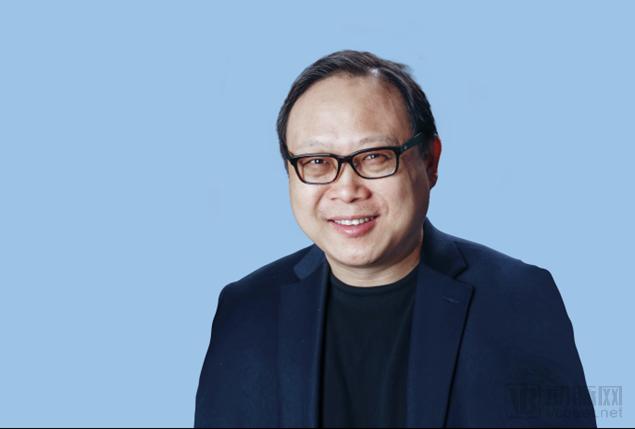
Barbara Crittenden Distinguished Professor at UT Southwestern Medical Center, Vice Chair of the Department of Radiation Oncology, and Director of the Division of Medical Physics and Engineering. His current primary research focuses include the application of artificial intelligence in healthcare, cloud-based automated radiotherapy planning, and online adaptive radiotherapy. He leads the Medical Artificial Intelligence and Automation (MAIA) Lab at UT Southwestern, which is the largest research team in the United States dedicated to “AI + Radiotherapy.”
From 1998 to 2000, he completed his postdoctoral fellowship at Stanford University. In 2000, he became an Assistant Professor at Massachusetts General Hospital, Harvard Medical School. In 2007, he joined the University of California, San Diego as a tenured professor, where he founded the Center for Advanced Radiotherapy Technologies, and was promoted to Full Professor with tenure in 2011. In 2013, he joined UT Southwestern Medical Center as the Barbara Crittenden Distinguished Professor, Vice Chair of the Department of Radiation Oncology, and Director of the Division of Medical Physics and Engineering.
In terms of academic research achievements, Professor Jiang Bin is a Fellow of the Institute of Physics (UK) and the American Association of Physicists in Medicine, serves on the editorial boards of multiple international journals, has published over 170 papers (H-index: 67), and has supervised more than 30 postdoctoral fellows and over 10 doctoral candidates.
Professor Jiang Bin currently serves as a scientific advisor to Defiled Medical, providing guidance on its AI-powered radiotherapy products. Meanwhile, both parties are jointly committed to translating scientific research achievements into clinical applications.
As one of the three major modalities for cancer treatment, radiotherapy has garnered increasing attention in recent years due to its advantages, including high precision, broad applicability, minimal side effects, and reduced invasiveness. Radiation therapy is a complex process; any slight oversight in any stage—from patient positioning and target volume delineation to treatment planning and plan implementation—can lead to severe consequences.
Taking the AI-based automatic delineation of organs at risk in head and neck cancer, which is currently adopted by most enterprises, as an example. Each year, more than 600,000 people are diagnosed with head and neck cancer, many of whom opt for radiotherapy. However, critical structures in the head and neck region are densely packed and exhibit complex anatomical relationships. If these organs are not carefully segmented prior to treatment, surrounding healthy tissues may suffer severe damage during radiotherapy.
During radiotherapy for head and neck cancer, physicians manually delineate the radiation target volumes and organs at risk (OARs) based on patients’ CT images. The aim is to maximize radiation dose concentration within the target volumes while minimizing or avoiding unnecessary exposure to surrounding normal tissues or organs. However, this delineation process is highly time-consuming, which not only reduces clinical efficiency but also delays patient treatment.
At the 2018 CSTRO Satellite Symposium hosted by Defiled Medical, Yan Senxiang, Deputy Chairman of the Radiation Oncology Branch of the Zhejiang Medical Association and Director of the Department of Radiation Therapy at the First Affiliated Hospital of Zhejiang University, also stated, “Only about 18% of professionals in the radiotherapy industry are engaged in radiation oncology. However, radiation oncologists need to spend more time than medical oncologists getting familiar with patients, resulting in a longer learning curve.”
It is understood that when oncologists formulate radiotherapy plans, target volume delineation and treatment plan design often consume a significant amount of time. Each cancer patient has approximately 200 CT images, and during the delineation process, physicians need to annotate the organs and tumor locations on each image.
This process traditionally takes physicians 3–5 hours. After locating the tumor, the physician must also design a specific radiotherapy treatment plan based on the tumor’s size, shape, and other characteristics, which includes varying radiation doses for different locations.
The application of artificial intelligence in the field of radiation therapy can address two major pain points today: the shortage of radiation oncologists and the excessive time required for treatment planning due to the technical complexities of radiotherapy. Delegating routine tasks to AI while enabling physicians to focus on sophisticated, high-value, and more challenging responsibilities holds significant value for the overall development of the radiation therapy ecosystem.
For instance, Lianxin Medical’s release of the Lianxin Intelligent Radiotherapy Cloud 3.0 at this conference achieved intelligent automatic delineation for 54 organs (without distinguishing left from right), covering major body regions. AI-powered intelligent delineation can reduce the contouring process, which originally took several hours, to just a few minutes.
The Medical Artificial Intelligence and Automation (MAIA) Lab at the Southwest Medical Center, led by Professor Bin Jiang, brings together a group of medical physicists dedicated to leveraging artificial intelligence (AI) technologies to address medical challenges. This research team is the largest in the United States focused on “AI + radiotherapy” and ranks among the most prestigious. It features prominent young and mid-career medical physicists well-known in the field, including Xun Jia, Jing Wang, Xuejun Gu, and Weiguo Lu.
In the interview, Professor Jiang Bin stated, “Our team is fully committed to exploring the immense capabilities and potential of artificial intelligence (AI) technology and its impact on the medical field. The goal of MAIA Lab is to empower clinicians with intelligent medical devices and AI technologies, accelerate the iterative efficiency of clinical knowledge, and ultimately improve treatment outcomes and enhance patient safety. AI’s ability to address pain points in healthcare is manifested in three aspects:”
First, there are areas where it outperforms physicians. During the medical diagnostic process, medical images and other healthcare data may contain subtle signals that are indiscernible to the naked eye of physicians, whereas artificial intelligence can identify deep-seated information hidden in high-dimensional spaces with high precision;
Second, while it may not necessarily outperform physicians in quality, it significantly surpasses them in speed. For instance, in the AI-assisted delineation of organs at risk, the contouring process that originally required physicians to spend several hours can be shortened to just a few minutes, with high accuracy already achieved under current technology.
Third, although it may not perform as well as senior physicians, it can serve primary healthcare institutions with scarce resources. Artificial intelligence can learn from the experience of senior physicians and large hospitals, assisting junior doctors and those in primary care settings in formulating accurate diagnostic and treatment plans. One potential application is the delineation of clinical target volumes.
“This wave of artificial intelligence, I believe, will truly change the world,” Professor Jiang Bin told reporters.
During his postdoctoral fellowship at Stanford University and Massachusetts General Hospital, Harvard Medical School, Professor Jiang Bin’s primary research focused on Monte Carlo dose calculation, as well as image guidance and management of moving organs.
In 2009, while serving on the faculty at the University of California, San Diego, Professor Jiang became a pioneer among the first to leverage GPUs for accelerating computations and improving radiation therapy. He established the Center for Advanced Radiation Therapy Technologies and assembled the earliest and largest team in this field. Subsequently, during his tenure at UT Southwestern Medical Center, he built the largest AI-driven radiation therapy team in the United States, extending their legacy in general-purpose GPU computing by applying deep learning to enhance cancer radiotherapy techniques.
In the field of AI in healthcare, Professor Jiang Bin and his colleagues at MAIA Lab primarily focus on organ segmentation and target delineation in radiation therapy, AI-driven automated treatment planning, prediction of treatment efficacy and toxicity, peer review and medical error detection, image reconstruction, restoration, and interpretation, as well as wearable devices and smart clinics.
In integrating research outcomes with commercial applications, Professor Jiang Bin’s team has collaborated with Lianxin Medical, an innovative enterprise in China’s AI-powered radiotherapy sector, to acquire cutting-edge AI algorithms. By leveraging their respective resources and strengths, both parties are jointly driving the translation of AI technology into marketable products, thereby enhancing the efficiency and precision of cancer treatment.
Addressing the pervasive gap between scientific research outcomes and commercialization, Professor Jiang Bin noted that researchers are often unfamiliar with product development or reluctant to devote substantial effort to it, while commercial companies frequently lack understanding of or trust in the latest scientific findings. Therefore, third-party facilitation is needed to coordinate collaboration between research teams and enterprises. Establishing joint laboratories through university-industry partnerships is an effective approach, as exemplified by the IBM-MIT Joint Laboratory and the Medical AI Laboratory established through the collaboration between Tencent and the University of California.
Radiotherapy is a highly specialized field within medicine. It is intensely technical and has been at the forefront of other specialties in terms of digitalization and data integration. Therefore, Professor Jiang Bin believes that radiotherapy is well-suited for the application of artificial intelligence to address its challenges.
For AI+radiotherapy companies in the current market, product differentiation lies in their algorithms. Regarding how to leverage competitive advantages in the field of AI+radiotherapy applications, Professor Jiang Bin pointed out that future applications should focus on target delineation and AI-automated treatment planning, which are also the current research priorities of MAIA Lab.
Clinical Target Volume (CTV) delineation is critical for controlling tumor recurrence and metastasis in radiotherapy, and it represents the most technically challenging and time-consuming aspect of target volume delineation. Inadequate CTV delineation can lead to insufficient treatment coverage, resulting in tumor recurrence and significantly reducing the likelihood of cure. “While organ segmentation primarily saves time, target volume delineation not only improves efficiency but also genuinely enhances treatment outcomes.”
For organ delineation, the basic information in images is sufficient to support AI in planning. However, for target volume delineation, the technical challenge lies in the fact that it relies more heavily on physicians’ interpretation and mental reconstruction of the images. In this process, it is difficult even among physicians to establish a uniform standard; consequently, it is also challenging for artificial intelligence to replicate this using standardized algorithms.
Professor Jiang Bin stated that the information required for contouring does not reside in the images themselves, but rather in the physician’s mind. Therefore, enabling artificial intelligence to learn physicians’ cognitive processes for target volume delineation is a significant challenge. “Medicine is, to a large extent, an art, relying on many factors such as physicians’ experience and intuition. In the absence of a ‘gold standard,’ we must learn from the best artists—that is, from the most widely recognized expert physicians.”
“It is precisely for this reason that artificial intelligence has significant room to play in areas lacking a ‘gold standard.’ For instance, the deep learning model developed by the Medical Center of Southwest University can inform physicians of the potential uncertainty in automated segmentation results. This allows doctors to focus their examinations on regions with high uncertainty, thereby saving considerable time—a crucial advantage.”
Another research direction of the MAIA Lab, where Professor Jiang Bin is based, focuses on AI-driven automatic radiotherapy planning, which can directly predict three-dimensional dose distributions based on delineated organs and target volumes. Furthermore, diverse clinical considerations from physicians can be incorporated into deep learning models to assist in generating more personalized treatment plans. In dose calculation, there is typically a trade-off between computational speed and accuracy; however, deep learning approaches can effectively address this challenge. Meanwhile, deep learning can also significantly enhance the accuracy of conventional algorithms.
Currently, AI remains largely a “black box.” When AI performs automatic segmentation for physicians, it often still requires repeated verification by doctors. As we are still in the era of “weak AI,” the key to the successful clinical deployment of AI products lies in ensuring their acceptability among physicians.
For physicians, the decisive factor in adopting artificial intelligence remains the accuracy of the product. Regarding the assurance of accuracy in AI-based automatic delineation, Professor Jiang Bin proposed three methods to ensure precision:
First, validate the data. Verify the accuracy of the algorithm using extensive data from diverse hospitals and patient populations;
Second, clarify errors. Use artificial intelligence methods to calculate uncertainty simultaneously, so that when doctors review the delineation results, they can spend more time on areas with higher uncertainty and less time on areas with higher accuracy;
Third, enable deep learning in artificial intelligence to become interpretable. Transform AI from a “black box” into a transparent system by exposing its computational logic. This presents significant challenges.
Furthermore, Professor Jiang Bin pointed out that many current artificial intelligence algorithms are essentially “brute-force” computations, leveraging common algorithms to derive favorable results from large datasets. However, as products advance toward clinical implementation and undergo regulatory review by agencies such as the FDA and the CFDA, the reliance on models based on simplistic applications of common algorithms and big datasets will diminish from a research perspective. Instead, more teams will begin to focus on how to handle refined small datasets and develop superior algorithms capable of delivering robust results even from limited data.
True strong artificial intelligence requires the capacity for continuous and even autonomous learning. For instance, if a model’s training results are inaccurate, the system should be able to independently address these inaccuracies during clinical application and automatically feed this information back into the model for improvement. In other words, the machine must possess the ability for self-evolution.
In layman's terms, artificial intelligence products in application must not only learn from doctors' historical diagnosis and treatment data, but also capture their clinical reasoning and wisdom. By embedding physicians' experience into algorithms, these systems aim to enable computers to think like humans, rather than relying on crude methods to identify patterns from massive amounts of raw data.
Technology is bound to progress; it will not regress, nor will it cease. “What we can currently do and observe represents a very early stage of ‘intelligence.’ Artificial intelligence is still at the developmental stage of a two- or three-year-old child, far from reaching maturity. Nevertheless, it is already remarkable that AI can play a role in certain fields during this phase. We need to allow it time to grow, and it will inevitably mature.”