

Exclusive Interview with Li Haoqiang: The Era of Fierce Competition in Bio-CRO and Haoyang Bio's Growth Strategy

Healsun
Antibody and Recombinant Protein Therapeutics Developer
In October 2018, the Cancer Research Institute (CRI) released the survey report “Global Trends in Cancer Immunotherapy Development.” The report showed that from September 2017 to September 2018, the number of global cancer immunotherapy projects increased by 67%, reaching 3,394. Among these, preclinical drug candidates increased by 97% to 2,107, while drugs in clinical development grew by 34% to 1,287. The number of therapeutic targets rose by 50%, reaching 417.
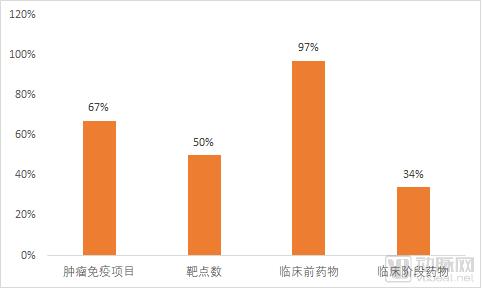
Data source: “Global Trends in Oncology Immunotherapy Development”
The number of companies and institutions with clinical development projects increased by 42%, reaching 665. In the top 15 ranking by number of clinical projects, Bristol-Myers Squibb, Celgene, and Novartis occupied the top three positions. Among the four research institutions on the list, three were Chinese entities: Shenzhen Institute of Immune Gene Therapy, the 301 Hospital (Chinese PLA General Hospital), and the First Affiliated Hospital of Army Medical University (Third Military Medical University).
Tumor immunotherapy has entered a phase of vigorous development, with biologics overtaking small-molecule drugs to become the mainstay of innovative therapeutics. As a supporting industry for biologic innovation, contract research organizations (CROs) specializing in biologics R&D have significantly benefited from the explosive growth in this sector.
Globally and in China, Lonza, Boehringer Ingelheim (BI), and WuXi Biologics are undeniably the leaders in the biopharmaceutical CRO/CDMO industry. Admittedly, the monopolistic positions of these pioneers are difficult to challenge. However, monopoly is not the only reality. In an era of explosive growth in biopharmaceuticals, the market landscape for biopharmaceutical CROs remains dynamic, with numerous competitors emerging and thriving. Li Haoqiang, founder of Hangzhou Healsun Biopharm Co., Ltd., has spent many years navigating the ups and downs of the biopharmaceutical CRO sector and offers unique insights into the industry’s development.
“Haoyang Speed” Is Slowing Down: Scaling Through Technology
In 2010, Li Haoqiang joined a CRO company specializing in biopharmaceutical R&D upon graduating from university. As his former employer grew from a team of just over a dozen to an R&D workforce of several thousand, he personally witnessed the “Chinese speed” of biopharmaceutical development.
Li Haoqiang’s past work experience has allowed him to witness a competitive landscape in the biologics R&D CRO sector characterized by supply-demand imbalance. “The industry features a ‘one superpower, multiple strong players’ structure, yet all the ‘strong players’ combined cannot rival the dominant ‘superpower.’” However, as large CRO/CDMO companies continuously extend their business pipelines upstream into drug discovery, and while striving to meet both domestic and international outsourcing demands, they are increasingly unable to satisfy the substantial demand within China.
Li Haoqiang spotted a business opportunity in this. In November 2015, he founded Hangzhou Healsun Biopharm Co., Ltd. (Healsun Biopharm). The following May, Healsun Biopharm settled into the Donghu High-Tech Hangzhou Biopharmaceutical Industrial Park. In June 2018, the first CRO project commissioned to Healsun Biopharm—the clinical trial application for an innovative antibody drug—was accepted by the Center for Drug Evaluation (CDE). That August, the drug received approval for clinical trials. In September of the same year, Healsun Biopharm completed its Series A financing of RMB 50 million and began expanding its new 3,400-square-meter R&D laboratory.
Li Haoqiang believes that in an era where numerous biopharmaceutical CROs/CDMOs are emerging, competition among CROs is not only about production scale but also technological prowess. Peer competition within the CRO/CDMO sector invariably centers on technical capabilities and production capacity. In terms of production scale, many industry leaders have established 2,000-liter bioreactors, positioning themselves at the forefront of the industry.
Technology-driven scalability is the cornerstone of Healsun Biopharm’s survival. In honing its technical prowess, Li Haoqiang places the utmost emphasis on accumulating experience, focusing specifically on developability analysis of novel antibody drugs, stable cell line construction, and culture process development. On one hand, the company builds its reputation among clients through timely and efficient project delivery; on the other, it establishes long-term partnerships with clients to enhance its project management capabilities. Here, project management capability refers to the ability to allocate sufficient human resources and a robust technical system to each project. “The most critical aspect is striking a balance between project acquisition and team expansion,” says Li Haoqiang. He believes that further comprehensively strengthening Healsun Biopharm’s preclinical pharmaceutical research capabilities for biologics is the shortcoming that urgently needs to be addressed. Only by reinforcing its technical expertise and service capabilities can Healsun Biopharm expand toward larger-scale production.
Li Haoqiang rejects expansion without experience. In his view, if Hangzhou Healsun Biopharm Co., Ltd. can scale up from 10 liters to 200 liters or even 2,000 liters, it will be a natural outcome built upon accumulated project experience and customer reputation.
Healsun Biopharm’s founding team is young yet highly experienced. CEO Li Haoqiang has led cell line construction and process development for nearly ten domestic and international projects, all of which have now entered clinical trials. Deputy General Manager Dai Mingshu brings experience from both CROs and five years in antibody drug R&D at multinational pharmaceutical companies, offering deep insights into large-molecule antibody therapeutics. ADC Manager Lin Shuai previously oversaw the development and manufacturing of one of the few antibody-drug conjugate (ADC) projects in China, which is currently in clinical stages. Protein Purification and Analytics Manager Jin Weiwei has participated in and completed expression, analysis, and characterization for hundreds of antibodies and fusion proteins.
Four individuals passionate about technology came together, and their entrepreneurial dreams were naturally filled with a dedication to technological innovation. In the three years since its establishment, Healsun Biopharm has served dozens of pharmaceutical companies, including those listed on the main board of China’s A-share market as well as pre-IPO companies on the Hong Kong Stock Exchange, despite only possessing pilot-scale experimental equipment at the time. In September 2018, Healsun Biopharm secured RMB 50 million in Series A financing, which enabled the company to begin expanding its new R&D laboratories. Li Haoqiang told VCBeat that by June 2019, Healsun would be equipped to serve more clients simultaneously and have a more comprehensive R&D system in place.
On the other hand, as an increasing number of large pharmaceutical companies outsource CMC (Chemistry, Manufacturing, and Controls) for new drug development based on cost-benefit analyses, biotechnology firms rushing to enter the market have no bandwidth to expand their R&D capabilities, leading to a shortage of biological drug CROs.
Market Share Captured from In-House R&D of Pharmaceutical Companies
There is significant overlap between the work of biological CROs and the internal R&D departments of pharmaceutical companies. In large pharmaceutical firms, such as Hengrui and Amgen, R&D departments are fully equipped with end-to-end capabilities spanning from new drug development to process development. The market share captured by CROs from these internal R&D departments actually stems from the standardized division of labor within the drug development processes of large pharmaceutical enterprises.
For pharmaceutical companies, patents are undoubtedly the lifeline. Currently, internal R&D departments are gradually focusing their work on early-stage drug discovery. They identify potential targets through research or communication with scientific institutions and conduct market value analysis for new drug launches. Subsequently, CROs begin to intervene, completing stages with lower patent value such as druggability analysis, process development, and even commercial production.
Furthermore, the R&D and manufacturing demands outsourced by most domestic pharmaceutical companies and small foreign pharmaceutical firms—due to their inability to establish internal CMC capabilities—represent another market where CROs are fiercely competing. Consequently, every biological CRO faces competition from two fronts: one from the in-house R&D departments of pharmaceutical companies, and the other from industry peers.
Healsun Biopharm currently provides clients with drug development services that commence with druggability analysis and conclude with small-scale process development. Druggability analysis serves as a bridging step between new drug molecule screening and the CMC stage, involving the screening and evaluation of new drug molecules.
Healsun Biopharm’s core technologies center on early-stage stable cell line development and process development, covering the entire biopharmaceutical development workflow—including molecular construction, stable cell line screening, cell culture process development, protein purification and process development, antibody-drug conjugate (ADC) process development, and bioanalytical method development. The company has established a high-expression stable cell line screening platform and an ADC process development platform.
According to Li Haoqiang, Healsun Biopharm currently has 39 technical staff members who work in project teams. Each team consists of 3–4 members and is responsible for different stages focused on druggability analysis and cell line development. In line with the characteristics of biopharmaceutical R&D, these project teams flexibly advance technical progress while strictly controlling project quality.
Li Haoqiang believes that there is no pure CMO in the field of biologics; instead, it should be a CDMO. CMOs often transition to manufacturing based on technology transfer, which poses significant challenges and difficulties in biologics. This process requires experienced R&D personnel from both upstream and downstream processes to meticulously review every step.
From early-stage cell culture to small-scale trials, then pilot-scale production, and finally to commercial-scale manufacturing, each stage presents significant technical barriers. “From drug discovery to achieving production at a scale of 2,000 liters or larger, every step must be tightly integrated; otherwise, failure is highly likely.” Li Haoqiang has deep insights into the challenges of biopharmaceutical development.
Biologics Have Moved Beyond the Trial-and-Error Phase
Around 2013, biosimilars entered their golden age. However, at that time, many domestic companies originally engaged in chemical drugs approached the development of biosimilars with the same mindset used for generic small-molecule drugs.
On the one hand, the cost of biosimilars is significantly higher than that of chemical generic drugs. In China, the average cost for a biosimilar from research and development to market launch ranges from RMB 500 million to RMB 800 million, with substantial financial burdens at every stage.
On the other hand, the development of biosimilars is far more challenging than that of generic small-molecule drugs. The structure of biologics is significantly more complex than that of chemical drugs, making it highly challenging to achieve similarity to the reference product during the Chemistry, Manufacturing, and Controls (CMC) stage.
Under this dual pressure, many pharmaceutical companies have abandoned their efforts midway. On the market side, although biologics offer the advantage of fewer side effects, their high unit price means that patient education in China is still an ongoing process.
Li Haoqiang pointed out that earlier, pharmaceutical companies flocked to develop biosimilars, with each blockbuster antibody drug receiving 20–30 clinical trial approvals. However, only about one-tenth of these companies actually initiated clinical trials, and even fewer completed them. In contrast, the cost of developing innovative biologics is several orders of magnitude higher than that of biosimilars. “Therefore, only well-capitalized pharmaceutical companies have remained in the biologics sector,” Li Haoqiang noted, adding that this natural selection process has been beneficial for the development of the biologics industry.
Having moved past the trial-and-error phase, the biopharmaceutical industry is poised to enter a golden age of innovative drug development. The success of WuXi Biologics has generated a significant positive externality, leading an increasing number of investors to view CROs as high-quality investment targets. This influx of capital will inevitably accelerate the growth of the CRO sector.
Li Haoqiang candidly stated that the substantial profits in the CRO/CDMO sector are concentrated in downstream segments. “Healsun Biopharm certainly intends to expand, but prior to expansion, we must strengthen our core competencies to ensure our proprietary technologies remain at the industry forefront, enabling us to serve every client and partner effectively. We are also committed to recruiting more experienced, like-minded scientific researchers to join our team. We do not regard market position as our operational objective.”
In the era of fierce competition among biological CROs, who will define the new market landscape? We shall wait and see.