

Deepwise Medical's Chief Scientist Yu Yizhou, IEEE Fellow 2019 and ACM Distinguished Scientist 2018, Drives Innovation in AI-Powered Medical Imaging
In mid-November, Deepwise Medical, established just one year and eight months ago, officially launched six AI products, once again drawing industry attention to the startup’s R&D capabilities.
The high-caliber core algorithm team (Deepwise Research Institute), led by Professor Yu Yizhou, Co-founder and Chief Scientist of Deepwise Medical, is the backbone behind these remarkable achievements. Under Professor Yu’s leadership, research and development of algorithms for all core product lines have advanced rapidly, earning consistent acclaim following their clinical deployment.
Most members of the research team at Deepwise Medical hail from world-class institutions such as Peking University, Tsinghua University, the Chinese Academy of Sciences, and the University of Hong Kong. Under his leadership, the Deepwise Research Institute has continuously improved and expanded, boasting a master’s and doctoral talent pool that is second to none in the industry, serving as the core driving force behind Deepwise’s ongoing progress.
VCBeat (WeChat ID: vcbeat) has learned that in November this year, Yu Yizhou was successfully elected as an ACM Distinguished Scientist for 2018 and was named an IEEE Fellow for the 2019 class. Such honors are by no means accidental for Professor Yu. As a leading authority in artificial intelligence deep learning, computer vision, and graphics processing, he has authored more than 130 academic papers to date, including nearly 70 presented at top-tier industry conferences. Despite these accolades, Yu Yizhou remains deeply engaged at the research institute, dedicating himself to thoughtful product development.
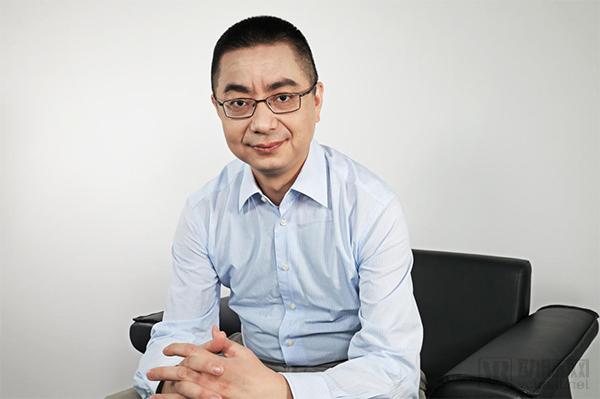
Prof. Yizhou Yu
Co-founder and Chief Scientist of Deepwise AI
In his approach to scientific research, Yu Yizhou upholds a spirit of continuous innovation alongside rigorous methodology. In the field of computer vision, he proposed an innovative deep neural network architecture for saliency detection based on deep learning, achieving internationally leading accuracy. He published influential papers at the top-tier conference CVPR for three consecutive years (2015–2017), garnering widespread attention from peers both domestically and internationally. Furthermore, he developed a hierarchical convolutional neural network architecture for large-scale image recognition and proposed an optional joint fine-tuning technique for fine-grained image identification.
Yizhou Yu has successfully applied deep learning and computer vision techniques to bioinformatics and medical image analysis, proposing highly effective algorithms for predicting protein secondary and tertiary structures. He also ingeniously combined statistical learning with level set methods to develop a leading interactive image segmentation algorithm. This segmentation algorithm was further extended and successfully applied to the segmentation of both 2D and 3D medical images.
Meanwhile, Yizhou Yu has focused on developing innovative technologies with practical value. Some of the computer vision and graphics processing technologies he helped develop have been widely used in visual effects production for American films, such as *The Matrix*, *Mission: Impossible 2*, *Pirates of the Caribbean: At World's End*, and *Harry Potter and the Half-Blood Prince*. The reason Deepwise Medical’s products have consistently maintained a leading position in the industry is precisely due to the continuous dedication of a core group of technical experts led by Professor Yu.
For Yu Yizhou, the original intention behind establishing the Deepwise Research Institute was to concentrate the company’s core technical resources, explore forward-looking technologies, provide leading-edge technology for medical AI, offer high-quality solutions to clinical pain points for healthcare institutions, and cultivate outstanding talent in medical AI. Currently, Deepwise Medical has established long-term academic and research collaborations with more than 10 top-tier academic institutions both domestically and internationally, and maintains long-term clinical research partnerships with over 20 top-grade tertiary hospitals. Multiple clinical products, represented by early screening solutions for lung cancer and breast cancer, have been successfully implemented in nearly 200 hospitals. While deploying these solutions, Deepwise continuously incorporates clinical feedback to refine its products, ensuring superior practicality, user experience, and other aspects compared to similar offerings. Rigorous scientific attitude and relentless pursuit of product excellence have become the most distinctive hallmarks of Deepwise Medical’s products.
Yu Yizhou believes that medical AI shares commonalities with AI in other fields; for instance, many recent advances in computer vision can be extended to medical imaging, yielding favorable results. However, medical AI also faces unique challenges, such as limited training data, highly skewed data distributions, poor consistency in data annotation, and diverse data types (e.g., multimodal imaging and combined text-and-image data). These challenges dictate that we cannot simply apply existing general-purpose AI technologies to the healthcare sector. Instead, it is essential to develop new AI technologies and algorithms specifically “tailor-made” for medical applications to effectively address critical pain points in healthcare. For example, we need to develop AI models that exhibit strong generalization capabilities despite being trained on small samples, remain insensitive to data distribution shifts, and demonstrate high tolerance for inconsistencies in annotations. Furthermore, we must advance AI techniques capable of effectively fusing multimodal and multi-type data. Therefore, the development of medical AI is a long-term and demanding endeavor. Our researchers must possess both the determination to overcome difficulties and the patience for sustained technological accumulation. We are confident that a promising era for medical AI will ultimately arrive.
About ACM and IEEE
The Association for Computing Machinery (ACM) is the world’s oldest, largest, and most authoritative professional society for computing. The prestigious Turing Award is conferred by this organization. ACM Fellows must be researchers who have made significant achievements and impact in the field of computing. Only 49 researchers worldwide were selected for their outstanding contributions to computer engineering, education, and science. Professor Yu was elected in recognition of his distinguished research accomplishments in artificial intelligence deep learning, computer vision, and graphics processing.
The Institute of Electrical and Electronics Engineers (IEEE) is an international professional association for engineers specializing in electronic technology and information science. It is the world’s most renowned and largest non-profit multinational academic organization in the fields of electronics, electrical engineering, computer science, communications, and automation engineering. IEEE Fellow is the highest honor conferred by the organization upon its members, recognized within the academic and scientific communities as a prestigious distinction and a significant career achievement. This title is awarded to members who have made extraordinary contributions, as selected by peer experts, with the number of new Fellows elected each year not exceeding 0.1% of the total IEEE membership.