United Imaging Makes Global Debut at RSNA, Redefining China's Presence in Medical Imaging
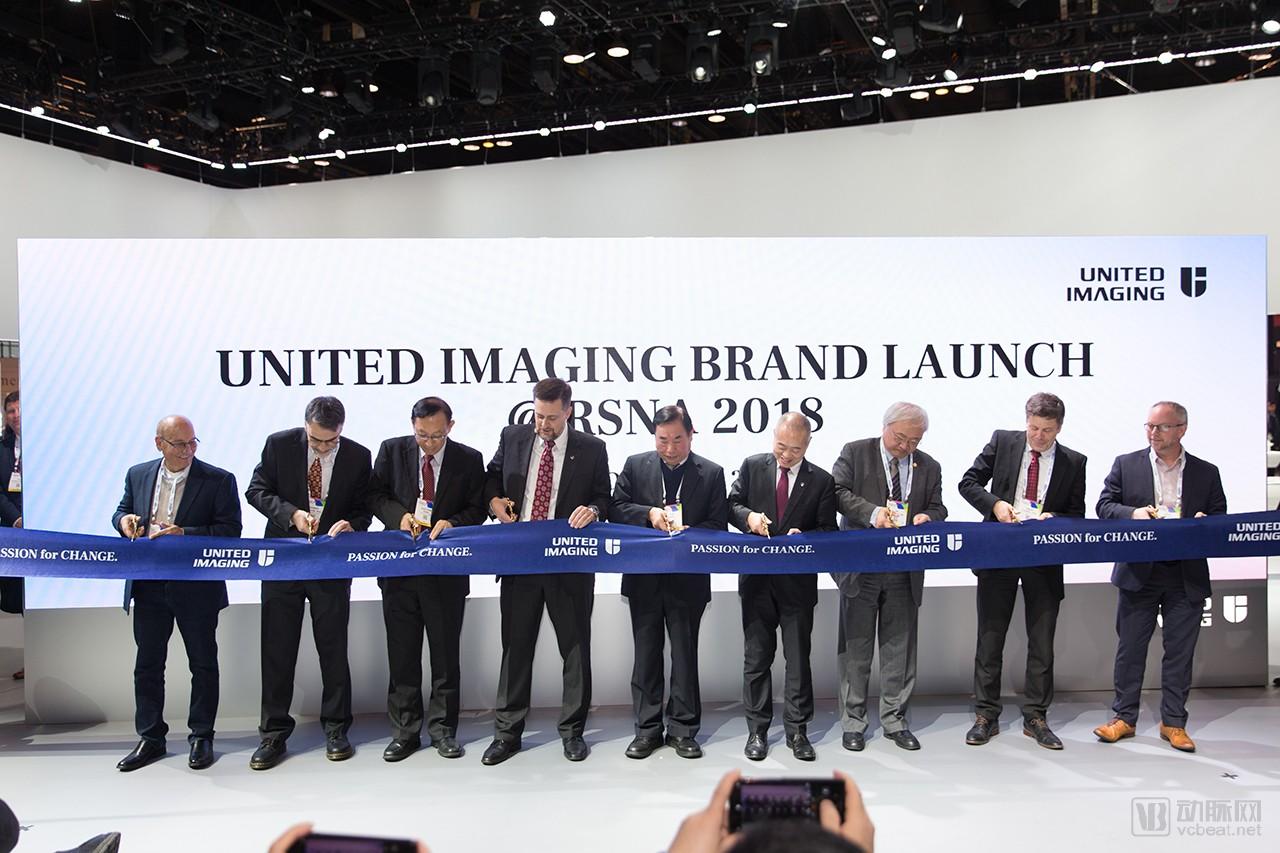
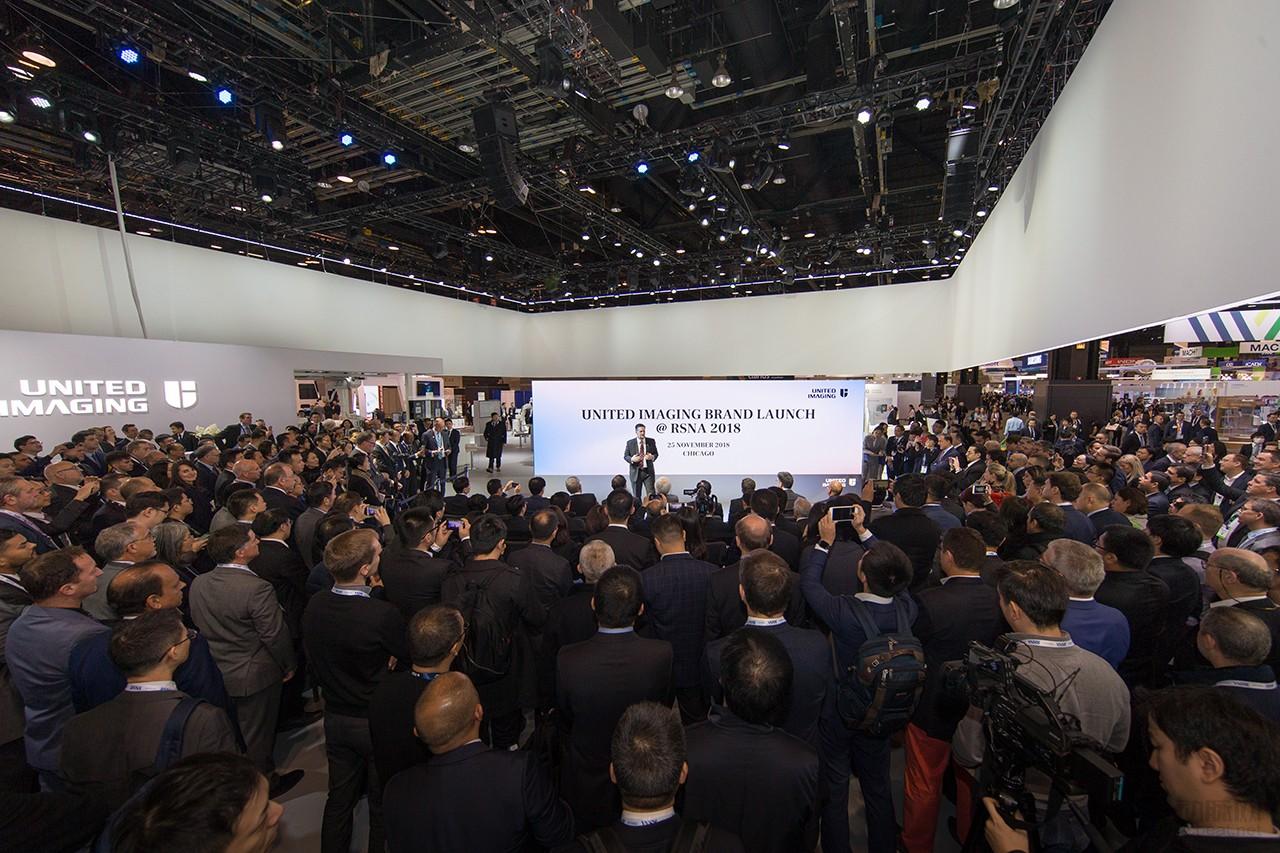
On November 25, 2018, local time, the Radiological Society of North America (RSNA) annual meeting, an international conference on diagnostic imaging, radiation therapy, and radiological technology, convened in Chicago, United States. VCBeat (WeChat ID: vcbeat) learned that Shanghai United Imaging Healthcare Co., Ltd. (hereinafter referred to as “United Imaging”) made its debut at RSNA—the largest medical gathering in the global radiology community that best represents future technological trends and industry development directions—showcasing its full portfolio of products and core technologies in medical imaging, radiation therapy, healthcare informatics, and medical artificial intelligence. The company’s booth size, range of exhibited items, and number of accepted papers all set new records for China’s high-end medical imaging equipment industry. Notably, United Imaging premiered a “holographic film” at the event, comprehensively demonstrating the process of whole-body dynamic PET-CT imaging.
RSNA is hailed as the “bellwether of radiology,” having profoundly influenced the course of human medicine for over a century. A series of revolutionary products and technologies that have rewritten modern medical history—including the world’s first CT, MRI, PET-CT, and PET/MR systems—were all unveiled here for the first time. Advanced medical humanities concepts, such as patient-first care and value-based healthcare, have also been widely disseminated globally from this platform. Participating in RSNA and garnering significant attention signifies the opportunity to engage in, or even lead, the next wave of industry transformation.
However, among the exhibitors vying to showcase their “signature capabilities” each year, it is often the century-old industry giants with robust technological prowess and deep market and brand equity that leave a lasting impression; few cutting-edge products from China can truly rival them.
This year has witnessed a significant shift in this landscape: Among more than 50 Chinese companies exhibiting, United Imaging made its debut with the largest showcase ever by a domestic enterprise, featuring eight major product lines, 16 exhibited systems, and five core components, thereby garnering substantial attention from the global radiology community.
“In this ‘arena’ where global medical device manufacturers compete, United Imaging has fully demonstrated the strength and stature of Chinese manufacturing, filling all its Chinese peers with genuine pride and serving as an inspiring model for China’s medical equipment industry, which is currently in a phase of accelerated development,” remarked Zhao Zilin, Chairman of the China Association of Medical Equipment, during his visit to the United Imaging booth.
At the United Imaging booth, a full lineup of medical imaging and radiotherapy equipment—including PET/MR, PET/CT, MR, CT, DR, and RT systems—was showcased, covering everything from “research-oriented” to “clinically versatile” models to fully meet the diverse needs of users. Additionally, United Imaging presented multiple informatized and intelligent solutions based on its uCloud smart healthcare cloud and uAI artificial intelligence platform.
At this year’s RSNA, United Imaging also became the first Chinese medical device manufacturer to showcase its “core proprietary technologies.” In the core components exhibition area, attendees could view the “heart” of PET-CT systems—the integrated digital light-guide detector—which features the industry’s smallest crystal cutting size and serves as the foundation for achieving the world’s highest resolution. Also on display was China’s first independently developed and commercialized MR gradient power amplifier, equivalent to the “engine” of magnetic resonance imaging systems and a key determinant of the overall technical performance of MRI scanners; currently, only three companies worldwide have mastered this technology. Additionally, the domestically produced first “zero”-noise spatiotemporal detector, known as the “eye of CT,” can reduce the transmission path from the centimeter scale to the micrometer scale by a factor of ten thousand, achieving “zero” signal loss in both time and space.
It is worth noting that in its debut appearance, United Imaging Healthcare (UIH) had dozens of papers selected for this year’s RSNA Annual Meeting in collaboration with its research partners. Among these, a series of research findings by UIH and Zhongshan Hospital, Fudan University—based on China’s first domestically developed integrated PET/MR system—were accepted for presentation at RSNA. These studies, covering radiomics, motion correction, and scan workflow optimization, were presented by experts from the Department of Nuclear Medicine at Zhongshan Hospital to their global peers.
“Eight years of relentless refinement have culminated in this moment. This marks United Imaging’s debut on the world’s most prestigious stage, as well as the first time that United Imaging’s quality, brand, and corporate spirit have undergone the most professional and rigorous scrutiny on a global scale. The recognition and encouragement from leading scholars and professional clients will empower us to advance along our globalization path with greater confidence and determination. Looking ahead, United Imaging will remain steadfastly committed to independent innovation and to enhancing the quality of its products and services, thereby creating greater value for customers, patients, and partners worldwide,” stated Min Xue, Chairman and CEO of United Imaging.
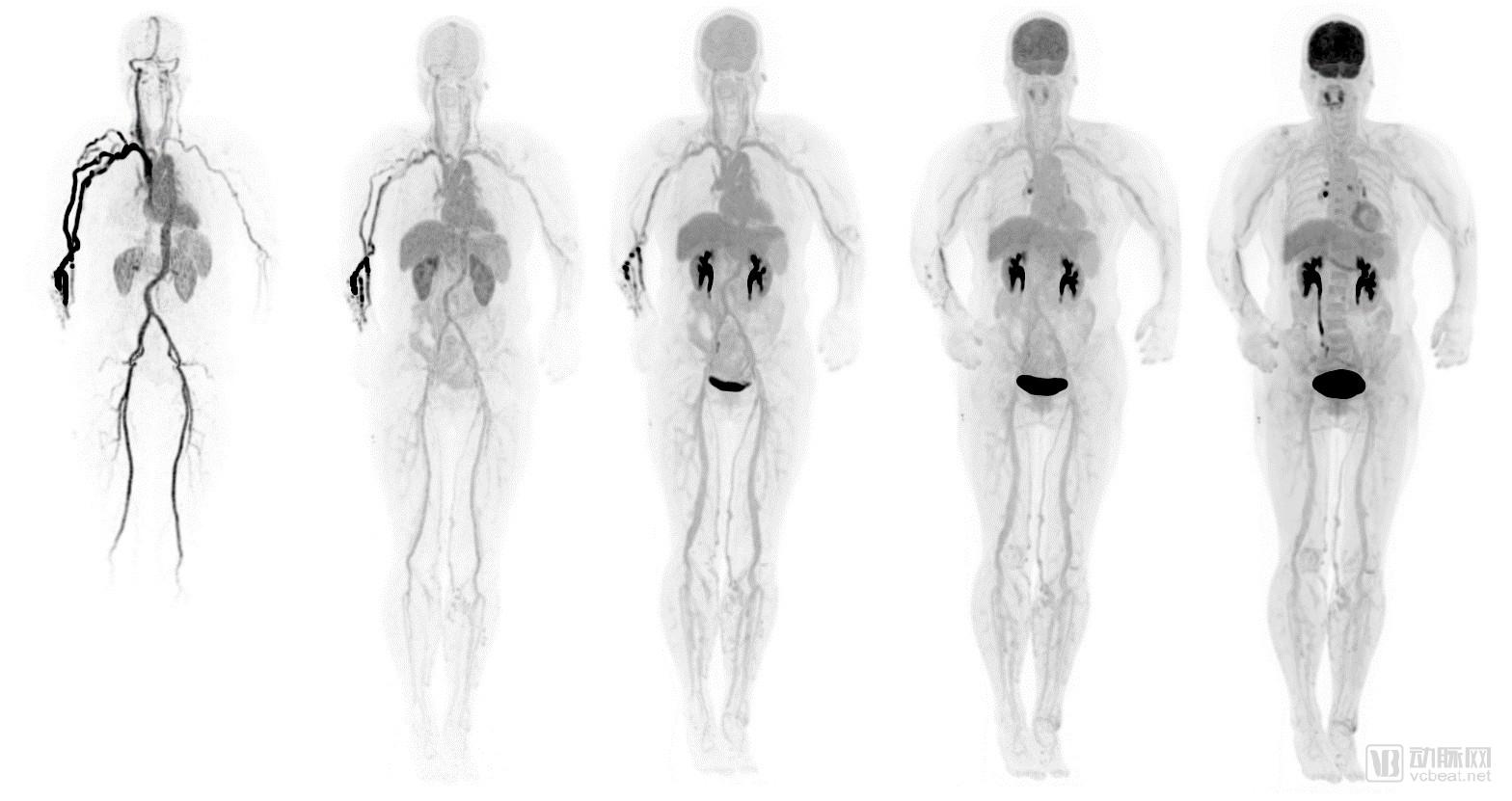
At the event, United Imaging also premiered a groundbreaking “holographic film” that fully demonstrates the process of whole-body dynamic PET-CT imaging: with a total duration of 20 seconds, it is composed of 1,260 consecutive whole-body human images. These are among the first human images acquired by the world’s first 2-meter PET-CT scanner (uEXPLORER), developed by United Imaging in collaboration with the U.S.-based top-tier molecular imaging consortium, the EXPLORER Alliance. The project was approved by the Ethics Committee of Zhongshan Hospital, Fudan University, and carried out through a partnership between United Imaging and the team led by Dr. Shi Hongcheng, Director of the Department of Nuclear Medicine at Zhongshan Hospital.
The generation of the first human images from the uEXPLORER represents an unprecedented breakthrough in the field of medicine: for the first time, humans have achieved clear visual observation with the naked eye of the entire process of drug flow and diffusion within blood vessels after injection, followed by uptake and metabolism by tissues and organs. This achievement overcomes the limitations of traditional equipment, which can only provide imaging of different organs at discrete time points, thereby stitching together fragmented images into a global, coherent “holographic movie.”
Building on this foundation, the uEXPLORER is poised to facilitate the precise identification of inflammation, infection, and microscopic metastases of cancer throughout the body. By leveraging specific radiopharmaceuticals, it enables accurate detection of systemic diseases, including immune-mediated conditions, infections, and tumors. Furthermore, it provides intuitive visualization of neural connections among various organs, helping to unravel the mysteries of how the brain interacts with bodily organs and other aspects of human life.
“For years, we have been envisioning what these human body images would look like. When the moment finally arrived, I was greatly impressed by their remarkable level of detail! Our successful collaboration with United Imaging has enabled us to jointly achieve this groundbreaking milestone in the field of molecular imaging,” stated Dr. Simon Cherry and Dr. Ramsey Badawi, leaders of the “Explorer” Consortium and professors at the University of California, Davis, while sharing their insights with experts and scholars from around the world at the recently held IEEE International Symposium on Biomedical Imaging (ISBI) and Nuclear Science Symposium. Prior to this, the uEXPLORER total-body PET/CT scanner had already garnered widespread attention at international conferences and academic forums, including the Society of Nuclear Medicine and Molecular Imaging (SNMMI) Annual Meeting in North America and the Total-Body PET Workshops in the United States and Europe.
The uEXPLORER Explorer is a concept that scientists in the international molecular imaging community have nurtured for decades. Two years ago, to turn this vision into reality, the “Explorer” Consortium sought enterprises worldwide with extensive experience in product development and commercialization. After thoroughly evaluating all renowned manufacturers in the industry and conducting multiple rounds of rigorous screening, United Imaging Healthcare was ultimately selected as its sole global partner for research, development, and industrialization.
After overcoming immense technical challenges and completing a massive engineering effort, the United Imaging uEXPLORER has redefined multiple world records: an ultra-long axial field of view approaching 2 meters, ultra-high sensitivity 30–40 times greater than that of conventional scanners, ultra-high resolution of 2.9 mm, and radiation doses as low as 1/40th of those required by traditional equipment. Building on these achievements, United Imaging has implemented a series of enhancements in device stability and user-friendliness to better meet the practical demands of clinical and research applications.
It was revealed that the first uEXPLORER system would be delivered to customers in 2019, and several top-tier research institutions in Europe and the United States have already expressed interest in purchasing it.