

Development of the Biopharmaceutical Industry in the Guangdong-Hong Kong-Macao Greater Bay Area: Policy Innovation, Talent, and Capital as Key Drivers
In July 2017, with the joint signing of the Framework Agreement on Deepening Guangdong-Hong Kong-Macao Cooperation and Promoting the Development of the Greater Bay Area by Hong Kong, Macao, and Guangdong, the Guangdong-Hong Kong-Macao Greater Bay Area was poised to become a demonstration zone for in-depth cooperation between mainland China and the Hong Kong and Macao Special Administrative Regions, as well as a high-quality living circle suitable for residence, business, and tourism. Under the development goals for health and healthcare, the demonstration zone centered on the “9+2” cities across Guangdong, Hong Kong, and Macao has emerged as another highland for medical innovation.
Following the inclusion of the Guangdong-Hong Kong-Macao Greater Bay Area into the national development strategy, Zhongshan City, as a member of the “9+2” city cluster within the Greater Bay Area, has taken the lead in undertaking a series of innovative explorations in the health industry and medical services sector.
Recently, the 13th Zhongshan Forum on Health and Development and the 2018 Wu Jieping Medical Prize Award Ceremony were held in Zhongshan, Guangdong. Dozens of top domestic and international experts and entrepreneurs from the pharmaceutical and healthcare industries gathered, including Han Qide, former Vice Chairman of the 12th National Committee of the Chinese People's Political Consultative Conference; Bai Chunli, President of the Chinese Academy of Sciences; Shi Yigong, Academician of the Chinese Academy of Sciences and President of Westlake University; and Peter Agre, winner of the 2003 Nobel Prize in Chemistry. Together, they explored current issues in urban healthcare and the development of the biopharmaceutical industry.
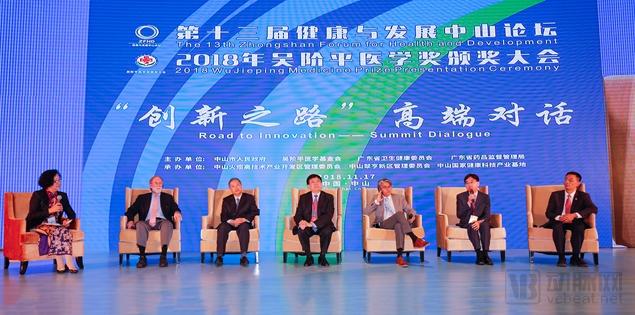
On-site of the 13th Zhongshan Forum on Health and Development & the Award Ceremony of the 2018 Wu Jieping Medical Prize (Source: Provided by the enterprise)
Zhongshan City covers an area of 18 million square kilometers, with a total population of 3.26 million. Despite accounting for only 1% of Guangdong Province’s land area, it has achieved the sixth-largest economic output in the province. In 2018, its GDP is projected to exceed RMB 350 billion, and per capita GDP will surpass RMB 100,000, placing the city among the top ranks in Guangdong in terms of both the quality and scale of urban development.
Zhongshan City has already developed strategic emerging industries such as high-end equipment manufacturing, health technology, and next-generation information technology, establishing 38 national-level industrial bases. In particular, its health technology sector ranks among the forefront of city clusters in the Guangdong-Hong Kong-Macao Greater Bay Area.
Wei Weihan, Deputy Secretary of the Zhongshan Municipal Committee of the Communist Party of China and Mayor of Zhongshan City, pointed out that Zhongshan is home to national-level industrial parks, national-level innovation-driven parks, and a national-level comprehensive pilot zone for biomedical industry clusters. The city also boasts key platforms for the development of the health technology industry, including the Health Base, the Sino-German Biopharmaceutical Industrial Park, the Cuiheng New Area Biopharmaceutical Science and Technology Park, and the South China Modern Traditional Chinese Medicine City. The output value of Zhongshan’s health technology industry is projected to reach nearly RMB 90 billion this year.
As a key city in the development of the Greater Bay Area, Hou Yibin, member of the Standing Committee of the Zhongshan Municipal Party Committee and Secretary of the Party Working Committees of both the Torch Development Zone and Cuiheng New Area, frankly acknowledged that Zhongshan is currently “encountering some difficulties” in the development of its biopharmaceutical industry:
First, the absence of major research institutes and academies has resulted in insufficient scientific and technological R&D capabilities;
Second, there are few innovative backbone enterprises;
Third, efforts in sci-tech finance need to be further strengthened;
Fourth, urban infrastructure development needs to be further improved.
For the nation’s healthcare industry as a whole, insufficient independent innovation capability is a widespread shortcoming. Pan Honghui, President of Zhongshan Kangtian Shenghe Biotechnology Co., Ltd., believes that China’s biopharmaceutical manufacturing currently faces three major pain points:
First, there are currently only 15 monoclonal antibody biologics in industrialized production, and most companies lack experience in manufacturing biopharmaceuticals.
Second, experience with quality systems. Starting in October of this year, China’s biopharmaceutical sector has been identified by the U.S. FDA as a key focus for inspection, particularly regarding quality and data integrity. India is subject to the same level of scrutiny.
Third, employees at Chinese biopharmaceutical manufacturers lack production experience, with the average tenure of staff on production lines being less than two years.
The public’s demand for safe and effective medicines, along with the continuous introduction of new drugs to treat or prevent diseases that current medications cannot address, serves as both a driving force and a significant burden for drug regulatory authorities and the pharmaceutical industry. In the face of these challenges and pressures, learning from international experience and introducing advanced foreign technologies have become the optimal pathways for developing the biopharmaceutical sector.
Zhongshan boasts robust industrial strength, with the health and medical sector emerging as one of its three key priority industries. The municipal government is actively cultivating an industrial service ecosystem encompassing CRO, CMO, CDMO, CSO, and CRAO. At the conference, Thermo Fisher Scientific, a Fortune Global 500 company, signed a cooperation agreement with the Administrative Committee of Zhongshan Torch Hi-Tech Industrial Development Zone. The parties will collaborate to establish shared open laboratories within the Zhongshan Torch Hi-Tech Industrial Development Zone and the National Health Industry Base, and intend to introduce biological drug CDMO and MO platforms to Zhongshan.
Xu Xingguo, Senior Director of Thermo Fisher Scientific’s Strategic Accounts Department in China, stated: “Thermo Fisher China has engaged in extensive discussions with the Zhongshan Torch Development Zone and the National Health Base regarding solutions for biomanufacturing production, laboratory products, and environmental monitoring. Under this strategic cooperation agreement, both parties will engage in comprehensive collaboration across various areas, including shared laboratory construction, biosafety, CDMO platform development, talent training, and rapid monitoring solutions for environmental and food safety.” 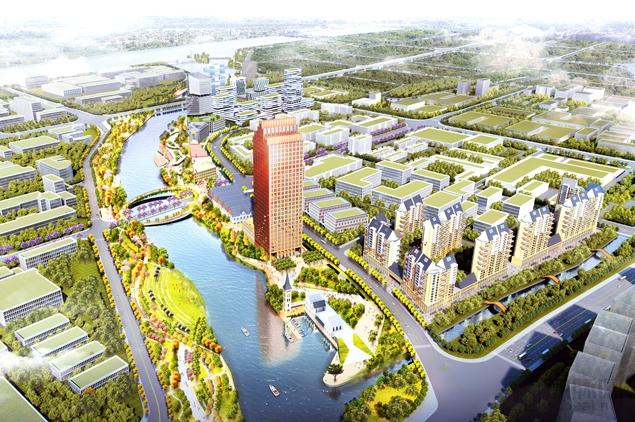
Zhongshan Torch Smart Health Town (Source: Provided by the enterprise)
In the early 21st century, the United States introduced “Quality by Design (QbD).” Implementing QbD can alleviate regulatory burdens, facilitate continuous manufacturing improvements, and reduce the likelihood of deviations or product scrap that previously resulted from the absence of a design space and the necessity to strictly adhere to narrow control ranges. The U.S. pharmaceutical industry has made progress in implementing QbD, with some new drug applications already submitted in accordance with QbD principles.
Pan Honghui stated that applying Quality by Design (QbD) principles to the research and development of new drugs for market approval can more scientifically ensure product quality, mitigate risks, and enhance the alignment of drug development, manufacturing, and regulatory oversight. This approach better meets patients' needs for drug safety, efficacy, and accessibility. Currently, Zhongshan Kangtian Shenghe Biotechnology Co., Ltd. has signed a cooperation agreement with the Sartorius Group from Germany to establish a QbD Application Center, leveraging Sartorius's comprehensive QbD service package.
Regarding urban development, Professor Zhou Muzhi from Tokyo Keizai University in Japan introduced the term “radiating power.” “‘Radiating power’ refers to the capacity of a city’s industrial sector to provide services to regions beyond the city itself.” He pointed out that a question worthy of consideration for Zhongshan is how to transform the healthcare system, which has historically been hospital-centric, into one that is individual-centric.
Chen Xiaojing, Head of Novartis Pharmaceuticals, expressed particular interest in Zhongshan’s innovation ecosystem: “With the improvement of Zhongshan’s innovation ecosystem, I believe that an increasing number of multinational corporations will be willing to invest in Zhongshan and bring innovative products and technologies here. As the development of the Guangdong-Hong Kong-Macao Greater Bay Area continues to deepen, more companies will focus on Zhongshan, thereby attracting a growing influx of innovative resources into the city.”
At this conference, the Marketing Authorization Holder (MAH) system was also a key topic of discussion among experts and scholars.
This means that the Marketing Authorization Holder (MAH) system, which has been piloted in ten provinces and municipalities across China since November 2015, has finally sent a clear signal of its imminent nationwide implementation.
Compared to the previous model that bundled drug marketing authorization with manufacturing licenses, the separation of these two permits has further stimulated the R&D enthusiasm of drug research institutions, researchers, and pharmaceutical manufacturers. This decoupling also presents significant commercial opportunities for CMO/CDMO enterprises.
Gao Huijun, Deputy Secretary-General of the Shanghai Food and Drug Safety Research Association, stated that while discussing the benefits of the Marketing Authorization Holder (MAH) system, the guiding principles of China’s MAH pilot program are to encourage innovation and foster strategic alliances between leading enterprises, thereby accelerating the translation of research achievements into practical applications.
In May 2016, the State Council issued the Pilot Program for the Marketing Authorization Holder (MAH) system, launching pilot initiatives in ten provinces and municipalities, including Beijing, Shanghai, Shandong, and Guangdong. During the pilot phase, it was essential to align with internationally accepted rules and adhere to the principles of replicability and scalability to comprehensively implement the experimental MAH system.
Taking Shanghai as an example, the city must establish an insurance system and a risk relief fund system, stipulate that entrusted enterprises should generally be located within the municipality, and allow for the optimization of production resource allocation across 10 pilot zones.
At the government level, the Zhangjiang Administrative Committee has allocated RMB 50 million to establish a risk relief fund, which “can provide initial compensation when issues arise.” Gao Huijun emphasized that enterprises must purchase appropriate commercial insurance to ensure safety safeguards during the research and development process.
At the regulatory approval level, the National Medical Products Administration (NMPA) aims to establish a “green channel” and provide detailed guidance to pilot enterprises. In particular, it will permit changes in the identity of the Marketing Authorization Holder (MAH) during the process, either before or after the submission of clinical trial applications or the approval of marketing authorization. This measure is also intended to incentivize and boost the enthusiasm of personnel participating in these pilot programs.
“The NMPA has also introduced numerous incentive policies. For changes in the manufacturing enterprise, the modification can be implemented simply by submitting supplementary documentation, with a significantly streamlined application process. Shanghai has made exploratory efforts in pilot implementation, protocol design, and the development of corresponding supporting infrastructure.”
Over the past two years, the pilot implementation of the Marketing Authorization Holder (MAH) system in Shanghai has yielded remarkable results. According to Gao Huijun, 39 companies participating in the pilot have submitted more than 100 applications, covering 59 drug products. Among these, 32 are global first-in-class innovative drugs. Companies such as Zai Lab, BeiGene, and Hualing Medicine have accelerated their R&D and market launch processes by leveraging outsourced services for biological product sample preparation, among other strategies.
“From a product perspective, this truly reflects the goal of promoting the research and development (R&D) of innovative drugs under the Marketing Authorization Holder (MAH) pilot program. With 71% of applicants being R&D institutions, it also addresses our initial concern regarding how to effectively translate R&D achievements into successful industrialization.”
Overall, the impact of MAH on the biopharmaceutical industry lies in:
1. Facilitates pharmaceutical companies in launching contract manufacturing services, leading to rapid growth in the CMO business;
2. Achieve internal resource integration within enterprises and promote specialized, scaled operations more effectively, which is more conducive to the development of R&D-focused enterprises without manufacturing resources;
3. Realize the R&D dividends of universities and research-and-development enterprises;
4. Regulatory System Reform and Risk Mitigation. The National Medical Products Administration oversees new drug development, clinical trial approval, and market authorization, while provincial and local authorities are responsible for manufacturing oversight and market supervision. This dual-process regulatory framework ensures effective control of pharmaceutical safety risks.
Based on Shanghai’s experience, the Marketing Authorization Holder (MAH) system presents a significant opportunity for urban biopharmaceutical industry clusters. Hou Yibin stated, “In light of the favorable opportunities presented by the development of the Guangdong-Hong Kong-Macao Greater Bay Area, as well as the national MAH regulatory policies and reforms to the procurement and payment systems, Zhongshan City will seize this rare opportunity. We will support the rapid development of the health technology industry in Zhongshan by refining our policies, enhancing our services, and fostering an innovative environment.”
Hou Yibin emphasized, “In the face of favorable opportunities presented by the development of the Guangdong-Hong Kong-Macao Greater Bay Area, as well as those arising from China’s Marketing Authorization Holder (MAH) regulatory policies and reforms to the regulatory system, Zhongshan City will seize these opportunities to support the rapid growth of the health technology industry through policy refinement, enhanced services, and the cultivation of an innovative environment.”
In terms of the service system, in addition to vigorously building a systematic industrial service ecosystem for biomedicine—encompassing CROs, CMOs, CDMOs, CSOs, and CRAOs—to enhance Zhongshan’s capacity for industrial service development, the city is also advancing the construction of the Zhongshan Laboratory of the Guangdong Provincial Port Institute for Drug Control and the South China Branch of the Shanghai Institute of Materia Medica, Chinese Academy of Sciences. Furthermore, it has facilitated the establishment of innovation centers in collaboration with The University of Hong Kong and Guangdong Pharmaceutical University. These initiatives will continuously improve the innovation environment for the health industry in Zhongshan City.
During the conference, 17 high-quality health and pharmaceutical projects from The University of Hong Kong and Guangdong Pharmaceutical University completed on-site signing. These projects include the industrialization of in vitro diagnostic reagent products, research and development of antibody-drug conjugates, human YB1 cancer immunotherapy, and the development and industrialization of polymer-based nano-silver highly efficient antibacterial agents. They will subsequently be centrally housed at the Zhongshan Innovation Platform, established by The University of Hong Kong and Guangdong Pharmaceutical University at the National Health Base.
In 2018, Zhongshan City and the Macao SAR Government signed the Framework Agreement on Cooperation in Jointly Establishing the National Biopharmaceutical Science and Technology Innovation Zone, committing to full collaboration in developing the Zone into a world-class R&D cluster for biopharmaceuticals, an international industrial base for biopharmaceuticals, a globally leading hub for high-end medical technology services, and a demonstration base for bio-industry cooperation and innovation among Guangdong, Hong Kong, and Macao.
According to Yuan Yongkang, Vice Mayor of Zhongshan City, Zhongshan has made proactive explorations and laid a solid foundation in the development of its pharmaceutical industry through innovations in scientific research, policy, and talent, as well as enhanced capital services.
In terms of innovative development in the pharmaceutical and medical sectors, Zhongshan has built public technology R&D platforms, vigorously introduced high-level innovative research teams, issued special policies to support the development of the biopharmaceutical industry and talent cultivation, and leveraged financial capital assistance, thereby establishing a certain level of innovation capacity. The city is home to 46 new-type R&D institutions and 42 postdoctoral workstations. It has established industrial bases focused on molecular diagnostics and genetic testing, biomaterials, and biopharmaceutical incubation. Additionally, it hosts three national drug clinical trial centers. Zhongshan has gathered a cluster of innovative products, including new monoclonal antibody drugs for targeted tumor therapy, Class 1.1 small-molecule chemical drugs, high-end medical imaging equipment, genetic testing and molecular diagnostic technologies, and new cellular immunotherapy techniques.
In terms of policy, the “Action Plan for the Development of Zhongshan’s Health and Pharmaceutical Industry (2018–2022)” was issued, providing key support to biopharmaceuticals, medical devices, health foods, and high-end specialized medical services, while fostering the integrated development of next-generation information technology with the health and pharmaceutical sector. High-quality projects settling in the region, capital increases and expansions, technological upgrades, use of core biological equipment, and construction of R&D platforms are all eligible for subsidies or rewards of up to RMB 10 million. In addition, corresponding subsidies or rewards are available for the industrialization of new drug R&D, consistency evaluations of generic drugs, international certifications, and industrialization efforts.
In terms of financial capital services, Zhongshan provides diversified financial support through measures such as science and technology credit risk reserves, tech banks, guarantees, and financial leasing. The government has taken proactive steps to guide investment by establishing funds for health and pharmaceutical industry investment, venture capital, and angel investment. To date, seven investment funds focused on the health industry have been established, including Besen Capital and the Wu Jieping Health Industry Investment Fund, to support the entrepreneurship, growth, and expansion of technology-based enterprises.
In terms of talent integration, Zhongshan City has introduced the “1+18” talent policy, providing comprehensive support for high-level talents with a doctoral degree or above to settle in Zhongshan for innovation and entrepreneurship. This support covers housing, startup assistance, government allowances, medical care, children’s education, and entry-exit services.
In the future, Zhongshan will leverage the favorable policies of the Guangdong-Hong Kong-Macao Greater Bay Area to integrate innovation resources from Guangdong, Hong Kong, and Macao. By drawing on the mechanisms of Hong Kong and Macao, it will take the lead in advancing innovative development in the biopharmaceutical industry and exploring the integrated development of medicine and healthcare across the region, thereby continuing to contribute to China’s health cause.