

He Jiankui's Full Presentation and Q&A at the Second International Summit on Human Genome Editing
Compiled by: Xiang Lai, Liu Sida, He Li
Editors: Hao Han, Zhou Mengya
The “gene-edited babies” incident continues to escalate. Following the National Health Commission’s announcement of the establishment of an expert committee to investigate, Hemei Medical was suspended from trading due to its alleged involvement in the gene-edited babies case; the Shenzhen Science and Technology Innovation Commission stated that it had never independently supported He Jiankui’s gene-editing project; and the Ministry of Science and Technology confirmed that the gene-edited babies had already been born. Amidst the widespread public outcry and condemnation over the past two days, He Jiankui has neither made a public appearance nor issued any direct response.
On November 28, 2018, He Jiankui appeared at the Second International Summit on Human Genome Editing in Hong Kong. Following his presentation and report on the experiment, He Jiankui answered questions from scientists and the media. VCBeat has compiled the following summary of the on-site speech and Q&A session:
This article is intended solely to provide information to readers and does not imply that VCBeat endorses or opposes the specific views expressed herein.
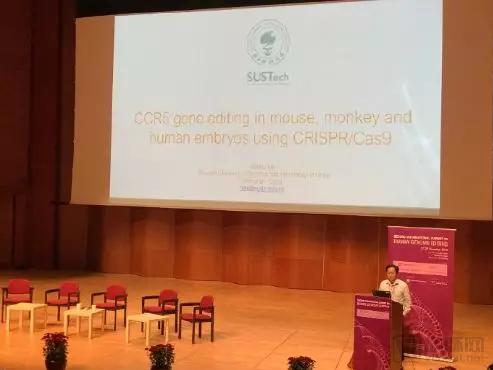
First, I must apologize. This news was unexpectedly leaked; it circulated within the academic community prior to its presentation at a scientific venue, and without undergoing the peer-review process preceding this conference. (Interrupted by photography)
This study has been submitted to a scientific journal for review. I would also like to thank the Associated Press, which we contacted several months ago, for their accurate reporting on these studies from multiple perspectives. I also extend my gratitude to my university, although they were entirely unaware of this research. Thank you for sharing your insights with me, and for providing this forum for academic discussion of these data.
I will present our data, with a focus on humans and monkeys.
HIV Prevention
Encouraging progress has been made in the prevention and treatment of HIV/AIDS, yet the number of new infections remains three times the United Nations’ target. In some countries, particularly developing nations, HIV continues to rank among the top ten causes of death. Uninfected children born to HIV-positive mothers—who constitute a significant proportion of newborns in South Africa—face a risk of acquiring HIV during the first few months after birth that is many times higher than that of other infants. This is a serious problem, which often exacerbates the severity of the infection.
Natural CCR5 Mutation Confers Strong Resistance to HIV-1
In some European countries, up to 10% of the population carries a natural resistance to HIV, which can prevent HIV infection. The CCR5 gene is one of the most extensively studied genetic variants and is also among the most well-known.
We first performed CCR5 gene knockout in mice to investigate the "multi-generation effect." We obtained third-generation CCR5-knockout mice and confirmed successful knockout via Western blot and flow cytometry. Histopathological examination of heart, liver, lung, and stomach tissues appeared normal, and no differences were observed in general behavioral assessments of the mice.
We then proceeded to evaluate whether sgRNAs could be designed to target human CCR5. We assessed potential RNA targets at the site corresponding to the Δ32 variant. Our findings indicated that no off-target effects occurred. Previous studies have also evaluated similar sg4 sites and likewise detected no off-target effects.
sg4 induced the most efficient gene editing activity in human cell lines and human embryos. Since this target is conserved in the monkey genome, we can use cynomolgus monkeys (M. fascicularis) to further evaluate this target.
Early Microinjection Can Effectively Improve Efficiency
We found that immediate injection of Cas9 following fertilization yielded the highest efficiency, consistent with findings from other studies. Repeated experiments produced consistent results and concurrently reduced the incidence of mosaicism.
Single-Cell Sequencing Technology
To examine mosaicism more closely, we also sequenced each cell in several embryos at the 1-, 2-, and 3-cell stages.
Enhancing Cas9 Efficiency Through Secondary Injection
Given the rapid degradation of Cas9 and the time required to locate the correct target, we explored strategies to reduce mosaicism by re-injecting Cas9 at the 2-cell stage.
We expanded the sample size and observed consistent experimental results across cycles in both parents.
We then sought to determine whether this experimental protocol could be applied to human embryos. As reported by others, Cas9 represents the most efficient delivery modality. Dosage optimization can further enhance efficacy. Following my recommendations presented at the Genome Editing Symposium in early February 2017, we edited non-viable embryos and established embryonic stem cell lines.
The results were normal, with a normal karyotype. Staining and flow cytometry analyses showed normal expression of embryonic stem cell markers. These embryonic stem cells also differentiated into all three germ layers, which is an indicator of safety.
Another safety concern is the impact of off-target effects. Embryos are at the single-cell or few-cell stage of life, so any off-target effects can have severe consequences and potentially affect the entire body. In adult gene therapy, off-target effects are anticipated but still pose challenges. Prior to embryo implantation, we detect off-target effects by performing single-cell whole-genome sequencing on the embryos. We employed an amplification method to minimize the false-positive rate and obtain accurate results. While other laboratories have adopted the same approach, we went a step further by sequencing the parental genomes to identify hazardous sites present in the parental cells but absent from the sequenced embryonic genome.
We added genomic loci to enable unbiased assessment of potential off-target sites. We performed in silico predictions for CRISPR design, utilizing mismatch-guided computational design.
Finally, we import parental genomes, which enhances sensitivity and enables the detection of embryo-specific novel risk loci derived from SNPs.
We can visualize personalized hotspots of off-target effects, with approximately 10,000 sites per embryo. We use whole-genome sequencing to assess these sites and validate any novel findings through single-cell sequencing.
Among the potential cleavage sites identified by an unbiased genome-wide approach, whole-genome sequencing data revealed no obvious cleavage sites. Using our CRISPR design software, no cleavage activity was observed at any potentially hazardous loci in any of the 50 human embryos.
We investigated off-target effects in hESC cell lines. Although we did not have access to the parental donor genome, we were able to identify a potential off-target site. This off-target site is located in a non-genic region, although we cannot determine whether it arose from genetic inheritance or from the editing process.
Here, the editing efficiency of 19 viable embryos is shown. We performed preimplantation genetic diagnosis (PGD) and whole-genome sequencing on the embryos. No off-target sites were identified.
In one embryo, we identified a 6-kb deletion at the target site; apart from CCR5, no other genes were affected. The distance between the CCR5 gene and other genes mitigates the risk of unintended deletions. These analyses were performed using next-generation sequencing technology.
I will now focus on the twin pregnancy. We sequenced both parents to detect off-target effects. The mother was HIV-negative; the father was HIV-positive with an undetectable viral load. Sperm washing was performed to prevent transmission. Prenatal DNA sampling was conducted during the pregnancy, and Lulu and Nana were healthy and normal.
After birth, we sequenced several different tissues. Preimplantation genetic testing revealed that two gene loci had been edited. One was a frameshift mutation, which can truncate the CCR5 protein, similar to naturally occurring protective variants.
We informed the couple of the implications, reminding them that they could choose to discontinue the trial without uterine implantation or proceed with embryo transfer. The couple chose to implant the embryo and initiated a twin pregnancy.
In addition to Sanger sequencing, we also reported whole-genome sequencing data to the volunteers, covering 80% of the genes. An off-target effect was detected during whole-genome sequencing. Prior to embryo implantation, we informed the volunteers of the risk of off-target effects; however, no off-target effects were identified in blood tests.
After the infant's birth, we performed deep sequencing on umbilical cord blood (primarily fetal blood), confirmed the outcome of gene editing via preimplantation genetic diagnosis, and obtained consistent results from Sanger sequencing.
Neither deep sequencing nor Sanger sequencing detected any off-target effects. Subsequently, we performed whole-genome sequencing, achieving a coverage depth of 100× for umbilical cord blood and 30× for other tissues. No off-target effects were identified during this process, and no large deletions were observed in the whole-genome sequencing data.
Next, we intend to continue the evaluation, including assessing the likelihood of HIV infection through blood tests, while further investigating off-target effects in chimeric tissues.
We plan to conduct an 18-year longitudinal study on the twins and hope they will continue to participate in our trial after reaching adulthood. Thank you!
Q: What did you do with the other embryos? Were they also transferred?
A: Seven couples participated in the trial, but the clinical trial has been suspended given the current situation.
Q: What feedback have you received on your clinical trial design? How large is your team, and has approval been obtained?
A: Initially, I consulted with several scientists and a physician to assess whether CCR5 was a viable target. Subsequently, I obtained data that I presented at the 2017 Cold Spring Harbor and Berkeley Genome Editing Conferences. At these meetings, I also engaged in discussions with other attendees, receiving positive feedback as well as criticism and constructive suggestions.
In addition to scientists, I also engaged in discussions with leading ethicists from top U.S. institutions such as Harvard University and Stanford University, and presented my data to visiting scientists.
Before initiating the clinical laboratory phase, we drafted an informed consent form, and subsequently, all procedures proceeded as planned.
Q: How many individuals participated in the informed consent process and deemed it reasonable?
A: 4 people.
Q: Was this consent form drafted by an individual or a team, or was it developed through communication with the patient?
A: The team first communicated with the volunteers for two hours. One month later, the volunteers came to Shenzhen, where I personally took them to meet another professor and introduced them to the clinical trial.
Q: Did you participate directly?
A: Yes, I also introduced off-target effects and other information to them.
Q: How were these volunteers recruited? What were the recruitment criteria?
A: It was through an AIDS volunteer organization.
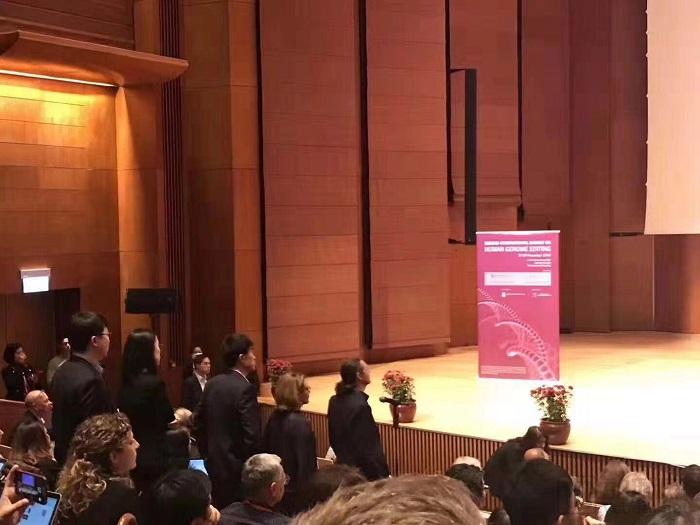
Scientists and media queuing on-site to ask questions
Q: I do not believe there is an unmet medical need behind this trial. Although the father is a carrier, embryo infection can still be avoided through sperm washing. Please explain what unmet needs exist for these specific patients.
A: Why is CCR5 editing considered an unmet need? I believe it addresses not just specific patients, but the entire population living with HIV. Currently, there is no HIV vaccine available. I have spoken with some patients; in certain villages, 30% of the residents are infected with HIV. In fact, I am proud of our achievements. This child can develop immunity to the HIV virus. I will work harder and remain accountable for their well-being throughout my life.
Q: May I interrupt? Are there any other pregnant mothers at present?
A: There is one more case, but she is still in the early stage of pregnancy.
Q: Could you explain how the ethical approval was specifically obtained? Additionally, could you provide a detailed overview of the future treatment and screening plans for these two children?
A: Do you have children or friends around you who may suffer from serious diseases? They need help. For patients, we have the technology; the earlier it is applied, the more people will benefit.
In the future, I will maintain transparency and openness by publicly disclosing my child’s physiological information to the world, allowing everyone to collectively decide on the next steps.
Q: My question is more direct. How will you take responsibility for these two children in the future?Will you disclose the identities of the children to the world? If not, how can we verify whether they have truly achieved positive outcomes? The global community is closely monitoring their health status.
A: In accordance with regulations, we cannot disclose the specific identities of patients. We will submit the data to regulatory authorities and experts.
Q: How to persuade volunteers?
Answer: These volunteers all have strong educational backgrounds and are knowledgeable about the most advanced antiretroviral therapies, data methodologies, and research related to HIV/AIDS. Additionally, they stay informed of the latest advances in HIV/AIDS research through social media platforms. Prior to the start of the trial, all volunteers signed informed consent forms, demonstrating their understanding of the potential risks and benefits of gene-editing technology.
Q: Returning to the issue of transparency. Are you willing to make the informed consent forms, manuscripts, and trial details publicly available on biorxiv.org or other public websites?。
A: Yes, the informed consent form has been published online and can be found by searching my name. As for the manuscript, four other individuals were involved in its drafting. I will seek their input, after which we may submit it to bioRxiv.
Q: How do you explain the risks to volunteers, and do they truly understand the implications behind them?
A: Our discussion lasted for 1 hour and 10 minutes. It took place in a conference room, where, in addition to the couple, there were two other observers. Prior to signing the informed consent form, they had already received printed copies.
Q: Can they understand it?
A: Yes. They are well-educated. I explained the content to them word by word and paragraph by paragraph, from page 1 to page 20. During this process, they were entitled to raise any questions. Finally, I allowed them some time for discussion, and they could take the informed consent form home to make their decision.
Q: Is this the first time the team members have drafted the informed consent form?
A: There are two versions of the informed consent form. The first is an informal draft prepared by members of my laboratory team. The second is a more formal version that we developed collaboratively. Prior to drafting, I reviewed the NIH guidelines on informed consent.
Q: Can you explain the funding sources for this study?
A: When I started this project three years ago, I was a university professor. The initial funding came from my university salary, with patient medical expenses covered out of my own pocket. Additionally, the costs associated with sequencing were covered by the university’s startup fund.
Q: So there is no funding from industry or companies? I’d like to clarify: you were involved with a company, but that company was not involved in this project?
A: My company was neither involved in this project nor did it provide any personnel, space, or equipment.
Q: Did the volunteer families pay for this, or cover part of the cost? Was there any monetary payment involved?
A: We have stated in the informed consent form that we will cover all medical expenses, so no fees will be charged to them for this project.
Q: Who should be responsible for these patients? How do you provide them with medical services? Under strict supervision, how would you assess their mental health status, and what are the outcomes regarding vaccination and neurodevelopment?
A: The informed consent form provides information regarding periodic blood tests and other medical procedures. All such details can be found in the informed consent form.
Q: You mentioned that you performed single-cell whole-genome sequencing. To my knowledge, there are currently no reliable and mature technologies available for single-cell whole-genome sequencing. How did you achieve this?
“There is also a consensus, both in China and internationally, that germline genome editing is prohibited. Why did you choose to cross this red line and conduct this clinical trial in secret?”
A: We can only extract 3 to 5 cells from the embryo for biopsy. Subsequently, we perform amplification on individual cells. Given current technological capabilities, this may yield a genomic coverage of 95% or 80–85% per single cell. Although off-target effects may occur, we do not rely solely on the assessment of a single embryo; by simultaneously monitoring multiple targets, we can quantify the extent of off-target effects.
Q: Why is there such a high level of secrecy?
A: I have been working in the scientific community. I have delivered presentations at Berkeley, Cold Spring Harbor, and an Asian conference to solicit their feedback. At that time, I also consulted with U.S. experts on ethical issues.
Q: Numerous scientific questions have been raised. Of these two children, one is immune to HIV while the other is not necessarily so; given their differences in genetic characteristics, will they be treated differently?
A: I have given this considerable thought. First, we must respect children’s autonomy; these tools should not be used to control their future, and they should have the freedom to make their own choices. Second, we should encourage children to unlock their full potential and pursue their own lives.
Q: Before their genes were edited, these children did not possess the autonomy you refer to, and their genotypes might influence their development. Could this affect their cognition or their parents?
A: Their parents are aware that they have undergone gene editing.
Q: The last question is, if this were your child, would you do the same?
A: If it were my child, under the same circumstances, I would give it a try.
Note: The original presentation was delivered in English. There may be inaccuracies in this translated version. Please refer to the original content for accuracy.

Scan the QR code and reply with “JYBJ” to obtain