

CRISPR Pioneer Feng Zhang Opposes He Jiankui's Gene-Edited Babies Experiment at International Summit
On the first day of the Second International Summit on Human Gene Editing, held at the University of Hong Kong, He Jiankui’s research became the focal point of media attention. In response, attending scientists generally stated that the project was fraught with issues ranging from ethical conduct to regulatory approval procedures, and that the incident had severely damaged the image of the Chinese scientific community. Experts called on the government to promptly improve relevant laws and regulations and ensure their effective enforcement.
According to existing reports, He Jiankui’s research employed CRISPR-Cas9 gene-editing technology, and Zhang Feng, the recognized inventor of this technique, was in attendance at the current conference. He stated that gene-editing technology still faces numerous challenges, and conducting experiments on humans is inadvisable. He supports halting the implantation of edited embryos, as practiced in the CCR5 trial, until a comprehensive set of well-considered safety measures is established before such procedures are permitted again.
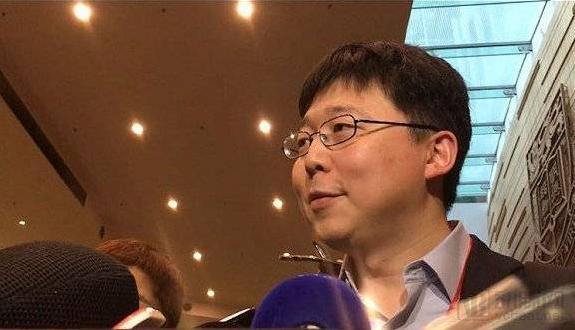
Zhang Feng, Photography: Yin Ruiyue
Meanwhile, it stated that safer treatment options for HIV/AIDS are currently available. Using gene editing to help infants resist HIV is theoretically more effective and relatively safer; however, this approach requires further experimental research to repeatedly demonstrate its feasibility and safety before implementation. Knocking out the CCR5 gene in human embryonic cells carries risks that far outweigh the benefits.
It is reported that the most representative strategy for HIV prevention and control currently is the prevention of mother-to-child transmission (PMTCT) program. This approach aims to block the transmission of HIV from mother to child through antiretroviral therapy for pregnant women, prophylactic medication for newborns at birth, and artificial feeding. If medications are taken as prescribed, delivery occurs in a hospital setting, and artificial feeding is strictly adhered to, the probability of the infant remaining healthy can reach 85% to 95%.
However, most experts present believe that the experiment is highly likely to be real, as it does not involve significant technical challenges; the absence of prior precedents was due to ethical and social considerations. Meanwhile, there are precedents for clinical trials of gene therapy for severe genetic disorders internationally, although this remains a highly controversial treatment approach because its technical safety has not yet been fully resolved.
“If the children have already been born, we can only monitor them closely, because we need to pay close attention to the risks associated with immune deficiency resulting from gene knockout,” said Zhai Xiaomei, Executive Director of the Center for Bioethics Studies. However, she emphasized that these children are autonomous individuals and should not be subjected to any restrictions, such as impediments to marriage.
However, obstructing the marriage of the two girls would plunge society into new human rights issues, and it is foreseeable that this will spark an endless controversy.
Multiple experts explained the unreasonable aspects of He Jiankui's experiment from ethical and procedural perspectives.
Qiu Renzong, an Honorary Senior Research Fellow at the Institute of Philosophy, Chinese Academy of Social Sciences, revealed that he had interacted with He Jiankui at a national ethics-related conference earlier this year. At that time, He stated that he had already conducted gene-editing experiments on monkeys and mice (both large and small), with the next step being human subjects. “But he did not specify that it involved children,” Qiu said. “He claimed to have carried out numerous experiments, conducted extensive investigations, and secured substantial supporting work. When I asked him whether he had obtained approval from an ethics committee, he said yes. However, I did not expect that it was the ethical review of Harmony Women’s and Children’s Hospital.”

Qiu Renzong, Photo: Yin Ruiyue
Qiu Renzong stated that, under regulations in mainland China, only institutions are authorized to fulfill the responsibilities of an ethics committee. Scientists’ cases must be reviewed by their affiliated institutions, rather than by seeking out separate hospitals. “From this perspective, He Jiankui’s engagement of Hemei Hospital to serve as his ethics committee constituted fraud.” Furthermore, prior to initiating clinical trials, researchers should first publish the results of animal studies and undergo safety and efficacy assessments by relevant authorities. However, He Jiankui’s study lacked any such pre-published data. “He merely released information through the media, which is unacceptable, as scientific findings cannot be properly vetted through media channels.”
Jennifer Doudna, Professor of Chemistry, Molecular Biology, and Cell Biology at the University of California, Berkeley, also expressed concerns about the experimental procedures in a public statement released the day before yesterday. “The public needs to consider several key issues: the clinical reports have not been published in peer-reviewed academic journals. Without peer review of the data, it is impossible to determine the precision of the gene-editing process.”
Zhai Xiaomei, who participated in drafting the ethical guidelines for human embryonic stem cells promulgated in 2003, also stated that He Jiankui’s research clearly violated two key provisions of the guidelines: the requirement to terminate human embryo research within 14 days and the prohibition on gene editing for reproductive purposes. Furthermore, He Jiankui’s experiment endowed humans, who originally lacked the ability to prevent HIV infection, with such capability, representing an enhancement beyond natural human capacities. This falls under the category of genetic enhancement, one of the four major classes of gene editing. Genetic enhancement is a highly controversial category, and the academic community currently largely excludes research and applications in this area from consideration.
However, He Jiankui may not face substantial legal penalties, as current regulatory frameworks in this field consist primarily of rules and regulations issued by the Ministry of Health or the Ministry of Science and Technology. Enforcement mechanisms for violations are weak, having not yet been elevated to the level of statutory law with corresponding legal sanctions. Experts have called for leveraging this incident to strengthen China’s legal and regulatory framework in relevant fields, rather than engaging in mere lip service.
However, although He Jiankui may not face legal constraints, he could encounter challenges to his academic career. Experts at the conference stated that He Jiankui’s experiments have damaged China’s international reputation in this field and will impact certain important clinical trials currently underway or planned. Some experts further noted that young Chinese scholars have already been rejected by foreign institutions when applying for positions due to this incident.
“If the scientific community collectively ostracizes him, he may never again gain prominence within academic circles, and his work will come to an end,” said Zhai Xiaomei. “This means his academic career is also over.”
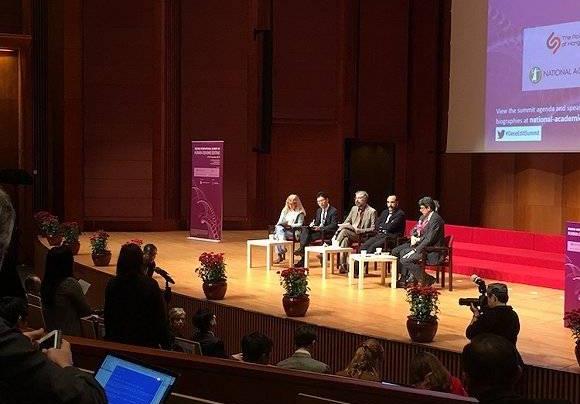
Summit Venue, Photography: Yin Ruiyue
This article is republished from Jiemian, authored by Yin Ruiyue, and reposted by VCBeat with authorization.