

Yitu Healthcare Launches Global First AI-Powered Comprehensive Cancer Screening Platform and care.ai™ Thoracic CT 4D Imaging System
This is an era of rapid advancements in AI technology, and a time when innovators ride the waves of change. At the 2018 RSNA conference, radiology experts from around the world witnessed the revolutionary wave brought by Chinese medical AI companies.
The Radiological Society of North America (RSNA) Annual Meeting, held in the “Windy City” of Chicago at the end of November each year, is the world’s largest and most attended industry event, best representing future technological trends and the direction of industry development. Many revolutionary advances in radiology, including the world’s first CT scanner, MRI, and PET-CT, have been unveiled to the public at this meeting. Throughout its history of more than 100 years, RSNA has consistently led global technological trends and academic directions in the field of radiology.
VCBeat (WeChat ID: vcbeat) has learned that Yitu Healthcare, a leading medical AI enterprise in China, officially unveiled the world’s first intelligent cancer screening and diagnosis-treatment platform based on medical artificial intelligence technology, along with the care.ai™ Chest CT Intelligent 4D Imaging System, at the Radiological Society of North America (RSNA) annual meeting. This marks the first time a Chinese medical AI company has simultaneously launched an industry solution and its latest product at RSNA.
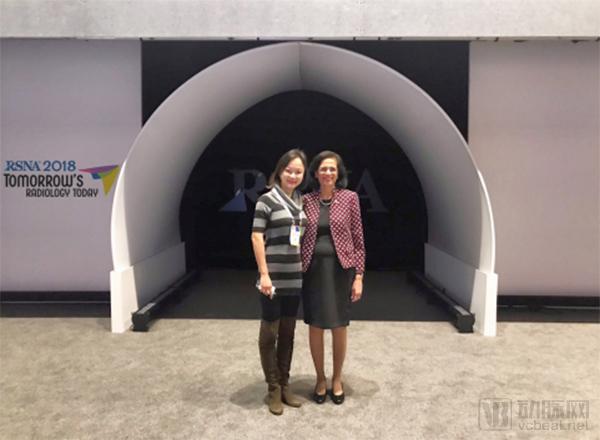
Dr. Fang Cong, Vice President of Yitu Healthcare & Vijay M. Rao, Chair of the 2018 RSNA Annual Meeting
The newly launched Intelligent Cancer Screening and Diagnosis Platform leverages Yitu Healthcare’s advanced suite of medical AI products to empower early cancer detection through artificial intelligence. In collaboration with hundreds of medical institutions across China, the platform covers multiple high-incidence cancers, including lung, breast, cervical, and colorectal cancers. It provides AI-driven services for clinical experts, such as image detection, lesion analysis, clinical decision support, and patient management. This marks the first time globally that AI technology has been applied to critical disease screening based on a large-scale population sample.
As a robust support for the intelligent cancer screening, diagnosis, and treatment platform, the care.ai™ Chest CT Intelligent 4D Imaging System has achieved a global first by transcending the sole detection of pulmonary nodules. Its lesion detection capabilities encompass over 95% of findings visible on chest CT scans, including nodules, patchy opacities, streak-like shadows, cystic lesions, mediastinal lymph nodes, and pleural effusion. Furthermore, the system is capable of analyzing and diagnosing lesion characteristics, as well as predicting and evaluating therapeutic efficacy.
According to the WHO’s “Global Cancer Report 2018,” there were an estimated 18.1 million new cancer cases and 9.6 million cancer deaths worldwide in 2018. The incidence of lung cancer, breast cancer, colorectal cancer, prostate cancer, gastric cancer, and other malignancies continues to rise rapidly. China features prominently on the distribution maps for many high-incidence cancers. Artificial intelligence is regarded as the most promising technology for enhancing the supply of high-quality medical resources, facilitating large-scale early cancer screening, and effectively improving the five-year survival rates for these high-incidence cancers.
Yet, as Vijay M. Rao, MD, President of this year’s RSNA Annual Meeting, stated in an interview with the Daily Bulletin: AI and machine learning applications have already effectively demonstrated their value in radiology, freeing physicians from repetitive tasks to work more efficiently; however, we have only scratched the surface of these technologies.
For a long time, the vast majority of medical AI companies have confined their lung imaging diagnostic products to the single task of nodule detection. However, nodules account for only 60% of all lesions visible on lung CT scans, leaving approximately 40% of lesions—such as patchy opacities, fibrous streaks, and cystic shadows—undetected. Furthermore, these systems fail to identify mediastinal and pleural pathologies that are closely associated with the lungs.
The care.ai™ Intelligent 4D Chest CT Imaging System represents a major breakthrough in the field of intelligent diagnostic imaging for chest CTs, being the world’s first AI solution capable of comprehensive whole-chest diagnosis. For the first time in the industry, this system transcends mere nodule detection; its lesion detection capabilities cover over 95% of findings visible on chest CT scans, including nodules, patchy opacities, fibrotic streaks, cystic lesions, mediastinal lymph nodes, and pleural effusions—a global first.
Building upon lesion detection, this intelligent system conducts comprehensive, quantitative analysis of identified abnormalities. It not only intelligently assesses the probability of malignancy but also provides imaging-based evidence for clinical staging of lesions diagnosed as malignant on imaging. Furthermore, leveraging Yitu’s proprietary “YIF Elastic Registration” technology, the system automatically registers images acquired at arbitrary time points, endowing 3D images with a precise temporal dimension. This enables the deduction of key biological characteristics, such as lesion doubling time, thereby delivering multidimensional, rich information beyond human visual perception and judgment. As a result, it equips radiologists with an unprecedented AI-powered diagnostic tool.
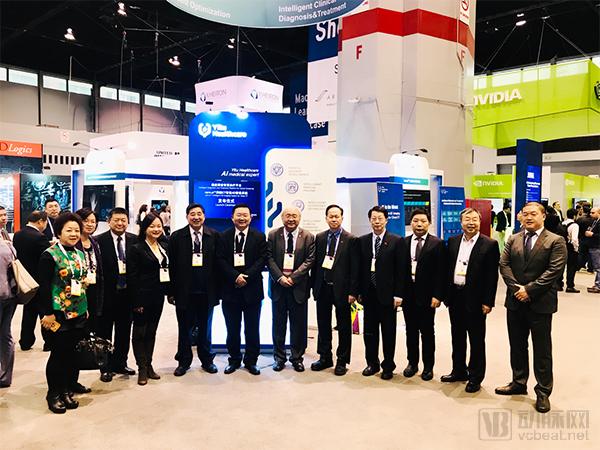
Professor Jin Zhengyu, Chairman of the Chinese Society of Radiology and Director of the Department of Radiology at Peking Union Medical College Hospital, and his delegation unveiled the product launch.
At the launch event, Professor Jin Zhengyu, Chairman of the Chinese Society of Radiology and Director of the Department of Radiology at Peking Union Medical College Hospital, stated that medical AI capable of detecting only pulmonary nodules does not truly serve as an assistant to radiologists. He emphasized the significant importance of launching the care.aiTM Chest CT Intelligent 4D Imaging System. This AI system, which covers a wide range of lesions, can effectively alleviate the workload of clinicians, facilitate early cancer screening, and elevate medical AI from being merely “usable” to “user-friendly,” ultimately evolving toward becoming “indispensable.”
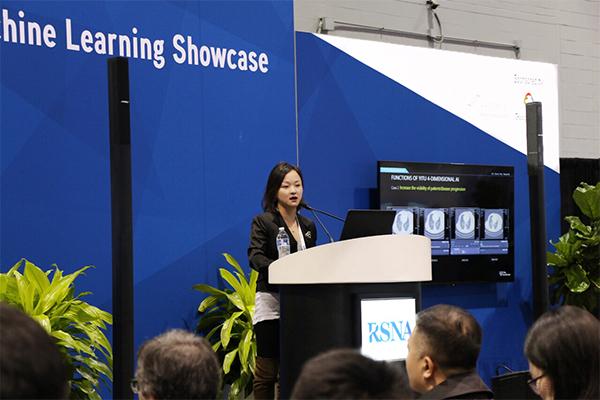
Dr. Fang Cong, Vice President of Yitu Healthcare, Delivers Keynote Address
At the conference, Dr. Fang Cong, Vice President of Yitu Healthcare, revealed that AI is becoming a crucial tool for early cancer screening in China. A large-scale early tumor screening initiative called the “AI Cancer Prevention Map” has been launched. In collaboration with hundreds of medical institutions, the program now covers 19 provinces, municipalities, and autonomous regions across China. By leveraging AI applications to enhance the service delivery capacity of medical institutions, this initiative supports large-scale early tumor screening efforts, improves regional population-level early detection rates, and provides reliable health data for extensive clinical research.
From May to July 2018, in the AI-based early screening campaign for lung cancer jointly conducted by Yitu Healthcare and the Second Affiliated Hospital of Guangzhou Medical University, 10 lung cancer patients were identified among 1,323 high-risk individuals, with 9 cases diagnosed at an early stage. This initiative relied on advanced low-dose spiral CT scanning and an intelligent imaging diagnostic system for lung cancer. It also marked the first large-scale application of medical AI technology in the field of early tumor screening worldwide.
Dr. Fang Cong stated, “Advanced, reliable medical AI products that meet clinical needs are a significant boost to early cancer screening. China is making rapid progress in this field, with Yitu Healthcare’s series of AI products deployed in hundreds of Grade A tertiary hospitals across China and achieving full coverage of county- and city-level regional medical centers in certain provinces. We look forward to bringing our advanced AI products to markets worldwide and working together to elevate the standard of healthcare for all.”