

Huiying Medical Showcases AI-Powered Full-Cycle Healthcare Solutions at RSNA 2018 Ahead of IPO Filing
The Radiological Society of North America (RSNA) 2018 Annual Meeting opened in Chicago on November 25. As the world’s largest radiology conference, it attracted tens of thousands of experts, scholars, and corporate representatives from over 130 countries. Huiyi Huiying, a medical imaging AI company committed to the global market, showcased two full-cycle AI products at RSNA: the “AI-Powered Full-Cycle Health Management Platform for Breast Cancer” and “AORTIST 2.0, the AI Cloud Platform for Aortic Diseases.” This marked the first time that Chinese AI healthcare products covering the entire care cycle were introduced to the international market. Unlike other AI solutions, these two platforms extend AI applications beyond pre-diagnosis to encompass treatment decision-making and prognosis prediction, thereby enabling smarter assisted treatment decisions and more accurate prognostic assessments.
The “AI-Powered Full-Cycle Health Management Platform for Breast Cancer” and the “AORTIST 2.0 AI Cloud Platform for Aortic Diseases” made their debut at the 2018 Chinese Congress of Radiology, marking the first time that Chinese AI-driven full-cycle medical products were presented on the international stage. The AORTIST 2.0 AI Cloud Platform for Aortic Diseases is an intelligent stent implantation solution designed for Type B aortic dissection. It was jointly launched in April by the Chinese PLA General Hospital and Huiyi Huiying (Infervision) in Beijing, China. According to Guo Wei, Director of the Department of Vascular Surgery at the Chinese PLA General Hospital, this represents the world’s first AI-based automated segmentation method developed specifically for Type B aortic dissection. The other product, the “AI-Powered Full-Cycle Health Management Platform for Breast Cancer,” was co-developed by Huiyi Huiying (Infervision) and Intel. It aims to provide comprehensive AI-driven healthcare solutions for breast cancer throughout the entire care cycle. By integrating data from mammography, MRI, and pathology, the platform quantifies diagnostic outcomes and, in combination with neoadjuvant chemotherapy, helps downstage tumors clinically, thereby improving breast-conservation rates and the success of breast-conserving surgeries. Furthermore, by leveraging radiomics, it enables precise prognosis prediction and personalized follow-up plans.
Compared with AI 1.0 medical imaging products that merely perform disease screening and assist in diagnosis, full-cycle AI healthcare products exhibit three distinct characteristics: data integration, achieved by constructing a comprehensive imaging data chain through the fusion of multimodal data (such as CT and MRI) with multidimensional clinical, pathological, and genetic data; value integration, realized by enabling artificial intelligence to create greater value for physicians and patients through recommendations for personalized treatment plans and prognosis optimization; and scenario integration, accomplished by seamlessly embedding imaging AI products into physicians’ diagnostic and therapeutic workflows to enhance diagnostic efficiency.
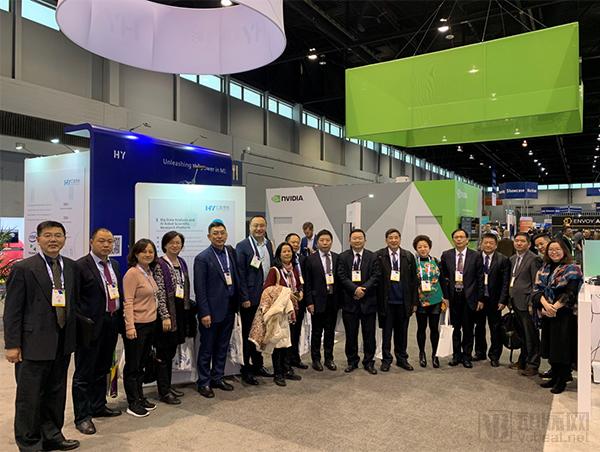
Liu Shiyuan, President-Elect of the Chinese Society of Radiology, Chairman of the China Medical Imaging AI Industry-Academia-Research-Application Innovation Alliance, and Director of the Department of Radiology and Nuclear Medicine at Shanghai Changzheng Hospital, has stated: “The products and concepts of Huiyi Huiying’s AI-driven full-cycle health management are excellent. Currently, medical imaging AI faces the following challenges: addressing only isolated issues fails to resolve all problems in medical imaging, and focusing solely on imaging issues does not address all aspects of medicine. Therefore, only end-to-end imaging AI and comprehensive medical AI solutions can ultimately solve the problems faced by physicians and patients.”
“Many procedures performed at top-tier hospitals are reparative surgeries, which carry a high rate of postoperative recurrence. For such complex diseases, discharge is not the endpoint; rather, prognosis prediction and post-discharge follow-up mark a new starting point in medical care. Our goal is to design a patient-centric product that covers the entire medical journey of patients. In addition to improving surgeons’ procedural precision, the AORTIST system integrates our developed radiomics cloud platform and embeds prognosis prediction models to forecast whether patients with Type B aortic dissection will experience adverse events after surgery,” said Chai Xiangfei, Founder and CEO of Huiyi Huiying.
Since 1898, the field of medical imaging has successively undergone a physics-driven era, represented by X-rays, ultrasound, and MRI, and an application-driven era, characterized by image-guided interventions and treatment planning. After 2010, we entered the era of data-driven smart healthcare, whose hallmark is the extraction of valuable insights from massive datasets to optimize diagnostic and therapeutic approaches.
In the era of data-driven smart healthcare, data is key. In the medical field, big medical data is quite unique; it is not truly “big,” and even imaging data is very limited. For specific single diseases, each patient averages less than one scan per year. For instance, with interstitial pneumonia or fractures at a specific site, there may be only tens of thousands of patients annually across China, and these cases are scattered across various hospitals, making data acquisition extremely difficult. Furthermore, data collection standards are not unified among hospitals, and there is a substantial amount of unstructured data.
The advancement of AI hinges on the evolution of data. Data centers that integrate imaging, clinical, laboratory, pathological, and even genomic data will become the key to unlocking patient health. Currently, Huiyi Huiying has built a comprehensive, patient-centric data platform, offering full-stack medical AI solutions spanning from clinical diagnosis and treatment to scientific research. It achieves end-to-end AI coverage for specific diseases, encompassing the entire disease lifecycle from intelligent screening and decision support to prognosis prediction. By leveraging comprehensive patient data, it provides effective assistance to physicians at multiple stages of diagnosis and treatment, such as tumor staging and classification, adaptive radiotherapy, and prognostic follow-up.
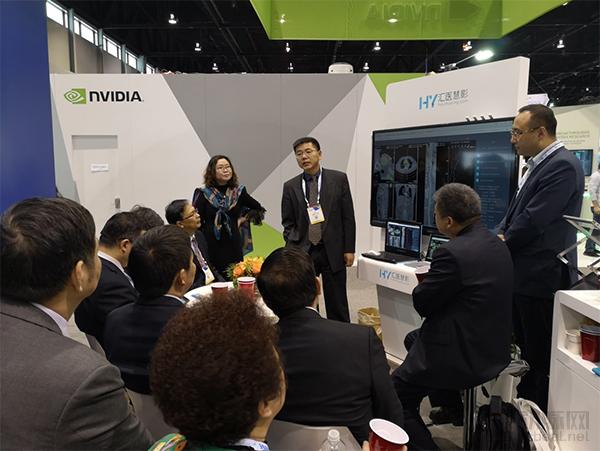
Dr. Lei Xing, Chief Scientist at Huiyi Huiying and Tenured Professor at Stanford University, stated: “To unlock greater value for AI in healthcare, it is essential to build a multidimensional database. By leveraging AI to integrate multimodal data—including imaging, genetics, pathology, and clinical information—we can deliver personalized treatment plans for patients, recommend surgical options for clinicians, and provide medication guidance. AI enables the provision of rational strategies for examination, treatment, follow-up, and rehabilitation, facilitates intelligent monitoring and management across the entire disease course, optimizes diagnostic and therapeutic workflows, and reduces healthcare costs.”
“Our big data intelligent analysis system based on radiomics has aggregated research topics from more than 500 hospitals. It currently boasts a large volume of precisely annotated imaging data, and by integrating massive amounts of clinical, laboratory, and pathological data, we have built a comprehensive data center. This serves as the foundation for achieving full-cycle AI-driven healthcare,” said Chai Xiangfei.
Huiyi Huiying’s patient-centered, data-driven product philosophy aligns perfectly with the core spirit of this year’s RSNA Annual Meeting. In his keynote address, “How Emerging Technology Will Empower Tomorrow's Radiologists to Provide Better Patient Care,” Vijay M. Rao, Chair of the 2018 RSNA Annual Meeting, stated that AI and machine learning would bring substantial benefits to radiology. These technologies will enhance radiologists’ workflow efficiency, allowing them to devote more time to patient care. Technological innovation will drive medical imaging toward being “faster, safer, quantitative, precise, and affordable.” Information centers integrating key imaging data, clinical information, genetic profiles, and risk factors will play a pivotal role in enabling personalized patient treatment.
Furthermore, Huiyi Huiying simultaneously launched a new product at RSNA: Intelligent Tuberculosis Screening. This solution enables tuberculosis screening on X-rays to detect whether patients have pulmonary tuberculosis. By integrating CT analysis to quantify features such as the location and morphology of tuberculous lesions, it facilitates definitive diagnosis, risk assessment, and support for clinicians’ treatment decisions.
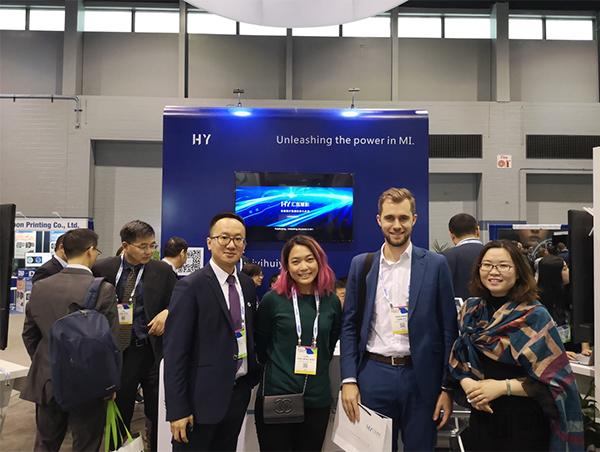
Previously, Huiyi Huiying signed a commercial cooperation agreement with Nuance, the world’s largest company specializing in the development and sales of speech recognition software and the technology provider behind Apple’s Siri voice recognition. Four of Huiyi Huiying’s mature AI algorithms have been successfully listed on Nuance’s AI algorithm marketplace platform. During this year’s RSNA Annual Meeting, the two parties jointly exhibited their collaborative achievements.
Currently, Huiyi Huiying’s AI product portfolio includes screening-oriented solutions such as pulmonary nodule screening, fracture screening, chest X-ray screening, and tuberculosis screening, along with two full-cycle products. These solutions have been deployed in over 800 hospitals of varying scales across China and are in use at more than 50 hospitals in Japan, the United States, Kazakhstan, Brazil, and other countries.
Guo Na, Co-founder and Chief Operating Officer of Huiyi Huiying, stated, “The application of multimodal imaging data and comprehensive coverage across the entire cycle of disease diagnosis and treatment represent industry development trends. In the future, AI applications will be implemented throughout the entire workflow for a broader range of diseases. Human-AI collaboration will become the norm in physicians’ daily practice, with computers serving as their most capable assistants.”