

Chinese MedTech Innovators Shine at RSNA 2018 with AI-Powered 'Black Tech' Breakthroughs

United Imaging
High-end Medical Device Developer
The 2018 Radiological Society of North America (RSNA) Annual Meeting gradually opened amidst heavy snow in Chicago, with top-tier radiology equipment manufacturers and artificial intelligence companies from around the world gathering there to grasp the trends for the coming year.
This year’s RSNA theme is “Tomorrow’s Radiology Today,” highlighting a focus on the future development of radiology.
With the RSNA agenda now halfway through, this article features interviews with several Chinese companies that traveled to Chicago and compiles extensive on-the-ground insights from the event, aiming to uncover emerging trends in radiology for the coming year through text and images.
In particular, domestic and international companies such as Siemens and United Imaging have introduced many “black tech” products, which we will highlight.
After the first day of the conference, Guo Na, co-founder of Huiyi Huiying, shared her impressions with VCBeat at RSNA: “What struck me most this year is that the focus has shifted from debating whether AI can disrupt healthcare to discussing what role AI should play in the work of radiologists. Following breakthroughs in the field of pulmonary nodules, people are beginning to engage in deeper reflection on a broader range of scenarios and details.”
Compared to the hesitation displayed by physicians at last year’s RSNA, we are witnessing the most significant shift in medical AI—a change in mindset. In an interview with the Daily Bulletin following the opening ceremony of RSNA 2018, Vijay M. Rao, MD, President of RSNA, stated: “AI and machine learning applications have effectively demonstrated their value in radiology, yet we have only scratched the surface of these technologies. Current AI applications liberate physicians from repetitive tasks, enabling them to work with greater efficiency; patients benefit from shorter wait times due to technological advancements, thereby enhancing transparency across the field of radiology.”
This change can be described as the most profound shift of the year. Medical AI has never been solely the domain of engineers; without physicians’ participation in research, their feedback on product usage, and the data they provide through collaboration, medical AI would remain confined to the conceptual realm of “liberating physicians,” with no possibility of becoming a reality.
Therefore, this conceptual advancement represents a crucial step in the development of artificial intelligence; only when physicians truly accept and embrace AI can AI technology move out of the laboratory and into the real world.
Beyond the shift in mindset, the numerous hardware and software products showcased at RSNA demonstrated how life sciences companies are leveraging cutting-edge technologies to upgrade existing hardware and extend services deeper into clinical workflows, with AI playing a pivotal role. Throughout the exhibition, all vendors focused their attention on AI technology and AI-enabled hardware.
Of course, different companies choose different approaches to AI development. For instance, United Imaging has adopted an in-house R&D strategy for its AI product line, whereas GE has partnered with China-based Tuma Shenwei.
Beyond this, we are witnessing breakthrough advancements in hardware. Ultra-high-field MRI systems at 7T and above have become flagship products for every medical device company. Building on this foundation, leading equipment manufacturers such as United Imaging and GE are focusing more on finer details, striving to break through the limitations of single-modality imaging and continuously pursuing optimal scan times.
In the field of artificial intelligence, Chinese AI companies have entered the world’s first tier. According to AI enterprises participating in this conference, there were more domestic companies and a larger scale of participation at this event. Many overseas enterprises visited the booths of Chinese companies to seek collaboration opportunities.
This is driven not only by foreign companies’ covetousness toward the Chinese market and data, but more importantly, by the substantial advantages that domestic companies have accumulated in talent, algorithms, and experience—advantages that many foreign firms struggle to match.
Therefore, the dozens of Chinese enterprises attending this conference all have their own overseas operations, promoting artificial intelligence technology abroad through their unique approaches.
However, China also faces its own challenges. Amid the rapid development of AI, the National Medical Products Administration (NMPA) cannot compromise rigor for the sake of speed. Perhaps we can seek solutions from cases that have received FDA approval.
For example, at this year’s RSNA annual meeting, QView Medical announced that its AI-powered CAD system for detecting dense breast tissue in women, QVCAD, had received FDA approval, making it the world’s first FDA-cleared AI-based CAD system for breast imaging. Conventional mammography often yields false-negative results due to dense breast structures. The QVCAD system combines innovative C-Thru technology with Automated Breast Ultrasound (ABUS), employing multi-modal image recognition processes and artificial neural networks to detect suspicious lesions within the breast, thereby differentiating potential pathological changes from normal breast tissue.
Guo Na stated, “It took five to six years of adjustment for the FDA’s AI approval process in the United States to reach its current state. It is entirely necessary for China to engage in rigorous discussion and data preprocessing; this is an inevitable process. In fact, China has already made rapid progress.”
At this year’s RSNA Annual Meeting, several overseas companies showcased a wide array of cutting-edge “black-tech” innovations.
At this year’s RSNA conference, Siemens Healthineers unveiled the “syngo Virtual Cockpit,” the industry’s first remote imaging scan assistance system. Through this platform, experienced medical professionals can remotely connect to Siemens Healthineers’ imaging equipment to provide expert guidance to staff at different locations—particularly those performing complex examinations—thereby ensuring consistency in medical services across broader regions.
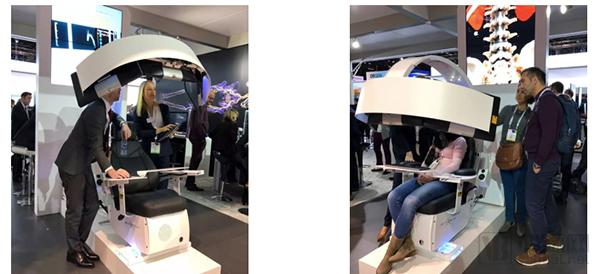
Virtual Cockpit
Ziehm Imaging is a recognized innovation leader in the field of mobile C-arm digital X-ray imaging. The Ziehm Vision RFD 3D utilizes advanced CMOS technology to enable superior intraoperative control. Consequently, this mobile C-arm is highly suitable for high-end orthopedic, trauma, and spinal interventions, as well as highly specialized maxillofacial surgeries. Mobile 3D C-arms are available in various sizes to meet diverse individual imaging needs, ranging from large-scale high-end pelvic surgeries to small cochlear procedures.
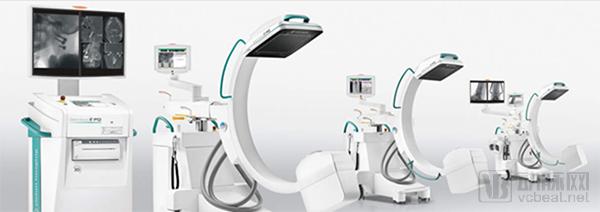
Mobile C-arm Digital X-ray Imaging System
Another noteworthy product is a VR system for surgical visualization and planning launched by ImmersiveTouch. Traditional X-rays may distort the patient’s true anatomical and pathological structures due to limitations in imaging angles and the influence of pathological tissues. ImmersiveTouch’s suite rapidly converts existing patient-specific images (CT/MRI) into precise, fully rendered, high-resolution virtual reality (VR) models, enabling doctors to manipulate and examine them from any angle and achieve a certain level of interactivity. Physicians are no longer confined to any 2D perspective; they can differentiate between skin, muscle, and bone on a 3D model of the patient’s body.
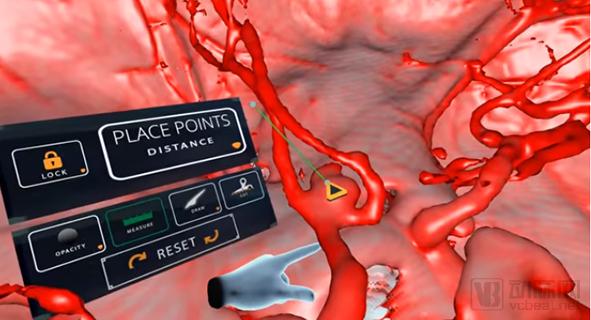
VR-Guided Surgical Navigation
Carestream Health showcased to the worldOnSight 3D Extremity System, CARESTREAM DRX-Evolution Plus, CARESTREAM DRX-Revolution, DRX-Revolution Nano mobile X-ray imaging system, and the newly upgraded CARESTREAM DRX-Plus digital wireless flat panel detector, among many other products. Carestream Health has consistently leveraged innovative imaging technologies to enhance diagnostic efficiency and significantly improve patient experience.
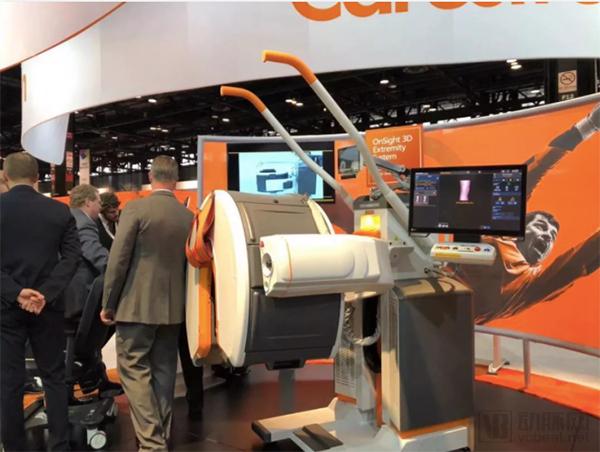
Digital Tomosynthesis X-ray Machine for Extremities
In terms of software, many manufacturers have focused their attention on the breast sector. In addition to QView Medical mentioned above,Volpara Solutions has developed a breast imaging analysis tool for radiologists that predicts cancerous lesions through quantitative breast density analysis. Its VolparaDensity software measures breast density and objective volume using digital mammography and tomosynthesis data. VolparaEnterprise is a suite of quantitative breast imaging tools used for personalized density measurement, patient-specific X-ray dose customization, breast compression, and positioning in breast imaging. These factors can serve as biomarkers to improve the accuracy of early detection.
Samsung Medison also showcased four AI-based diagnostic imaging software solutions, targeting breast ultrasound, chest digital radiography, intracranial computed tomography (CT), and knee magnetic resonance imaging (MRI). Among them, the Automatic Lung Nodule Detection (ALND) is an AI-powered computer-aided detection (CAD) solution for lung nodules, which is expected to receive FDA approval.
A total of 10 domestic companies had booths at this conference, namely Yitu Healthcare, Huiyi Huiying, Infervision, TomoDeep, Deepwise Medical, Neusoft Medical, United Imaging, Visionary Technology, Bosh Medical, and Diannao Technology. As a first-time exhibitor, United Imaging’s booth was comparable in size to that of GE, showcasing the pinnacle of Chinese manufacturing.
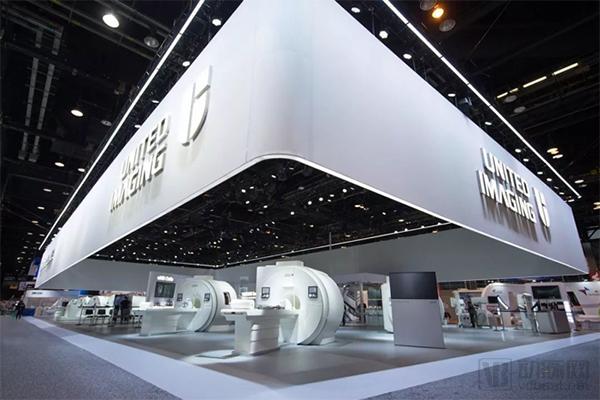
United Imaging Booth at RSNA 2018
China’s leading medical AI company, Yitu Healthcare, officially unveiled the world’s first intelligent cancer screening and diagnosis-and-treatment platform based on medical artificial intelligence technology, along with the care.ai™ Chest CT Intelligent 4D Imaging System, at the Radiological Society of North America (RSNA) Annual Meeting. The care.ai™ Chest CT Intelligent 4D Imaging System is the world’s first AI solution capable of comprehensive whole-region diagnosis. This system achieves an industry-first breakthrough in nodule detection, with lesion detection capabilities covering more than 95% of chest CT imaging findings, including nodules, patchy opacities, streak-like shadows, cystic lesions, mediastinal lymph nodes, and pleural effusions. It not only intelligently assesses the malignancy probability of lesions but also provides radiological evidence for clinical staging of lesions diagnosed as malignant.
Regarding overseas expansion strategies, Fang Cong, Vice President of Infervision Medical, stated: “The European and American markets are highly fragmented, and the supply-demand imbalance between doctors and patients is not as severe as in China, making it difficult for artificial intelligence to deliver its maximum value. In contrast, cities like Singapore face a shrinking workforce as a consequence of urban development, while the booming medical tourism sector has brought a large influx of patients to the country in recent years.”
“Therefore, Singapore serves as an ideal starting point for Yitu. We have already established our own sales and R&D teams in Singapore. It will function as our regional hub for serving customers and partners in Southeast Asia, delivering world-class artificial intelligence technologies and solutions to clients in Southeast Asia, Hong Kong, and Macau. We will collaborate with regional partners to jointly build an AI ecosystem in Southeast Asia.”
Huiyi Huiying continues to achieve new breakthroughs in the field of medical artificial intelligence. At this year’s RSNA, in addition to common products such as pulmonary nodule screening and fracture diagnosis, the company showcased its exclusive AI-powered cloud platform for aortic diseases, an AI-based full-cycle health management platform for breast cancer, and a radiomics big data research platform, positioning itself at the forefront of international peers.
“The AI-Powered Full-Cycle Health Management Platform for Breast Cancer” is the fruit of a collaborative effort between Huiyi Huiying and Intel. This partnership has significantly enhanced Huiyi Huiying’s computational capabilities, enabling rapid mining of its platform, algorithmic strengths, and extensive medical data to build multidimensional models. This has substantially improved data processing and inference efficiency, thereby boosting the accuracy and efficiency of breast cancer screening.
Today, Infervision’s radiomics platform has been adopted by top-tier institutions such as the Faculty of Medicine at KU Leuven, and its full-cycle AI products have entered select hospitals in Japan. Looking ahead, Infervision will align with national development initiatives and deliver AI diagnostic systems to countries along the Silk Road; notably, more than 30 hospitals in Kazakhstan have already deployed Infervision’s AI platform.
Infervision pioneered the development of AI for medical imaging in China as early as 2015, completing its international deployment in the United States, Japan, and Germany within just two years. To date, Infervision has achieved relatively breakthrough progress in its global markets.
At the RSNA Annual Meeting, Infervision unveiled multimodal clinical scenario solutions, leveraging AI to break through technical barriers in single-disease detection and screening. This approach effectively enables horizontal and vertical expansion within specific disease categories, establishing a new pathway for AI-driven disease management that spans the entire continuum from prevention through screening, diagnosis, treatment, follow-up, and education. Its AI product, InferRead CT Lung, now encompasses comprehensive functionalities across the entire care pathway, including nodule screening, differential diagnosis, characterization, and follow-up. It also supports remote interaction and continuing medical education modules, thereby deepening capabilities within specific clinical scenarios and overall enhancing physicians’ diagnostic and therapeutic proficiency. Together, Infervision’s Clinical Research Institute and Advanced Research Institute are accelerating the in-depth implementation of AI solutions, having cumulatively assisted in the diagnosis of 3.05 million patients and supporting 22,000 examinations daily.
Infervision’s multimodal clinical solutions showcased at RSNA support pulmonary nodule screening, quantitative functional analysis of COPD, quantitative calcium scoring, and bone disease management, aiming to build a one-stop service platform. Furthermore, Infervision’s diverse product portfolio extends beyond single-disease examinations, maximizing the respective strengths of X-ray and CT to unlock equipment value and ultimately achieve integrated workflows across imaging modalities.
As a pioneer in the field of medical artificial intelligence in China, Deepwise Medical held an academic salon during the RSNA exhibition to discuss the development direction and prospects of AI-driven healthcare in the new era with experts in radiology. Following the launch of six new products at the CCR conference, Deepwise Medical has subsequently introduced two additional innovations: the Dr. Wise™ AI-Assisted Diagnostic System for Stroke V2.0 and the Dr. Wise™ Intelligent Bone Age Assessment System, continuously accelerating its pace of innovation.
This AI-powered medical auxiliary diagnostic system for stroke is built upon an automated detection system for hemorrhagic cerebrovascular lesions based on non-contrast CT scans. It improves the detection rate over its predecessor and adds detection and classification capabilities for subdural hemorrhage, epidural hemorrhage, subarachnoid hemorrhage, and intraventricular hematomas. The system achieves precise segmentation and attribute recognition for each type of hemorrhage, assisting radiologists and emergency physicians in promptly identifying lesions and providing volumetric measurements for different lesion categories. For complex intracranial hemorrhages, it enables detection and analysis of intricate lesions.
Another AI-based bone age assessment system is built on optimized deep learning algorithms and a dataset comprising tens of thousands of radiological images from children of diverse ages, genders, and ethnicities. While conventional bone age evaluation by physicians typically takes around 30 minutes, the Dr. Wise™ Intelligent Bone Age Assessment System completes the task in just a few seconds. Furthermore, the Dr. Wise™ system leverages artificial intelligence to automatically detect and grade epiphyses, perform automated calculations, and generate standardized reports, thereby enhancing both diagnostic efficiency and accuracy.
As a high-tech medical AI company with a global footprint, Tuma Shenwei showcased not only its Discover/Lung Nodule intelligent diagnostic system for pulmonary nodules at this year’s RSNA annual meeting, but also unveiled four newly released AI-assisted medical imaging diagnostic systems: the Chest X-ray Intelligent Diagnostic System (σ-Discover/Lung DR), the Mammography Intelligent Diagnostic System (σ-Discover/Mammo), the Stroke CT Intelligent Diagnostic System (σ-Discover/Stroke CT), and the Liver CT Intelligent Diagnostic System (σ-Discover/Liver CT). Several of these products have already entered the U.S. FDA approval process, signaling that entry into the U.S. market is imminent. Tuma Shenwei is also making steady progress in other global markets, with regulatory review and clinical trials currently underway in Europe, Japan, Hong Kong, and other regions, marking the initial realization of its global expansion strategy.
At this year’s RSNA, VISION Technology showcased its products, including the Lung Sight AI-assisted diagnostic system for lung CT images, the DR Sight AI-assisted diagnostic system for chest X-rays, the LiverSight AI-based screening system for liver cancer, and the Cevix Sight AI-based screening system for liquid-based cervical cytology.
Currently, Infervision has established multiple partnerships in mainland China and Hong Kong. Its strategy involves initially promoting its products in Southeast Asia and broader Asia before expanding to other continents. This includes establishing collaborations and pilot programs with private imaging centers in Australia, as well as expanding business and research cooperation with other hospitals and universities in the region; signing memoranda of understanding with several Japanese companies to focus on the healthcare market and introduce Imsight A.I. to Japan; and forging partnerships with multiple PACS and pharmaceutical companies among customers in the United States, Canada, and the European Union. In the future, Infervision will work with its partners to further explore these new markets and actively pursue FDA approval.
The intelligent diagnostic products introduced by Baishi Medical offer one-click multi-disease diagnosis covering over 94% of common pulmonary conditions, including pulmonary nodules, lung tumors, pneumonia, pulmonary tuberculosis, lung infections, and chronic obstructive pulmonary disease (COPD).
Also making its debut in the U.S. market is the startup Diannei Technology, which will collaborate with its strategic partner EBM to explore markets in Taiwan, Japan, Southeast Asia, and the Middle East, thereby laying the foundation for business cooperation in the United States. This joint appearance at RSNA marks a milestone in the strategic partnership between Diannei and EBM, serving as a litmus test for Diannei’s global expansion strategy. Ge Liang, founder of Diannei, stated, “Partnering with EBM represents a significant strategic move for us. It will enable us to expand our reach to more domestic hospitals and overseas markets, marking another successful example of commercial implementation following our strategic collaboration with Yunnan Haobang. Meanwhile, we aim to provide greater support to physicians and patients.” Through this collaboration with EBM, “Fei Chang Hao” will become the first AI-based product for pulmonary nodules to be directly integrated into PACS systems, gaining access to EBM’s network of 3,500 partner hospitals worldwide.
This year marks Neusoft Medical’s 19th consecutive participation in RSNA, with each appearance showcasing a distinctly transformed identity. In 2018, coinciding with the company’s 20th anniversary, Neusoft Medical leveraged two decades of rapid development and profound expertise to make a prominent presence at the Radiological Society of North America annual meeting. The company unveiled a series of innovative products that not only embody its core strengths and philosophy but also integrate advanced technologies such as artificial intelligence (AI). These innovations include:- The NeuViz Glory CT, a 256-slice wide-bore spectral CT system offering end-to-end AI applications across the entire workflow—from scanning and imaging to processing, diagnosis, and service;- The NeuMR 1.5T MRI system, which drives value through Artificial Intelligence Management (AIM);- The NeuAngio 30C DSA, a dual-isocenter seven-axis intelligent angiography system featuring a proprietary trackless suspended C-arm structure and multiple patented innovations;- The Mobile CT Unit, a mobile medical device based on an intelligent cloud platform. As a typical product integrating civilian and military technologies, it supports the implementation of tiered diagnosis and treatment and the Healthy China initiative, providing robust capabilities for emergency care, field medicine, and border defense;- The AI NeuWise PET/CT, equipped with intelligent autonomous quality control, self-healing capabilities, and intelligent vision;- NeuAI, a comprehensive AI-powered medical imaging solution addressing diseases across the entire care continuum from the source;- An imaging cloud platform designed to facilitate tiered diagnosis and treatment.
Today, Neusoft Medical’s products and services cover more than 110 countries and over 9,000 medical institutions worldwide, with a total installed base exceeding 30,000 units. Its products are deployed in 80% of the countries along the Belt and Road Initiative. Neusoft Medical is showcasing the vitality, confidence, and responsibility of China’s national brands to the world, allowing the global community to gain a renewed appreciation for “Intelligent Manufacturing in China.”
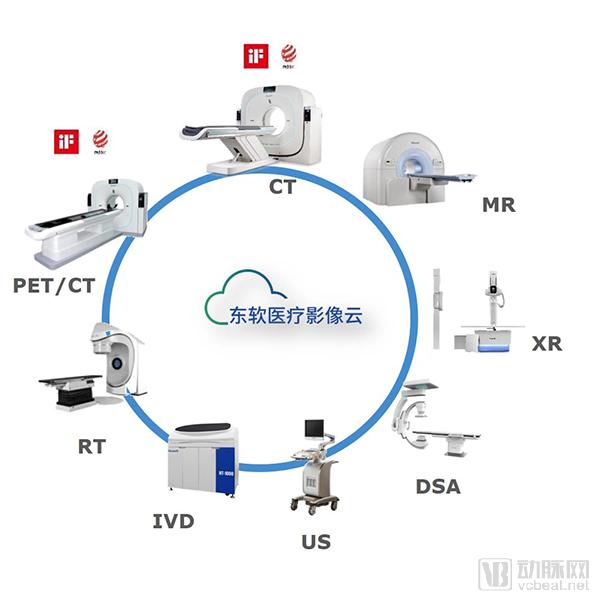
United Imaging, another domestic hardware giant, delivered a stunning performance at the Art Institute of Chicago, showcasing numerous cutting-edge products. In the field of diagnostics, United Imaging launched its "spatiotemporal integrated" ultra-high-definition TOF PET/MR system, which overcomes industry challenges such as the limitations of single-modality imaging, constraints on imaging speed, and the boundaries of cross-modal fusion. Additionally, China’s first ultra-high-end 640-slice CT scanner from United Imaging exemplifies the pinnacle of digital diagnostic equipment. It eliminates physiological barriers for patients undergoing coronary artery examinations, comprehensively improving scan success rates and image quality while significantly reducing radiation dose.
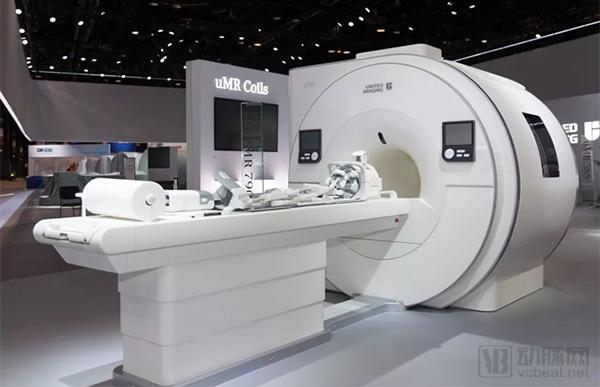
“Spatiotemporal Integration” Ultra-High-Definition TOF PET/MR
To advance precision therapy, United Imaging’s integrated CT-linac achieves the first-ever seamless fusion of a linear accelerator with CT, further enhancing “precision,” the core challenge in radiation therapy. This “new species” features pioneering coaxial, same-couch technology, leveraging diagnostic-grade CT for precise simulation and localization as well as high-definition image guidance, thereby comprehensively improving radiotherapy accuracy and enabling dynamic, personalized treatment plans for patients.
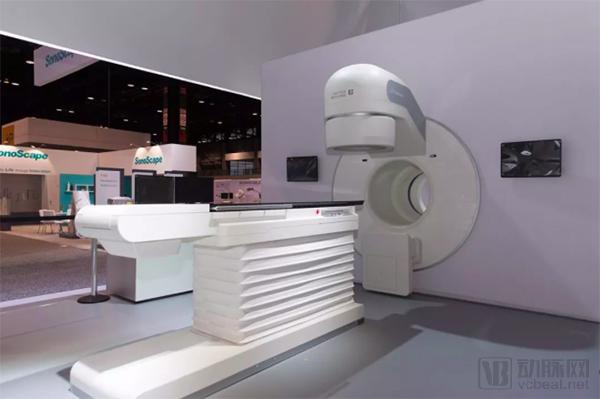
Integrated CT-Linac
At RSNA, United Imaging’s AI platform, uAI, underwent another upgrade, unveiling nearly ten new, independently developed forward-looking diagnostic and therapeutic applications that open up fresh possibilities for clinical practice and scientific research. Building on this foundation, an intelligent ecosystem featuring a cross-modal AI software-and-hardware solution that spans the entire disease diagnosis and treatment workflow is taking shape.
In addition to the aforementioned cutting-edge equipment, United Imaging also showcased numerous core components of its products at the conference, including MR gradient power amplifiers, MR RF power amplifiers, a new generation of digital spectrometers, integrated digital optical detectors, and CT spatiotemporal detectors, demonstrating China’s technological prowess to the world.
United Imaging’s Houston factory is scheduled to be completed next year, while a fully localized core team for marketing and services, boasting extensive industry experience, has already been established. The United States, a notoriously challenging market, is set to become United Imaging’s largest overseas market, signaling that the company has advanced to the forefront of global technological manufacturing.
In addition to China and the United States, United Imaging has entered nearly 20 countries and regions, including Japan, Southeast Asia, the Middle East, Europe, Africa, and South America. In the future, United Imaging will more actively participate in global market and industry collaboration, continuously creating value for customers through innovative technologies and services.