

Endless Smoke: The Fifteen-Year Tug-of-War of China's Healthcare Reform
Editor’s Note: This article is reprinted from Fan Tong Dai Laoban (WeChat Official Account: worldofboss), authored by Chen Xiaorong and Dai Laoban, with authorization for republication by VCBeat.
On the morning of May 11, 2016, Shi Yingkang, former president of West China Hospital of Sichuan University, left his home on the 8th floor of the Guojia Huating residential complex in Chengdu and went to another apartment he owned on the 20th floor. The apartment was usually occupied by Shi’s mother, who was visiting relatives in Chongqing at the time, leaving the unit empty. He leaned against the windowsill in the study, smoked more than twenty cigarettes alone, extinguished the cigarette butts, opened the window, and jumped to his death, dying instantly.
West China Hospital is a top-tier public hospital in China, consistently ranking among the top three comprehensive hospitals nationwide. Founded in 1892, the hospital once enjoyed prestige comparable to that of Peking Union Medical College Hospital, though it experienced a period of decline in the 1980s. In 1993, Shi Yingkang, at the age of 43, was appointed as the president of West China Hospital. Over the following two decades, he remarkably propelled the hospital to the number one position in China for business revenue and the second position for scientific research strength.
The “West China Model,” spearheaded by Shi Yingkang, has become a unique phenomenon in China’s healthcare sector. It has been widely emulated by other public hospitals across the country, leading to the proliferation of mega-sized tertiary (Grade A) hospitals. In Chengdu, Sichuan Province, and even throughout the entire Southwest region, provincial-level and military-affiliated hospitals—which should theoretically possess competitive strength comparable to that of ministries-affiliated institutions—appear underdeveloped relative to their counterparts in other regions. This disparity serves as another testament to West China Hospital’s dominant position.
Only extraordinary individuals can accomplish extraordinary feats. Upon stepping down in 2013, Shi Yingkang summarized his tenure as follows: “I believe I have made significant contributions to China’s healthcare sector. I led West China Hospital from an inland basin to the open ocean. I provided my team with a bright future and a clear direction for their efforts. If graded on a scale of 100, I would give myself a 95.” Perhaps it was precisely this confidence and unconventionality that left him little room for maneuver or self-preservation.
Thus, after being embroiled in a series of upheavals in the southwestern region, he chose to end his life in an extreme manner.
Nevertheless, the legacy left by Shi Yingkang continues to resonate throughout China’s healthcare sector. As a former advisory expert to the State Council’s Leading Group for Healthcare Reform, he used West China Hospital as his masterpiece to chart a course for China’s healthcare reform, which was then mired in noisy disputes and lacking clear direction. His approach involved creating super-sized public hospitals, leveraging administrative resources to establish competitive advantages, enhancing operational efficiency through intensive management, and incubating Grade 3A hospitals of astonishing scale.
This path has long been shunned and avoided by the highest echelons of healthcare reform, yet it is embraced by countless grassroots Grade A tertiary hospitals. The West China Hospital model of “first expand scale, then strengthen capabilities” has spread like wildfire, becoming unstoppable.
The Divide Between Top-Level Policymakers and Grassroots Practitioners Over “Super Hospitals” Reflects Two “Parallel Worlds” in China’s Healthcare Sector: Above the surface, the five major reform tasks outlined in the State Council’s healthcare reform plan have gained increasing momentum, with alleviating the difficulties and high costs of medical care for the general public becoming a top livelihood priority for leaders at all levels; beneath the surface, the “super hospital” model—characterized by resource concentration and severe overcrowding—remains the true preference of every public hospital director.
These two worlds, each racing ahead yet rarely intersecting, present the public with two entirely different pictures: On Xinwen Lianbo (CCTV News Broadcast), healthcare reform has achieved remarkable success, with over RMB 6 trillion in fiscal investment, universal health insurance coverage, and full coverage of primary healthcare institutions... Yet in the eyes of ordinary citizens, super-sized public hospitals continue to expand, doctors complain about low incomes and exhausting workloads, patients lament the difficulty and high cost of accessing medical care, doctor–patient relations remain tense, and vicious incidents occur frequently...
All that unfolds today is the fruit of karmic ties from the past. How exactly did this come to be? To find the answer, we must rewind along the timeline back to 2003.
In 2003, two major events occurred in China, directly ushering in a fifteen-year-long healthcare system reform.
The first incident was SARS. This virus, which ravaged the entire country, caused widespread fear among people across China. For a prolonged period, the national public health system failed to identify the pathogen or contain the spread of the disease. Ultimately, it was the research team at the University of Hong Kong that first succeeded in isolating the virus. The containment of the outbreak was also aided by favorable weather conditions; as summer arrived, rising temperatures reduced viral activity, eventually halting its spread.
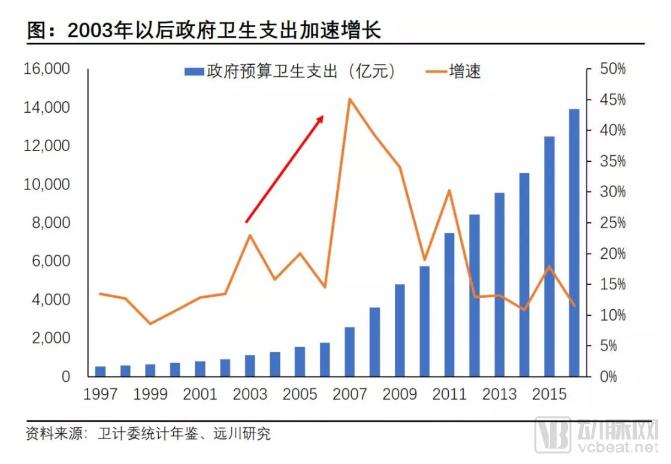
This “black swan” event pressed the “pause button” on China’s rapid development for more than three months, suddenly making Chinese people across the political spectrum realize that the long-standing underinvestment in healthcare had become a fatal flaw in the country’s overall social development. Consequently, increasing investment in healthcare became a national consensus. Under the leadership of the new government, government health expenditure began to rise sharply from 2003 onward.
The second incident occurred in Suqian, Jiangsu Province. Seemingly trivial at first glance, it had far-reaching consequences. Around 2003, under the banner of “deepening market-oriented economic reforms,” various industries embraced market principles and intensified liberalizing reforms. Suqian City in Jiangsu Province, known for its bold and innovative approach, undertook a sweeping privatization initiative led by Qiu He, then Secretary of the Municipal Party Committee. All public healthcare institutions—from tertiary Grade A hospitals to township health centers—were auctioned off without exception.
With localities taking such bold steps, some officials at the central level grew uneasy. In 2003, a prospective study led by the National Development and Reform Commission (NDRC) and the Ministry of Health quietly got underway, aiming to chart the course for China’s healthcare system reform in the coming decade.
In mid-2005, the research team released an interim report that sharply criticized Suqian’s “sell-off” policy and publicly declared that China’s healthcare reform, with its commercialization and market-oriented approach, had been “unsuccessful.” It was highly unusual for a study led by the competent ministerial authorities to unreservedly critique the failure of its own reforms, sparking a public outcry. Healthcare reform, once a niche and obscure area of study, suddenly became a prominent and widely discussed discipline.
Public scrutiny has placed the National Development and Reform Commission (NDRC), tasked with “top-level design,” under considerable pressure. The healthcare reform plan, which was originally scheduled to be finalized before the 17th National Congress of the Communist Party of China in 2007, became increasingly complex through prolonged deliberations. In an unprecedented move, the NDRC commissioned nine separate proposals from a range of entities, including renowned domestic universities and think tanks, as well as international organizations such as McKinsey & Company, the World Health Organization (WHO), and the World Bank. It even rarely solicited public feedback to ensure comprehensiveness.
This “hundred schools of thought” approach to gathering recommendations has led to a proliferation of experts in the field of healthcare reform. These experts often represent diverse interests and put forward a wide array of proposals and suggestions, creating a bewildering landscape. However, tracing back to the essence of healthcare reform, these numerous factions can be broadly categorized into two camps: subsidizing providers or subsidizing consumers.
As previously mentioned, following the 2003 SARS outbreak, fiscal investment in healthcare by both central and local governments surged like a dam releasing its waters, instantly unleashing vast resources. Once increasing investment became a consensus, how to allocate these funds emerged as a critical issue: Who should receive the fiscal payments? Who should lead the distribution? And based on what rules should allocations be made? This is not merely idle political rhetoric; it involves substantial financial interests.
At the heart of the debate surrounding the impending surge in healthcare funding is whether new investments should be directed straight into public hospitals or channeled through increased medical insurance subsidies to benefit the general public. The former approach subsidizes the supply side (hospitals), referred to as “supply-side subsidization” and associated with the “government-led camp”; the latter subsidizes the demand side (patients), known as “demand-side subsidization” and aligned with the “market-oriented camp.”
Under the dominance of these two factions, China’s healthcare reform has been mired from the outset in a debate between the government and the public, reminiscent of the “Great Rites Controversy” during the Jiajing reign of the Ming Dynasty.
Whether subsidizing the supply side or the demand side, both approaches are backed by powerful interests. Central ministries and commissions, which hold the key discourse power in healthcare reform, took sides early on and prepared themselves for action.
First, the National Development and Reform Commission (NDRC): As the architect of the healthcare reform plan, the NDRC aims to expedite the implementation and completion of the reforms. It advocates for channeling more resources—primarily fiscal investment and personnel quotas—toward healthcare reform. The commission seeks to increase investment in facilities and equipment to “subsidize the supply side,” while also boosting medical insurance funding to “subsidize the demand side.” This reflects a wavering stance and a middle-of-the-road approach.
Next is the Ministry of Health (later reorganized into the National Health and Family Planning Commission): As the spokesperson for public hospitals, it firmly advocated for “subsidizing the supply side,” vigorously promoting the UK’s National Health Service (NHS) model of full government funding for public hospitals. It insisted that the government cover all expenditures of public hospitals, thereby fully integrating them into the administrative system. This represents a steadfast commitment to “subsidizing the supply side.”
Next are the Ministry of Finance and the Ministry of Human Resources and Social Security: As the party bearing the cost of reform, the Ministry of Finance remains naturally wary of the budgetary black hole caused by “subsidizing suppliers” and firmly supports the “subsidizing demanders” approach, which offers relatively controllable expenditures. Meanwhile, as the implementer of the “subsidizing demanders” scheme, the Ministry of Human Resources and Social Security seeks to leverage this reform to establish “universal health insurance” and secure absolute influence over public hospitals, thus firmly supporting the “subsidizing demanders” approach.
Finally, we turn to the price control authorities: at the central level, price management is overseen by a department under the National Development and Reform Commission (NDRC), while at the local level, price control agencies operate as independent entities. Healthcare expenditures are ultimately borne by three parties—the government, patients, and medical insurance funds—whereas pricing authority directly determines the financial burden shouldered by the latter two, underscoring its critical importance.
Price control authorities are highly averse to raising the pricing of medical services, as this would incur direct political pressure and public scrutiny over livelihood issues. Consequently, medical service prices in most regions have remained at low levels without adjustment for many years. In response to pressures from hospitals, authorities pin their hopes on increased fiscal subsidies to shift the burden, or even take the opportunity to lower prices further. Fundamentally, there is greater sympathy for the “supply-side subsidy” approach.
During the discussion and formulation of the healthcare reform plan, these ministries at the highest level of government waged a “proxy war” through research institutions backed by their respective supported scholars, engaging in fierce public criticism and counter-criticism in a lively exchange.
However, much like the “Great Rites Controversy” of the Ming Dynasty, the issue itself is neither right nor wrong when divorced from its specific practical context. We can illustrate this with a simple example: Suppose a group of impoverished people on the street are starving day after day, and the government, recognizing insufficient investment, prepares to allocate budgetary funds to ensure that these individuals can have three steamed buns each day. There are now two approaches to achieve this:
Option A: The government funds the establishment of relief centers and hires personnel to produce steamed buns, with all costs for raw materials, labor, and management covered by the government. The steamed buns are then distributed to the poor free of charge or at a nominal price. This constitutes a subsidy to the supply side.
Option B: Issue food vouchers to the poor, allowing them to redeem up to three steamed buns per day. The poor can exchange these vouchers for steamed buns at market vendors, who then submit the vouchers to the government in exchange for cash. This constitutes a subsidy directed at the demand side.
On the surface, both Approach A and Approach B can address the issue of impoverished individuals being unable to afford steamed buns. In reality, however, whether subsidizing providers or subsidizing consumers, certain prerequisites or necessary conditions must be met for implementation:
The prerequisite for subsidizing suppliers is high administrative efficiency and self-discipline, ensuring that after funds are invested in public hospitals, the vast medical bureaucracy can consistently deliver affordable, high-quality medical services. To use a simple analogy, it is like a government-funded steamed bun shop: it must ensure ample supply while maintaining high quality at low prices. Years of practice have taught us that while this sounds easy, it is difficult to implement.
The rationale for subsidizing the demand side stems from the theory of “market failure.” Its essence lies in creating a new internal market to restore effective competition, but this presupposes that the parties with informational advantages causing the market failure (namely, physicians and hospitals) no longer hold such advantages; otherwise, the market will continue to fail in other ways. To put it simply, even if subsidies are provided to the public to purchase steamed buns, if steamed bun shops exploit their dominant position to mistreat customers, low-income individuals will still be unable to afford high-quality, reasonably priced steamed buns.
Ultimately, the outcome of this “Great Rites Controversy” over healthcare reform mirrored its Ming Dynasty counterpart. Commentators often engaged in abstract theoretical debates detached from practical implementation, comparing their own strengths against others’ weaknesses while ignoring their own shortcomings. As time passed, the new leadership team assumed office after the 17th National Congress of the Communist Party of China, viewing healthcare reform as a key entry point for improving people’s livelihoods and deciding no longer to wait. Finally, ahead of the Two Sessions in 2009, the healthcare reform plan was approved and set into motion.
History has repeatedly proven that in a large, unified country like ours, if top-level leaders fail to make decisive decisions and instead allow the vast administrative system to produce outcomes spontaneously, the resulting policies often reflect mutual constraints and compromises among various departments. A thorough review of the 2009 healthcare reform plan reveals that the clearest aspect outlined in the document is financial expenditure—specifically, increased investment. However, the pathways for such investment remain ill-defined, and critical binding details are notably absent.
Following the release of the 2009 healthcare reform plan, at a press conference held by the State Council Information Office, the then Vice Minister of Finance stated that two-thirds of the projected RMB 850 billion in new investment over the next three years would be allocated to “subsidizing the demand side,” and one-third to “subsidizing the supply side.” However, this clearly reflected the Ministry of Finance’s well-intentioned aspirations; the specific investment structure would still need to be finalized through the annual budgetary process.
In other words, during the policy formulation stage, neither “subsidizing providers” nor “subsidizing consumers” emerged as a clear winner through a quick decisive battle. The actual direction of investment had to be contested on a project-by-project basis, thereby drawing both sides into a protracted tug-of-war.
The first critical battle was launched in late 2009.
At the heart of this skirmish lies the investment channel for primary healthcare institutions. Unlike previous debates confined to rhetoric, massive budgets are now poised for deployment. Once the investment pathway is determined, funds will flow continuously into the long-starved accounts of township health centers and community health service providers. This represents a substantial pool of capital, coveted by countless stakeholders.
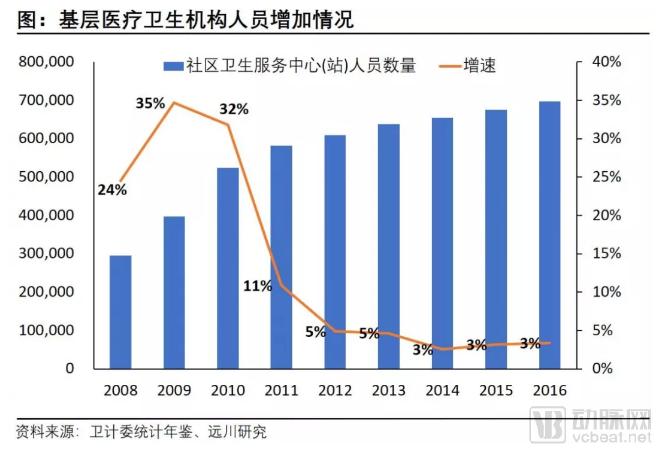
Thus, a peculiar phenomenon emerged: around 2009, township health centers across China, which had long been neglected, suddenly began to expand their staff on a large scale, with previously vacant authorized positions filled one by one by relatives connected through various networks. In hindsight, it was a case of “the duck knows first when the spring river warms.” While there were debates at the policy-making level, grassroots actors demonstrated their own shrewdness; regardless of whether the “supply-side subsidy” or “demand-side subsidy” approach prevailed, these individuals were bound to benefit.
To sum it up with a slogan from “I Can I BB”: “Whether you like it or not, I’m coasting to victory all the way.”
The overall logical sequence of the 2009 healthcare reform was as follows: At the upper level, the interest relationships among tertiary and secondary medical institutions at the city and county levels were intricate and far-reaching, making reform difficult; at the lower level, the vast number of village doctors faced unresolved staffing quota issues and substantial historical debts, also posing significant challenges to reform; consequently, medical institutions at the township and sub-district level naturally became the starting point for the reform.
The so-called "crossing the river by feeling the stones" operational guide means starting with reforms that appear relatively simple.
Both the “supply-side subsidy” and “demand-side subsidy” camps recognize that this is a crucial preliminary battle; whoever dominates the investment model for primary healthcare institutions will secure dominance in the future main battlefield—large general public hospitals at the municipal and county levels. The focal point of contention between the two factions is a 23-character phrase in the 2009 healthcare reform plan: “Explore management approaches such as separating revenue from expenditure for primary healthcare institutions.”
The so-called “two separate lines for revenue and expenditure” is, in essence, a de facto form of full fiscal support; if implemented, it would constitute a pure “supply-side subsidy” approach.
It is reported that the department which strongly advocated for “subsidizing the demand side” made significant efforts to delete this sentence. The debate persisted until the final moments before the document’s release. The ultimate outcome was a limited concession from the “subsidizing the supply side” proponents: they agreed not to delete the sentence, but added the word “explore” before “separate management of revenue and expenditure” and appended the character “etc.” after it, thereby weakening the policy’s directional clarity.
Behind each of the 23 characters in this sentence lies a heart-stopping confrontation.
The philosophy embedded in China’s “red-headed documents” is an abstruse and elusive discipline. This is, in fact, a tradition of the Central Empire: when policy debates reach an impasse and no definitive decision can be made, the language is deliberately rendered ambiguous, leaving room for local governments to “explore.” However, the typical outcome is that the central government waits for localities to “take the lead and pilot,” while localities wait for the central government to provide “top-level design,” resulting in an endless cycle of mutual deference.
At this juncture, the “Anhui Model” emerged abruptly, disrupting the equilibrium between the two parties and placing a substantial weight on the side of “subsidizing supply-side providers.”
In brief, Anhui’s healthcare reform model adopts a straightforward “per-capita budgeting” approach to calculate the required funding, which is then directly approved and allocated to township health centers. This effectively implements a “two-line management system for revenue and expenditure,” thereby achieving two key outcomes: guaranteeing salaries (raised to the average level of public institutions) and reducing drug prices (by eliminating drug markups).
To put it simply, the government has fully funded primary healthcare institutions at the township and sub-district levels, aiming to resolve the majority of medical issues for the public within these grassroots facilities.
Although Anhui is a relatively poor province in central China, it has never lacked “models” over the past four decades. The political culture of Anhui’s officialdom excels in innovation and summarization, having sent many cadres to higher levels of government. The boldness and financial strength demonstrated this time provided significant support to the central leadership. As a result, the “Anhui Model” has become a frequent feature on Xinwen Lianbo (CCTV’s main evening news program), and the State Council has held several on-site meetings on healthcare reform in Anhui, vigorously promoting the “Anhui experience in comprehensive grassroots healthcare reform” nationwide.
Thus, the eastern provinces had no reason to wait, while the western provinces, relying on central government fiscal transfers, could simply replicate the model. In just about a year, the “Anhui Model” swept across China. The initial campaign of “subsidizing providers” achieved complete success, with hundreds of billions of yuan in fiscal investment continuously flowing into township health centers. For the first time in the history of the People’s Republic of China, grassroots medical and health institutions were fully funded by the state.
The initial battle was won, and the advocates of “supply-side supplementation” were elated by what seemed a swift and decisive victory. Officials who had distinguished themselves in this campaign were smoothly promoted, while the consequences of this overly simplistic, campaign-style reform would not become fully apparent until two years later.
Around 2010, the “subsidizing providers” approach advanced vigorously at the local level, but powerful agencies supporting “subsidizing demand-side” were not idle either; they formulated a series of countermeasures that were rapidly implemented at the central government level.
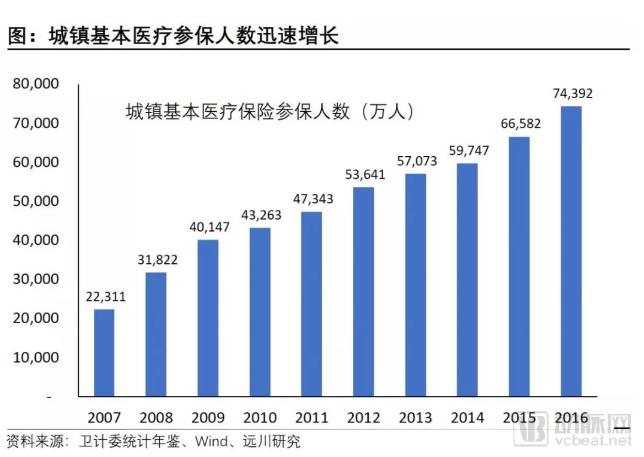
First, universal health insurance was rapidly realized. Health insurance serves as the key recipient of “demand-side subsidy” initiatives. In 2009, the three major health insurance schemes—covering urban employees, urban residents, and rural residents—still had significant gaps, leaving a large portion of the population without coverage. Starting in 2009, investment in health insurance increased sharply, becoming the primary driver of overall healthcare reform spending. This surge enabled the three insurance schemes to achieve near-universal coverage, to the extent that duplicate enrollment became common among a considerable segment of the population.
Second, liberalize the participation of private capital in healthcare. Introducing the “catfish” of private capital has been a tried-and-true method for advancing market-oriented reforms. The 2010 document “Opinions on Further Encouraging and Guiding Private Capital to Establish Medical Institutions” even included language such as “giving priority to private capital.” However, overall, the outcomes of private-capital-led healthcare have been less than ideal, due partly to constraints imposed by public hospitals and partly to widespread irregularities in the medical sector.
At this juncture, the opponents of “subsidizing the demand side” have also delivered a significant blow: the Anhui model, dominated by “subsidizing the supply side,” has reached an unsustainable stage after only a few years of operation.
The policy was originally intended to achieve “lower drug prices” and “guaranteed wages.” However, lowering drug prices relied on the high concentration of pharmaceutical procurement authority, shifting from independent procurement by townships to centralized provincial bidding. For reasons well understood by all, winning bid prices for drugs have continued to rise, completely eroding the slight price advantage that primary care institutions once held. Meanwhile, the “guaranteed wages” policy has returned grassroots medical workers to an era of egalitarianism (“the big pot”), where insufficient incentives have led to a significant decline in patient volume at the primary care level.
For example, a 2010 work summary from the Health Bureau of Feixi County, Anhui Province, noted that the number of inpatients at primary healthcare institutions across the county dropped by as much as 57% that year, with most of these patients seeking care at private hospitals or large hospitals in Hefei. Furthermore, during a severe influenza outbreak, community doctors, having grown complacent, even began refusing to treat common colds, thereby shattering public trust in primary healthcare institutions to unprecedented lows.
Primary healthcare institutions, sustained by fiscal subsidies, have failed to fulfill their intended roles. As a result, the public has voted with their feet, flocking to public hospitals in major cities and causing severe overcrowding at large tertiary Grade-A hospitals.
However, once any decision becomes a hallmark of the system, it gains institutional protection and is destined to march from one victory to another “victory.” Although the Anhui Model was quietly halted in Anhui Province in 2011, and the “separate management of revenue and expenditure” policy was officially abolished by the Anhui provincial government in 2015, at least in public discourse in 2011, Anhui remained a mecca for healthcare reform across China, continuing to receive admiration and emulation from other provinces and municipalities.
On the other hand, “subsidizing the demand side” has also failed to achieve the expected results. “Universal health insurance coverage” has proven to be the most effective measure, standing out as the brightest achievement on the three-year healthcare reform report card. Leveraging this, medical insurance authorities have grown into a powerful regulatory force in the healthcare market, imposing crude and rigid budget constraints on public hospitals (with medical insurance payment rates in some regions dropping to below 60%).
Yet policies with substantial technical content that could help improve healthcare efficiency—such as outpatient reimbursement, long-term care insurance, cross-regional reimbursement, single-disease payment, and per-bed-day payment—have progressed slowly, despite being common international practices in health insurance systems and having long been included in the work reports of the Communist Party of China and the Chinese government. As for “socially run healthcare” and the separation of regulation from operation, these reforms, grounded in the logic of self-revolution, have been cleverly shelved by institutional inertia.
Throughout the entire 12th Five-Year Plan period, healthcare reform continued along the inertia established in the preceding three years. Reforms of county-level and urban public hospitals were rolled out sequentially, with their core content still revolving around the three pillars of “increasing investment,” “lowering drug prices,” and “guaranteeing salaries.” As a result, the public still lacked a “sense of gain” (Xinhua News Agency commentary), and accessing medical care remained both “difficult” and “expensive.”
Yet the substantial increases in funding for medical insurance and basic public health services—aimed at boosting demand-side resources—have also yielded disappointing results. As a unique feature worldwide, China has adopted a dual-subsidy approach that supports both supply and demand. Investments in both “supply-side subsidies” and “demand-side subsidies” have grown significantly and remained roughly equal in scale, akin to two massive streams—one cold, one hot—flowing simultaneously into a pool, ultimately neutralizing each other’s effects.
“Supply-side subsidies” advanced stealthily, while “demand-side subsidies” proved superficial and ineffective; thus, the five years from 2011 to 2015 slipped away in vain.
While policy decisions at the highest levels of government appear conflicted and self-defeating, the healthcare sector is witnessing a different reality of aggressive expansion: on one front, large public hospitals are engaging in a “Great Leap Forward” to seize market share, while on the other, Putian-affiliated hospitals are growing in an unregulated and rampant manner.
Under the leadership of Shi Yingkang, West China Hospital has set a benchmark for leapfrog development among public hospitals across China. In the minds of every public hospital director, there exists a “West China Dream,” the core logic of which is as follows: leveraging the ample cash flow of public hospitals to prioritize incentives for medical staff and upgrade medical facilities, thereby attracting more patients and generating greater revenue, achieving rapid iterative growth, and ultimately evolving into a healthcare giant.
“In those years, it was ‘Learn from Daqing in industry and learn from Dazhai in agriculture’; today, it is ‘Hospitals learn from West China Hospital.’”
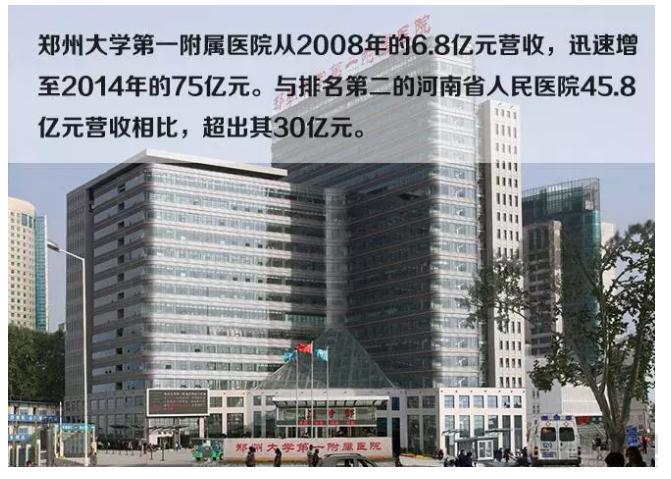
Thus, as Shi Yingkang was on the verge of stepping down from his position at West China Hospital, a large public hospital in Henan, another populous province, embarked on a rapid expansion path following in West China’s footsteps. This journey began with the official appointment of Vice President Kan Quancheng, who spearheaded the creation of a near-perfect replica of West China Hospital. The institution where Kan Quancheng serves is the First Affiliated Hospital of Zhengzhou University.
The development history of the First Affiliated Hospital of Zhengzhou University is almost a replica of that of West China Hospital. In simple terms, it leveraged the patient volume advantage of a populous province, starting by recruiting experts to retain local patients, then enhancing the medical technical capabilities of its local teams, and finally attracting patients from other regions. This trajectory—from large to strong—followed a path of clinical discipline construction akin to the “trade-industry-technology” model.
The secret to the rise of super hospitals lies in three key factors:
First, providing high incentives to medical personnel. West China Hospital implemented an internal shareholding system for its medical staff as early as the 1990s, while The First Affiliated Hospital of Zhengzhou University has offered what is claimed to be the highest salaries for medical and nursing staff in China, with particularly favorable treatment for nurses. For top-tier medical talent, the hospital has gone to great lengths to recruit, with reports once circulating of a RMB 10 million offer to attract leading experts.
Second, it has made substantial investments in medical facilities and equipment. West China Hospital began to lead the nation in medical equipment standards after 1990, while The First Affiliated Hospital of Zhengzhou University equipped itself with top-tier devices—including high-end hybrid operating rooms with advanced imaging capabilities and surgical robots—in less than six years. Furthermore, by constructing a new campus and expanding its bed capacity by nearly 50%, the hospital has achieved a level of hardware infrastructure that stands out nationwide.
Third, leveraging a robust patient base to drive medical research. As modern medicine relies heavily on statistical studies involving large case volumes, substantial clinical throughput ensures ample sample sizes and increased opportunities to identify rare and complex cases, all of which constitute fertile ground for high-quality medical research. This, in turn, continuously attracts top medical talent.
In less than a decade, the First Affiliated Hospital of Zhengzhou University has accomplished what West China Hospital took over 20 years to achieve. Transforming from a second-tier hospital that was slightly lagging within its province, it has surged to become the “world’s largest hospital,” with annual revenues exceeding RMB 10 billion and more than 10,000 beds—surpassing its former idol, West China Hospital, by over 30%. In terms of medical proficiency, the First Affiliated Hospital of Zhengzhou University has ranked among the top 30 hospitals nationwide, successfully realizing the optimal pathway of “scaling up first, then strengthening capabilities.”
However, where there is a community, there are leaders; and where there are leaders, there is competition. Shortly after Kan Quancheng, who orchestrated the “miracle” of the First Affiliated Hospital of Zhengzhou University, stepped down from his position, projects such as Peking University International Hospital, Shanghai International Medical Center, and Xi’an International Medical Center were launched one after another, with investments often reaching billions or even tens of billions of yuan. On the path to scaling up and strengthening their capabilities, new super-sized public hospitals are continuously redefining people’s expectations.
Amidst the fierce debate in policy circles over “subsidizing providers” versus “subsidizing demanders,” it has suddenly become apparent that a “mini West China Hospital” has emerged in every prefecture-level city: medical resources are becoming increasingly centralized, with mega public hospitals handling everything from colds and fevers to smoking cessation counseling. Meanwhile, surrounding small and medium-sized hospitals are nearly deserted, grassroots medical institutions are experiencing further hollowing-out, and patient congestion at these mega-hospitals is exacerbating the difficulties and high costs of accessing medical care.
Ten years ago, hospitals with annual revenues exceeding RMB 1 billion were considered mega-hospitals; today, hospital presidents whose institutions generate less than RMB 5 billion annually would find it difficult to secure a seat on the rostrum at national forums.
This was unforeseen by both the “supply-side subsidies” and “demand-side subsidies.” The complexity of China lies in the fact that officials have their own agendas, those in the private sector have their own agendas, the government has its agenda, hospitals have theirs, patients have theirs, and pharmaceutical manufacturers have theirs. When four people play mahjong, it is impossible for all to win; pressing down the gourd only makes the ladle float up—there will always be one party that ultimately foots the bill.
Around 2010, the “demand-side subsidy” approach ignited a fire in the backyard of the “supply-side subsidy” model by unveiling an unprecedented policy document favorable to private capital, namely the Opinions on Further Encouraging and Guiding Private Capital to Establish Medical Institutions. Four years later, another document, the Guidelines for Promoting the Development of the Health Service Industry, was issued, elevating the encouragement of private capital participation in medical services to the level of industrial policy.
However, the well-regarded market participants that the authorities had high hopes for emerged too late and in too few numbers, while the so-called "Putian-system" private hospitals sprang up everywhere.
In 1998, anti-counterfeiting expert Wang Hai launched an investigation into the widely criticized itinerant practitioners treating sexually transmitted diseases, uncovering a shocking fact: the proprietors behind thousands of outsourced dermatology departments all hailed from a single small town nestled in the mountains of Fujian Province—Dongzhuang Town in Putian City. Moreover, the ultimate beneficial owners could be traced back to just a handful of families, whose founding patriarchs were said to have studied under the same itinerant physician.
The operators behind the Putian medical network have received little higher education and are essentially laymen from a medical perspective. However, they are exceptionally adept at marketing, never missing an opportunity to leverage each evolution in media—from primitive utility pole advertisements to television commercials and search engines—where the Putian group has consistently been a dominant player. The resulting high customer acquisition costs inevitably mean that the average revenue per patient must be aggressively driven up for every individual visiting their hospitals.
No matter how the banner of healthcare reform changes, the Putian clique continues to adhere to its business philosophy of making fortunes in silence, with savage expansion spreading like wildfire. A widely cited report states that at the founding conference of the China (Putian) Health Industry Association, the spokesperson declared that “Putian-origin” hospitals accounted for 80% of all private hospitals nationwide, providing millions of job opportunities.
Nevertheless, every few years, some Putian-affiliated hospital oversteps the mark and triggers a scandal, sparking nationwide crackdowns on the Putian network and forcing these hospitals to operate with even greater secrecy. After the “old military doctor” persona and the “department contracting” model were gradually exhausted, the death in 2016 of Wei Zexi, a young university student, exposed the “Baidu promotion” model and ushered Putian capital into a new phase of covert operations.
The latest revelation concerns Shenzhen Hemme Women’s and Children’s Hospital, which was involved in the gene-editing incident and is affiliated with the Lin family, one of the “Four Major Families” of the Putian medical network.
Of course, the “Putian clique” does not represent all private hospitals; there are indeed outstanding examples among private hospitals, such as Wuhan Asia Heart Hospital, Beijing United Family Hospital, and Xiamen Chang Gung Hospital. Nevertheless, their development has always been constrained by the system in which regulatory and operational functions are combined.
Under this system, public hospitals have leveraged multiple institutional mechanisms—including career-track staffing (shiye bianzhi), research grants, academic prestige, and administrative resources—to secure the most critical medical asset: top-tier expert talent. This has left private hospitals without key opinion leaders to drive disciplinary development, relegating them to a marginalized position for an extended period and preventing them from fulfilling the high expectations placed upon them by policymakers. Most physicians in public hospitals remain unwilling to transition to private institutions, even when offered improved compensation packages.
On one hand, truly high-quality supply is scarce; on the other, a large volume of substandard offerings prevails. This is the predicament facing private medical institutions, as well as the broader challenge confronting China’s healthcare supply side.
Nearly a decade since the 2009 healthcare reform policies were promulgated, the grand debate over “subsidizing providers” versus “subsidizing demanders” has spawned a deluge of policy documents from the central to local governments. Yet, this has failed to halt the further concentration of medical resources within the public system, nor has it curbed the unchecked expansion of Putian-affiliated private hospitals. As grassroots hospitals struggle to survive, super-hospitals continue to emerge, and chaos reigns in the private healthcare sector.
After more than RMB 6 trillion in government funding was injected, a consensus has finally been reached between “subsidizing providers” and “subsidizing consumers”: healthcare reform cannot be achieved by throwing money at the problem alone.
Consequently, the two instances of “subsidize” in the phrases “subsidizing providers” and “subsidizing demanders” have become less significant. The key issues are: from the demand side, where patients should seek medical care; and from the supply side, where physicians should practice. The former has driven the advancement of a system known as “tiered diagnosis and treatment,” while the latter has led to the implementation of a policy called “multi-site practice.”
These two keywords have respectively become the most frequently used terms in healthcare reform in recent years.
From a policy perspective, the “tiered diagnosis and treatment” policy continues the approach of “subsidizing providers,” primarily using administrative measures to guide patients to seek medical care in an orderly manner and curb the growing disparity in workloads and revenues between large and small public hospitals. In contrast, the “multi-site practice” policy aligns more closely with the market-oriented approach of “subsidizing demanders,” aiming to break through the development bottlenecks faced by small hospitals and private hospitals by facilitating the mobility of physician human resources.
If Shi Yingkang, now in heaven, were to witness this scene, he might well smile. In the final years of his life, he introduced venture capital to develop an internet healthcare product centered on multi-site practice, aiming to facilitate tiered diagnosis and treatment. Whether this reflected his late-life reflection and correction of the “West China Model,” or a renewed recognition of the importance of market forces, is now impossible to ascertain.
The only certainty is that the tug-of-war between “subsidizing suppliers” and “subsidizing demanders” will continue in the future. For ordinary citizens, who wins or loses is not important; we simply hope that there will be fewer unnecessary struggles and detours.