

Community Clinic Doubles Business After Integrating Third-Party Diagnostic System, Files IPO Prospectus
In China’s third-party medical laboratory testing market, listed companies such as KingMed Diagnostics primarily serve tier-1, tier-2, and tier-3 hospitals. However, primary healthcare institutions also have substantial demand in this sector, and with the implementation of the national tiered diagnosis and treatment system, empowering primary care has begun to be prioritized by some large enterprises.
In contrast, Yunhu Technology has pursued a “rural-encircling-cities” strategy since its inception, aiming to differentiate itself in the third-party medical testing market. Since its establishment in 2017, Yunhu has partnered with more than 30,000 primary healthcare institutions across Beijing, Zhejiang, Fujian, Anhui, Hubei, Shandong, Hebei, Shanghai, Henan, Hunan, Jiangxi, Jiangsu, and other regions, cumulatively serving nearly one million patients.
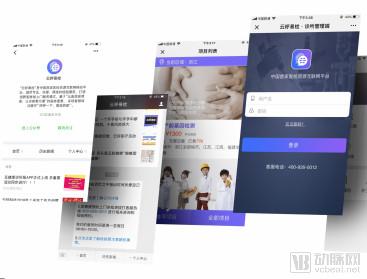
However, whether Yunhu Technology’s laboratory testing system is truly effective ultimately depends on user feedback. To this end, VCBeat (WeChat Official Account: vcbeat) specifically visited a community clinic in Lin’an District, Hangzhou, Zhejiang Province, named “Zhang Xiaohua Internal Medicine Clinic.” Through the insights of its physician, Dr. Zhang Xiaohua, we gained an understanding of the specific application of the Yunhu Laboratory Testing System at this clinic.
Before establishing his grassroots clinic, Zhang Xiaohua served at multiple hospitals. As a native Northerner, he recognized greater potential and opportunities in the southern primary healthcare market, ultimately settling in Lin’an to open the “Zhang Xiaohua Internal Medicine Clinic.” Regarding his choice of Lin’an, Zhang explained that the city has numerous primary care clinic brands, a relatively higher proportion of private medical resources, and comparatively lenient policies. Moreover, Lin’an boasts the highest density of clinics in Zhejiang Province.
The rapid advancement of modern medicine extends beyond medical equipment and devices; it also requires healthcare professionals to maintain a contemporary mindset and keep pace with the times. Once an internal medicine clinic is established, it must be equipped with a laboratory, rather than relying solely on the traditional triad of stethoscope, sphygmomanometer, and thermometer.
Previously, local primary care clinics relied on sending samples to higher-level hospitals for testing. This approach was highly inconvenient for patients and prone to causing patient attrition for the clinics.
Therefore, Zhang Xiaohua hoped to establish a standardized and scientifically rigorous laboratory testing operation.
However, primary care clinics are small in scale and have limited funding, making the purchase of large-scale diagnostic equipment a significant financial burden. Upon learning that Yunhu Technology was seeking partnerships with primary healthcare institutions, the two parties quickly reached an agreement.Zhang Xiaohua stated that Yunhu Technology’s laboratory information system is highly user-friendly and can be used immediately after registration and login.
Yunhu Technology assigns business managers in each partner region to liaise with local clinics. Patients can directly select the desired test items on the “Mi Jiankang” mobile app, complete the payment, and then scan the barcode provided by the company for the clinic. The information is subsequently transmitted to the business manager for review. Upon approval, the samples can be submitted for testing. Additionally, business managers periodically visit clinics to verify recent test orders, thereby minimizing errors.
Zhang Xiaohua stated that laboratory test orders were previously handwritten. After Yunhu Technology upgraded the laboratory information system, records are now maintained not only manually but also via PC and mobile terminals, thereby providing a dual layer of protection for patient data.In addition to the computer, patients can also view their test reports on mobile devices via the “Mi Jiankang” app. Once saved to either a mobile device or a computer, the test reports can be downloaded and printed. If patients are unable to collect their test reports in person, physicians can directly send electronic versions of the reports to patients via WeChat.
From the original 20 minutes or so to 5–10 minutes, this approach saves nearly half the time compared with the previous handwritten order-entry method, substantially improving work efficiency.
Regarding payment methods, an upfront payment model is adopted. Patients pay the required laboratory testing fees when placing the order. After the test results are released and the physician provides a diagnosis along with a treatment plan or prescription, patients then pay for the medications. Separating the payment for laboratory tests from treatment costs enhances patient confidence.
Meanwhile, Yunhu Technology has established its own rapid testing center near Lin’an District, capable of performing routine tests with results available in an average of 30 minutes. Dr. Zhang Xiaohua stated that he conducted a complete blood count (CBC) test for a patient the day before the interview; blood was drawn at 7:30 a.m., and the results were ready by around 8:00 a.m. For special or untestable samples, they can be sent to a higher-level rapid testing center in Hangzhou, where samples submitted on one day will yield results by the next day.
Zhang Xiaohua told us that from the moment a patient enters the clinic for consultation, everything—including medication recommendations, patient follow-ups, pharmaceutical management, and intelligent diagnosis—can be managed through this system. The electronic medical record (EMR) management provided by the system has reached the national standards for health management. On this point, Chen Huachao of Yunhu Technology stated that optimization should not be limited to software interface functions; the entire process must be standardized, delivering medical services in accordance with national standards and requirements.
There will inevitably be an adjustment period in the collaboration between both parties. If clinic medical staff are unfamiliar with the system, Yunhu Technology will directly assign IT technicians to provide training. In addition, Yunhu Technology’s official WeChat account will regularly publish instructional articles.
Zhang Xiaohua stated that the collaboration with Yunhu Technology has not only helped clinics increase their revenue, but more importantly, has enabled physicians to acquire additional medical knowledge, serving as a valuable learning opportunity for them.
Chen Huachao of Yunhu Technology also stated that Yunhu’s mission is to enable its sales representatives to be “peers among experts and experts among laypersons,” ensuring seamless communication with clinic physicians. This even requires them to possess greater knowledge than the doctors themselves, thereby assisting physicians in resolving issues encountered during the operation of laboratory information systems.Both parties agree that effective communication is beneficial to each other and can more effectively achieve win-win cooperation.
Zhang Xiaohua is locally renowned for his expertise in treating rhinitis. The adoption of Yunhu Technology’s laboratory testing system has further enhanced his capabilities. Due to climatic factors, the Jiangsu-Zhejiang region experiences a high incidence of seasonal rhinitis. He noted that prior to integrating the laboratory testing system, rhinitis was primarily managed through endoscopic examination. Since adopting the system, more precise diagnoses can be achieved directly via blood tests, thereby improving the patient experience.
Zhang Xiaohua spoke highly of Yunhu Technology’s laboratory information system, noting that it is truly beneficial for physicians by enabling more precise, targeted treatment and thereby enhancing the quality and standard of care at clinics. Furthermore, the scientific rigor and accuracy of the laboratory system offer greater reassurance to patients.
For example, if a doctor tells parents that their child needs trace element supplementation, the parents may not believe it and might even suspect the doctor of prescribing unnecessary medications. However, if a system detects deficiencies of certain substances in the child’s body, the parents are likely to place full trust in the results. This is because patients tend to perceive automated systems as more objective, accurate, and scientific than human judgment. Zhang Xiaohua stated that earning patients’ trust is crucial, and a good doctor–patient relationship is the foundation for successful treatment.
Secondly, this approach also helps clinics increase their business volume. With such scientific testing serving as an entry point, clinics can subsequently offer a broader range of services to help patients address more health issues.
Furthermore, it has brought significant convenience to internal management, including data entry, medication management, and medical record management. After Yunhu Technology upgraded its software, medical consumables, pharmaceuticals and devices, and medical records could all be managed scientifically. On this point, Dr. Zhang told us that Yunhu’s service system has greatly enhanced the clinic’s operational efficiency and substantially reduced operating costs.
Zhang Xiaohua’s clinic has been in operation for four years, covering an area of approximately 110 square meters. Like most primary care clinics, it is a family-run practice operated by a married couple, with a slightly broader scope of disease diagnosis and treatment compared to typical clinics.In the few months since integrating Yunhu Technology’s laboratory information system, the clinic has seen a significant increase in outpatient visits. Many patients have come specifically for its reputation, forcing Dr. Zhang to extend operating hours from early morning (after 6:00 a.m.) until 10:00 p.m. In just a few short months, the clinic has accumulated more than five volumes of laboratory test records.
Zhang Xiaohua also shared another interesting case with us. One of his long-time patients, a man in his forties who had always been in good health, decided to “experience” the cloud-based laboratory testing system integrated into Dr. Zhang’s practice. Dr. Zhang recommended that he undergo cancer screening. The test results ultimately revealed that he was in the early stages of cancer.
Following this incident, Zhang Xiaohua gained a deeper appreciation for the scientific validity and effectiveness of the laboratory testing system. He stated that this approach enables early detection and timely treatment of major diseases, which he described as a stroke of “good fortune” for patients.
On the walls of Zhang Xiaohua’s Internal Medicine Clinic, we also spotted the visual identity of Yunhu. Chen Huachao stated that one aspect of Yunhu Technology’s brand empowerment is the establishment of a standardized Yunhu image. The penetration of the Yunhu brand system into primary care clinics should not be forced; instead, it must be implemented subtly and gradually. This process begins with wall-mounted materials, followed by comprehensive image building, optimization of service functions, development of service workflows, and management of fee structures, with reinforcement at each step.
Regarding the next steps in the collaboration between Yunhu Technology and primary care clinics, Zhang Xiaohua predicts: First, Yunhu Technology will integrate all medications into the clinics’ systems to enable more scientific and comprehensive pharmaceutical management. Second, Yunhu Technology may deepen its leadership and management involvement in clinic operations, ultimately establishing a relationship of mutual checks and balances. He stated that this development is beneficial for the clinics. Both parties can maximize benefits through cooperation, whether in terms of cost control or profitability.
Zhang Xiaohua is highly receptive to new technologies. After adopting the Cloud Call Laboratory System, he actively shares and recommends it to his peers. Dr. Zhang stated that this aligns with the national advocacy for comprehensive health management. In disease diagnosis and treatment, priority should be given to prevention over therapy, embracing the path of green medicine.
Dr. Zhang stated that Yunhu Technology’s system should not be simply interpreted as an improvement in business model; rather, it is a mutually beneficial arrangement for both clinics and Yunhu. In primary care clinics, tests for tumor markers, trace elements, cardiovascular and cerebrovascular indicators, and blood lipids can all be conducted through the Yunhu laboratory testing system. With this system, the diagnostic capabilities of primary care clinics have been significantly enhanced, even rivaling those of community hospitals.
Affected by factors such as location and foot traffic, primary care clinics face a relatively challenging operating environment and significant competitive pressure in their business operations.Chen Huachao stated that Yunhu Technology’s third-party laboratory testing system aims to help primary care clinics improve their diagnostic capabilities while expanding their revenue streams. After partnering with Yunhu Technology, Dr. Zhang’s clinic has seen a monthly income increase of several thousand yuan.
Regarding the fee schedule for laboratory tests, Chen Huachao explained that prices in each region are set in accordance with local regulations issued by the Price Bureau and cannot be changed arbitrarily. However, among all the provinces and municipalities involved in the collaboration, Zhejiang Province has the relatively lowest prices.。
Chen Huachao stated that since its inception, Yunhu Technology has been committed to delivering tangible results. The company has focused on integrating products, building systems, securing contracts with clinics on a one-by-one basis, and providing training and education. Currently, Yunhu Technology is continuously improving and upgrading its software platform for primary care clinics. In the future, when the Yunhu brand officially targets consumer-facing (C-end) markets, it will continue to deepen its collaboration with primary care clinics by expanding their scale, sharing brand systems, and assisting them in health management.