

AI-Powered Diabetic Retinopathy Screening Initiative Launched in Community Health Centers by Bao'an Central Hospital and Tencent

Tencent
Internet Comprehensive Service Provider
According to statistics from the World Health Organization, there are more than 100 types of diabetes complications. Diabetic retinopathy is the most common severe complication of diabetes and has currently become the leading cause of irreversible blindness among adults aged 20 to 60 worldwide. Characterized by high incidence and high disability rates, it is the third leading cause of blindness in China, following cataracts and glaucoma.
Diabetic retinopathy is closely associated with the duration of diabetes. According to retrospective data on chronic diabetic complications in hospitalized patients from the Chinese Diabetes Society, the prevalence of diabetic retinopathy was 19.4% in patients with a disease duration of less than 5 years, 38.8% in those with 5–10 years, 63.3% in those with 10–15 years, and 78% in those with more than 15 years. Nearly all patients with long-standing diabetes develop diabetic retinopathy to varying degrees.
According to the latest global diabetes overview released by the International Diabetes Federation, the number of people with diabetes in China reached 110 million in 2017. The prevalence of diabetic retinopathy among individuals with diabetes in China ranges from 24.7% to 37.5%. Based on these figures, it is estimated that approximately 27 million people in China suffer from diabetic retinopathy; however, the current screening rate for this condition in China remains below 10%.
Therefore, increasing the screening rate for diabetic retinopathy among citizens has become an urgent priority.
Recently, Shenzhen Bao’an District Central Hospital and Tencent officially launched an AI-based screening program for diabetic retinopathy in community settings. Leveraging new technologies such as artificial intelligence and remote diagnosis, the hospital has significantly expanded the coverage of diabetic retinopathy screening. Residents enrolled in family doctor services at community health centers can now access screening services at nearby community medical facilities, enabling early detection and timely intervention.
Zhou Hua, President of Bao’an District Central Hospital, stated, “Artificial intelligence can enhance the capacity of community physicians in the absence of ophthalmology specialists, facilitating screening for diabetic retinopathy—particularly ocular lesions—at the community level. This addresses gaps in clinical capability and improves access to care for patients, fulfilling both our social responsibility and our public health mandate.”
Li Zhenhua, Director of Healthcare Industry Partnerships at Tencent, stated, “The treatment of chronic diseases is a long-term and gradual process with substantial demand. Deploying artificial intelligence at the primary care level not only alleviates physicians’ workload but also optimizes the allocation of medical resources through tiered diagnosis and treatment, enabling more patients to receive professional diagnostic advice and health education earlier, thereby facilitating early diagnosis and timely intervention.”
Chronic diseases constitute a major category of illnesses that pose a serious threat to public health and have become a significant health issue affecting economic and social development. Among various chronic conditions, diabetes has drawn widespread attention: China has the largest number of type 2 diabetes patients globally. As the diabetic population grows, the prevalence and blindness rates of diabetic retinopathy (commonly known as "diabetic eye disease"), one of the most severe complications of diabetes, have been rising year by year, making it the leading cause of blindness among individuals aged 20 to 65.
The "13th Five-Year National Eye Health Plan (2016–2020)," issued and implemented by the National Health Commission, listed early diagnosis and treatment of diabetic retinopathy as a key priority. It specified that, based on the tiered diagnosis and treatment system, effective models for early screening, diagnosis, referral, and treatment of diabetic retinopathy should be explored, and collaboration between ophthalmology and endocrinology departments in screening, diagnosis, and treatment should be strengthened. In strengthening chronic disease prevention and control, Shenzhen has successively introduced policies to conduct surveys on monitoring services for diabetic eye diseases, and to explore feasible risk assessment tools and appropriate intervention technologies for diabetic eye diseases in Shenzhen, to be used for early warning screening and tiered classification management of diabetic eye diseases.
Bao’an District Central Hospital and Tencent Have Officially Launched an AI-Based Screening Program for Diabetic Retinopathy in Community Settings. Aligned with China’s national policies on chronic disease management, this initiative leverages medical AI to establish a model for community health screening. As the initial pilot, Liutang Community Health Center under Bao’an District Central Hospital will offer free diabetic retinopathy screening services to local residents. The program is planned to gradually expand to cover all 36 community health centers managed by Bao’an District Central Hospital.
It is reported that over 80% of diabetic patients seek care at county-level and lower-tier medical institutions, yet the basic diagnostic and therapeutic measures as well as appropriate technologies for diabetic retinopathy are primarily implemented in tertiary hospitals. This mismatch in resource allocation poses significant challenges to chronic disease management. Under China’s tiered diagnosis and treatment system, the management of chronic diseases must be decentralized to grassroots healthcare facilities.
Lin Hao, Deputy Director of the Bao’an District Health and Family Planning Bureau, stated, “The collaboration between Tencent and Bao’an District Central Hospital to implement AI-based early screening for diabetic retinopathy has expanded the application scenarios of artificial intelligence in general practice at community health centers. This initiative provides new tools for the prevention and control of diabetes as a chronic disease in communities and enriches the service offerings of family doctors. It holds significant importance for improving early screening for diabetic eye diseases among residents within the jurisdiction and enhancing the quality of family doctor services.” He further pointed out, “We hope that this collaboration will reach more residents, truly establishing the diabetic retinopathy screening program as a model project for chronic disease prevention and control.”
AI-assisted diagnosis and treatment systems provide support for general practitioners at primary community health centers. The "Tencent Miying" diabetic retinopathy screening system used in this AI screening collaboration achieves a 97% accuracy rate in identifying diabetic retinopathy and an 85% accuracy rate in staging the disease. Through staging, patients with chronic diseases can be effectively triaged, allowing those with milder symptoms to remain under care at the primary level, thereby alleviating the diagnostic and treatment burden on higher-level hospitals and physicians.
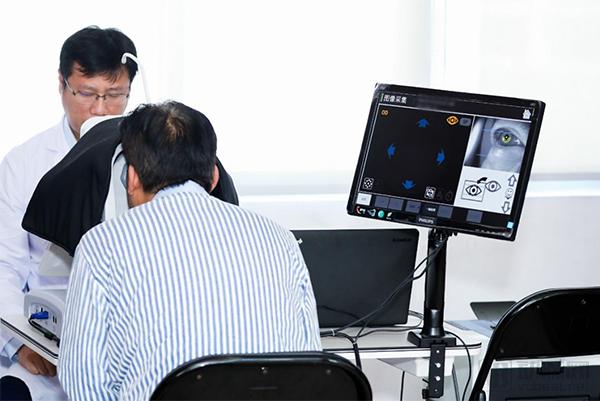
Live Demonstration: Doctor Uses Tencent Miying to Screen Patients for Diabetic Retinopathy
Wu Jiang, Vice President of Bao’an District Central Hospital, stated, “Artificial intelligence technology can liberate general practitioners from tedious tasks. By integrating community health center screenings with family doctor services, AI-driven alerts function like traffic lights: a red light indicates referral to diabetes and ophthalmology specialists; a yellow light signifies that the case can be managed within the community health center; and a green light means the patient can proceed with self-health management. This three-tiered network not only improves efficiency and reduces costs but also enhances the patient’s healthcare experience.”
Li Zhenhua emphasized that, with the assistance of AI-based diabetic retinopathy screening technology, community-wide large-scale screening for diabetic retinopathy has become practically feasible. This holds significant importance for reducing the incidence of moderate-to-severe diabetic retinopathy. “By partnering with Bao’an District Central Hospital, we will leverage this collaboration to expand the coverage and efficiency of population-based chronic disease screening, and promote the reallocation of medical resources through tiered diagnosis and treatment, thereby enabling more people to access ‘safe, efficient, smart, and healthy’ medical services.”