

Deloitte Report: Global IoMT Market Exceeds $15 Billion—Eight Capabilities Essential for Companies to Capture Value
Major technological advances are driving innovation in medical technology and fostering the development of interconnected medical devices capable of generating, collecting, analyzing, and transmitting data. These data, along with the devices themselves, are giving rise to the Internet of Medical Things (IoMT)—a connected infrastructure comprising medical devices, software applications, healthcare systems, and services. The IoMT market is estimated to reach a value of $158.1 billion by 2022.
Recently, Deloitte UK’s Centre for Health Solutions (hereinafter referred to as “Deloitte”), a global management consulting firm, released a new research report titled “Medtech and the Internet of Medical Things: How Connected Medical Devices Are Transforming Healthcare.” The report examines how the Internet of Medical Things (IoMT) is reshaping the role of medical technology in healthcare and outlines how medtech companies can effectively pursue digital transformation—whether by adapting existing business models, inventing new ones, or both.
The report states that the future of the medical technology industry will depend on the ability of medtech companies to demonstrate to healthcare providers and payers how connected medical devices contribute to the new value-based paradigm.
Due to the length of the original report, a reporter from VCBeat (WeChat ID: vcbeat) has organized and compiled the summary section of this research study for readers’ reference. This article mainly includes the following sections:
I. The IoMT Market Will See Significant Growth
II. Challenges Faced by MedTech Companies in Adopting IoMT
III. Key Drivers Promoting IoMT and Healthcare Reform
A series of technological and cultural changes have enabled technology and people to connect more effectively, thereby promoting the development of the Internet of Things (IoT). The IoT is a network composed of interconnected smart devices and objects that can communicate with each other and automate mission-critical tasks.
In the healthcare industry, medical technology (medtech) companies produce more than 500,000 different types of medical devices annually, including wearable external medical devices (skin patches, insulin pumps, and blood glucose monitors), implantable medical devices (pacemakers and implantable cardioverter-defibrillators), and stationary medical devices (home monitoring equipment, connected imaging systems, and scanning devices). Most patient interactions with the healthcare system involve the use of medical devices.
As with most other industries, advances in computing and processing power, wireless technology, and miniaturization have driven innovation in the development of connected medical devices, leading the healthcare industry to increasingly recognize the revolutionary impact of Internet of Things (IoT) technology. Enhanced connectivity can be applied to most categories of medical devices. The growing number of connected medical devices, coupled with advancements in technologies, service systems, and software that support the acquisition and transmission of medical-grade data, has given rise to the Internet of Medical Things (IoMT).
The IoMT Market Will See Significant Growth
The IoMT integrates the digital and physical worlds to enhance the speed and accuracy of diagnosis and treatment, while enabling real-time monitoring and modification of patients’ behaviors and health status. It also improves the operational efficiency and effectiveness of healthcare organizations by streamlining clinical processes, information management, and workflows.
The connectivity between sensors and devices facilitates real-time patient care, even for patients in remote areas, while also enhancing communication within and among healthcare institutions. The vast amount of data generated by the interconnection of sensors and devices creates opportunities for new care models and supports the delivery of 4P medicine—predictive, preventive, personalized, and participatory.
The IoMT integrates people (patients, caregivers, and clinicians), data (patient or performance data), processes (care delivery and patient support), and devices (connected medical devices and mobile applications) to effectively improve patient treatment outcomes.
Although the Internet of Medical Things (IoMT) has the potential to help alleviate some of the challenges in healthcare related to cost, access, and care coordination, the impact of data points generated by millions of connected medical devices will be negligible unless the data can be translated into actionable insights.
More specifically, connected medical devices are a key enabler among the six predictions outlined in Deloitte’s other report, Future Awakenings: Life Sciences and Health Care Predictions 2022. The realization of these predictions largely depends on the continuous innovation and large-scale adoption of connected medical devices.
In 2017, the global market research and consulting firm MarketsandMarkets valued the IoMT market at $41.2 billion, projecting it to reach $158.1 billion by 2022. By 2022, the connected medical devices segment of the IoMT (which aids in diagnosing, monitoring, and treating patients) is expected to grow from $14.9 billion in 2017 to $52.2 billion.
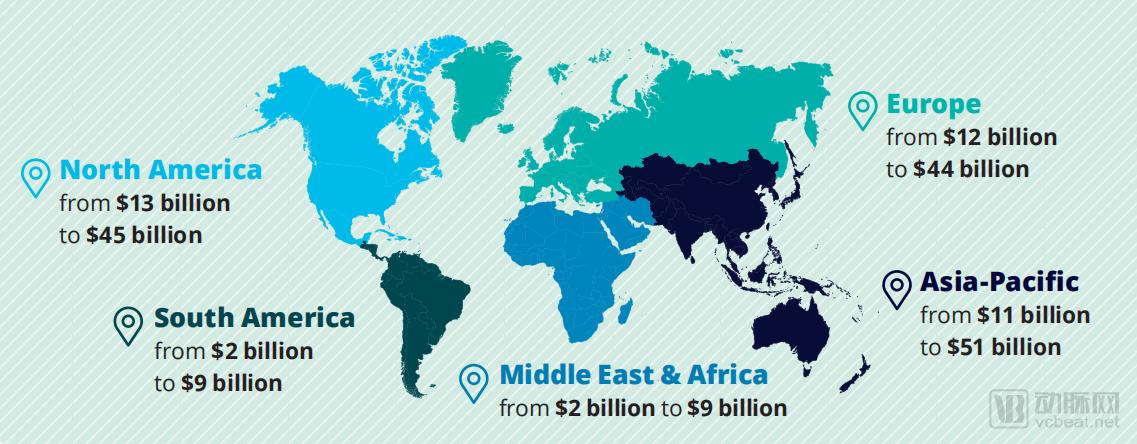
In 2017, North America accounted for the largest share of the IoMT market ($13.3 billion, or 33% of the total market), followed by Europe ($12.4 billion), Asia-Pacific ($11.0 billion), the Middle East and Africa ($2.4 billion), and South America ($2.1 billion). (Image attachedOriginating fromDeloitte Official Website)
The rise of the Internet of Medical Things (IoMT) coincides with the escalating costs of healthcare. Global healthcare expenditure is projected to grow at an annual rate of 4.2%, increasing from $7.1 trillion in 2015 to $8.7 trillion in 2020. The primary drivers of this growth include a growing and aging population, as well as increased longevity accompanied by multiple comorbidities.
Therefore, without thorough reform, healthcare in many countries will face the risk of becoming increasingly unaffordable.
Challenges Faced by Medical Technology Companies in Adopting the IoMT
The medical technology industry plays a pivotal role in helping to reduce costs, improve the quality and efficiency of care, and support the transition to value-based care (VBC). However, to realize the full potential of the Internet of Medical Things (IoMT), medical technology companies in this sector still face numerous systemic challenges that must be addressed.
• Gain in-depth understanding of end users——As more suppliers adopt the Value-Based Care (VBC) model, the adoption and integration of connected medical devices will accelerate. Data and insights regarding patients and clinical workflows are central to VBC. Challenges include the extent to which healthcare organizations’ IT infrastructure can manage connectivity and data, as well as whether clinicians and patients can be confident in the safety and efficacy of these devices.
Medical technology companies need to gain a deep understanding of end users and develop business models and scenarios that demonstrate how their new and existing devices can improve patient outcomes and create value for key healthcare stakeholders.
• Develop new funding, business, and operational models—As healthcare institutions place greater emphasis on improving quality and reducing the cost of delivering medical services, they are demanding that medtech companies provide more evidence to demonstrate the added value of new and enhanced products.
A survey commissioned by Deloitte reveals mixed results among medical technology companies in demonstrating the value of their connected medical devices, even though some have shifted toward service-based business models rather than merely providing products. Different types of innovation will require different business models, and progress will depend on innovators’ willingness to assume risks and reap rewards in new ways, as well as on the evolution of existing payment systems by public and private payers.
• Understand interoperability requirements— Interoperability is arguably the greatest challenge facing health technology, encompassing compliance with various national and international standards and protocols in data exchange and utilization.
The industry still faces certain technical challenges, such as establishing a comprehensive governance framework and obtaining authorization to access healthcare data. To ensure effective interoperability, the way forward should be open platforms based on open data standards. This will enable payers, providers, and technology vendors to come together, making data more accessible and usable across parties.
• Maintain cybersecurity—Cybersecurity issues are pervasive in the medical technology sector, and the growing number and capabilities of connected medical devices pose additional risks to data security. The scale and cost of breaches are often significant and far-reaching. Although four out of five respondents believe they are well-prepared to address device cybersecurity, other studies indicate that many stakeholders lack a clear understanding of how to prevent such risks and how to respond once they are identified.
Regulators acknowledge that cybersecurity threats cannot be completely eliminated, and stakeholders need to work together to adopt a more proactive approach to risk management. Medical technology companies need to adopt a "security by design" approach, establishing real-time monitoring, cyber threat modeling and analysis, as well as threat mitigation and remediation measures.
• Responding to Regulatory Changes——Managing a large volume of regulatory changes, particularly those related to new regulations in Europe and the United States, is critical to the successful development of connected medical devices and the Internet of Medical Things (IoMT).
Managing the Impact of Regulatory Changes Requires a Proactive and Well-Planned Approach from Medtech Companies. For an innovation model to be sustainable, companies must preserve room for regulatory engagement within their innovation frameworks and involve clinicians and patients in product design.
• Attracting Digital Talent and Building Digital Capabilities— Key stakeholders are increasingly concerned that the widening skills gap will delay the deployment of IoMT solutions and constrain market growth. To remain competitive, medical technology companies need to develop a new set of digital capabilities, including hiring data scientists and multidisciplinary talent with backgrounds in innovation and science.
To attract such talent, medical technology companies need to adopt more flexible recruitment and retention strategies, including collaborating with and establishing partnerships among a diverse range of existing and emerging players—particularly academic institutions, data-first technology companies, and innovative startups.
• Maintain Trust in the Digital Age——Global technology companies and other new entrants to the healthcare ecosystem are increasingly engaging in the connected medical device industry, while traditional medical device companies are increasingly involved in data management and analytics.
Therefore, when medical technology companies formulate strategies and services based on the generation and transmission of patient data, they must ensure that it is clearly communicated to patients, the public, and healthcare professionals that such data is protected and used responsibly. Medical technology companies need to establish key principles for data management and consent, empowering patients to control their own data, including the right not to share it.
• Promoting the large-scale application of medical technologies—A key challenge facing medical technology is ensuring that healthcare institutions, clinicians, and patients understand the added value of connected medical devices and adopt them at scale to drive better economic efficiency and patient health outcomes. Difficulties in this regard include a lack of governance standards and sufficiently robust evidence demonstrating the cost-effectiveness of connected medical devices and their contribution to advancing the Value-Based Care (VBC) agenda.
This includes ensuring that devices are intuitive and easy to use, and providing training and support for staff as needed to embed the skills required for optimized technology utilization. Creating effective IoMT at scale requires collaboration and partnerships among patients, providers, payers, pharmaceutical companies, academia, and other medical technology manufacturers.
Key Drivers Propelling IoMT and Healthcare Reform
Although the medical technology industry must take multiple measures to address challenges in order to realize the full value of the Internet of Medical Things (IoMT), it is undeniable that certain key factors driving IoMT and healthcare reform already exist, owing to the inherent ability of medical technology to play a significant role within the IoMT ecosystem. If medical technology companies can identify and leverage these factors, they will undoubtedly significantly facilitate their deployment of IoMT solutions.
• Collaboration between healthcare providers and medical technology is key to the effective deployment of IoMT— Integrating connected medical devices into established care pathways presents significant challenges, necessitating substantial collaboration within the Internet of Medical Things (IoMT) ecosystem. Collaborative strategies, such as partnerships and joint ventures, help ensure the effective transmission, aggregation, analysis, and management of data from connected devices.
These collaborations enable all stakeholders to enhance their understanding of patient needs and deliver more proactive, cost-effective care. Respondents to the survey conducted by Deloitte’s UK Health Solutions Centre ranked collaboration with healthcare providers as the most critical partnership in the development of their respective business models, followed by collaborations with healthcare payers and other health technology companies.
• Connected medical devices benefit patients, healthcare providers, and payers—Collaboration with healthcare providers enables medtech companies to understand the clinical contexts in which their devices are used. Medical devices are almost always designed for specific applications. Connectivity added to these devices allows data to be generated based on patient conditions and the effectiveness of healthcare providers’ operations. The ability to quantify, contextualize, and communicate these interactions empowers the medtech industry to deliver solutions that create value for all healthcare stakeholders.
• Points connecting interconnected medical devices and healthcare IT systems——Many large medical technology companies have developed interconnected ecosystems as public platforms for sharing, aggregating, and viewing data to drive clinical and operational value. Connecting disparate datasets within healthcare organizations is key to achieving connectivity at scale.
• Apply advanced analytics to data generated by connected medical devices to deliver critical insights and enhance decision-making capabilities—Mining, managing, and analyzing the vast amounts of data generated by medical-grade wearables, connected imaging devices, and monitoring equipment is a critical component in realizing the value of the Internet of Medical Things (IoMT). The insights derived from integrating connected medical devices with health datasets play a pivotal role in helping healthcare systems reduce costs and improve quality, identify at-risk populations, engage consumers, and gain a better understanding of performance.
• Medical technology services help improve patient health outcomes and reduce healthcare costs——Medical technology companies are leveraging the increasing sophistication of connected medical devices, improved interoperability among healthcare institutions, and advanced analytics to develop service-oriented solutions that provide value-based services to VBC tenants. These services are improving patient outcomes and reducing healthcare costs, transforming medical technology companies from manufacturers into healthcare providers.
The integration of connected devices into healthcare systems is becoming an industry trend. Medical technology companies need to develop new strategies to leverage the data provided by their digital products, ensuring their business and operational models remain relevant and competitive. For some medtech companies, this will involve transitioning from a product-based model to a value-based system.
In the coming period, there will likely be a growing number of medical technology companies that effectively leverage their digital expertise to develop ecosystems capable of aggregating vast amounts of medical device data for advanced analytics. The further development of these digital initiatives will continue to transform healthcare delivery and blur the boundaries between industries.
Editor’s Note: The original report, “Medtech and the Internet of Medical Things: How Connected Medical Devices Are Transforming Health Care,” was recently published by the Deloitte UK Centre for Health Solutions. This article presents only selected excerpts from that report.
(Compiled by Cheng Xiaoqin)