

HKEX Aims to Shift Listing Timeline to Meet New Economy's Critical Funding Needs, Says Ba Shusong
VCBeat (WeChat ID: vcbeat) has learned that the “Opportunities and Challenges in China’s Biopharmaceutical Innovation and the 2018 SAPA China Annual Conference,” hosted by the China Chapter of the Chinese-American Society for Advancement of Pharmaceutical Development (SAPA), was held in Changping, Beijing, from November 30 to December 1, 2018. Professor Ba Shusong, a renowned economist, Managing Director of the Hong Kong Exchanges and Clearing Limited (hereinafter referred to as “HKEX”), and Chief Economist of the China Banking Association, delivered a keynote speech titled “New Economy, New Finance, New Trends,” providing an in-depth analysis of the economic rationale behind HKEX’s relaxation of listing restrictions for biopharmaceutical companies’ initial public offerings (IPOs).
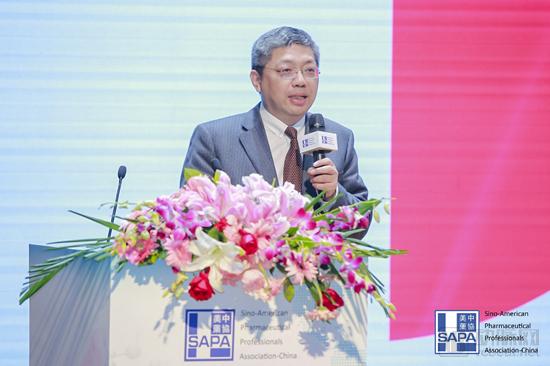
Professor Ba Shusong. Photo provided by the China Chapter of SAPA.
In his keynote address, Professor Ba Shusong primarily presented the following viewpoints:
1. China is currently undergoing a period of economic structural adjustment, with the contribution of traditional industries to economic growth diminishing;
2. The new economy is a powerful driver of future economic growth;
3. The biopharmaceutical industry is characterized by stringent regulation, making financing risks relatively controllable;
4. The IPO timeline should be shifted to align with the period when the company has the greatest need for capital;
5. The interaction between capital and industry will achieve a win-win outcome.
VCBeat has compiled Professor Ba Shusong’s keynote address, incorporating relevant background information, for the benefit of its readers.
Professor Ba Shusong first pointed out that the growth and expansion of enterprises are inseparable from capital markets. Currently, within the global capital market system, two markets offer particularly convenient pathways for biopharmaceutical companies to raise funds through initial public offerings (IPOs): New York and Hong Kong. For companies seeking to prioritize expansion into the Chinese or broader Asian markets, Hong Kong represents a significant option. Professor Ba Shusong reviewed the evolution of strategic thinking and recent developments at the Hong Kong Stock Exchange (HKEX) from last year to this year, highlighting its gradual shift from broadly financing the new economy to focusing specifically on the biopharmaceutical sector.
On April 24, 2018, the Hong Kong Stock Exchange announced that the new provisions of the Listing Rules, introduced to broaden Hong Kong’s listing regime, would take effect on April 30, 2018. It also published the consultation conclusions and responses regarding the Listing Regime for Emerging and Innovative Companies, thereby implementing the proposal to allow pre-revenue or pre-profit biotechnology companies to list on the Main Board of the Hong Kong Stock Exchange.
Since then, mainland China’s new-economy enterprises such as Ping An Good Doctor and WuXi Biologics have flocked to list in Hong Kong. The Hong Kong Stock Exchange has become the world’s most active capital market and is gradually forming a financing and pricing ecosystem conducive to the development of the biopharmaceutical industry.
The US-China Rivalry Lies in the Control over New Drivers of Economic Growth
Currently, the contribution of existing technological progress and innovation to economic growth has reached a historical low globally. Both developed and developing countries face a common task: injecting new momentum into economic growth by fostering innovation. Professor Ba Shusong believes that a significant aspect of the trade conflict between China and the United States is essentially a struggle for control over the drivers of this new economic growth.
Professor Ba Shusong believes that the leading industries driving economic growth at any given time can be largely inferred from the sectors in which the wealthiest individuals in the United States made their fortunes during different periods. The large-scale urbanization in the U.S. once spurred substantial demand for steel, creating figures like Andrew Carnegie, while the rise of the oil industry produced oil magnate John D. Rockefeller. Later, as the U.S. economy transitioned from industry to services, financial tycoons such as Warren Buffett and Bill Gates emerged.
“This approach is also universally applicable when analyzing China’s macroeconomy.” Over the past 40 years of reform and opening-up, the leading industry in each phase of China’s economic takeoff has been different.
China is currently at a juncture where the momentum of its “infrastructure plus real estate” growth model is gradually waning. Recently, China’s economic growth rate has slowed, real estate investment has been subject to regulatory adjustments, infrastructure spending has contracted, and consumption has declined. While export growth remains robust, it is expected to drop significantly next year if tariffs are imposed amid Sino-U.S. trade frictions. This represents a phase of economic transition, characterized by a shift from old to new growth drivers, which is specific to this particular period.
However, the new economy and emerging industries have been growing relatively rapidly and gradually diverging. There is a growing consensus that new industries, new business formats, and new business models are needed to drive economic growth. At the policy level, there has been a frequent rollout of “subtraction” policies aimed at deleveraging, destocking, and reducing excess capacity. At the market level, the scale of the traditional economy continues to shrink.
Professor Ba Shusong pointed out that it is necessary to make additions and allocate resources to the new economy, “It is obvious that the profitability of the new economy is higher.”
“China’s next richest person may come from the pharmaceutical and healthcare sector.” Professor Ba Shusong believes that this speculation is highly competitive and plausible, as the forces driving changes in industrial structure are beyond what many people imagine. Ten years ago, China’s most valuable company had a valuation of 8 trillion RMB. Now, a decade later, its market capitalization has shrunk to less than 2 trillion RMB. Currently, China’s most valuable companies are internet-based new economy firms. “Ten years ago, no one would have believed that a gaming company would become China’s most valuable company,” said Professor Ba Shusong, implicitly referring to Tencent, which listed on the Hong Kong Stock Exchange 14 years ago.
The Power of the New Economy Needs Capital Markets to Amplify It
The force driving changes in industrial structure is immense, but it requires the leverage and amplification effects of the capital market. In the capital market, the most frequently used metric is the price-to-earnings (P/E) ratio. Taking a P/E ratio of 50 as an example, this indicates that investors are optimistic about a company’s business model and are willing to discount 50 years of future earnings to the present, effectively advancing funds to support the company’s business development.
Thus, the capital market serves as an accelerator, leveraging financial leverage to speed up corporate development.
Professor Ba Shusong argues that over the past four decades, an inertia in financial resource allocation has taken shape underpinning China’s economic growth miracle, rapid urbanization, and industrialization. Although the real economy urgently needs to channel scarce financial resources into innovations within the new economy, the inherent inertia of the entire financial system continues to direct these resources toward real estate and other infrastructure development.
“There is a telling figure: in 2017, despite regulatory controls on China’s real estate sector, annual real estate investment reached RMB 10.9 trillion, whereas the biopharmaceutical industry—the most capital-intensive segment of the healthcare sector—recorded only RMB 1.7 billion in R&D spending last year.” In other words, the financial system continues to channel substantial funds into traditional industries.
Existing Capital Market Rules Need to Be Revised
China’s financial system is dominated by bank financing. Professor Ba Shusong points out that this form of financing is inherently conservative. As a result, new-economy industries in China face significant challenges in securing funding. “Banks’ funds come from depositors, with safety being the paramount concern. Therefore, bank lending primarily hinges on collateral or guarantees.”
The financing requirements of the banking system are often not met by new economy enterprises. Professor Ba Shusong believes that to support the new economy with capital, it is essential to develop direct financing.
Direct financing includes direct equity financing and direct bond financing. Private equity (PE) and venture capital (VC) firms provide successive rounds of financing in the early stages of a company’s development and exit through initial public offerings (IPOs) once eligibility criteria are met, which has become a common direct financing model for the new economy. To fully leverage the role of direct financing, it is crucial to establish efficient exit channels for PE/VC firms.
To this end, both mainland China and Hong Kong have established modern capital markets; nevertheless, many high-quality companies choose not to list domestically or on the Hong Kong Stock Exchange, but instead seek listings overseas.
Around the year 2000, the U.S. capital market was dominated by the industrial economy, whereas today it is largely driven by the new economy. The capital market has quietly undergone an industrial shift, a trend that has also occurred in China. However, due to the lack of timely innovation in its capital market, China’s development and upgrading of the new economy have benefited the U.S. capital market to a greater extent. Professor Ba Shusong attributes this to certain deficiencies in the listing regimes of mainland China and the Hong Kong Stock Exchange. Some conditions essential for the development of Asia’s new economy are absent in mainland China and Hong Kong but are available in New York or London.
Provisions on Control Rights. Chinese entrepreneurs place great emphasis on maintaining control over their companies. Among Chinese concept stocks listed in the United States, those with dual-class share structures account for 84% of the total market capitalization. Dual-class share structures grant founders voting rights that exceed their proportional equity ownership, a practice that was previously absent in Asia.
Regulations on Profitability. Among biotechnology companies listed in the United States between 2016 and 2017, 92% were not profitable within the 12 months prior to their IPOs. “The U.S. has shifted financing needs to an earlier stage, which is a global trend.”
After Two Rounds of Consultation, the HKEX’s New Listing Rules Are Finally Finalized
Therefore, the Hong Kong Stock Exchange is pursuing innovation in an effort to break the inertia of traditional financial resource allocation and channel capital into new economy sectors.
Professor Ba Shusong revealed that prior to the official announcement of the Hong Kong Stock Exchange’s new listing rules, there existed a more comprehensive and extensive version. In the initial conceptualization, the HKEX attempted to incorporate all forms of the new economy into its considerations. For companies at various stages prior to meeting listing standards, different financing channels and product support were provided, segmented by profitability.
For startups in their initial phase, an equity registration system known as the “Harbor Board” is established to facilitate the tracking of equity changes during the IPO process. For pre-profit companies with emerging business models, a “Voyage Board” is set up with strict risk controls and a minimum investment threshold of RMB 500,000. For companies that are already profitable and meet listing requirements, a “Pilot Board” is introduced, distinguished by its provision for dual-class share structures.
The first version of the new listing rules failed to pass scrutiny. Professor Ba Shusong joked that this was because Hong Kong refers to being trapped in illiquid stocks as “sitting in a boat,” and naming capital market mechanisms using nautical terminology does not align with local culture.
The revision of the new listing rules was, in fact, driven by risk control considerations. The new listing rules covering all new-economy companies undoubtedly face significant risks; therefore, during the second round of consultation, it was necessary to focus on sectors with relatively controllable risks and substantial future market potential. The Hong Kong Stock Exchange’s ultimate decision to relax listing requirements for biopharmaceutical companies was precisely based on the consideration of the sector’s strong regulatory oversight characteristics.
Professor Ba Shusong pointed out that the biopharmaceutical industry is highly specialized, and countries have established independent official review systems. Evaluating the data accumulated by these review systems can capture information they release regarding the valuation of new economic value. Taking the U.S. new drug review process as an example, the probability of a small-molecule innovative drug successfully reaching the market after Phase I clinical trials is 13.5%, while this probability increases to 30% after Phase II clinical trials. Accordingly, the R&D stage can serve as one of the credentials for valuing innovative drug companies.
Furthermore, the Hong Kong Stock Exchange’s new listing rules place significant emphasis on the professional opinions of private equity (PE) and venture capital (VC) firms, stipulating that biotech companies must have received investment from at least one sophisticated, specialized biomedical investor prior to applying for a listing. Professor Ba Shusong believes that PE/VC firms, as professional investment institutions, have already performed a preliminary screening for retail investors before making their own investment decisions, and they share investment risks through their equity holdings. “This rule has prompted more specialized biomedical investment institutions to proactively approach biotech companies and seek investment opportunities.”
In fact, certain innovative elements of the initial listing rules have been retained and further refined. For instance, under the new Hong Kong Stock Exchange (HKEX) listing rules, biopharmaceutical companies seeking to list on the HKEX are no longer subject to profitability and cash flow requirements, significantly lowering the entry barriers. However, the new rules explicitly require that a company’s drug candidates have obtained clinical trial approval from the U.S. Food and Drug Administration (FDA) or the China Food and Drug Administration (CFDA), completed Phase I clinical trials, received no objections to proceeding to Phase II clinical trials, and that the company achieves a market capitalization of at least HK$1.5 billion.
Professor Ba Shusong stated that the original intention behind the Hong Kong Stock Exchange’s new listing rules was to gradually address the traditional financial system’s inability to meet the financing needs of the new economy, thereby enabling timely capital market support for the commercialization of laboratory technological achievements. “The Hong Kong Stock Exchange is attempting to shift the listing trajectory earlier, aligning it with the period when new-economy companies have the greatest need for capital.”
Typical listing rules for the manufacturing sector during the industrialization and urbanization stages require profitability as a prerequisite and impose strict standards on asset structure. However, the characteristics of the new economy lead to a mismatch between capital needs and profitability, making it unable to meet traditional listing requirements. The biopharmaceutical industry is the most typical example: 60%–80% of its capital expenditures occur during the R&D phase, which is characterized by negative cash flow, lack of profitability, and considerable length, resulting in the strongest demand for funding during this period.
Data shows that the growth of China's R&D investment has continued to fluctuate. Since 2010, the growth rate of R&D investment has begun to decline. However, it is expected that domestic R&D investment will accelerate due to the impact of Sino-US trade friction. Professor Ba Shusong pointed out that R&D cannot rely solely on government investment and guidance; instead, a synergy needs to be formed between corporate own funds and the capital market, thereby truly achieving a pattern of benign interaction.
The STAR Market resembles the first version of the HKEX’s new listing rules; however, differences between the two markets’ environments should also be noted.
Professor Ba Shusong pointed out that the STAR Market currently under discussion in China is very similar to the first version of the Hong Kong Stock Exchange’s new listing rules. However, there are significant differences between Hong Kong’s capital market and that of mainland China. The Hong Kong Stock Exchange is one of the world’s three major trading centers, forming the “Hong Kong” leg of the “New York–London–Hong Kong” triad.
The market environment in Hong Kong differs significantly from that of mainland China. While mainland Chinese investors are predominantly retail investors—with those holding portfolios valued at less than RMB 500,000 accounting for 90%—investors on the Hong Kong Stock Exchange (HKEX) are primarily institutional. Furthermore, HKEX investors are highly diversified and international. Among them, British investors constitute the largest group, followed by mainland Chinese investors as the second-largest since the launch of the Shanghai-Hong Kong Stock Connect and Shenzhen-Hong Kong Stock Connect, with U.S. investors ranking third.
Should local capital in Hong Kong prove insufficient, more than 400 of the Global Fortune 500 financial institutions, which have established branches in Hong Kong, can mobilize funds from London, New York, Luxembourg, and other global financial hubs. Therefore, the Hong Kong Stock Exchange places greater emphasis on ensuring that high-quality companies with strong growth potential are brought to the capital markets.
In contrast, China’s capital market is relatively closed and subject to stringent regulation, resulting in a limited pool of capital and, consequently, a constrained capacity for initial public offerings (IPOs) each year. Professor Ba Shusong likens China’s capital market to a lake, whereas the Hong Kong capital market is akin to an ocean. “The Hong Kong Stock Exchange never worries about insufficient capital; its only concern is a shortage of high-quality listing candidates.”
Finally, Professor Ba Shusong emphasized that capital markets are highly cautious, and participants need to build creditworthiness. “An outstanding company must continuously cultivate trust, repeatedly raise funds from the capital market, thereby earning higher valuations and driving a steep, healthy rise in its market capitalization.” He expressed hope that the new economy could leverage the positive interaction between capital markets and industry to achieve win-win outcomes.