

China Maternal and Child Health Association Launches Big Data and AI Committee to Advance 'Smart Maternal and Child Health'
VCBeat (WeChat ID: vcbeat) has learned that on the morning of November 29, 2018, during the 9th Conference on the Development of Maternal and Child Health Care, the inaugural meeting of the Professional Committee on Big Data and Artificial Intelligence for Maternal and Child Health under the China Maternal and Child Health Association was held.
Li Changming, former Director of the Department of Primary Health Care and Maternal and Child Health under the Ministry of Health and Lifetime Honorary Vice President of the China Maternal and Child Health Association; Yu Xiaoqian, Executive Vice President and Secretary-General of the China Maternal and Child Health Association; Wang Ling, Deputy Secretary-General of the China Maternal and Child Health Association; Liu Guolan, Honorary President of the Henan Maternal and Child Health Association; and other association leaders attended the conference. The meeting was presided over by Li Changming, former Director of the Department of Primary Health Care and Maternal and Child Health under the Ministry of Health and Lifetime Honorary Vice President of the China Maternal and Child Health Association.
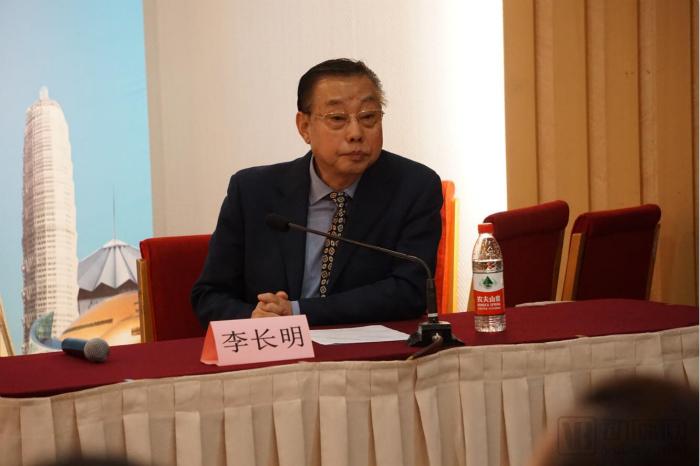
Li Changming, Former Director of the Department of Primary Health Care and Maternal and Child Health under the former Ministry of Health, and Lifetime Honorary Vice President of the China Maternal and Child Health Association
The inaugural conference was attended by over 100 experts in the field of maternal and child health, including directors of maternal and child health hospitals (institutes) from various regions, vice directors in charge of big data and information services, and heads of information departments at maternal and child health institutions at all levels. This professional committee is the highest-level industry governing body in China for big data and artificial intelligence in maternal and child health. It serves as a national platform integrating industry, academia, research, and application, jointly established by more than 3,000 maternal and child health institutions across China, along with related entities and experts in internet-plus, big data, and artificial intelligence. Furthermore, the establishment of this professional committee marks the entry of China’s maternal and child health institutions into a new historical phase characterized by “Smart Maternal and Child Health” and “Intelligent Maternal and Child Health.”
At the inaugural meeting, Yu Xiaoqian, Executive Vice President and Secretary-General of the China Maternal and Child Health Association, pointed out in his speech that, against the backdrop of the deep integration of information technology—particularly new technologies, services, business forms, and models such as big data, Internet Plus, and artificial intelligence—with the healthcare sector and industry, the Association is keeping pace with the times and responding to national policy strategies. It is committed to advancing the informatization and intelligent development of maternal and child health. By leveraging the leadership of the Professional Committee on Big Data and Artificial Intelligence for Maternal and Child Health, the Association aims to pool expertise, engage industry experts and authorities, and promote the development of maternal and child health through new technologies and models such as big data and AI. Furthermore, it seeks to provide recommendations for national policy formulation and build an authoritative integrated platform for production, education, research, and application, thereby accelerating the informatization and intelligent transformation of maternal and child health in China.
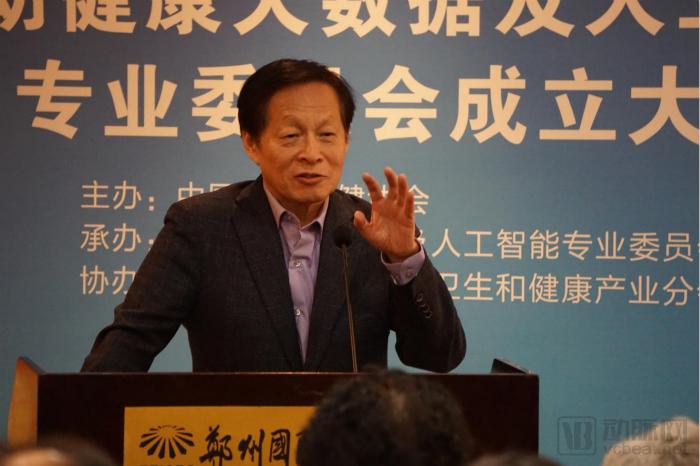
Address by Yu Xiaoqian, Executive Vice President and Secretary-General of the China Maternal and Child Health Association
At the inaugural conference, Song Xin, Secretary-General of the Maternal and Child Health Big Data and Artificial Intelligence Professional Committee under the China Maternal and Child Health Care Association, delivered a report to all committee members. He pointed out that the deep integration of health with informatization and intelligentization will guide the development direction of China’s health undertakings and health industry. Smart maternal and child healthcare and intelligent maternal and child health are not only important components of the development of China’s medical and health services, but also an essential pathway for promoting the advancement of women’s and children’s causes in China, as well as a crucial step in implementing the “Healthy China 2030” development strategy.
The Maternal and Child Health Big Data and Artificial Intelligence Professional Committee of the China Association of Maternal and Child Health will pool maternal and child health resources and expertise from across the country. It will focus on advancing initiatives in “Internet + Maternal and Child Health,” the development of smart maternal and child healthcare institutions, mobile healthcare for maternal and child populations, wearable devices and intelligent hardware, big data and informatization in maternal and child health, automated equipment and software, artificial intelligence in maternal and child medical care, the Internet of Things (IoT) and blockchain applications, health monitoring, data acquisition, and other intelligent products for maternal and child health. The committee aims to progressively promote the standardized and规范化 development of “smart maternal and child healthcare institutions.”
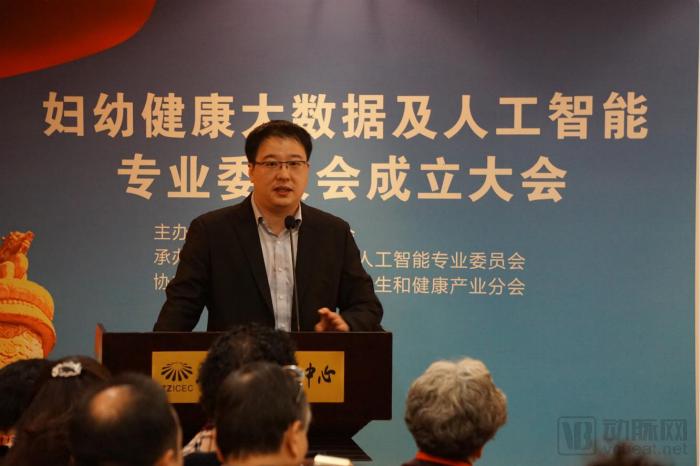
Song Xin, Founder of the Professional Committee on Maternal and Child Health Big Data and Artificial Intelligence under the China Maternal and Child Health Association, Delivers a Report
Guided by technological innovation, the Professional Committee on Maternal and Child Health Big Data and Artificial Intelligence of the China Maternal and Child Health Association promotes the practical application of intelligent, automated, and informatized concepts and advanced technologies in the field of maternal and child health. Leveraging maternal and child health big data as its foundation, the Committee empowers maternal and child health services with advanced production models such as artificial intelligence and the Internet of Things, continuously improving the quality of maternal and child health services and the efficiency of maternal and child healthcare work in China. By driving the reform and upgrading of the maternal and child health industry, the Committee contributes to the realization of China’s “Smart Maternal and Child Health” and “Intelligent Maternal and Child Health” initiatives.
On the Professional Committee on Big Data and Artificial Intelligence for Maternal and Child Health of the China Association of Maternal and Child Health
Key Responsibilities: Entrusted by the competent authorities, formulate industry management norms and standards for technical access, performance evaluation, etc., related to big data and artificial intelligence (AI) in maternal and child health; carry out international cooperation and exchanges in the fields of maternal and child health big data and AI, strengthen ties with relevant international organizations, and introduce and promote new theories, knowledge, technologies, and applications in maternal and child health big data and AI; facilitate the practical application and industrial translation of scientific achievements in maternal and child big data and AI; produce and assist in the distribution of audio-visual products and publications related to maternal and child health big data and AI; conduct R&D, evaluation, promotion, and guidance for products related to maternal and child big data and AI; carry out training programs related to maternal and child health big data and AI; organize research activities on big data and AI in maternal and child healthcare institutions across China, and conduct special topic studies; organize experts to compile popular science books and publish scholarly works on related technologies; organize and carry out publicity and promotion efforts regarding policy trends, standardization progress, and the latest applications in maternal and child big data and AI; undertake other tasks delegated by relevant government departments.
Currently, its areas of responsibility include: Internet+ Maternal and Child Health; development of smart maternal and child healthcare institutions; mobile healthcare for maternal and child populations; wearable devices and intelligent hardware; big data and informatization in maternal and child health; automated equipment and software; artificial intelligence in maternal and child healthcare; IoT and blockchain applications in maternal and child health; health monitoring, data acquisition, and other intelligent products for maternal and child care.