

Jiayou Health Files for IPO: Building a Premium Community Healthcare Brand through Family Doctors and AI-Enabled Diagnostics Integrated with Real Estate
The normal healthcare delivery order should resemble an “inverted triangle,” with tertiary hospitals at the apex treating complex and refractory diseases, secondary hospitals in the middle serving as a connecting link, and community health centers forming the broad base to handle common illnesses.
However, the phenomenon of overtreatment has inverted the healthcare delivery pyramid into a “reverse triangle,” with over 70% of patient visits concentrated in secondary and tertiary hospitals, while community healthcare facilities remain largely underutilized.
For common and frequently occurring diseases, the fundamental goal of tiered diagnosis and treatment is to manage minor illnesses within the community. Novel clinics, represented by Penguin Clinic and Xingren Clinic, have begun to form alliances and integrate diverse resources. Under the chain-store model, challenges differ in terms of cost control, customer acquisition, and staffing. Differentiated specialty services and a sustainable business model are key factors for the long-term viability of community-based clinic chains.
In January 2017, China’s first “family doctor” service integrated with residential real estate projects was launched in Zhongshan City, Guangdong Province, with the official opening of the Youjia Jiankang Community Medical Clinic.
How Can “Jiayou Health” Carve Out a Niche in the Primary Care Market by Leveraging Community Populations and Location Advantages Through Its “New Clinic” Model? Recently, VCBeat interviewed Li Ying, Co-Founder and General Manager of Jiayou Health, to explore how a community clinic specializing in preventive medicine can empower real estate developers and support the development of primary healthcare.
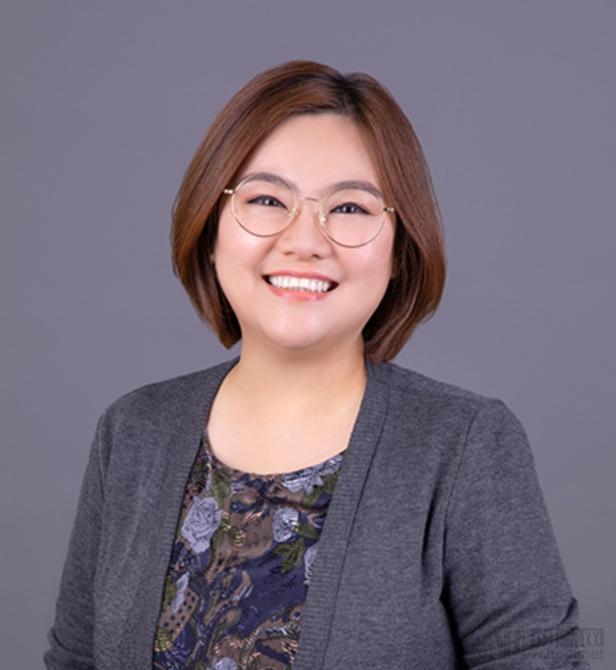
Li Ying, Co-founder and General Manager of Jia You Health
In VCBeat’s annual review of primary healthcare, it was noted that the national government’s signals regarding the next key steps for developing primary medical and health services are very clear. These include clearly defining the functional positioning of diagnostic and treatment services across medical institutions at all levels, strengthening the workforce and capacity building in primary healthcare, improving service quality, and ultimately implementing the tiered diagnosis and treatment system. The goals include achieving, by 2017, a proportion of no less than 65% of total patient visits handled by primary healthcare institutions, and ensuring that no less than 70% of residents choose primary healthcare institutions as their first point of care for illnesses occurring within a two-week period.
This goal implies that community medical institutions will shoulder the majority of diagnosis and treatment tasks for common diseases in the future.
In the current primary healthcare market, there are essentially two segments. The first is government-led basic medical services, primarily delivered through community health service centers and township health clinics, which carry a public health mandate. Their main challenge lies in the relative scarcity of medical resources, resulting in lower quality of care and subpar services. The second segment consists of private community clinics driven by social capital, which can be further divided into independent and chain clinics. In this segment, physician quality and brand trust have become nearly decisive factors.
In the 2010 document “Opinions on Further Encouraging and Guiding Social Capital to Establish Medical Institutions,” significant emphasis was placed on healthcare provision by social capital. However, after several years, the overall outcomes have been less than satisfactory, due in part to constraints imposed by public hospitals and in part to widespread irregularities in the medical sector.
Li Ying believes that for private primary care institutions, the greatest challenge lies in gaining public trust. “Without trust, there is no growth or revenue, and private clinics cannot survive in the long run.”
Founded in May 2016, Jia You Jian Kang is one of China’s earliest medical brands dedicated to national health management, with years of medical experience and a vast pool of physician resources.
In the definition of "Healthy at Home," a new clinic refers to "a new model of clinics that relies on the internet, utilizes advanced technologies such as big data and artificial intelligence to reengineer service experiences and operational processes, thereby reshaping business structures and ecosystems, and achieving deep integration of online and offline services."
Li Ying emphasized that Jiayou Health had a clear direction from its inception: to innovate grassroots healthcare through a business model combining “healthcare + real estate,” while leveraging modern, intelligent internet-based approaches to deeply develop and integrate digital solutions, thereby empowering new types of residential real estate projects.
The integration of real estate with healthcare is not uncommon; major developers such as Wanda and Evergrande have ventured into the medical sector. Despite their substantial financial strength, the complexity of healthcare should not be underestimated, and deeply embedding medical services within real estate projects remains a significant challenge for them.
Real estate and clinics have natural conditions for integration. In the initial investment of clinics, a significant portion of costs comes from rent and labor expenses. Meanwhile, education and healthcare have become "standard amenities" in real estate developments. Therefore, during their collaboration, property developers can provide commercial spaces to establish trusted medical brands as supporting facilities for residential communities, creating a mutually beneficial relationship between both parties.
Li Ying stated, “Jiayou Health empowers the real estate sector in two ways: first, by providing community-based medical services as supporting amenities for residential developments; and second, by leveraging cloud-based Hospital Information System (HIS) big data to ensure the integrity and continuity of household health records.”
Upon moving into the community, residents gain access to comprehensive, high-quality medical care. Services include scheduled home visits by family doctors and remote video consultations via online appointment. For conditions that cannot be managed within the community, the clinic provides a green referral channel to facilitate seamless access to further medical treatment.
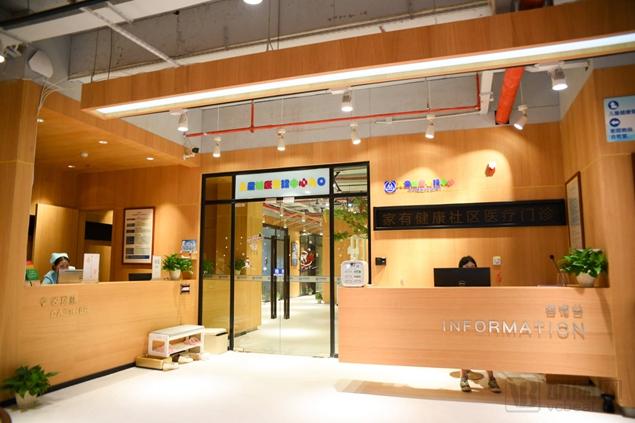
Jiayou Health Zhongshan Clinic (Source: Photo provided by the company)
Jiayou Health’s signature services include family physician services and child health management. The family physician service leverages its in-house team of doctors to provide proactive home visits for disease prevention and health management among community residents. Additionally, the Child Health Management Center, established in collaboration with the Early Childhood Development Center of the Capital Institute of Pediatrics, addresses gaps in basic pediatric healthcare that are often underserved by tertiary hospitals. It offers specialized services such as growth and development monitoring, guidance and intervention for children with developmental deviations, nutritional assessment and testing, breastfeeding consultation and guidance, and complementary feeding consultation and guidance.
Leveraging high-quality child health management services, the Child Health Management Center of Zhongshan Jia You Jian Kang has also become a scientific parenting base in Zhongshan City.
In terms of home health data, Jia You Jian Kang establishes exclusive family health records for each homeowner. It collects health data through smart hardware such as wearable devices, customizes personalized health management plans, and gradually builds the SLS (Smart Life System) smart living ecosystem to integrate data with community amenities. This includes providing intelligent services such as fitness progress reminders for gym workouts and medication reminders via robotic dogs.
Meanwhile, in terms of intelligence, Jia You Health has independently developed unmanned medical kiosks deployable within communities to provide on-demand diagnosis and treatment services. Within these micro-clinics, users can access services including preliminary testing, telemedicine, prescribing and dispensing medications for chronic diseases or follow-up visits, medical triage, registration, and appointment scheduling.
Since its launch in May 2016, Jiayou Health has established three outpatient clinics and eight experience stores within residential real estate projects in Zhongshan, Zunyi, Wuxi, and other cities. It has built a full-time medical team of 86 staff members and a remote expert team of 200 physicians currently practicing at Grade IIIA hospitals. The clinics handle between 30 and 60 patient visits per day, having served more than 35,000 residents in total.
According to Li Ying, 75%–80% of Jia You Jian Kang’s revenue since its inception has been derived from preventive medicine and community-based rehabilitation medical services. Among these, the annual package for family doctor contracted services is priced between RMB 7,000 and RMB 10,000, covering all family members.
Regarding the most pressing customer acquisition challenge facing community clinics, Li Ying believes that for community healthcare to attract residents, the primary issue to address remains building trust in medical services. In establishing trust with community residents, Jia You Health adopts a two-step approach:
First, by collaborating with property management companies, we foster user stickiness. Since community residents rely on property management for various activities, offering free clinic services through these partners enables residents to access convenient medical care right at their doorstep, thereby addressing poor healthcare experiences such as long queues and registration hassles at large hospitals for common ailments. Second, by partnering with the government, we provide services and resident health data for government preventive medicine programs.
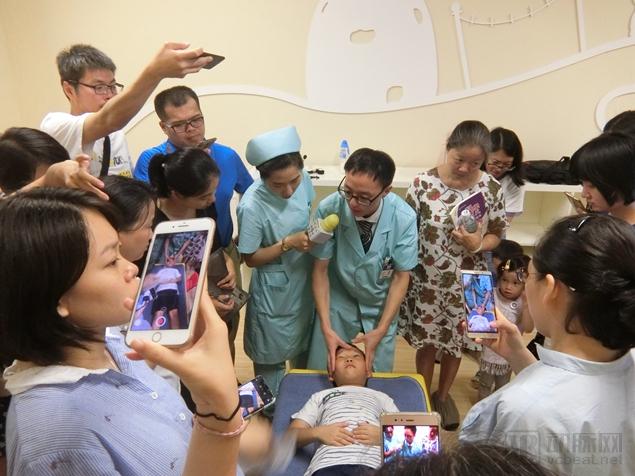
Jiayou Health Medical Staff Teach Parents Pediatric Massage at Home (Source: Company Photo)
Within the limited radius of its outreach to surrounding residents, the most important communication channel for community healthcare is word-of-mouth. Community healthcare does not need to focus heavily on rare and complex diseases; in the treatment of the 80% of cases involving chronic and common conditions, the key factors that attract patients to community healthcare are the following three:
1. Locational advantage: situated near residential areas, enabling convenient access to nearby medical care;
Second, medical quality should help residents prevent and detect diseases;
Third, it addresses urgent medical needs by providing in-home emergency care, thereby preventing tragedies that may occur during transport to hospitals.
In traditional healthcare settings, communication between doctors and patients is often inadequate. Face-to-face offline services are the primary and fundamental step in building trust; only through such in-person interactions can trust be established, thereby generating positive word-of-mouth and shaping the outpatient clinic’s image.
Li Ying told VCBeat that community clinics need to develop their own core strengths and specialty services, leveraging these offerings to rapidly build visibility and establish brand recognition. “In promoting specialty services, it is not just about offline models; online dissemination channels, such as community groups, are also critically important.”
In terms of medical quality, Jiayou Health leverages its in-house medical team of over 80 professionals and a remote outpatient service network comprising more than 200 physicians from Grade A tertiary hospitals. Meanwhile, it has introduced the CICARE framework from UCLA in the United States, specifically designed for doctor-patient communication. “We have standardized every step of the outpatient consultation process using this system to enhance patient satisfaction, experience, and trust.”
In terms of replicating its chain operation model, Jiayou Health has developed a standardized process that can be directly applied to new community clinics. The company has accumulated relatively mature experience in areas such as site selection and construction, specialized family doctor services, and community-based marketing strategies. According to Li Ying, by 2020, Jiayou Health plans to expand to 20–25 self-operated outpatient clinics and launch a clinic franchising program, thereby exporting its standardized chain model to residential communities developed by major real estate companies.