

Japan's Toranomon Physio Center Launches in Zhengzhou with Redcord Therapy, Files IPO Prospectus
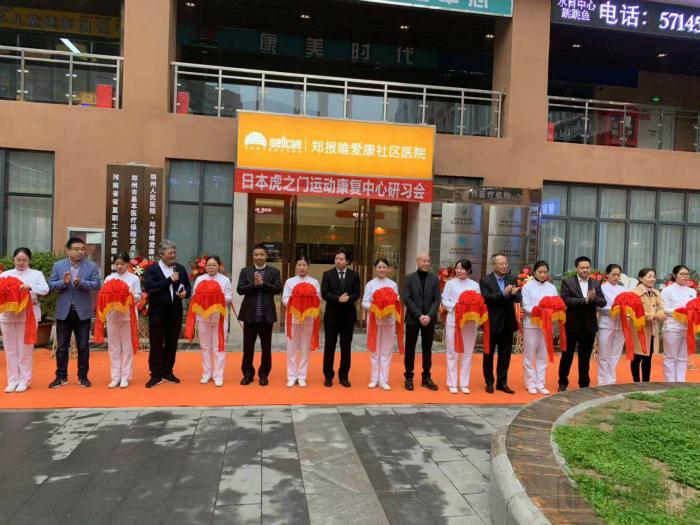
VCBeat (WeChat ID: vcbeat) has learned that on December 2, after intensive preparations, the Toranomon Sports Rehabilitation Center from Japan was officially established at Zhengbao Wei Ai Kang Community Hospital. Zhang Yong, Chairman of Wei Ai Kang Medical Group; Yin Su, President of Wei Ai Kang Medical Group; Wang Zheng, Chief Strategy Officer of Wei Ai Kang Medical Group; Ota Kosaku, Director of the Toranomon Rehabilitation Center in Japan; Lv Qiong, General Manager of Henan Weirui Health Technology Co., Ltd.; as well as medical experts, guests, and media friends from the hospital jointly attended the grand opening ceremony.
This marks a novel initiative by Zhengbao Wei’ai Kang Community Hospital since its opening, focusing on the theme of “sports rehabilitation,” and holds significant importance for advancing one-on-one health management services and enhancing the leisure convalescence service network.
At the launch of the event, Wang Zheng, Chief Strategy Officer of Weiai Kang Medical Group, stated that the Zhengzhou Daily Weiai Kang Community Hospital must focus on meeting the public’s healthcare needs. Guided by a spirit of learning, the hospital will adopt advanced concepts and service models from its Japanese counterparts to deliver more human-centered health services to the community. It will leverage scientific big data and internet-based tools for project management, while continuously innovating upon its existing foundation to build brand reputation and promote healthy lifestyles among a broader population.
Meanwhile, with the advent of a super-aged society, medical insurance and long-term care insurance systems are undergoing changes, making one-on-one personalized health management services increasingly important. It is hoped that Japan Toranomon Sports Rehabilitation will introduce its effective rehabilitation system to the market, thereby serving the general public.
Toranomon Sports Rehabilitation Center (PHYSIO CENTER): Kojiro Ota, Director of the Toranomon Rehabilitation Center in Japan, stated that to better highlight and leverage the professional expertise of physical therapists, the center was established in 2005 as Japan’s first “problem-solving” rehabilitation facility led by physical therapists.
This rehabilitation center leverages world-class rehabilitation equipment and the specialized therapies of physical therapists to help individuals suffering from post-orthopedic surgery dysfunction, sports injuries, and chronic pain alleviate pain and improve function, addressing a wide range of practical issues for patients. Zhengzhou offers superior conditions that are highly suitable for developing sports rehabilitation programs.
Myth: Chinese People Generally Prioritize Treatment Over Rehabilitation
Kosaku Ota explained, “In China, there is a prevailing emphasis on treatment over rehabilitation. Many people believe that health will naturally follow once clinical diagnosis and treatment are concluded; however, this is precisely the time when patients should transition promptly into the rehabilitation phase. Taking orthopedics as an example, many patients who do not undergo timely postoperative exercise-based rehabilitation training experience severe pain and reduced range of motion in their joints, which significantly compromises surgical outcomes and quality of life.”
Sports rehabilitation is a specialized field focused on rehabilitating functional impairments of the human musculoskeletal system. Through systematic examination, assessment, and diagnosis by physical therapists, it integrates multiple therapeutic approaches—including functional training, manual therapy, and physical modalities—to help patients alleviate pain, enhance joint range of motion and function, restore physical capabilities, and improve overall health and quality of life.
Advantages: Develop personalized rehabilitation programs to achieve optimal outcomes
Many patients undergoing rehabilitation training in hospitals experience significant anxiety, as “no matter how pleasant the environment, it is still a hospital.” The crowded and noisy conditions prevent them from forgetting their status as patients, while pain and difficulties in daily mobility further complicate the rehabilitation process. Even when aware of the importance of rehabilitation, they may choose to give up, thereby missing the opportunity to improve their health.
It is understood that, as the most distinctive feature of Zhengbao Wei Ai Kang Community Hospital, its “Exercise Rehabilitation” program will leverage professional staff and equipment to develop personalized rehabilitation protocols based on individual assessment results. This approach enables patients to complete high-quality exercise rehabilitation training in a pleasant state, thereby achieving optimal outcomes.
Feature: The first in the province to introduce modern advanced rehabilitation technology—"Red Rope Exercise Rehabilitation Therapy"
It is reported that Zhengzhou Daily Weiaikang Community Hospital has introduced the full range of sports rehabilitation programs from Japan’s Toranomon Sports Rehabilitation Center. As the first sports rehabilitation center in the province to offer professional physiotherapy services, it primarily provides three core rehabilitation services: “Redcord Exercise Rehabilitation Therapy,” “Traditional Chinese Medicine (TCM) Rehabilitation Physiotherapy,” and “Musculoskeletal Rehabilitation Screening.” It is the first medical institution in Henan Province to introduce the Redcord exercise rehabilitation program.
Redcord, originating from Norway and commonly known in China as “Red Rope,” primarily utilizes progressive active training to stimulate and activate “inhibited” or “dormant” deep local muscles. This approach helps relax muscles, enhance muscle strength, increase joint range of motion, and improve sensorimotor control. Additionally, through movement diagnostics, it identifies the “weak links” in patients or athletes and provides targeted, stepwise training. This enables patients to achieve long-term pain relief and restore health without experiencing pain during the process.
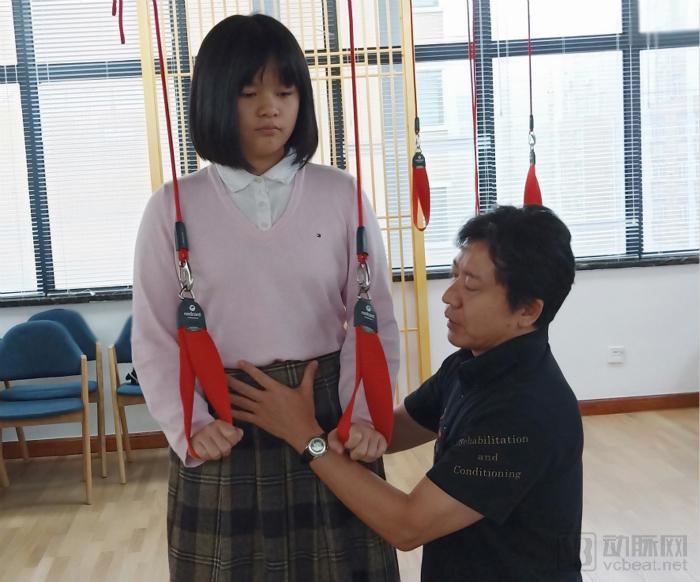
Target Population for Exercise Rehabilitation:Elderly individuals classified as requiring support levels 1 and 2 for long-term care prevention; patients with cerebrovascular disorders, ankle sprains or fractures, and those post-surgery of the neck, lower back, hip, or knee joints who seek improvement or prevention; individuals suffering from neck, shoulder, lower back, or leg pain; those wishing to enhance physical performance; gynecological patients (e.g., urinary incontinence, postpartum pain); individuals seeking posture correction or maintenance of general health; other patients; patients who have recently undergone surgical treatment at a hospital; and patients still receiving medical treatment or rehabilitation at a hospital but with physician approval.
Rehabilitation Protocol:Physical therapists should first aim to restore patients’ self-care abilities by assessing their physical and mental conditions. They then provide necessary, targeted professional rehabilitation services when patients express desires such as “recovering to a level that satisfies them,” “undergoing rehabilitation under expert guidance,” or “performing more effective rehabilitative exercises.”
Develop personalized rehabilitation programs based on individual assessment results. Conduct rehabilitation training using resistance trainers, suspension systems, and other equipment to enhance physical and mental function. Common rehabilitation protocols include: improving physical function; providing comprehensive training for muscle strength, flexibility, and balance that support physical endurance; joint guidance by medical personnel and physical therapists; and establishing individualized rehabilitation programs according to specific conditions.