

Fentanyl Crackdown Creates Major Opportunities for Medical Devices and Digital Therapeutics
At the recent meeting between the Chinese and U.S. heads of state, both sides agreed to take positive actions to strengthen cooperation in law enforcement, counter-narcotics, and other areas, including one measure to control fentanyl.
Fentanyl instantly became the headline-grabbing news story, prompting a renewed public awareness of the drug. In the United States, the opioid crisis, exemplified by fentanyl, has become as severe as the impact of widespread gun violence.
Fentanyl is a type of opioid. Opioids are a class of drugs similar to the alkaloids found in the opium poppy, including illegal drugs such as heroin, synthetic opioids such as fentanyl, and prescription pain relievers that can be legally used, such as oxycodone (OxyContin), hydrocodone (Vicodin), cocaine, morphine, and many other drugs.
Fentanyl has garnered the most attention. As a synthetically produced pharmaceutical agent, in contrast to plant-derived opium, it can be classified either as a designer drug or as an analgesic with superior efficacy and a more favorable side-effect profile.
“All medications carry some degree of toxicity; opioid abuse is tantamount to illicit drug use.” While stricter controls on fentanyl are understandable, VCBeat’s research has found that these regulations have brought significant benefits to the medical device and digital prescription therapy sectors.
The main contents of this article are as follows:
1. The synthesis of the opioid fentanyl is not inherently wrong; poor management of prescription drugs has led to a crisis
2. The FDA seeks to prevent opioid addiction by encouraging innovation in medical devices, thereby better helping patients manage pain and even serving as alternatives to opioids.
3. Blockchain, VR technology, and digital prescription therapies may offer new hope for addressing opioid-related issues, with companies such as Samsung, Novartis, and Oculus actively entering the field.
In the United States, according to a report by The New York Times, the number of deaths caused by drug overdoses in 2016 exceeded those resulting from firearms and car accidents. Drug overdose is also a leading cause of death among Americans under the age of 50, primarily driven by opioids. It is estimated that more than 2 million Americans suffer from opioid dependence. According to the latest survey data, over 97 million people used prescription painkillers in 2015; among them, 12 million did so without medical supervision.
In October last year, Trump signed a memorandum declaring a national public health emergency in the United States to address the opioid epidemic. The root of this crisis stems from excessive prescribing of opioid medications in the U.S. As shown in the figure below, deaths caused by drug overdoses involving common prescription opioids are no less severe than those involving heroin and fentanyl.
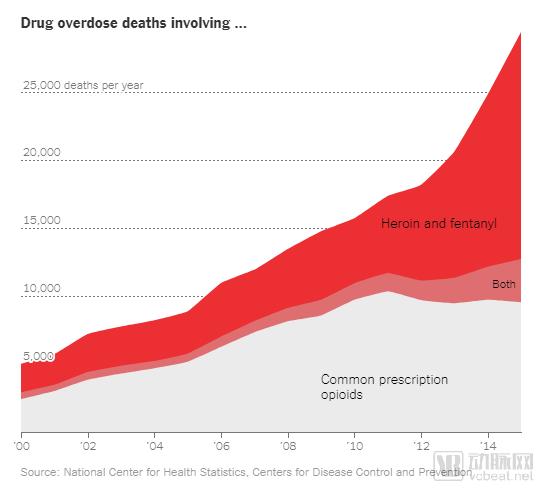
Opium addiction existed as early as the Qing Dynasty, but the current opioid crisis in the United States began in the 1980s. Several influential journal articles led physicians to relax their restrictions on the use of opioids. As safeguards were eased, opioids flooded the market, and pharmaceutical companies launched aggressive marketing campaigns. Consequently, an increasing number of people developed substance use disorders. Some individuals initiated drug use voluntarily, while others became addicted after initially taking prescribed medications. Furthermore, because fentanyl is used in the manufacture of counterfeit drugs and is a synthetic substance, it is difficult to track and detect.
One of the causes of the opioid crisis is the lack of prescription regulation. The current U.S. prescription system relies on trust—trust between patients and prescribing physicians, trust between prescribing physicians and pharmacies, and trust between pharmacies and patients. However, handwritten, paper-based prescriptions are, in fact, easy to forge or alter.
Addressing the opioid epidemic requires strict control over prescription practices, ensuring that patients with legitimate medical needs have access to these medications while preventing excessive or inappropriate prescribing.
The FDA has also made significant efforts in this regard. Its initial rationale was to replace opioids with alternative analgesic approaches. However, no suitable pharmaceutical alternatives have yet been identified. With the advancement of digital health technologies, the FDA is also promoting innovation in medical devices to help alleviate the opioid crisis.
Additionally, the FDA has launched an innovation challenge to select digital solutions to address the opioid crisis. This challenge aims to stimulate the development of medical devices, including digital health technologies and diagnostic tests, that can provide new solutions for detecting, treating, and preventing addiction, managing diversion, and treating pain.
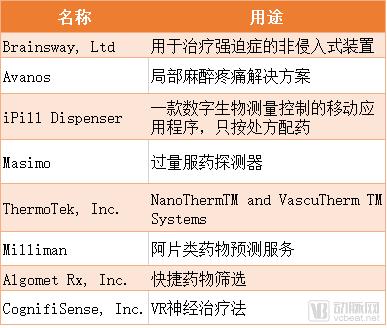
In this challenge, a total of 250 applications were received, from which the FDA ultimately selected eight products. The FDA stated that although the devices from these eight companies will not gain immediate market authorization, they will benefit from increased interaction with CDRH experts, receive guidance on clinical trials, and enjoy an accelerated approval process.
“We believe that medical devices hold the greatest potential to assist individuals with opioid use disorder by managing pain or providing prevention, either as an alternative to opioids or by mitigating opioid dependence,” the FDA stated in its announcement. “For example, the development of a diagnostic device—whether an in vitro diagnostic test, software, or a mobile medical application—could help identify patients who require careful management.”
In the past few years, the CDRH has authorized more than 200 devices related to pain treatment or management for market entry (through clearance, grant, and approval, respectively). Among these, 10 devices incorporate novel technologies, and the FDA hopes that these new devices will help reduce reliance on opioids.
“The Innovation Challenge is another example of how we are bringing advanced treatments, including medical devices, to the individuals who need them. Collaborating with selected developers is expected to drive innovation and successfully bring these products to market,” the FDA stated in its announcement.
The FDA is driving medical device innovation to address the opioid crisis, primarily by leveraging medical devices to better manage opioids, control pain, and provide alternatives to opioid therapy. Listed below are eight products favored in the FDA’s Innovation Challenge, which represent the directions the FDA aims to encourage in pain management.
In addition, many digital health solutions are also drawing significant attention.
Blockchain
It is hard to imagine that blockchain technology could also help combat opioid addiction. Blockchain can provide clinicians, pharmacies, and patients with a secure and reliable prescription platform, ensuring clear accountability and greater process transparency.
The solution currently under development will enable clinicians, when treating patients, to access not only the patients’ prescription histories but also their own prescribing records. This is because every prescription is recorded on a blockchain, allowing government agencies or third-party regulatory bodies to better track and combat prescription abuse.
VR Technology
Although VR has not been a major trend in recent years, it has consistently been viewed favorably in the field of pain management and holds promise as an alternative to certain anesthetic drugs. Samsung has been closely monitoring this area and continues to refine its technology.
In March 2018, Samsung announced a collaborative study with Travelers Partners Insurance, Cedars-Sinai Medical Center, Bayer, and appliedVR to investigate the use of virtual reality (VR) in pain mitigation. The study employed wearable devices and VR-assisted therapy techniques to alleviate acute orthopedic pain and extremity pain. The project aimed to leverage cutting-edge technology to improve treatment outcomes for injured workers.
Chronic pain in the workplace can lead to a range of issues, with injured employees often turning to opioids to mask their pain. This study demonstrates that non-pharmacological VR therapy can help injured workers avoid chronic pain, reduce the risk of opioid addiction, and lower healthcare costs.
In the field of childbirth, international efforts have also been extensive.VR Has Already Been Applied to Pain Management During Childbirthproducts ofVRHealth has partnered with Oculus to use VR to alleviate pain in cancer patients and women during childbirth.
VRHealth’s non-invasive medical tools are delivered through VR content, while leveraging artificial intelligence and cloud computing algorithms to provide advanced data analytics. VRHealth employs highly precise tracking tools to deliver data analytics for hospitals, healthcare institutions, or remote settings. VRHealth collaborates with multiple world-renowned U.S. healthcare providers, hospitals, and rehabilitation centers.
VRHealth is leveraging Oculus Go and Rift to provide VR technology solutions for a range of health challenges, from pain management during childbirth to alleviating pre- and post-operative anxiety in cancer patients undergoing chemotherapy. Virtual reality transports patients into an environment where they can more actively observe and experience their treatment. Through VRHealth’s engaging solutions, healthcare becomes an enjoyable activity.
APP
The application primarily addresses the opioid epidemic crisis at the front end by helping people reduce accidental ingestion through medication management and opioid identification.
The FDA has recently approved a mobile application designed to assist in the treatment of alcohol, cannabis, and cocaine addiction. Results from relevant clinical trials indicated that 40% of patients using the app achieved abstinence or remission from addiction or dependence within three months, compared with only 17.6% of patients receiving standard therapy alone.
This product is ReSET, developed by Pear Therapeutics.TM...product, and it is also the first FDA-approved digital therapeutic for the treatment of Substance Use Disorder (SUD). It empowers patients to regain control over drug addiction and can serve as an adjunctive therapy in the treatment of dependence on stimulants, cannabis, cocaine, or alcohol. Although it has received FDA clearance, it has not yet been commercialized and remains under further testing.
Although it sounds cutting-edge, Pear Therapeutics has already partnered with Novartis to jointly develop pharmaceuticals. Meanwhile, Pear’s competitor, Click Therapeutics, secured $17 million in financing this July, led by Sanofi. This substantial investment underscores the promising prospects of prescription digital therapeutics.
In addition to its commercialized product Clickotine® for smoking cessation, Click Therapeutics boasts a robust pipeline of investigational digital prescription therapies, including CT-152 for depression, CT-141 for insomnia, CT-111 for acute coronary syndrome, and CT-130 for chronic pain.
References:
https://www.nytimes.com/interactive/2017/08/03/upshot/opioid-drug-overdose-epidemic.html
https://www.fda.gov/NewsEvents/Newsroom/FDAVoices/ucm627132.htm
https://www.himssinsights.eu/could-digital-health-resolve-current-us-opioid-crisis