

Daisy Medical Nutrition Pioneers Enteral Nutrition with Strategic Layout in FSMP Sector Ahead of IPO
There are two types of clinical nutritional support. The method of providing nutrients and other various nutritional substances required for metabolism via the gastrointestinal tract is collectively referred to as enteral nutrition (EN). The primary routes for administering enteral nutrition are oral intake and tube feeding; the latter includes nasogastric tubes, nasoduodenal tubes, nasojejunal tubes, and gastrojejunostomy tubes. Corresponding to enteral nutrition is parenteral nutrition (PN), which refers to the provision of nutrients intravenously.
Compared with parenteral nutrition, enteral nutrition demonstrates significant advantages. In addition to the direct intestinal absorption and utilization of nutrients, which is more physiologically appropriate, as well as the convenience of administration and lower cost, it is particularly beneficial in maintaining the structural integrity and barrier function of the intestinal mucosa. On one hand, when nutrients are delivered intravenously and eventually enter the bloodstream, they may trigger immune rejection responses, leading to uncertain nutritional outcomes. On the other hand, small intestinal villi require stimulation by nutrients to maintain their viability.
Studies have shown that more than half of the small intestinal villous epithelial cells will be irreversibly inactivated if they are not exposed to nutrients for more than 48 hours. In other words, long-term parenteral nutrition will reduce the body's autonomous absorption function. Therefore, when deciding on the type of nutritional support to provide, enteral nutrition has become the consensus among many clinicians as the preferred option.
In developed countries and regions such as the United States, Europe, and Japan, enteral nutrition has become the primary method of clinical patient feeding, with a relatively mature development. In contrast, China currently still relies mainly on parenteral nutrition, although the proportion of enteral nutrition is increasing year by year.
Foods for Special Medical Purposes (hereinafter referred to as “FSMPs”) fall within the category of enteral nutrition. According to the interpretation issued by the former China Food and Drug Administration, FSMPs are specially processed and formulated foods designed to meet the specific nutritional or dietary needs of individuals with limited food intake, impaired digestion and absorption, metabolic disorders, or specific disease states. Common standards and regulations for FSMPs have been established worldwide.
In 2009, China began to establish a regulatory framework for foods for special medical purposes (FSMP), starting with the public consultation on GB 25596-2010 "Infant Formula for Special Medical Purposes." The general standard GB 29922-2013 "General Rules for Foods for Special Medical Purposes" was officially released in 2013. By 2018, national standards drafts specifically targeting diseases such as inflammatory bowel disease, diabetes, and tumor-related nephropathy, along with draft guidelines for FSMP production, were introduced, accelerating the improvement of national regulations.
The China Food and Drug Administration (CFDA) has established a separate registration number system for foods for special medical purposes (FSMPs) and implements distinct quality standards for infants under one year of age and adults over ten years of age. Among the 18 approvals granted to date, 15 are for FSMPs intended for infants under one year of age. Currently, only one domestic enterprise has obtained approval numbers for FSMPs for adults over ten years of age, covering two electrolyte formulations, which were approved in July 2018.
For critically ill patients, long-term enteral nutrition supplementation is a crucial and preferred approach, making foods for special medical purposes (FSMP) an essential necessity. Data shows that during hospitalization, patients with cancer, diabetes, and various diet-related chronic diseases have strong demand for FSMP, with daily expenditures ranging from tens to hundreds of yuan. This has created a substantial FSMP market within the broader health sector. Currently, many domestic and international dairy and pharmaceutical companies are establishing FSMP production lines, with Dongze Special Medical Foods being one such example.
Dongze Medical Nutrition was established in 2012. In September 2014, the company pivoted from its long-standing pharmaceutical business to focus on foods for special medical purposes (FSMP), dedicating itself to the R&D, production, and promotion of FSMP products. It operates powder and liquid manufacturing bases in the Liuyang Development Zone in Hunan Province and the Nantong Biotechnology Park in Jiangsu Province. Yuan Binwen, founder of Dongze Medical Nutrition, told VCBeat (WeChat ID: vcbeat) that the company had formally submitted a complete set of application materials for its first FSMP approval for a nutritionally complete formula in November 2017. If approved smoothly, Dongze Medical Nutrition will be at the forefront of the domestic market.
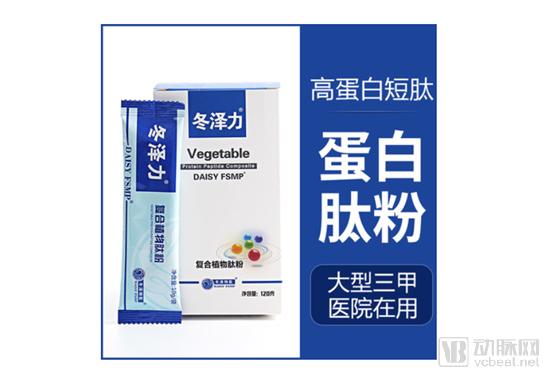
A Product from Dongze Special Medical Nutrition. Image provided by Dongze Special Medical Nutrition.
All Parties Are Set to Enter the Arena
Currently, the domestic market for foods for special medical purposes (FSMP) is dominated by foreign dairy companies and pharmaceutical firms, primarily international giants. However, the market landscape remains unclear, and profitable business models are still being explored. Among foreign dairy companies, Abbott and Nestlé are the key players; they began establishing production lines in China in 2015 and have directly introduced products from overseas. In the pharmaceutical sector, Huarui and Nutricia are the leading entities. Leveraging more than a decade of experience in selling prescription-grade pharmaceutical products, they have established effective sales networks in China and are currently preparing to build dedicated FSMP production lines.
According to Yuan Binwen, the entry of foreign giants into the Chinese market can be divided into two phases. The first phase spanned from 2003 to 2005, during which these giants successfully entered the Chinese market in the form of pharmaceutical products. Companies such as Huarui and Nutricia pioneered the market during this period, and many of the products they currently sell were introduced at that time. The second phase occurred around 2015, when China issued regulations on foods for special medical purposes (FSMP). Some companies, including Nestlé and Japan’s Otsuka, began to enter and strategically position themselves in the FSMP sector. On the domestic front, pharmaceutical companies as well as enterprises operating in the health supplement and infant formula sectors also began preparing to enter the FSMP industry. Overall, the domestic FSMP market is still in its early stages of development. While the basic market structure has initially taken shape, the division of shares among specific segments remains unclear. On one hand, policies have not yet been fully implemented; therefore, FSMP companies are mainly engaged in preliminary preparations and limited-scale sales activities within their respective professional fields. Intense market competition has not yet begun.
High-Tech Production Lines Build Competitiveness
The primary distinction between Foods for Special Medical Purposes (FSMPs) and conventional foods lies in their provision of personalized nutritional support tailored to patients’ specific needs. For instance, FSMPs formulated for diabetic patients typically adopt sugar-free recipes, whereas those designed for oncology patients feature high-protein, high-fat, and low-carbohydrate formulations. Precise nutritional intake not only helps alleviate disease symptoms but also improves overall health status.
According to Yuan Binwen, Dongze’s medical foods for special medical purposes hold certain advantages in China with their liquid formulations and short-peptide formulations. The technical challenges associated with liquid formulation products are substantial, and few domestic companies possess the capability for independent R&D and manufacturing processes. In contrast, multinational corporations such as Nestlé and Abbott have relatively mature liquid formulation technologies abroad.
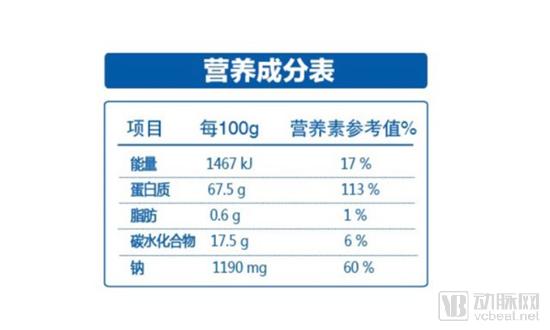
Nutritional Information of Dongzeli. Image provided by Dongze Special Medical Purpose Food.
Liquid-formula foods for special medical purposes (FSMPs) are relatively convenient and quick to use, eliminating the risk of secondary contamination during administration. More importantly, most patients requiring FSMPs are unable to eat voluntarily and need tube feeding assistance. Liquid-formula FSMPs can be administered directly via tube feeding without reconstitution, thereby avoiding contamination or osmotic imbalance.
However, the production costs and technical challenges associated with liquid-formula foods for special medical purposes (FSMP) are significantly higher than those for solid or powdered formulations. Yuan Binwen told VCBeat that, on one hand, the capital expenditure for establishing liquid-formula production lines is approximately ten times that of dry-blending powder lines; on the other hand, liquid-formula products require more stringent packaging standards to mitigate the risk of quality degradation during transportation and storage. Furthermore, product stability presents a major challenge, necessitating robust support from experienced R&D teams and highly skilled production personnel.
Furthermore, two-thirds of Dongze Special Medical’s raw materials are imported from abroad. Yuan Binwen believes that, at least at this stage, raw materials sourced from globally renowned suppliers offer more reliable quality assurance. “For products used in critically ill patients, quality is paramount.” It is understood that Dongze Special Medical has established long-term partnerships with reputable, high-quality suppliers such as FrieslandCampina.
In terms of product analysis and testing, Dongze Medical Nutrition has established an independent GLP laboratory spanning over 2,000 square meters, introduced GMP-standard workshops equipped with state-of-the-art instruments, and assigned dedicated quality control personnel. Yuan Binwen told VCBeat that the core testing staff at Dongze Medical Nutrition’s full-testing laboratory each possess more than 10 years of inspection experience in the infant formula industry.
Full Production Capacity: Early Strategic Deployment
Based on overseas market models, Yuan Binwen estimates that the total size of China’s FSMP (Food for Special Medical Purposes) market will reach RMB 200–300 billion. Therefore, in terms of capacity planning, Dongze FSMP has proactively positioned itself to meet future demand by establishing production bases in Liuyang, Hunan Province, and Nantong, Jiangsu Province. The Nantong production base plans to invest RMB 180 million, implemented in two phases. Upon completion of Phase I, the facility will have four liquid production lines, two powder production lines, one general food production line, and one production line for infant formula for special medical purposes, comprehensively covering all business formats and meeting market demand for the next decade. After Phase I becomes operational, the annual production capacity will reach 30,000 tons for powder products and 30 million bottles for liquid products.
It will have four liquid production lines, two powder production lines, one food production line, and one infant formula production line, comprehensively covering all business formats. The annual production capacity for powder will reach 30,000 tons, and 30 million bottles for liquid products, which can meet market demand for the next ten years.
In terms of qualifications, Dongze Medical Foods still has 11 products planned for regulatory approval applications in 2019. In addition, Dongze Medical Foods has established a dedicated R&D team to complete the research and development as well as clinical trials of medical foods specifically designed for cancer patients.
Leverage Established Channels to Rapidly Expand into the In-Hospital Market
The founding team of Dongze Medical Nutrition previously worked in pharmaceutical promotion, cultivating drug distribution channels for over 15 years. Having entered the FSMP (Food for Special Medical Purpose) industry four years ago, they have built a comprehensive distribution network leveraging their extensive early experience in pharmaceutical sales. Their products now cover 23 provinces and municipalities across China, reaching more than half of all Grade A tertiary hospitals. Looking ahead, Dongze Medical Nutrition is confident in its strategic expansion into out-of-hospital markets, including supermarkets and e-commerce platforms.
Currently, Dongze Medical Nutrition possesses a professional R&D team with extensive experience and exceptional capabilities, and has appointed two senior R&D consultants. One of these consultants is Professor Guo Mingruo, the Chief Scientist at the State Key Laboratory of Dairy Science; the other is Professor Liu Xinqi, who has worked in Japan for over 20 years and holds significant influence in the field of short peptides. Meanwhile, Dongze Medical Nutrition has established technical exchange and collaborative partnerships with nearly ten universities and research institutions in China.
Yuan Binwen believes that the FSMP (Food for Special Medical Purpose) industry is still in its nascent stage, facing relatively difficult development conditions. With policies yet to be fully implemented, all players are advancing through exploration. While building its market brand influence, Dongze FSMP is actively promoting the concept of FSMPs among doctors and patients, and vigorously driving the establishment of industry standards and the issuance of national standards. “Before market demand saturates R&D capabilities and production capacity, Dongze FSMP can engage in external services such as contract R&D, regulatory approval assistance, contract manufacturing, and imported product distribution.”
It is understood that Dongze Medical Nutrition has completed a Series A financing round of approximately RMB 20 million. As the construction of its second-phase manufacturing facility enters the implementation stage, Dongze Medical Nutrition plans to raise around RMB 60 million in a Series B financing round, with the proceeds primarily allocated to facility construction, product research and development, and regulatory approval processes.