

AKANG Health Hosts Forum on Internet-Enabled Primary Care Under Prescription Diversion Policy, Addressing Chronic Disease Management and Drug Accessibility in Grassroots Communities
On December 4, 2018, the Internet Healthcare + Primary Care Development Forum under the Trend of Prescription Outflow and the Launch Ceremony of the National Primary Care Tour Training for the “Chronic Disease Rehabilitation Project,” hosted by Aikang Health Technology Group, were successfully held in Guangzhou. The forum invited more than 450 guests, including Liao Xinbo, former Deputy Director/Inspector of the Guangdong Provincial Health and Family Planning Commission; Jiang Qiang, founder of Mingyi Zhonghe; Wu Zongxun, Chief Product Officer of Ping An Good Doctor; Liu Jun, Partner at Beijing Qunying Consultants; Wang Lijue, Chairman of Aikang Health; Qiu Ke, General Manager and Executive Editor-in-Chief of Physician Online; Gao Kangping, Senior Reporter at VCBeat and Researcher at VCBeat Institute; and others. The atmosphere for on-site exchanges was vibrant.
This Development Forum takes a global perspective on economic reform, focusing on hot topics such as the 2018 adjustment of government agency functions, new national policies on essential medicines, and “Internet + Healthcare.” It brings together experts, scholars, pharmaceutical manufacturers, primary healthcare enterprises, and industry investors to jointly analyze the 2018 pharmaceutical economic landscape, interpret new industry policies, and assess emerging trends. The forum aims to spark new ideas for discussions on the development opportunities of “Internet Healthcare + Primary Healthcare” in 2019 amid the trend of prescription outflow, and to chart a new blueprint for the pharmaceutical industry in the primary healthcare sector.
At the development forum, in addition to keynote speeches by distinguished guests, a high-level dialogue was held featuring representatives from pharmaceutical manufacturers, primary healthcare providers, and investment capital. The dialogue centered on the theme “Innovative Practical Development Opportunities for Internet Healthcare + Primary Healthcare in the Context of Prescription Outflow.” Finally, Akang Health joined hands with numerous partners, guided by the vision of enhancing physicians’ consultation capabilities and addressing chronic disease rehabilitation for the public at the primary care level. Together, they are committed to building the “Chronic Disease Rehabilitation Project” for primary healthcare and launched the inaugural ceremony for a nationwide tour of 100 training sessions. This initiative aims to create an academic medical communication platform for primary care physicians, provide medication solutions for patients with chronic, critical, and rare diseases, comprehensively support the development of chronic disease rehabilitation among the grassroots population, and promote the orderly decentralization of high-quality medical resources.
In accordance with the directives of the CPC Central Committee and the State Council, efforts are being accelerated to develop “Internet + Healthcare,” leveraging internet-based innovations in diagnosis and treatment services to minimize the need for patients to make physical visits while enabling data to flow more freely. Amid the deepening reform of various systems, further consensus has been reached among government bodies and society at large. The year 2019 will be a pivotal year for implementing the Healthy China initiative. At the forum, numerous industry leaders gathered to analyze key hotspots and pain points within the sector.
Liao Xinbo, former Inspector of the Guangdong Provincial Health and Family Planning Commission, delivered a keynote speech titled “Reflections on the Intersection of Tiered Diagnosis and Treatment and the Internet: Development Opportunities for Primary Healthcare.” “The vigorous promotion of tiered diagnosis and treatment will further enhance the service capacity of primary healthcare institutions; meanwhile, advancements in internet technology will challenge traditional concepts of hospital management,” Liao stated at the conference. He indicated that various policies would bring about significant changes to the healthcare landscape, subjecting the primary healthcare market to a major transformation. Citing a series of data points and international case studies, he revealed that future healthcare reforms would focus on three key areas: “equitable payment,” “breaking down barriers to facilitate resource flow,” and “downward dissemination of technology.” “An equitable payment system places greater emphasis on the value of medical services themselves, while reforming personnel systems to ‘break down barriers’ helps drive the downward allocation of medical resources. The application of technology further ensures the quality of primary healthcare,” Liao said.
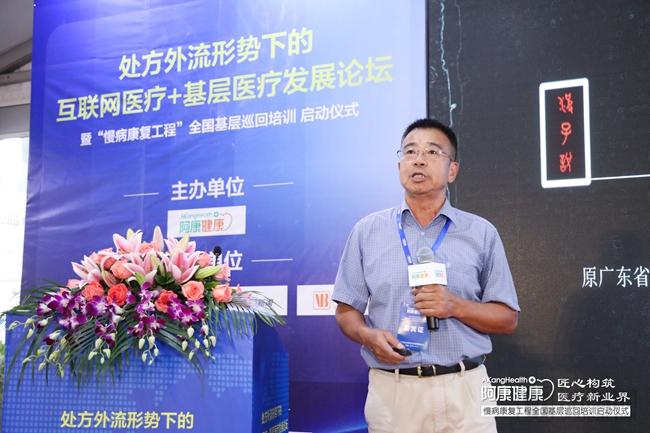
Liao Xinbo, Former Inspector of the Guangdong Provincial Health and Family Planning Commission
Wu Zongxun, Chief Product Officer of Ping An Good Doctor, delivered a keynote speech titled “Internet Healthcare Technology Empowerment: A Pioneer in New Medical Business Models” at the forum. Wu analyzed three major pain points in the healthcare market: scarcity and uneven distribution of high-quality medical resources, poor patient experience with medical services, and deficits in basic social health insurance funds. He estimated that the potential size of the healthcare market would reach RMB 8 trillion by 2025. With continuous release of favorable policies both domestically and internationally to vigorously promote the development of the internet healthcare market, the industry is poised for explosive growth. It has become an inevitable trend for internet healthcare to empower primary care, collaborate with pharmaceutical companies, and accommodate the outflow of prescription drugs from hospitals.
Jiang Qiang, founder of Mingyi Zhonghe, delivered a keynote speech titled “Opportunities and Explorations in Primary Care + Internet Healthcare” at the forum. Based on current economic characteristics and opportunities, he analyzed the development potential of the primary care market. Jiang stated, “Survey results on the service capabilities of primary care institutions reveal that over 62% frequently face medication shortages; 89% of primary care physicians require consultations with pharmacists; and 68% lack laboratory testing capabilities, which constrains their diagnostic and treatment capacities. The most urgently needed training for clinicians in primary care clinics is the sharing and analysis of clinical case studies.” Therefore, Jiang believes that with advancements in internet technology, empowering primary care institutions through digital solutions can address the challenges of difficult and costly access to healthcare for grassroots populations, ultimately enabling data to do more of the running so that patients have to do less.
At the forum, Liu Jun, a partner at Qunying Consultants in Beijing, delivered a keynote speech titled “Trends, Principles, and Tactics in the Primary Healthcare Pharmaceutical Market.” Through a series of data analyses, he revealed the turning points and strategic principles shaping this market. Liu Jun elaborated from the perspective of demographic trends: “Difficulties and high costs associated with accessing medical care are merely the ‘tip of the iceberg’ of tiered diagnosis and treatment. The more critical issue is that, as China enters an aging society, the elderly population faces increasing risks of chronic diseases. However, primary healthcare services remain relatively weak, necessitating the redirection of high-quality medical resources to enhance primary-care capabilities.” Regarding the current landscape of prescription drug distribution, if government incentives are strengthened and the authority to dispense outpatient prescriptions is further shifted from hospitals and primary healthcare institutions to pharmacies, the prospect of achieving a more balanced market structure could materialize.
Qiu Ke, General Manager and Executive Editor-in-Chief of Physician Online, delivered a keynote speech titled “Booming Primary Healthcare and Industry Insights” at the forum. He analyzed several key national initiatives for primary healthcare and proposed solutions involving initial diagnosis at the primary level, two-way referrals, separate management of acute and chronic conditions, and coordinated care between upper- and lower-tier medical institutions.
Gao Kangping, a senior reporter at VCBeat and a researcher at VBInsight, delivered a keynote speech titled “Investment and Financing Report on Primary Healthcare” at the forum. Data from the report indicates that the average financing amount in China’s primary healthcare sector showed an overall upward trend from 2013 to 2017, driven by the industry’s gradual maturation and increased capital investment. During this period, financing activity was particularly robust in the segments of specialized chronic disease management, clinics, and hospitals. Among these, the specialized chronic disease segment recorded the highest number of financing deals, totaling 48, while the hospital segment attracted the largest financing amount, exceeding RMB 3.4 billion. The report suggests that future “unicorns” in the new primary healthcare landscape will only emerge through innovations in technology, business models, and policy.
Wang Lijue, Chairman of Akang Health Group, delivered a keynote speech titled “Internet Healthcare + Primary Care in the Context of Outflow of Prescriptions” at the forum. He stated that driven by both national policy direction and market demand, the outflow of prescription drugs is inevitable. The outflow of prescriptions, coupled with tiered diagnosis and treatment, will bring significant development opportunities to primary care institutions and retail pharmacies, with an estimated RMB 1 trillion worth of prescription drugs flowing out over the next three to five years. Strengthening primary care, shifting focus downward, implementing policies at the grassroots level, and bringing patients back to local facilities constitute the second half of China’s healthcare reform. The current “inverted pyramid” dilemma in the healthcare system is accelerating the rapid penetration of prescription drug outflow into primary care; therefore, “Internet Healthcare + Primary Care” will be the standard solution for accommodating this outflow.
Wang Lijue stated that statistics show half of primary care patients choose not to take medication when diagnosed. China has 1.4 million primary care physicians, accounting for 28% of the total, with each physician serving an average of 430 patients, indicating extremely limited capacity. To address the difficulties in accessing medical care and the shortage of doctors and medicines at the primary level, he believes that the outflow of prescriptions is a key solution. So, what types of prescriptions should flow outward? “We believe it should involve more chronic diseases,” Wang Lijue said, specifying that the categories flowing out should be oral medications for chronic, severe, and rare diseases. “However, prescription outflow is merely an empty promise if there are no medicines available.” Wang Lijue noted that at the primary level, down to village health stations, drug usage is fragmented and varieties are complex. “A single patient’s medications may come from four or five different manufacturers. Without a supply chain, even if prescriptions flow out, the lack of available drugs fails to solve the problem, and patients will still have to go to large hospitals. To realize prescription outflow, the primary consideration is whether the terminal endpoints can adequately handle the drug supply.”
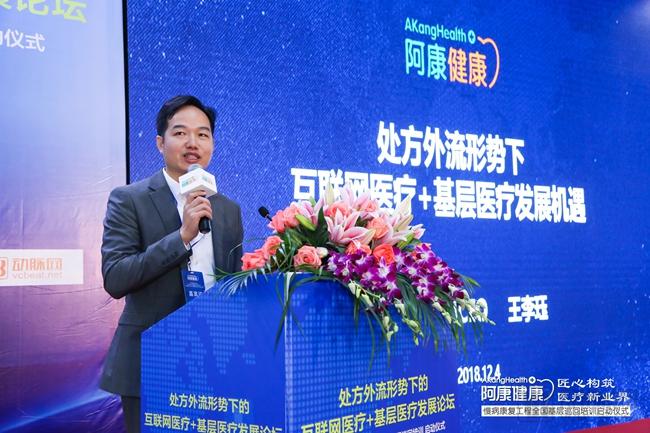
Wang Lijue, Chairman of Akang Health Group
Founded in 2005, Akang Health has built a solid foundation of over 13 years in prescription drug operations. By closely aligning with national policies and staying at the forefront of the industry, the company has continuously innovated and expanded its business scope. Its reach has extended from the initial in-hospital prescription drug market to the current out-of-hospital and direct-to-consumer (2C) markets. In terms of business model, it has evolved from a pharmaceutical B2B approach to an integrated supply chain system centered on specific diseases, combining DTP (Direct-to-Patient) and CDC (Chronic Disease Care), integrating B2B and 2C channels, and merging online and offline operations. This strategy aims to create an ecological closed loop encompassing “healthcare + disease management + pharmaceuticals + insurance.”Amidst the trillion-yuan market for prescription drug outflow, numerous innovative models have emerged. According to Wang Lijue, Chairman of Akang Health, “The greatest future opportunity in prescription drug outflow lies with the small-B segment closest to patients—including pharmacies, primary healthcare institutions, and internet pharmaceutical companies. Through supply chain integration, we ensure that prescription outflow is ‘successfully released, effectively received, well-managed, capable of driving growth, and data-enabled.’” Currently, Akang Health is leveraging supply chain-driven strategies to build regional “medical consortia” for prescription circulation. The company focuses on developing the primary healthcare system by empowering primary care institutions to establish chronic disease management departments and collaborating with pharmaceutical manufacturers to enhance the professional capabilities of primary care physicians and guarantee medication access.
Regarding product selection, Wang Lijue believes that the outflow of prescription drugs should begin with medications for chronic diseases, critical conditions, and rare diseases, thereby addressing the most urgent and unmet needs in this sector and ensuring that small-to-medium business (SMB) providers no longer struggle to source necessary medicines. Meanwhile, Akang Health Group is fully committed to building an “out-of-hospital CSO (Contract Sales Organization) system” tailored to the new landscape. According to current data, leveraging its advantages in the prescription drug supply chain, Akang Health has established therapeutic solutions across 17 medical specialties, covering more than 1,300 disease types. Its Cloud Pharmacy inventory encompasses 12,000 SKUs corresponding to the actual stock listed in hospital formularies nationwide. The company’s product portfolio includes offerings from over 2,500 domestic and international pharmaceutical manufacturers, with direct partnerships with more than 1,200 industrial enterprises and over 300 regional distributors. Akang Health currently serves 300,000 B-end clients and manages a C-end user base of more than one million patients with chronic diseases.
Following the forum, A-Kang Health concurrently hosted a dinner gala themed “Symbiotic Cooperation, Craftsmanship in Building a New Healthcare Industry.” During the event, A-Kang Health Group presented Cooperation Awards to representatives of primary healthcare institutions, internet healthcare providers, and outstanding suppliers. It also bestowed the Bo Le Award upon capital partners who have consistently provided strong financial support during the company’s growth phase. Most significantly, the Prescription Outflow Pioneer Chain Alliance, jointly prepared over nearly six months by A-Kang Health, Youdeyi, and other organizations, was officially established. The nine founding members of the alliance include Youdeyi (Guangdong Internet Hospital), A-Kang Health, Ping An Good Doctor, WeDoctor, Wei Wenzhen, Sirui Health, and Kingdee Medical. The alliance aims to promote the development of platforms for prescription outflow from tertiary hospitals. By leveraging outside-hospital pharmacies and primary healthcare as the foundation, and internet healthcare as a bridge connecting tertiary hospitals, the alliance seeks to build regional medical consortia. This initiative is designed to facilitate prescription outflow and tiered diagnosis and treatment, enabling chronic disease rehabilitation at the primary care level, and striving to provide guaranteed medical care and professional pharmaceutical services to chronic disease patients in China.

The Pioneer Chain Alliance for Prescription Outflow Is Officially Established
Currently, the grassroots pharmaceutical market is growing, and primary care clinics are undergoing transformation. The development of rural primary healthcare is crucial to the health of nearly 800 million rural residents in China. At this forum, a special guest, Dr. Wang from the Chaolaigang Village Health Station in Puning City, Guangdong Province, remarked with emotion: “Having practiced medicine for over 30 years, I have been working at our village health station throughout this period, primarily managing the diagnosis and treatment of common diseases. Over these decades, I have felt that the standards of care at rural health stations have remained stagnant. Our medication practices and physicians’ professional competencies are largely comparable to those of two or three decades ago, making it difficult to adequately meet the healthcare needs of rural patients.”
Since participating in Akang Health’s grassroots chronic disease rehabilitation project, the village health station has delivered tangible benefits to local patients, boosted the motivation and income of village doctors, and aligned with the healthcare reform direction of tiered diagnosis and treatment, which aims to reduce unnecessary hospital visits by patients. Currently, Akang Health is exploring a central prescription dispensing pharmacy model. Under the initiatives to strengthen grassroots healthcare, shift focus downward, and implement policies at the local level, this model seeks to bring more patients back to primary care settings. By leveraging social resources, it empowers three core capabilities at the grassroots level: empowerment of diagnostic and treatment capabilities—including third-party imaging, laboratory testing, and point-of-care testing (POCT)—to assist physicians in making better clinical judgments; empowerment of drug variety—by improving the formulary for grassroots medical institutions to effectively address the shortage of available medications; and empowerment of logistical support—through medical consortia, IT backend systems, and hospital infrastructure development, thereby integrating grassroots healthcare data.
At the forum, Wang Lijue also shared a moving example: a friend in distant Tibet was unable to obtain necessary medication and eventually asked him to send it. What was shipped across thousands of miles was not merely medicine, but hope for life. Inspired by this, Akang Health launched the “Connecting with Grassroots Tibetan Communities: Delivering Medicine in Snow, Warming Hearts” campaign this year, which received an enthusiastic response from Tibetan residents. Wang Lijue noted that pharmaceutical transactions have historically been viewed primarily as commercial exchanges. However, the outflow of prescriptions has brought us closer to patients than at any other point in history. Akang Health aims to foster a compassionate business model through integrated supply chain services, evolving from product offerings to disease-specific solutions, and ultimately to humanistic care, thereby clearly defining its human-centric identity.
Aikang Health has always adhered to the philosophy that “physicians should possess benevolence, and pharmacists should embody compassion,” consistently delivering healthcare with warmth. As mainland China’s population ages and chronic diseases experience a surge, the most urgent application scenarios for both “Internet + Healthcare” and “AI + Healthcare” lie at the primary care level. At this forum, Aikang Health Group took the lead in bringing together media outlets, industry partners, and primary care representatives to launch the National Grassroots Touring Training Program for the “Chronic Disease Rehabilitation Project.” The initiative aims to leverage digital technologies to extend high-quality resources directly to patients, bridge the “last mile” in making healthcare accessible to the public, improve medical efficiency and accuracy, promote tiered diagnosis and treatment, strive to ensure every Chinese household has access to a family doctor, and advance universal healthcare coverage.