

Chengdu Tianfu Software Park, Home to 13 Internet Healthcare Unicorns, Files IPO Prospectus
The Chengdu Tianfu Software Park exudes a leisurely atmosphere in the afternoon. Within the park, some people are strolling, while others gather in small groups under the trees, engaged in lively conversations.
Beneath this laid-back exterior, it boasts numerous accolades: National-Level Technology Business Incubator, Nationally Registered Makerspace, and National Demonstration Base for the Cultivation of Innovative Talent...
Since its official launch in 2005, the core area of Tianfu Software Park has attracted numerous renowned domestic and international enterprises, including IBM, SAP, EMC, Philips, Maersk, Siemens, Ericsson, Dell, Wipro, DHL, PwC, NCS, Garmin, Alibaba, Tencent, and Manulife Financial.
Currently, the park has formed several major industrial clusters, including software product R&D, communication technology, IC design, mobile internet, digital entertainment, fintech, and shared service centers. It covers hot sectors such as cloud computing, big data, artificial intelligence, the Internet of Things (IoT), blockchain, and VR/AR, and has become a key destination for the strategic layout in China by well-known domestic and international software and information service enterprises, as well as a renowned innovation landmark in China.
These companies stationed in the park come from various industries, covering a wide range of sectors. For example, they include general health, internet healthcare, artificial intelligence, big data, and the upstream and downstream industrial chains of gaming. The wildly popular game "Honor of Kings" was also born here.
In just a decade, how did the regional brand value of Chengdu Tianfu Software Park reach tens of billions? What are their perspectives on the currently booming fields of artificial intelligence and internet healthcare? Have they already made strategic early investments in these areas?
With these questions in mind, VCBeat (WeChat ID: vcbeat) interviewed He Lei, General Manager of Chengdu Tianfu Software Park, as well as Wang Shirui, founder of Medlinker; Shen Bo, founder of Codoon; and Zhou Kun, founder of 23Mofang, all of whom are tenants of the park.
Chengdu Tianfu Software Park is one of the first national software industry bases, a national-level technology business incubator, a nationally registered makerspace, and a national demonstration base for innovative talent cultivation. Its core area is located in the Southern Zone of Chengdu High-Tech Industrial Development Zone and the core area of the Sichuan Pilot Free Trade Zone.
Currently, Tianfu Software Park has been recognized as a “National-Level Science and Technology Business Incubator,” a “Demonstration Base for Training Innovative Talents,” and a “National-Level Makerspace” by the Ministry of Science and Technology; as a “National-Level Demonstration Base for Entrepreneurship Incubation” by the Ministry of Human Resources and Social Security; as a “National Public Service Demonstration Platform for Small and Medium-Sized Enterprises” by the Ministry of Industry and Information Technology; and as the “China University Student Entrepreneurship Park (Chengdu)” by the Central Committee of the Communist Youth League. It is currently the only innovative science and technology park in Sichuan Province to have received simultaneous recognition from the Ministry of Science and Technology, the Ministry of Industry and Information Technology, the Ministry of Human Resources and Social Security, and the Central Committee of the Communist Youth League.
Beyond its core area, Tianfu Software Park is committed to building a “one park, multiple sites” spatial layout. It aims to export professional management expertise to the Chengdu High-Tech Zone and even broader industrial clusters across Chengdu, providing one-stop solutions for enterprise investment promotion, human resources, startup incubation, and brand marketing. By extending its industrial services, industry promotion initiatives, and operational management models and experience to more functional industrial zones, the park helps drive the deep integration of Chengdu’s new economy with traditional industries.
Currently, Tianfu Software Park has become a vital carrier for the innovative development of the next-generation information technology industry in Western China, a core hub for innovation and entrepreneurship in the region, and an important base for the Chengdu High-Tech Zone to build an international center for innovation and entrepreneurship.
In March 2017, according to the 2016 regional brand value assessment conducted by the China Quality Certification Center, the regional brand value of Chengdu Tianfu Software Park reached RMB 41.562 billion. In December 2017, Chengdu Tianfu Software Park was approved as a pilot brand for the fourth batch of industrial cluster regional brand construction by the Ministry of Industry and Information Technology.
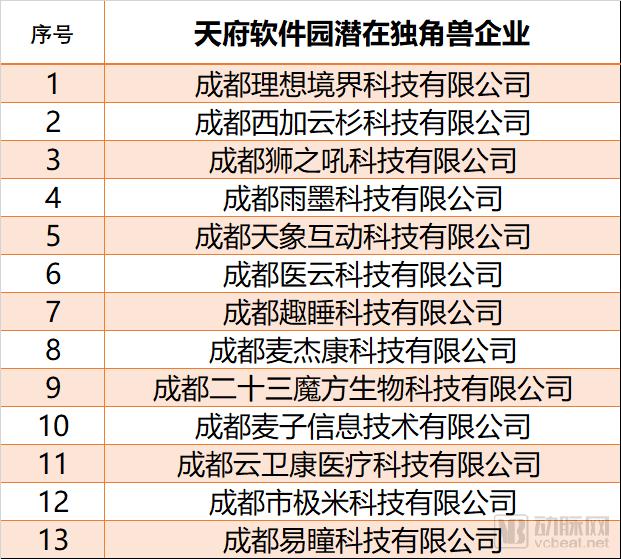
On November 9 of the same year, the New Economy Development Conference held in Chengdu conducted a comprehensive survey of the city’s potential unicorns. Among the 31 “potential unicorns” identified in Chengdu, 30 were from the Chengdu High-Tech Zone. Of these 30 companies, 13 are currently located in the Tianfu Software Park. The details are as follows:
Why Has Tianfu Software Park Incubated So Many Potential Unicorn Companies? What Are Their Advantages? Let Us Analyze from the Perspectives of Capital, Policy, Talent, and Industrial Gradient.
In terms of funding, we offer up to one year of rent-free incubation for start-up projects and assist entrepreneurial teams in applying for supportive policies from the High-Tech Zone, including start-up grants of up to RMB 5 million, as well as subsidies for rent, talent, and social security.
In addition to direct access to a RMB 200 million angel investment fund in the High-Tech Zone, which provides up to RMB 5 million in angel investment to entrepreneurial teams, there is also a venture capital platform and a 20% subsidy on usage fees for utilizing public technical service platforms.
Leveraging Yingchuang Dongli under the Gaotou Group and numerous renowned domestic and international investment institutions (such as Sequoia, ZhenFund, SoftBank China, IDG, DCM, and Tencent), this platform provides startups with financing and investment services, including angel investment, venture capital (VC), private equity (PE), and financing guarantees.
In addition, it regularly organizes project review meetings and pitch events with venture capital firms to provide an investment matchmaking platform for incubated projects. It has also established a Venture Capital Service Alliance in collaboration with leading domestic investment institutions, startup parks, renowned media outlets, prominent investors, and cross-industry leaders to focus on brand building for startups and facilitate their financing.
1. For enterprises founded by senior executives or key technical personnel from Fortune 500 companies and renowned domestic and international enterprises, experts and professors from top-tier domestic and foreign research institutions and universities, high-level overseas returnees, outstanding entrepreneurial teams from various innovation and entrepreneurship competitions, and serial entrepreneurs, we provide up to three years of support for 500 square meters of startup space. Depending on the team size, up to five talent apartments will be provided, along with guaranteed access to school enrollment quotas for their children and eligibility for property purchase. If the established enterprise secures venture capital investment, a one-time startup fund of up to RMB 5 million will be granted, equivalent to 10% of the equity financing amount.
2. Establish a growth potential assessment model for technology-based small and medium-sized enterprises (SMEs) to evaluate companies established within the past three years. High-quality enterprises identified through this assessment shall be eligible for a one-time startup grant of up to RMB 500,000, as well as rental subsidies for up to three years, covering premises of up to 200 square meters at a subsidized rate not exceeding RMB 40 per square meter per month.
3. A one-time reward of RMB 50,000 shall be granted to enterprises newly recognized as Seed-Stage "Eagle" Enterprises. (Seed-Stage "Eagle" Enterprises refer to technology-based enterprises established within three years that have achieved annual operating revenue exceeding RMB 2 million or have obtained equity financing.)
4. For Gazelle Enterprises newly recognized for achieving explosive growth in one year, high compound annual growth over three years, and continuous growth over five years, one-time rewards of RMB 100,000, RMB 200,000, and RMB 300,000 shall be granted to their management teams, respectively. Enterprises continuously recognized as Gazelle Enterprises shall be eligible for a reward of up to RMB 10 million, calculated at 20% of the incremental portion of their actual local fiscal contributions for the current year.
5. Enterprises using certified public technology platforms shall receive an annual subsidy of up to RMB 100,000, calculated at 20% of the technical service usage fees; meanwhile, the public technology platforms shall receive an annual subsidy of up to RMB 200,000, calculated at 20% of the amount paid by the enterprises for platform usage.
Today, the industrial park hosts a diverse range of enterprises, spanning sectors such as gaming and healthcare. The goal is to gradually build a higher-level industrial ecosystem within the park, focusing on developing an industrial development platform that facilitates the coverage and sharing of key resources—talent, capital, technology, and market access—among tenant companies, thereby fostering their collective growth.
In alignment with Chengdu’s “Talent-First Development” strategy and the talent development initiatives of the Chengdu High-Tech Zone, the industrial park provides comprehensive talent services to enterprises, including talent recruitment, training, and human resources consulting. Through the Tianfu Talent Initiative’s “City Tour,” “Campus Tour,” and “Overseas Tour” series of activities, the park conducts long-term recruitment campaigns in cities such as Chengdu, Beijing, Shanghai, Shenzhen, Guangzhou, Hangzhou, Chongqing, Xi’an, Wuhan, and Harbin. It also carries out overseas talent recruitment across North America, Europe, and Asia, and has established offshore talent innovation and entrepreneurship bases in Silicon Valley (USA), Seoul (South Korea), Frankfurt (Germany), Stockholm (Sweden), and Toronto (Canada).
Hundreds of talent-related events are held annually, attracting over 40,000 professionals and assisting enterprises in recruiting more than 5,000 talents. By integrating multi-party resources, an online education platform has been established to offer a variety of online courses in management, technology, languages, law, and other fields.
In the realm of human resources consulting, we have established the Human Resources Research Institute and the HR Elite Club, providing talent advisory services to enterprises over 1,000 times annually, hosting more than 20 HR exchange events, and releasing over 10 professional reports.
First, as of the deadline, nearly 100 CEO joint meetings have been held to strengthen connections between enterprises.
Second, the “Tianfu Software Park Entrepreneurship Mentor Pool” brings together CEOs of companies within the park, successful entrepreneurs, and leading technical experts.
Third, jointly establish public technology platforms such as cloud service platforms and mobile game testing platforms to enable enterprises to participate in the operation of the industrial park.
Fourth, open up the “Park’s Primary Market” to facilitate connections between enterprises and market resources.
As the wave of “Big Health” surges, He Lei is also keeping an eye on a new batch of enterprises that could grow into billion-dollar companies in the future.
Since the launch of the Healthy China strategy, people have placed increasing emphasis on health.
Meanwhile, Sichuan Province has also been swift in rolling out healthcare reform measures, such as the implementation of policies on internet-based healthcare and the refinement of medical consortium policies.
Chengdu also boasts abundant medical resources. These range from tertiary Grade A hospitals, such as West China Hospital, to community healthcare providers, including Dr. Lv’s Community Chain Clinics and Penguin Almond Clinic, as well as internet-based medical platforms like Medlinker, Wei Wenzhen, and Hao Yisheng.
He Lei is intimately familiar with these advantages. She has also continuously adjusted the park’s industrial tiering in response to market dynamics. Consequently, she strategically positioned the park to enter the healthcare and medical industry early, aiming to accompany enterprises from their inception through their growth journey.
Currently, artificial intelligence is experiencing unprecedented popularity. Building on the existing software park, the industrial park is further enhancing its operational management standards and professional incubation capabilities to establish a new platform for the internet health industry at this critical juncture. By serving as a more effective connector, it aims to aggregate greater resources to create a synergistic effect, thereby promoting the collaborative development of enterprises in this sector as they embark on a new journey.
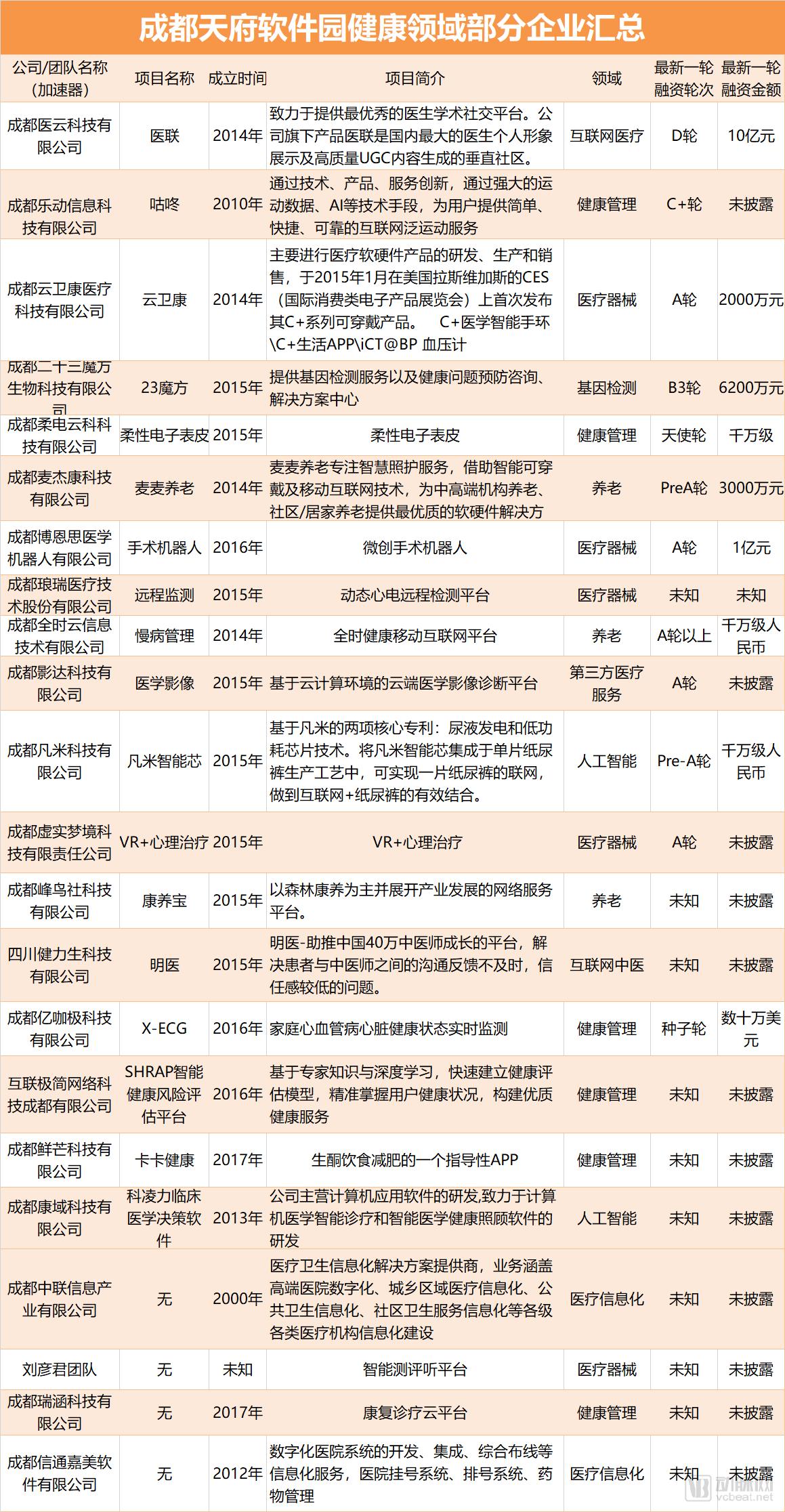
To gain an authentic understanding of the healthcare companies within Tianfu Software Park, we selected a subset of enterprises, as detailed below:
Currently, Tianfu Software Park’s Entrepreneurship Field has established a multi-tiered incubation model comprising “Startup Nursery–Incubator–Accelerator–Industrial Park.” It provides diverse co-working spaces, including incubation workstations, collaborative startup spaces, and independent offices, forming a comprehensive, multi-level “5C” cultivation program that covers funding, talent, networks, market access, and startup mentoring.
To date, Tianfu Software Park’s Startup Field has successfully incubated numerous leading domestic and international enterprises and mobile applications, including Medlinker, XGIMI, Codoon, Tap4fun, Camera360, TestBird, LionMobi, Huochebang (Logistics QQ), Maizi Academy, and Ludashi, as well as mobile game titles with monthly revenues exceeding RMB 10 million, such as Galactic Empire, King’s Empire, Spartan War, Three Musketeers, Empire TD 3, The Journey of Flower, Ninja Cute Sword Legend, and Battlefield Storm.
1. Up to 8 enterprises were established three years ago
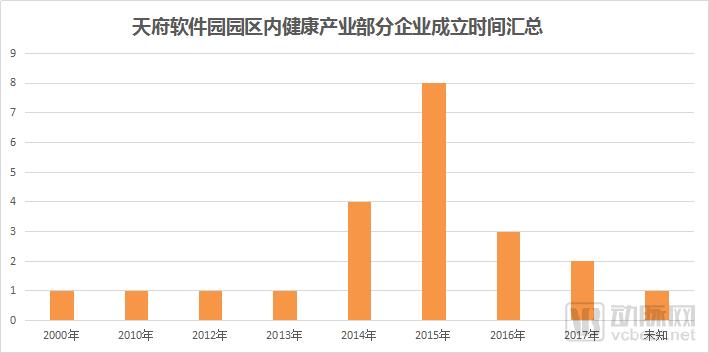
These companies were established between 2000 and 2017, with the highest number founded from 2014 to 2017. In particular, eight companies were established in 2015. These eight companies operate in fields such as artificial intelligence, internet-based traditional Chinese medicine, genetic testing, and medical devices. Since 2015 marked the rise of sectors including internet healthcare, artificial intelligence, and genetic testing, a significant influx of enterprises and capital entered these areas.
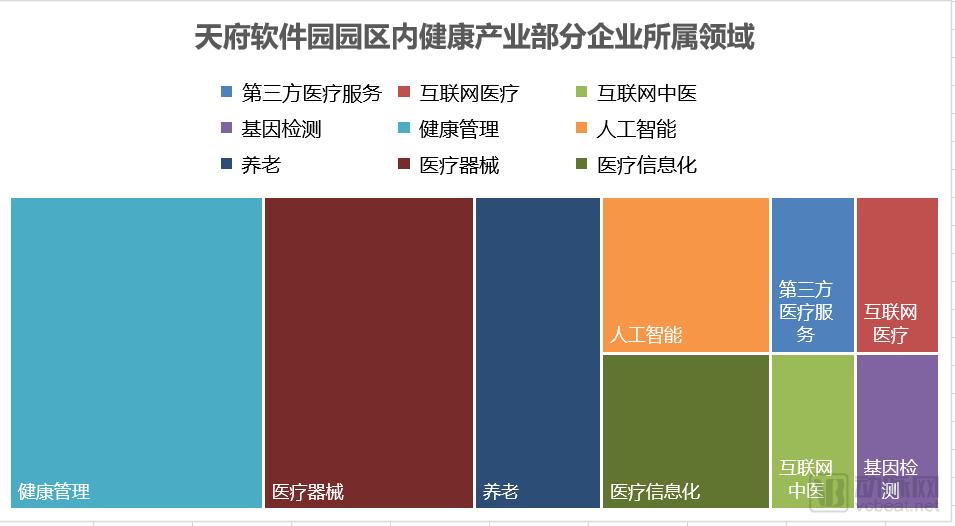
2. The sectors in which these enterprises operate are primarily concentrated in health management, medical devices, and elderly care
3. Among healthcare companies in the industrial park that secured financing, a maximum of four reached Series A, while only one reached Series D.
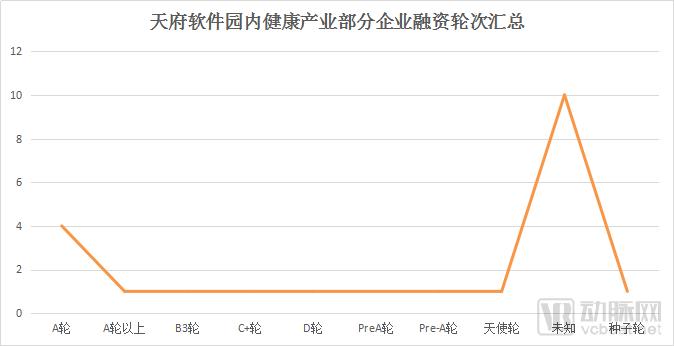
Among the park-based companies currently sampled, up to four have secured Series A funding, while only one has reached Series D. Funding amounts range from millions to hundreds of millions. Last year, the total financing obtained by startups in the park reached $360 million, representing a 33% year-on-year increase. This year, healthcare companies have secured over RMB 1.3 billion in total financing.
When it comes to medical enterprises within the industrial park, Medlinker is arguably the fastest-growing in terms of development speed. The company grew into a unicorn in just four years and completed its Series D financing round, dedicating itself to ensuring that every Chinese doctor achieves academic success and professional fulfillment. Currently, the platform features over 150,000 case records, more than 550,000 real-name verified physicians, and covers 32 provinces, 48 medical specialties, and 25,000 hospitals.
In fact, before founding Medlinker, Wang Shirui co-founded another well-known beauty app in the software park. He later left the project to become a visiting scholar at Harvard University.
During his time as a scholar in the United States, Wang Shirui gradually realized that he was more passionate about entrepreneurship than about tedious academic work. At that time, there were academic social networking apps in the U.S. that were highly regarded by physicians, while no similar products had yet emerged in China. Meanwhile, the high salaries and senior professional status of his American peers inspired him to consider bringing changes to the industry. Fueled by these insights, his desire to embark on a second entrepreneurial venture reignited.
At that time, China was vigorously advancing new healthcare reform policies, such as tiered diagnosis and treatment and multi-site practice, which allowed Wang Shirui to keenly identify entrepreneurial opportunities.
In 2014, 27-year-old Wang Shirui returned to China to defend his doctoral dissertation. During the flight, he spent three hours drafting a business plan, which he sent to 11 angel investors upon arriving in Chengdu. Seven of them were impressed by his idea and extended investment offers. After securing funding, Wang established Medlinker in April of that same year, making another return to the familiar “startup arena.”
As a startup, recruiting employees was extremely difficult, a predicament Wang Shirui also faced. According to employees at the Chengdu Tianfu Software Park, the entire office initially consisted of just one desk and Wang himself, the “Employee No. 1.” “At that time, even hiring people was a challenge.” Zhang Xin, the company’s Employee No. 2, was practically “tricked” into joining. Zhang recalled that during his interview, he saw only four people in the entire company—besides the boss, the other three were borrowed from a neighboring startup. However, as the business gradually got on track, the incubator founded by Wang Shirui ended up reverse-incubating the neighboring startup—all those employees who had been temporarily borrowed were eventually “absorbed” into Wang’s company.
Whenever Wang Shirui reflects on the early days of his entrepreneurial journey, he is always filled with gratitude. Since its inception, the company has received continuous support from the Chengdu High-Tech Zone and Tianfu Software Park, including talent acquisition, rental subsidies, and brand promotion assistance. Even now, as a company incubated at Tianfu Software Park, it continues to benefit from their care and support, which have been key factors contributing to Medlinker’s smooth development over the years.
Furthermore, the development of YiLian would not have been possible without the high-quality business environment in the High-Tech Zone and across Chengdu as a whole, nor without the strong support from leaders at all levels of the Chengdu municipal government.
Today, as China's largest real-name physician platform, Medlinker has evolved from its initial focus on pure physician social networking to connecting online and offline medical resources. Its operations now span 32 provincial-level regions across China, with partnerships encompassing 25,000 hospitals.
On April 28 this year, the General Office of the State Council issued the “Opinions on Promoting the Development of ‘Internet + Healthcare’” (hereinafter referred to as the “Opinions”). It is widely believed within the industry that the issuance of these Opinions signifies the government’s formal endorsement of the business model of internet hospitals.
Capitalizing on favorable policies, Medlinker began rapidly deploying internet hospital-related services and soon announced a strategic partnership with the People’s Government of Rizhao City, Shandong Province, to provide comprehensive smart healthcare services to the city. In July, Medlinker Huafang Internet Hospital was officially launched. Meanwhile, the Medlinker Internet Hospital Open Platform successively established collaborations with companies such as Baidu, Sogou, China Construction Bank, Beijing 114, Dingdang Kuaiyao, and Yaoshibang, offering a range of medical services including online health consultations with physicians.
Wang Shirui believes that future internet healthcare scenarios will undoubtedly center on patient-centric, end-to-end management, covering the entire care journey—including appointment scheduling, laboratory and diagnostic testing, online consultations, follow-up visits, referrals and multidisciplinary consultations, medical record management, and chronic disease management. Internet hospitals can serve as an excellent platform for this comprehensive process. In the future, YiLian will continue to refine its patient-centric, end-to-end management system, building a full industry chain focused on smart internet hospital solutions.
23Mofang, which entered the market one year later than Yilian, had accumulated over 300,000 paying users by September 2018, making it the largest database in China’s consumer-grade genetic testing sector.
According to Zhou Kun, founder of 23Mofang, the company moved into the park in May 2015. At that time, the Software Park provided substantial support, including preferential rental policies. Additionally, the park frequently facilitated communication with government authorities and organized lectures and promotional events, thereby creating many favorable conditions for the company’s development.
The primary challenges at the time were limited availability of leased space and high demand for office areas. However, Zhou Kun remained confident that, compared with the U.S. consumer-grade genetic testing market—where companies had already amassed nearly ten million users—and with the cost of genetic testing continuing to decline, the opportunities in the Chinese market were substantial and would continue to surge in 2018.
Market reactions unfolded exactly as he had anticipated. In recent years, China’s consumer-grade genetic testing market has risen rapidly, with exceptionally fierce competition. Consequently, in April of last year, 23Mofang launched its third-generation genetic testing service, entered into a strategic partnership with global life sciences giant Thermo Fisher Scientific, adopted a new biochip covering more than 700,000 loci, and announced the establishment of its own in-house testing center—a first in the industry. In August, 23Mofang further took the lead by slashing the price of its personal genetic testing service from RMB 999 directly to RMB 499, sending shockwaves through the market.
The rapid growth in user numbers has provided 23Mofang with the foundation to conduct more extensive and in-depth genetic and anthropological research, and to develop new research projects better suited to the Chinese population. In the past six months alone, 23Mofang has launched several new initiatives, including tests for favism, ABO blood type, and lactose intolerance, all offered as free updates to its users. Furthermore, 23Mofang recently upgraded its ancestry testing module to version 2.0, which can identify 40 distinct ethnic lineages across Asia, Europe, and Africa—the most comprehensive offering currently available in China.
Zhou Kun stated that while optimizing its products, 23Mofang places significant emphasis on enhancing its testing capabilities. Currently, the company’s testing center has achieved full automation, obtained qualifications as a medical clinical laboratory, and received certification from the National Health and Family Planning Commission (NHFPC), thereby meeting the standards for medical clinical laboratories. Its partners include the Chinese Academy of Sciences, Fudan University, and Thermo Fisher Scientific. According to the “2018 Analysis of China’s Genetic Testing Industry” published by Analysys, 23Mofang ranks first in the consumer-grade genetic testing sector. Additionally, 23Mofang was listed among the “50 Most Innovative Companies in China” by Forbes China, which hailed the company as a “game-changer in genetic testing.”
Codoon is a sports social platform with 150 million users, responding to tens of millions of workout requests daily from 210 countries worldwide. With over 200,000 sports groups distributed across China, it has hosted more than 500 online and offline events to date.
To date, Codoon has completed five rounds of financing, raising a total of nearly $120 million. Its shareholders include top-tier venture capital firms both in China and abroad, such as Shanda, Shenzhen Capital Group, CITIC Capital, SoftBank, SIG, and Fountaine Capital.
“As long as you are a participant in sports, Codoon can meet all your needs. This is Codoon’s national sports ecosystem.” CEO Shen Bo summarized the original intention behind founding Codoon in this way.
In 2016, Codoon officially entered the era of the “National Fitness Ecosystem.” By focusing on sports data collection and management models, and integrating video live streaming, multimedia interaction, and information dissemination, Codoon aims to build a high-value social content platform for fitness enthusiasts. The company will strengthen cross-industry collaborations with various partners, open its sports data platform APIs, and continuously improve a range of solutions including mobile payment and smart hardware integration. Furthermore, through comprehensive online marathon and cycling events, as well as proprietary IP-branded competitions—offering end-to-end services such as registration, result inquiries, event photos, live broadcasts, sports safety insurance, and merchandise—Codoon is committed to continually enhancing the user experience in sports and fitness.
In early 2017, Codoon unveiled its smart fitness strategy, integrating sports equipment, training programs, and AI technology to develop and launch a series of products, including the Codoon Smart Running Shoes. By leveraging AI technology to provide scientific, real-time guidance during workouts, the company aims to reduce injury risks and ensure safer, more efficient exercise. To date, Codoon has consecutively released five smart fitness products: Codoon Smart Running Shoes 1.0, Codoon Smart Walking Shoes, Codoon Smart Running Shoes 2.0, Codoon Smart Sports Bra, and the “Codoon × 1MORE Smart Sports Earphones.”
Particularly, the Codoon Smart Running Shoe Series has developed a specialized athletic performance testing system for runners based on big data analytics of exercise. This system evaluates users' physical conditions and assigns scores. During running activities, it monitors relevant data in real time and provides safe, scientifically grounded voice guidance.
With the rapid advancement of intelligent interaction technologies, the efficient application of multi-dimensional big data, personalized adjustments to training programs, and comprehensive coverage of mobile internet, Codoon has developed an embedded intelligent engine built on a solid foundation of sports big data. This engine helps users enhance their experience in terms of enjoyment, digital footprint, self-awareness, and status adjustment during exercise, offering greater freedom in application.
In the future, Codoon will leverage its platform scale of hundreds of millions of users and collaborate extensively with partners across the upstream and downstream industry chain to extend the evolution of smart sports to a broader range of products.
According to Shen Bo’s recollection, in 2010, when Codoon was a local startup enterprise in Chengdu, the Tianfu Software Park provided it with substantial support. In addition to offering initial office space, the park also periodically provided entrepreneurial training.
As Codoon has gradually grown, its business operations and team size have continued to expand. During this period, the Software Park has consistently provided support in talent acquisition and business enhancement.
For instance, through the Tianfu Talent Program, we recruit suitable candidates across major cities and even introduce high-end talent from overseas. We also provide irregular monthly training sessions on various business and expansion topics, as well as free exhibition spaces for companies to showcase their products. These comprehensive support measures have helped steer the company’s development in a favorable direction.
Currently, the company is striving toward an initial public offering (IPO). At this critical juncture, in addition to the company’s own continuous efforts, Shen Bo strongly hopes to receive support and assistance from the industrial park and the government. In terms of infrastructure, he hopes for ongoing maintenance to provide a seamless, bug-free office environment that ensures employee satisfaction. Regarding talent acquisition, he aims to continue leading Codoon in recruiting high-end professionals from first-tier cities to return to Chengdu and contribute their expertise. Finally, concerning costs, he hopes that the Chengdu High-Tech Zone government and the industrial park will provide greater support to facilitate better business development.
Over the past decade, alongside the growth of the global internet industry, Tianfu Software Park has also expanded rapidly. He Lei recalls that they started with Phase I of the software park (Zones A and B), which had a gross floor area of 230,000 square meters, housing nearly one hundred enterprises and several thousand employees. Today, in addition to its core area, the park is actively building a “one park, multiple sites” spatial layout. Tianfu Software Park is now extending its industrial services, promotion initiatives, operational management models, and expertise to support the development of more industrial functional zones.
Meanwhile, a large number of outstanding enterprises such as Xunyou, Medlinker, JMGO, and Codoon, along with numerous entrepreneurs including Yuan Xu, Wang Shirui, Zhong Bo, and Shen Bo, seized opportunities to stand out in the wave of entrepreneurship. On November 9, 2017, at the New Economic Development Conference held in Chengdu, a comprehensive survey was conducted on the city’s potential unicorns. Among the 31 “potential unicorns” identified in Chengdu, 13 were from Tianfu Software Park.
In the next decade, the internet is transitioning from the “consumer internet” to the “industrial internet,” and will begin to permeate the real economy from the virtual economy. In the future, the industrial internet will boast an immeasurable market capacity. We look forward to industrial parks and their entrepreneurs seizing the opportunity of this next internet transformation, keeping pace with the rhythm and steps, and achieving better development outcomes.