

Takeda to Acquire Shire in $58 Billion 'David vs. Goliath' Deal, Creating Global Pharma Leader in Rare Diseases
Recently, VCBeat learned that on December 5 (local time), Japanese pharmaceutical group Takeda Pharmaceutical announced the voting results of its shareholders’ meeting: Takeda’s shareholders approved the acquisition of UK-based rare disease drug manufacturer Shire. The acquisition is expected to be completed on January 8, 2019.
Despite opposition from some shareholders, 88% of shareholders voted in favor of the deal at Takeda Pharmaceutical’s shareholder meeting held on December 5. Ultimately, Takeda acquired Shire for $58 billion, a transaction that may become the largest merger and acquisition deal in the pharmaceutical industry this year.
Takeda Pharmaceutical Company proposed the continued appointment of three outside directors from Shire plc (who do not participate in audit and oversight functions), a proposal that received 87% of the votes in favor.
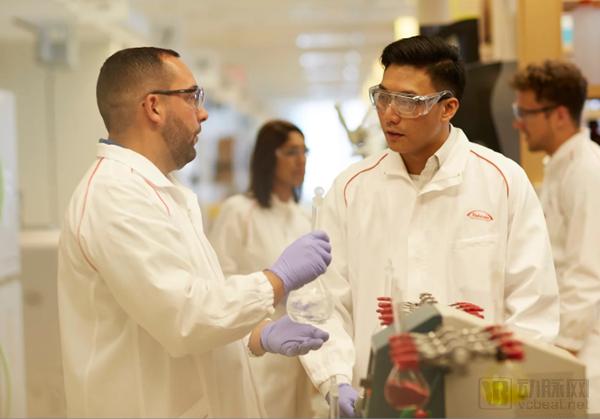
Image source: Takeda Pharmaceutical Company Limited official website
The acquisition was initially agreed upon in early 2018, with Takeda Pharmaceutical’s formal offer valued at approximately $62.2 billion. Previously, Takeda had made five public bids for Shire. The deal was struck at a price of $30.33 in cash and 0.839 shares of Takeda stock per share. Currency fluctuations and a decline in Takeda’s share price reduced the transaction’s value to approximately $58 billion.
Takeda Pharmaceutical not only acquired Shire’s patented technologies but also secured a larger share of the U.S. market for rare disease drugs. Furthermore, Takeda assumed substantial debt from Shire, bringing the total transaction value to nearly $80 billion. As part of the final agreement, Takeda secured $30.9 billion in bank loans.
Given that Shire’s market capitalization was nearly twice that of Takeda Pharmaceutical, some Takeda shareholders—who positioned themselves as acting in consideration of Takeda’s bright future (also referred to as TTBF)—made multiple attempts to obstruct the deal amid this stark disparity in corporate strength.
At the annual general meeting of shareholders held this June, the shareholder group voiced its opposition and proposed that major acquisitions should require prior shareholder approval. At the time, the group comprised approximately 130 shareholders, but the proposal received only about 10% of the votes in favor, ultimately failing to garner broader support from dissenting shareholders.
This September, the opposition gained a heavyweight supporter—Kazu Takeda, a member of the Takeda family. He told The New York Times, “The group should avoid making hasty decisions on major deals. Pursuing large-scale mergers and acquisitions without careful consideration would bring disaster to the group.”
He also believes that this deal would undermine the core principles of “Takeda-ism,” under which the company generates profits by enabling people to enjoy healthier and brighter futures. He told The New York Times, “We recognize that scaling up is necessary, but Takeda’s management must take into account the corporate culture and the company’s current stage of development.”
Despite opposition, nearly 90% of shareholders voted in favor of the deal. Since Takeda Pharmaceutical first disclosed its acquisition plans in March this year, its stock price has fallen by 25%. Satoshi Ito, a 75-year-old shareholder, told CNBC, “I want to continue holding Takeda shares, but now I am worried that the stock price will fall further.” He abstained from voting on this transaction.
Kazu Takeda stated before the vote, “We are firmly opposed to this deal due to the excessive financial risks and rather limited expected returns. While I believe mergers and acquisitions are necessary for Takeda Pharmaceutical, Shire is not the optimal choice.”
Takeda Pharmaceutical CEO Christophe Weber stated that the deal would be profitable, as he plans to cut costs. He expects that, following the completion of the transaction, at least $1.4 billion in annual savings will be achieved over the next three years. Meanwhile, Takeda also plans to divest up to $10 billion in non-core assets to help the group repay its loans.
Andy Plump, Global Head of R&D at Takeda Pharmaceutical, stated, “We have a divestiture plan that will enable us to meet the levels required by credit rating agencies within three to five years. Our credit rating may be downgraded by one notch, but it will remain above junk bond status, which is crucial for us.”
Kazu Takeda was not the only one who recognized that Takeda Pharmaceutical needed mergers and acquisitions to maintain its competitiveness. Beyond debt, Takeda faced a deeper issue: whether the acquisition of Shire was the optimal choice. Although Shire held a significant share in the hemophilia market, it also faced competition from Roche.
“It is crucial whether pharmaceutical companies can invest the profits from this deal into R&D for new drugs. The advantages of this deal will only last for a certain period, after all, no treatment can avoid patent expiration,” said Kazuaki Hashiguchi, senior pharmaceutical analyst at Daiwa Securities.
About Takeda Pharmaceutical
Takeda Pharmaceutical Company (Takeda), founded in 1781 with a 237-year history, is an innovation-driven global pharmaceutical company. As planned, Takeda will focus its efforts in the coming years on oncology, gastroenterology, neuroscience, and vaccines.
The acquisition of Shire may become the largest overseas acquisition in the history of Japanese companies, enabling Takeda Pharmaceutical to compete for a leading position in the global pharmaceutical market.
About Xia'er
Shire, founded in 1986, is a global leading biotechnology company.
In its early years, Shire launched a series of calcium supplement products for patients requiring prevention and treatment of osteoporosis. In the mid-1990s, Shire embarked on a series of strategic acquisitions to expand into new businesses, develop new products, and bring them to market. Over the following two decades, Shire continued to expand in scale and maintained strong growth momentum.
In 2016, following its acquisition of Baxalta, Shire added three new therapeutic areas—hematology, immunology, and oncology—further strengthening its capabilities and establishing itself as a global leading biotechnology company. Since then, Shire has focused on serving patients with rare diseases.