

Unlocking Trillion-Yuan Opportunities in China's Grassroots Pharmaceutical Market through Tiered Diagnosis and Prescription Flow-Out: How Aikang Health Is Leading the Charge
“Statistics show that half of primary-care patients choose not to take medication when they fall ill. China has 1.4 million primary-care physicians, accounting for 28% of the total, with each physician serving an average of 430 patients, indicating extremely limited capacity. To address the difficulties in accessing care and the shortages of medical professionals and medicines at the primary level, it is essential to ‘strengthen primary care’ by empowering grassroots facilities across multiple dimensions—including diagnostic and treatment capabilities, drug variety, and logistical support—thereby encouraging more patients to seek care at the primary level.”
Under the tiered diagnosis and treatment policy, the primary healthcare market has garnered increasing attention, with Akang Health being one of the many companies shifting its focus to this sector. At a recently held forum on “Primary Healthcare + Internet Healthcare Development,” Wang Lijue, Chairman of Akang Health, delivered the following opening remarks.
This conference was more akin to a gathering orchestrated by Akang Health, serving as a “roadshow” for the primary healthcare industry. Having cultivated the pharmaceutical market for nearly two decades, the company has recently shifted its focus toward primary care, particularly in rural markets. It brought together pharmaceutical manufacturers, pharmaceutical distributors, digital health companies, and investment institutions to jointly endorse and support the development of primary healthcare.
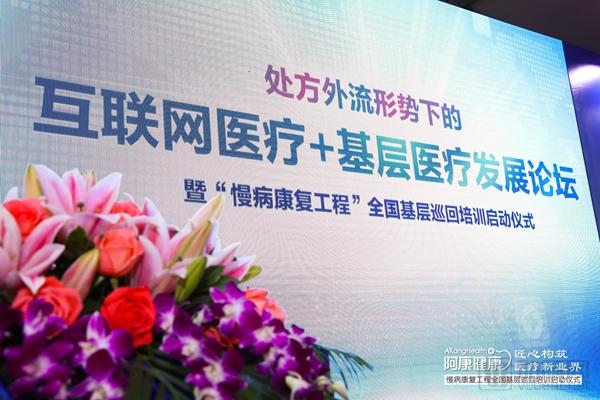
At this forum, a special guest was Dr. Wang from the Chaolaigang Village Health Station in Puning City, Guangdong Province. He remarked with emotion, “Having practiced medicine for over 30 years, I have been working at our village health station throughout this period, where we can only manage the diagnosis and treatment of common diseases. Over these decades, I have felt that the capabilities of rural health stations have remained stagnant. Our medication practices and physicians’ professional competencies are still similar to those of two or three decades ago, making it difficult to adequately meet the healthcare needs of rural patients.”
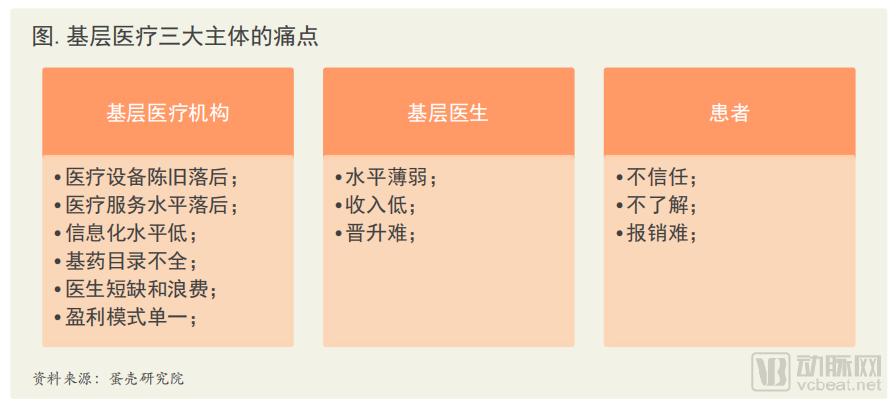
The challenges faced by Dr. Wang at the Chaolaigang Village Health Station reflect the current state of primary healthcare across China, particularly in rural areas. The foremost issue is a shortage of medical professionals; Dr. Wang alone is responsible for meeting the healthcare needs of over 2,000 villagers, including more than 300 patients with chronic diseases. In rural regions, each doctor serves an average of 430 people. The limited capacity of primary healthcare institutions to handle patient loads is also one of the main reasons why patients travel long distances to urban areas for medical care.
A severe challenge facing village doctors is the outdated medical equipment. Many still rely on the "old three" tools—stethoscopes, thermometers, and sphygmomanometers—for diagnosis. These are no longer adequate to meet the evolving demands of clinical care. Without clear diagnoses, further treatment cannot be provided, leading grassroots patients to seek healthcare in urban areas.
Even with a clear diagnosis, challenges persist in medication management. Industry insiders have remarked that “the National Essential Medicines List leaves primary care facilities with no drugs to prescribe.” While this statement may be somewhat exaggerated, it is an undeniable fact that rural primary care institutions suffer from low procurement volumes, inefficient pharmaceutical distribution channels, and shortages of certain drug varieties. To address the “inverted pyramid” dilemma in the healthcare system, it is essential to strengthen primary care, shift focus downward, implement policies at the grassroots level, and encourage patients to seek care closer to home. This constitutes a key task for the next phase of healthcare reform.
In this context, the state has introduced a tiered diagnosis and treatment policy. The goal of tiered diagnosis and treatment is to optimize the allocation of medical resources, enabling effective division of labor and collaboration among physicians at different levels, thereby alleviating the current shortage of medical service supply. Specifically, common and chronic diseases that are easy to treat and have high incidence rates are managed at the primary care level. For difficult-to-treat specialized conditions, patients receive an initial consultation at the primary care level and are then assisted with referral to higher-level hospitals. Primary care institutions serve as health gatekeepers, implementing a model characterized by initial consultation at the primary care level, two-way referrals, separate management of acute and chronic conditions, and coordination between upper- and lower-level medical institutions.
In summary, concerted efforts are being made across the supply, demand, and payment sides. On the supply side of primary care, the key players are primary healthcare institutions and primary care physicians. The main reasons for the current disparity, where large hospitals are overcrowded while primary healthcare institutions remain largely empty, are the shortage of talent, weak technical capabilities, and inadequate medical and health infrastructure with outdated equipment at the county, township, and village levels.
Insufficient supply-side capacity in primary care institutions and county-level facilities, a significant shortage of primary care physicians, low professional competency among physicians, and substandard medical quality are issues that need to be gradually addressed. Furthermore, due to poor working conditions, relatively backward medical infrastructure, and dim career prospects for community physicians and general practitioners, the attractiveness of these positions remains markedly inadequate.
The government will address the challenges facing primary healthcare institutions by strengthening both basic supply (the grassroots medical system) and high-end supply (the specialized private healthcare system). The new healthcare reform emphasizes the public-welfare nature of public hospitals, implements the separation of pharmaceutical sales from medical services, and positions these hospitals to primarily handle the diagnosis and treatment of major diseases and specialized conditions. Meanwhile, through mentorship and guidance programs, they will train grassroots medical personnel. Improving compensation for grassroots healthcare workers and stimulating their enthusiasm will create conditions that enable them to realize their professional self-worth.
Issues such as residents’ lack of trust in primary care institutions and low penetration of medical insurance among rural populations have led to a shortage of patients at the grassroots level. To promote tiered diagnosis and treatment, national policies encourage initial consultations at primary care facilities through measures such as adjusting medical insurance reimbursement rates and scopes, and reserving appointment slots at higher-level hospitals. As basic medical security and critical illness coverage are strengthened, healthcare demands among the grassroots population will be fully stimulated, driving faster growth in demand for primary care services. Meanwhile, given the currently extremely low level of healthcare consumption among rural residents, the gradual improvement of the medical insurance system will unleash their latent healthcare needs, resulting in increased patient visits to rural primary care institutions.
Since the launch of the new healthcare reform, funding allocated to primary healthcare institutions has increased significantly, with a marked rise in the proportion of financial subsidies. Expenditures are primarily directed toward purchasing basic health services through a combination of capitation and performance-based payments. Regarding compensation for medical staff, settlements are made based on performance appraisal results, thereby enhancing personnel motivation.
Driven by favorable policies, the demand in the primary healthcare market has been unleashed. Many companies have targeted this sector, strategically positioning themselves across medical services, pharmaceutical supply, and health informatics. This list is extensive, including internet healthcare giants such as Ping An Good Doctor, which has established a presence in clinics and pharmacies, and AliHealth, which built a telemedicine platform through its Rural Taobao initiative. Numerous AI companies have also provided tools for auxiliary diagnosis and patient management to primary care physicians.
Demand in the pharmaceutical sector is more urgent, prompting many companies to enter this space, with Akang being one of them. Founded in 2005, Akang Health has over 13 years of experience in prescription drug operations. By closely aligning with national policies and staying at the forefront of industry innovation, the company has continuously expanded its business scope from the initial in-hospital prescription drug market to today’s out-of-hospital and direct-to-consumer (2C) markets. Its business model has evolved from a B2B pharmaceutical approach to an integrated supply chain system centered on specific diseases, combining Direct-to-Patient (DTP) services with Chronic Disease Care (CDC), integrating both B2B and 2C channels, and merging online and offline operations. This strategy aims to build an ecological closed loop encompassing “healthcare + disease-specific management + medications + insurance.”
In the grassroots pharmaceutical market, A-Kang’s strategy is to target the medication needs of small business entities—such as village and town health clinics, private clinics, and pharmacies—against the backdrop of prescription outflow. Regarding product selection, Wang Lijue believes that the outflow of prescription drugs should begin with medications for chronic diseases, severe conditions, and rare diseases, thereby addressing the most critical and unmet needs under this trend and ensuring that small business providers have no difficulty sourcing necessary medicines.
Meanwhile, Akang Health Group is fully building an “out-of-hospital CSO system” under the new landscape. To date, leveraging its advantages in prescription drug supply chain resources, Akang Health has established therapeutic solutions across 17 medical specialties and more than 1,300 disease types. Its Cloud Pharmacy covers 12,000 SKUs of actual inventory from the medication formularies of all hospitals in China. The product portfolio includes offerings from over 2,500 pharmaceutical manufacturers worldwide, with direct collaborations with more than 1,200 industrial enterprises and over 300 regional distributors. The company serves 300,000 B-end clients and more than 1 million C-end patients with chronic diseases.
“For prescription outflow to be realized, the primary consideration is whether the terminal endpoints can handle it. Primary care facilities suffer most from shortages of medical resources and medications; many drugs are unavailable as they are not part of their standard formularies. Our task is to enhance the drug supply capacity at these terminal endpoints, ensuring that every ‘B-side’ client has access to medications, with off-hospital drug availability matching that within hospitals, thereby achieving hospital-level pharmaceutical supply standards,” said Wang Lijue. He stated that Akang Health’s goal is to establish a pharmaceutical supply assurance system comparable to “super Grade-A tertiary” hospitals. This aims, on one hand, to ensure no medication is unobtainable in the off-hospital market, and on the other, to strengthen off-hospital prescription drug service capabilities through disease-specific management, thereby eliminating concerns regarding medication use outside hospital settings.
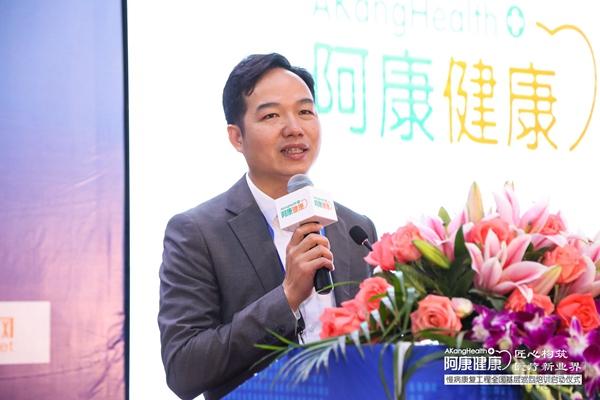
Wang Lijue, Chairman of Akang Health
Cooperation is the most critical approach for A-Kang Health to establish a comprehensive grassroots pharmaceutical distribution system. The “Prescription Outflow Pioneer Chain Alliance,” prepared over nearly six months and spearheaded by A-Kang Health, Youde Yi, and other entities, has been officially established. The nine founding members of the alliance include Youde Yi (Guangdong Internet Hospital), A-Kang Health, Ping An Good Doctor, WeDoctor, Wei Wenzhen, Sirui Health, and Kingdee Medical. The alliance aims to promote the development of platforms for prescription outflow from tertiary hospitals. By leveraging out-of-hospital pharmacies and grassroots medical institutions as the foundation, and internet healthcare as a bridge to connect with tertiary hospitals, the alliance seeks to build regional medical consortia. This initiative will facilitate prescription outflow and tiered diagnosis and treatment, enabling chronic disease rehabilitation at the grassroots level, and striving to provide guaranteed medical care and professional pharmaceutical services for chronic disease patients in China.
Why Collaborate? The Rationale Is ClearFirst, meeting the medication needs at the primary care level requires support from pharmaceutical manufacturers, who provide the necessary drug portfolios. Second, many players in the ecosystem possess relatively “singular” capabilities: internet healthcare providers lack robust pharmaceutical supply chain assurance, while pharmaceutical distributors lack comprehensive service capabilities. Since the demands for “medical care” and “medications” are inherently unified, only through collaborative efforts can all parties better meet patient needs without fragmenting them.
“China has 2,850 county-level administrative divisions, 417,000 towns and townships, and 662,200 villages, with a township population of 674 million. As tiered diagnosis and treatment and the outflow of prescriptions are promoted, each county-level market is expected to see an increase of approximately RMB 200 million, resulting in a national incremental market size of RMB 600–70 billion at the county level. Meanwhile, the number of clinics and primary healthcare institutions is also rising; there are currently 220,000 clinics and 670,000 village health rooms, with an estimated annual increase of 20,000–30,000 clinics, which will also generate substantial demand for medications.” Wang Lijue judges that, optimistically, the primary healthcare pharmaceutical market in China may see an incremental value of one trillion yuan in the future.
Jiang Qiang, founder of Mingyi Zhonghe, also stated, “Survey results on the service capabilities of primary healthcare institutions reveal that over 62% of these facilities frequently face ‘drug shortages’; 89% of primary care physicians need to ‘consult pharmacists’; and 68% of primary healthcare institutions lack ‘laboratory testing capabilities,’ which restricts their diagnostic and treatment capacities. The most urgently needed training for physicians in primary care clinics is the sharing and analysis of clinical cases.” Therefore, he believes that with advancements in internet technology, empowering primary healthcare institutions through digital means can address the difficulties and high costs associated with accessing medical care for people at the grassroots level, ultimately achieving the goal of “letting data do more running so that patients have to do less.”
The rapid growth of the grassroots pharmaceutical market is driven by multiple factors: First, the effectiveness of tiered diagnosis and treatment has become increasingly evident, with a rise in patient visits at primary care facilities boosting drug sales. Second, policies such as the “Two-Invoice System” and “Zero Markup” have prompted tertiary public hospitals to open their pharmacies, leading primary healthcare institutions to partially absorb the medication demands previously met by tertiary hospitals. Third, initiatives like medical consortia and family doctor contract services have enhanced the service capabilities of primary healthcare institutions, increased patient loyalty, and made pharmaceutical care an integral component of their offerings.
The increase in patient visits has directly led to changes in drug sales. According to data from Menet, since 2010, the market size of drugs at primary public medical terminals has grown at an average annual rate of 23.7%, reaching RMB 136.3 billion in 2016, accounting for approximately 9.1% of the total sales of China’s three major drug markets.
During his speech, Wang Lijue shared a case in which a friend in remote Tibet was unable to obtain necessary medication and asked him to send it. What he delivered across thousands of miles was not merely medicine, but hope for life. Inspired by this experience, Aikang Health launched the “Connecting with Tibetan Grassroots Communities: Delivering Medication in Snow, Warming Hearts” campaign this year, which received an enthusiastic response from the Tibetan people.
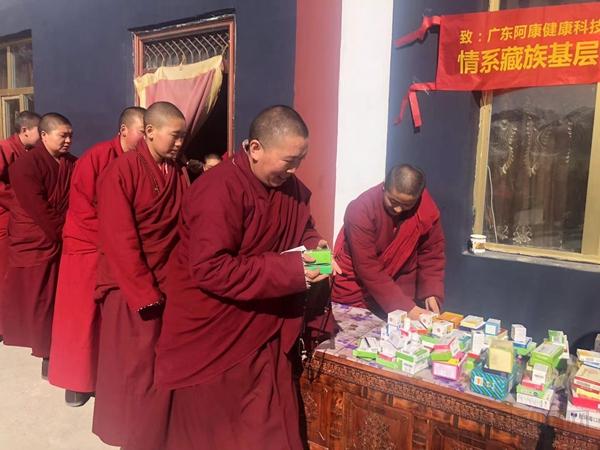
"Committed to the Tibetan Grassroots Community: Delivering Medicine in Snow, Warming Hearts"
Wang Lijue stated that, historically, pharmaceutical transactions were predominantly characterized by their commodity-trading nature. However, tiered diagnosis and treatment systems and the outflow of prescriptions have brought us closer to patients than at any other point in history. Akang Health aims to create a compassionate business model through integrated supply chain services, evolving from mere product offerings to disease-specific solutions, and ultimately to humanistic care, thereby outlining a clear vision of healthcare with warmth and empathy.
Amidst both the restructuring of existing stock and the expansion of incremental space, the grassroots pharmaceutical market is rapidly emerging and gaining increasing attention from the industry. Innovative enterprises represented by Akang are empowering grassroots healthcare with new technologies and new business models, thereby not only realizing commercial value but also promoting equity and accessibility in high-quality medical services.