

111 Group Unveils 'O+O' Strategy to Pioneer Integrated Online-Offline Pharma Retail Model
On December 7, the “New Era, New Challenges, New Opportunities—2018 China Internet Healthcare Summit Forum & 111 Group Partner Conference” was grandly held in Shanghai. Nearly 400 mid- and senior-level executives from pharmaceutical and healthcare companies gathered in Shanghai to engage in in-depth discussions on the integrated development of the internet and healthcare in the new era.
At the conference, Dr. Yu Gang, Co-founder and Executive Chairman of 111 Group, and Liu Junling, Co-founder, Chairman and CEO of 111 Group, jointly delivered a keynote speech titled “Empowering with Technology to Build an Ecosystem for Internet-Based Pharmaceutical Healthcare,” comprehensively showcasing 111 Group’s O+O new retail pharmaceutical solution.
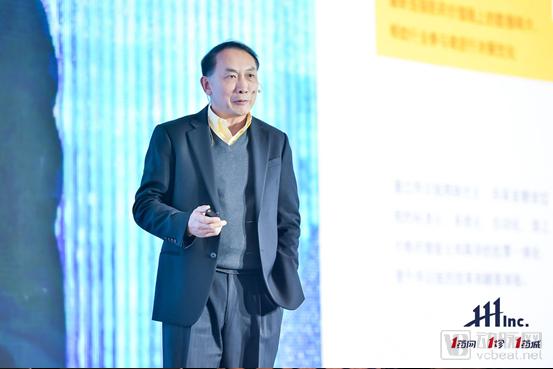
Dr. Yu Gang, Co-Founder and Executive Chairman of 111 Group
Dr. Yu Gang outlined 111 Group’s core competencies and its strategic layout in the future technology industry. He stated that 111 Group is building an intelligent supply chain; leveraging massive big data to gain deep insights into customer profiles and behaviors for precision marketing and personalized services; and developing a cloud service platform with unlimited scalability, among other initiatives.

Liu Junling, Co-founder, Chairman, and CEO of 111 Group
111 Group aims to build China’s largest integrated online-to-offline (O2O) pharmaceutical and healthcare platform, driven by technology. By leveraging its unique Technology-enabled Business-to-Consumer (T2B2C) model, the company connects online and offline retail terminals to establish an integrated pharmaceutical and healthcare ecosystem. It empowers the “second terminal” (pharmacies) and the “third terminal” (private hospitals and primary care institutions), while directly reaching consumers as the “fourth terminal.” Additionally, 111 Group enables pharmaceutical manufacturers to rapidly access channels beyond traditional public hospitals, capitalizing on prescription outflow to drive incremental channel growth and improve the inefficiencies and lack of transparency in the existing drug distribution system between pharmaceutical companies and patients.
This conference marks another high-profile, comprehensive showcase of 111 Group’s strength following its successful U.S. listing on September 12 this year.
1. 111.com was initially a sub-channel of Yihaodian, launching its operations in 2010 and becoming an independent entity in 2012; in 2016, the 1Zhen Internet Hospital went online; in 2017, the B2B pharmaceutical platform 111 City (Yiyaocheng) was launched. The name "111 Group" is derived from these three distinct business segments: 111.com, 1Zhen Internet Hospital, and 111 City, which are collectively referred to within the industry as the "three troikas."
111 Group’s revenue reached RMB 960 million in 2017, a year-on-year increase of 10%; the cumulative revenue for the first three quarters of 2018 amounted to RMB 1.228 billion, surpassing the full-year total of the previous year. The B2B business was the fastest-growing segment of 111 Group, with its gross merchandise value (GMV) totaling RMB 666 million in the first three quarters of 2018.
Financial reports indicate that 111 Group’s B2B business continued to expand, with the number of served pharmacies growing from 100,000 to 130,000. The B2B repurchase rate in the third quarter increased from 48.1% in the same period last year to 67.0%. Meanwhile, supply chain collaborations were further strengthened, as the number of domestic and international pharmaceutical companies establishing direct product supply partnerships with the Group rose from 62 to 80. These partners include renowned pharmaceutical firms such as Eli Lilly and Pfizer, as well as newly added listed pharmaceutical companies like Shenwei Pharmaceutical and Wondfo Biotech.
At the Partner Conference, 111 Group also stated its commitment to collaborating with pharmaceutical companies to create a new model for healthcare and medicine. This includes leveraging omni-channel strategies to reach users and gain deep insights into user behavior through new retail approaches in the pharmaceutical sector; establishing new retail networks for pharmaceutical companies, such as pharmacies, clinics, and private hospitals; and providing intelligent supply chain services that are efficient, transparent, controllable, and cost-effective.
In addition, on December 5, 111 Group entered into a deep strategic partnership with Manulife-Sinochem Life Insurance, the first Sino-foreign joint venture life insurer in China. By joining forces, the two parties will jointly build a closed-loop “big health” ecosystem service system encompassing prevention, consultation, medication purchase, Pharmacy Benefit Management (PBM), and health protection.
Dr. Yu Gang stated that online platforms have their own advantages. They are not restricted by geography, covering the entire country with a single network; they are not limited by time, offering 24/7 service; and they are not constrained by shelf space, allowing for an unlimited expansion of product varieties. Additionally, big data and business intelligence can be effectively applied online to gain deep insights into users. The internet also makes supply chains more transparent, eliminating or shortening intermediate links and improving efficiency.
Physical stores offer distinct advantages. Customers can obtain their desired items immediately, achieving instant availability; store staff can provide personalized, face-to-face service and implement experiential marketing strategies. In the future, the distinction between online and offline channels will disappear, giving way to deep integration that enables mutual traffic generation, shared SKU inventories, “buy online, pick up in-store” services, and the combination of medical consultations with medication purchases. What enterprises must do is deliver the products and services customers want, at the time and location they prefer, in their desired format, while ensuring quality and quantity.
The pharmaceutical e-commerce industry has entered an era of “integration,” characterized by the convergence of online and offline channels, B2B and B2C models, self-operated and platform-based operations, medical services and pharmaceuticals, as well as technology and distribution channels. Only through comprehensive integration can the industry leverage technological advantages and drive innovation, thereby facilitating its transformation and upgrading.