

Impact of Healthcare Reform on China's Pharmaceutical Market: Structural Shifts Across Seven Distribution Channels
On August 13, the annual Westpu Conference grandly opened in Boao, Hainan, with healthcare reform emerging as one of the hot topics at the event. As China’s new healthcare reform enters its 11th year and navigates into deep waters, a flurry of new policies have been introduced, bringing about profound changes in the terminal pharmaceutical market.
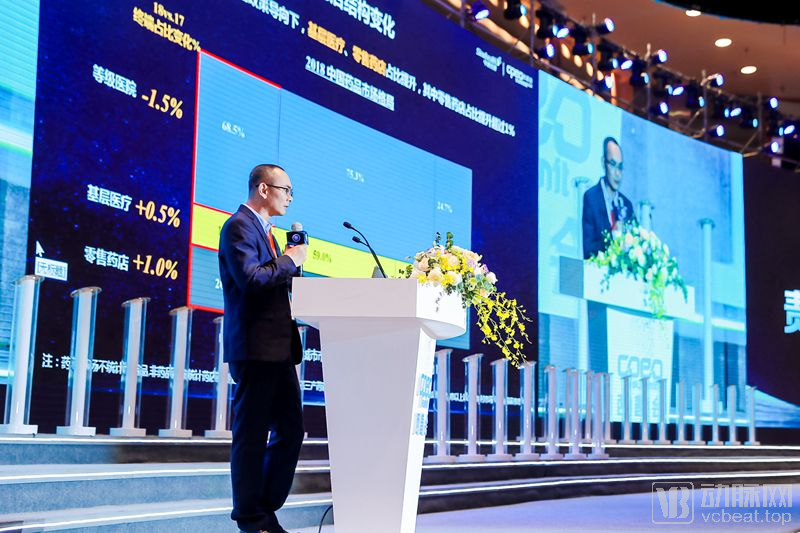
Su Caihua, Vice President of Sinohealth, delivered an interpretation of the new healthcare reform policies under the title “Impact of New Medical Insurance Policies on the Structure of the Pharmaceutical Terminal Market and Future Trend Analysis.” He analyzed the impact of the new healthcare reform policies on the terminal pharmaceutical market from three dimensions: key points of the new medical insurance policies and their industry implications, changes in the structure of the pharmaceutical terminal market under the new policies, and projections of future trends in the pharmaceutical terminal sector. The presentation revealed changes in the structure of seven major terminal pharmaceutical markets and provided forecasts for future developments.
# The Far-Reaching Impact of the New Policy
The introduction of the new policy presents both opportunities and challenges.
Taking the landmark “4+7” Volume-Based Procurement (VBP) policy on the procurement side as an example, which serves as a key measure promoted by the state to accelerate the substitution of originator drugs with generics, the National Healthcare Security Administration swiftly rolled out VBP for these 25 drug varieties nationwide. This followed the phased implementation of the winning bid prices from the first batch of VBP pilots in the “4+7” cities during the first half of the year.
Su Caihua stated that the in-depth promotion of the “4+7” volume-based procurement model will significantly impact companies’ existing business models. Adhering to the principle of “lowest price wins among products with consistent quality,” this initiative fosters direct competition between originator drugs and generics, inevitably leading to a decline in product prices. Therefore, enterprises need to adjust their resource allocation at an early stage, reduce unnecessary marketing and administrative costs, and create room for further price reductions.
Taking the recently issued "First Batch of National Key Monitoring List for Rational Drug Use" as an example, the list not only identifies 20 chemical drugs and biological products subject to key monitoring for rational use, but also explicitly restricts the prescribing authority of Western medicine physicians in hospitals regarding Chinese proprietary medicines.
Su Caihua pointed out that the introduction of the Key Monitoring List for Rational Drug Use standardizes prescriptions at the hospital decision-making level. Sales of drugs included in this list will be restricted in hospitals, posing challenges to existing distribution models and creating an urgent need for transformation and upgrading.
Furthermore, adjustments to the National Reimbursement Drug List (NRDL) have always been a top priority in medical insurance policy. The current National NRDL is the 2017 edition, which includes drugs added through two rounds of reimbursement access negotiations in 2017 and 2018, totaling 2,588 western medicines and Chinese proprietary medicines. Currently, the country is undertaking adjustments for the 2019 edition of the National NRDL. As planned, the regular directory of the new National NRDL will be released shortly, while the list of drugs approved through negotiation will be published in September–October.
Su Caihua believes that whether it is the “4+7” volume-based procurement on the procurement side, key monitoring of rational drug use on the decision-making side, or adjustments to the National Reimbursement Drug List on the payment side, the core of the new healthcare reform policies is to control costs and improve efficiency, thereby addressing the difficulties and high expenses faced by the public in accessing medical care.
Divergent Performance Across Seven Major End Markets
Amid the backdrop of intensive rollout of new policies, the structure of the pharmaceutical terminal market is also undergoing changes.
Overall, from 2014 to 2019, the compound annual growth rate (CAGR) of China’s terminal pharmaceutical market was approximately 6.3%, with urban primary care institutions and retail pharmacies experiencing slightly faster growth than tiered hospitals.
According to data from Sinohealth CMH, the total size of China’s pharmaceutical market (excluding crude medicinal materials, traditional Chinese medicine decoction pieces, and formula granules) reached RMB 1.6723 trillion in 2018, representing a 5.8% year-on-year increase from 2017, with a slight decline in the growth rate. The market size is projected to reach RMB 1.7392 trillion in 2019, a 4.0% increase from 2018, indicating a continued slowdown in growth momentum.
“Factors such as steady socioeconomic growth, accelerating population aging, improved living standards, and heightened health awareness will drive further expansion of the pharmaceutical market’s sales volume. Meanwhile, reform measures—including healthcare system reforms, medical insurance cost containment, drug tender pricing, centralized price negotiations, zero-markup policies for drugs in public hospitals, and restrictions on the proportion of drug revenue—will remain the dominant themes influencing 2019, thereby constraining high growth in pharmaceutical sales,” analyzed Su Caihua.
From the perspective of market share across seven major terminal channels, monitoring data from Sinohealth CMH’s All-Terminal Surveillance shows that in 2018, drug sales in urban tiered hospitals amounted to RMB 863.5 billion, accounting for 51.6% of the total pharmaceutical market share, a decrease of 1.1 percentage points compared with 2017; drug sales in county-level tiered hospitals reached RMB 283.5 billion, representing 17.0% of the market, a decline of 0.4 percentage points year on year; drug sales in retail pharmacies totaled RMB 286.9 billion, with a 17.2% market share, an increase of 0.1 percentage points from 2017; drug sales in urban primary healthcare institutions amounted to RMB 108.0 billion, accounting for 6.5% of the market, up by 0.4 percentage points compared with 2017; drug sales in rural primary healthcare institutions reached RMB 75.1 billion, representing 4.5% of the market, remaining flat compared with 2017; drug sales in hospital-affiliated third-industry pharmacies totaled RMB 47.5 billion, with a 2.8% market share, an increase of 0.8 percentage points year on year; and drug sales via online pharmacies amounted to RMB 7.8 billion, accounting for 0.5% of the market, up by 0.1 percentage points from 2017.
The data indicate that measures promoted by the new healthcare reform to foster the development of primary care, such as tiered diagnosis and treatment and initial consultations at the primary level, have begun to yield results in urban primary hospitals, with growth rates significantly higher than those in tertiary hospitals; however, the growth rate in rural primary hospitals remains sluggish.
Furthermore, driven by policies promoting the separation of prescribing and dispensing and the outflow of prescriptions from hospitals, the market share of retail pharmacies is gradually increasing. Hospital-affiliated pharmacies primarily focus on new and specialized drugs, biological products, and high-priced medications, a segment experiencing rapid growth. Propelled by the disruptive development of the internet, pharmaceutical e-commerce has expanded rapidly, with online pharmacies showing a trend of rising market share; however, their base remains incomparable to that of offline pharmacies.
“In 2018, the overall pharmaceutical terminal market grew driven by sales volume and new product launches, while the average market price declined slightly,” said Su Caicai. It is expected that in 2019, new products will become the primary growth driver. Additionally, due to widespread price increases for retail pharmaceuticals and the launch of new drugs pushing up the average retail price, pricing will once again become a positive driver; however, its contribution to incremental growth will be very marginal.
Future Trend Assessment
Amidst profound industry transformation, it is particularly crucial to assess future trends. The significantly improved efficiency in the regulatory review and market approval of innovative drugs, their inclusion in the National Reimbursement Drug List (NRDL), and sales volume ramp-up will undoubtedly exert a profound impact on the landscape of the terminal pharmaceutical market.
In 2018, the Center for Drug Evaluation (CDE) approved a total of 106 new drugs, including two new traditional Chinese medicine (TCM) compound formulations, nine Class 1 innovative drugs, and 67 imported originator drugs. The newly approved drugs were primarily concentrated in three therapeutic areas: oncology, antiviral therapy, and diabetes. Data indicate that these three categories also experienced the fastest market size growth.
Data from Sinohealth CMH shows that the quarter-on-quarter sales growth of most newly launched blockbuster drugs, such as anlotinib, ibrutinib, and regorafenib, exceeded 200% in typical sample hospitals in the first quarter of 2019. Additionally, “new specialty drugs need to be rapidly commercialized through DTP (Direct-to-Patient) pharmacies upon launch,” said Su Caihua. The introduction of new drug varieties can bring incremental opportunities to pharmacies.
Market performance data from major companies indicates that multinational corporations and innovative enterprises are leading market growth. Driven by recently launched products, foreign-funded enterprises recorded a 12.4% growth in 2018, with a projected growth rate of 11.2% for 2019, contributing nearly 70% to the overall market growth in 2019. In contrast, domestic companies have faced considerable challenges, with a growth rate of 3.8% in 2018 and a projected growth rate of only 1.6% for 2019. Benefiting primarily from the introduction of new products, AstraZeneca, Roche, and Hengrui Medicine achieved year-on-year growth exceeding 20% in 2018, emerging as the top-performing companies in the market.
A more significant shift is occurring in the generic drug market. In the United States, generic drugs account for 86% of the total volume but only 13% of the total value. In China, however, generic drugs far surpass originator drugs in both value and volume, accounting for 71% of the total market value and 79% of the total volume, with a substantial presence of high-priced generic drugs.
The advancement of the consistency evaluation for generic drugs, coupled with the implementation of the “4+7” volume-based procurement program, is reshaping the landscape of China’s generic drug market. A large number of substandard generic drugs will be phased out, and integrated enterprises combining active pharmaceutical ingredient (API) and finished dosage form manufacturing—with certain innovation capabilities and cost advantages—will gain a competitive edge in the future.
“Administrative measures such as the ‘4+7’ volume-based procurement will accelerate the transformation of the industrial structure, squeezing out significant price ‘bubbles.’” Su Caihua predicts that prices for products under volume-based procurement will drop sharply, market share for originator products will be eroded, and non-winning bids will essentially be eliminated from the hospital market.
Furthermore, with the introduction of the National Key Monitoring List for Rational Drug Use and restrictions on hospitals’ prescribing authority for traditional Chinese medicine (TCM), sales of certain adjunctive therapies in hospitals will be affected. The products included in the national key monitoring list represent a market size of RMB 66 billion, with most of these products experiencing year-on-year declines of over 20% for two consecutive years.
In the over-the-counter (OTC) drug sector, sales reached RMB 230 billion in 2018 and are projected to hit RMB 240 billion in 2019, representing an estimated growth rate of 4.3%, indicating a generally stable growth trajectory. As most branded OTC manufacturers have adopted price increases to offer greater margins to distribution channels—thereby meeting chain pharmacies’ requirements for product gross profit—the growth of the OTC pharmaceutical market has been primarily price-driven. Meanwhile, brand concentration has significantly increased in common OTC categories such as cold and flu, cough, dermatological, and gastrointestinal medications.
“When God closes a door, He leaves a window open; however, the height of this windowsill varies for different enterprises. Like many other industries, the pharmaceutical industry is currently in a transitional window period. Fundamental changes are imminent, making it urgent for companies to transform their business operating models, adjust investment strategies, and build and enhance new capabilities. Innovation-driven development and the implementation of the Healthy China strategy present tremendous opportunities for the entire industry; therefore, we remain confident about the future of China’s pharmaceutical industry,” judged Su Caihua.