

Taiwan Accelerates in Three Key Healthcare Innovation Directions: Insights from the Taiwan Healthcare+ Expo
As the last glimmer of twilight vanished into the distant horizon, the aircraft began its gentle descent, engaging in a second kiss with the clouds. Outside the window shade, the indicator lights flashed rhythmically, adding a touch of surrealism to this ten-minute interlude of ambiguity. What followed was a long coastline, resembling a golden ribbon against the backdrop of city lights. Not far away lay Taipei...
The flight from Chongqing Jiangbei International Airport to Taoyuan International Airport lasted more than three hours, leaving one slightly fatigued. It was already past 9 p.m., and without hesitation at the airport, the reporter took a taxi to the booked hotel. The hotel reserved by the organizer is located on Section 3, Bade Road, in Songshan District, Taipei. With a distinctly Taiwanese flair, it is named “A-Tree International Hotel.”
“Trees are the breath of this hotel.” The hotel’s environment lives up to its slogan. Upon entering the lobby, one is greeted by the fresh, oxygen-rich ambiance reminiscent of a tropical rainforest. After a moment of reflection, the reporter began to rest and recharge for the next day’s medical technology exhibition…


Early in the morning, the reporter set out. The exhibition halls of the convention center are conveniently located right at the exit of an MRT (subway/light rail) station. From the hotel to the Taipei Nangang Exhibition Center, the MRT is undoubtedly the most convenient mode of transportation. Thirty minutes later, we arrived at the venue for this medical technology exhibition—the Nangang Exhibition Center. Viewed from a distance, it still presents quite an imposing sight.

According to the official introduction, the 2018 Taiwan Healthcare Technology Expo featured joint exhibitions by more than 300 hospitals and enterprises. With 1,400 booths, the event covered industries such as electronic information, precision machinery, innovative medical devices, and biopharmaceuticals. The expo focused on three core themes: “Efficient Healthcare,” “Smart Care,” and “Technological Health,” integrating solutions across healthcare, health management, and caregiving, and attracted over 10,000 medical professionals.
Below are the official interpretations of the three core themes:
• Efficient Healthcare: Leveraging clinical big data, artificial intelligence (AI), and innovative medical materials to achieve high-quality, precise, and efficient healthcare.
• Smart Healthcare: Integrating mobile and IoT technologies, user-friendly assistive devices, and innovative care service models to deliver secure, human-centric smart care.
• Innovative Healthcare: Leveraging new technologies and tools for personal health management, along with innovative pharmaceutical technologies and products, to achieve preventive medicine and effective treatment.
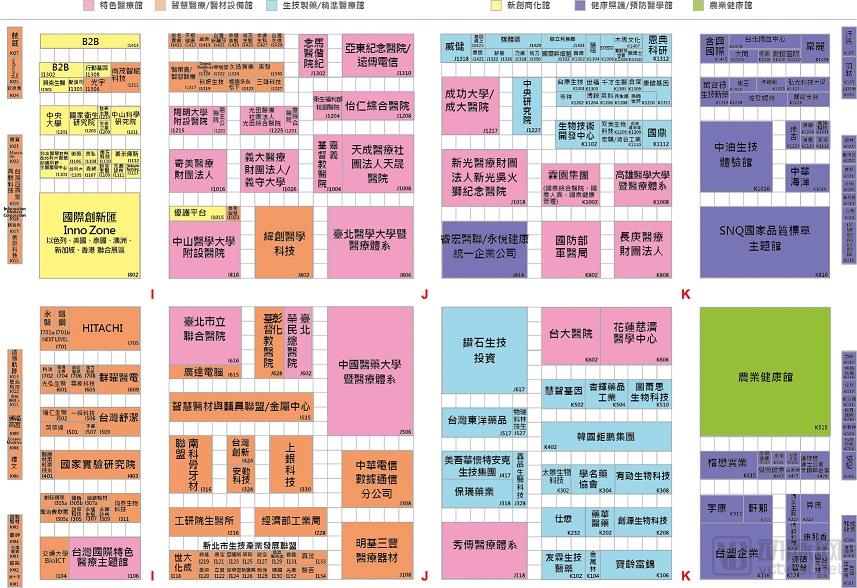
Notably, the “Taiwan Healthcare Technology Expo” is the world’s first exhibition primarily centered on hospitals, a fact clearly evident from the venue layout:
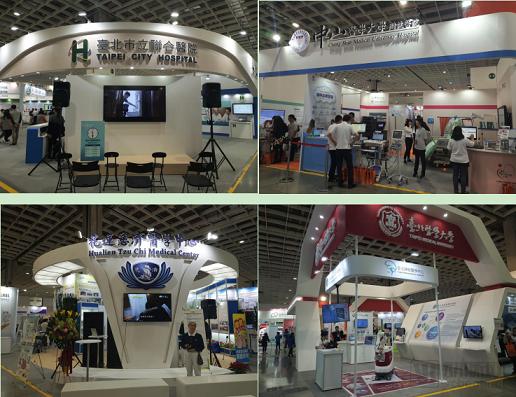
At past medical exhibitions, booths were predominantly hosted by enterprises. In contrast, at the “Taiwan Healthcare Technology Exhibition,” most booths are organized by hospitals, with enterprises participating as partners and setting up displays within the hospital booths. This difference may be attributed to the nature of private hospitals in Taiwan, which are willing to engage in mutual brand endorsement with their corporate partners. Conversely, public hospitals in mainland China tend to adopt a cautious stance toward corporate brand endorsements.
Below, let’s return to the highlight of this exhibition:"Efficient Healthcare," "Smart Care," "Tech-Enabled Health"Three Core Themes.
Topic 1: “Efficient Healthcare”
Chung Shan Medical University Hospital began promoting electronic medical records (EMRs) in 2009. It independently developed a “Patient-focused Method” (PFM)-based EMR system and further extended and innovated it to create an intelligent teaching-oriented EMR platform, which allows for direct correction, annotation, and instructional activities.
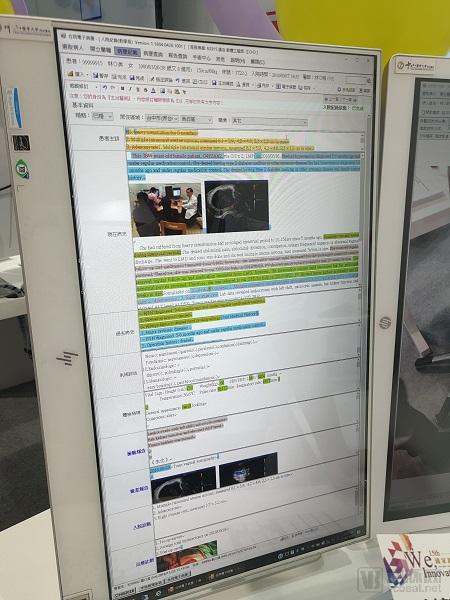
Currently, the workflows and databases of all outpatient, inpatient, emergency, and nursing systems across the hospital have been standardized.
Zeng Zhiren, Vice President of The First Affiliated Hospital of Sun Yat-sen University, told reporters that, compared with the electronic medical record (EMR) systems of other hospitals, the EMR system developed by his hospital has been upgraded to a standardized structure centered on big data. It embodies the spirit of “Shared Decision Making (SDM)” within its “patient-centered” workflows, thereby providing a digitalized environment for clinical operations and further evolving into an innovative, teaching-oriented architecture.
The so-called "patient-centered" approach involves rebuilding the electronic medical record (EMR) system from the patient’s perspective, effectively creating a “diagnosis and treatment diary” for the patient. For instance, starting from hospital admission, all significant events—including major examinations, surgeries, special procedures, and explanations of the condition to the patient or their family—are meticulously documented. Furthermore, graphical guidance tools understandable to patients are used to communicate and discuss their condition, which not only reduces the gap between healthcare providers and patients but also enhances mutual trust.
In contrast, teaching-oriented electronic medical records (EMRs) leverage existing EMR frameworks and integrate Healthcare Information Technology (HIT) to develop a new structured language that supports correction, annotation, and instructional functions. Compared with early paper-based handwritten or stamped records, teaching-oriented EMRs enable real-time display of teaching records and facilitate more convenient information retrieval and annotation. Key elements such as audit trails, timestamped signatures, authors, and teaching levels are clearly visible throughout the entire process.
Compared with traditional Hospital Information Systems (HIS), innovative electronic medical records are more efficient in clinical practice and patient-centered care, truly optimizing healthcare workflows and providing more convenient medical services. In the future, they can be integrated with precision medicine to tailor personal health management services for individuals, enabling applications in home-based telemedicine.
As electronic medical record (EMR) systems have achieved standardization and structuring, the resulting data are cleaner and more authentic, thereby enhancing the credibility and accuracy of information at the application level. This facilitates data or database vendors in leveraging such data to construct superior materials for clinical decision support analytics, while also laying a solid foundation for future artificial intelligence (AI) applications.
Topic 2: Smart Care
Show Chwan Medical System’s booth primarily showcased its smart healthcare solutions. Since 2017, Show Chwan Medical System has undertaken comprehensive reengineering of its smart medical processes, integrating internal and external hospital resources to enhance patient care, while strengthening remote healthcare collaboration with communities and the public. In November 2018, Show Chwan Medical System and Asus Life fully launched their smart healthcare services.
According to reports, Show Chwan has implemented an intelligent consultation service app in its outpatient department; introduced a barcode-based patient safety identification system in the pharmacy for medication dispensing, verification, and distribution; and adopted barcode-based patient identification in the radiology department. Furthermore, electronic whiteboards are utilized in the emergency department to integrate communication and monitor patient care status in real time. In the future, after discharge, patients will be able to use the hospital’s “Care Connect” app for home care functions, including physiological data recording and medication reminders.
In the inpatient ward section, electronic whiteboards are installed at nursing stations, and medical staff can simultaneously access patients’ clinical information via mobile devices, thereby reducing handover time. Physicians use mobile electronic health record (EHR) systems during rounds to enable mobile healthcare, allowing medical teams to discuss patient cases without being constrained by time or location. Additionally, barcode scanning is used to track equipment locations, integrating real-time usage data of medical instruments across the entire hospital. The operating rooms also employ electronic whiteboards to monitor the status of each surgical procedure in real time, thereby enhancing operational efficiency through lean management.
As a partner of the Show Chwan Healthcare System, ASUS Health, a subsidiary of ASUS Cloud Corporation responsible for the healthcare sector, is dedicated to the research, development, and operation of precision medicine products. By leveraging ASUS Cloud’s technological expertise, it has developed healthcare big data solutions (PhenoFinder), medical Internet of Things (IoT) products (OmniCare), and artificial intelligence applications (AiNurse). Furthermore, it promotes integrated innovation in healthcare applications within medical institutions, assisting the healthcare industry in advancing precision medicine services.
AiNurse, the virtual care robot developed by ASUS Health, leverages AI technology to guide patients in measuring blood pressure, provide basic interpretation feedback and health education materials, thereby reducing the workload of nursing staff. Additionally, the development of diverse companionship and care applications through the adorable Zenbo smart robot represents another example of how new forms of smart medical technologies are being applied in healthcare services.
Theme 3: “Tech for Health”
Faced with the impact of an aging population, changing lifestyles, and air pollution, many chronic respiratory diseases have emerged, such as asthma and Chronic Obstructive Pulmonary Disease (COPD). Among these, COPD is the most lethal. The World Health Organization points out that approximately 3 million people worldwide die from COPD each year, making it the third leading cause of death globally.
In light of this, Shuang Ho Hospital has specifically developed the “Chronic Respiratory Disease Early Warning System” for patients with chronic respiratory diseases, introducing a novel model of healthcare delivery.
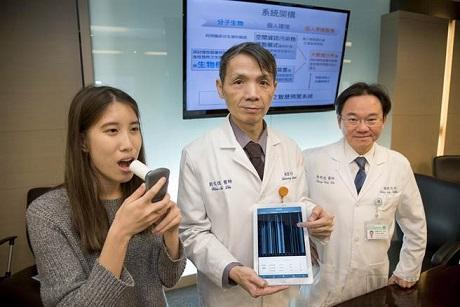
Dr. Liu Wen-De, a pulmonologist at Shuang Ho Hospital, stated that there is a lack of effective clinical assessment methods for patients with chronic respiratory diseases. By integrating artificial intelligence and the Medical Internet of Things (MIoT), Shuang Ho Hospital has shifted the management of chronic respiratory diseases—traditionally centered on tertiary hospital care—to a patient-centered model focused on long-term home-based care. This approach enables earlier intervention and control. Through this system, the hospital promotes preliminary screening for chronic respiratory diseases in hospitals and clinics, and establishes a new collaborative care model via referrals and medical consultations.
Liu Wende pointed out that the “Chronic Respiratory Disease Early Warning System” records physiological signals via “wearable devices” and environmental parameters through “home-based fixed and portable air quality monitoring devices.” By comparing these data with clinical assessments from medical institutions and subjective questionnaire results, the system accumulates sufficient data over several days to weeks. This information is then used in computational modeling to develop a personalized predictive model for respiratory diseases, providing a tool for long-term tracking of disease progression.
Taiwan’s humid climate, severe air pollution, and high smoking prevalence have contributed to a significant number of individuals with airway disorders. However, these conditions are difficult to diagnose early, lack convenient and effective assessment methods, and can lead to profound complications. These patients often constitute a population highly susceptible to air pollution, with their conditions easily exacerbated by environmental factors. Addressing these challenges requires establishing a new model of care that goes beyond traditional healthcare-seeking behaviors.
This system was also exhibited at the “Taiwan Medical Technology Exhibition,” where hands-on experience was offered.
Director Li Gangyuan stated that following its participation last year, the Taipei Medical University Healthcare System is once again jointly exhibiting this year, with themes centered on intelligent biomedical R&D, smart hospitals, precision medicine, and AI applications in healthcare. Among these, in the area of AI healthcare applications, Shuang Ho Hospital has integrated the Internet of Medical Things (IoMT) into a personalized early warning system for chronic obstructive pulmonary disease (COPD). This innovation transforms traditional medical practices and approaches to disease diagnosis and treatment. In the future, healthcare professionals, patients, and caregivers will be able to communicate about medical conditions and discuss treatment plans with empathy, unrestricted by time or distance. This shift will facilitate the transition from mere “treatment” of diseases to holistic care focused on “early warning and personalized attention,” thereby enhancing the overall quality of care for chronic respiratory diseases.
Some “Interesting” innovative products
Lunch was simple, with a dedicated bento shop inside the exhibition hall. I bought this box of fish belly rice for NT$128, approximately RMB 28. The portion was small, making it feel slightly expensive, but the taste was decent.

After reviewing the “relentless barrage” from major hospitals in Taiwan, the reporter shifted focus and dedicated their efforts to uncovering some “interesting” innovative medical products at the technology exhibition.
Feisibo Technology is an innovative supplier of wireless medical cameras, specializing in the research and development of products for medical documentation, optical positioning, and cloud-based surgical technologies. The company boasts a team of over 20 IT professionals with extensive technical experience, alongside specialized physicians. It has successfully developed multiple medical documentation and visual application devices, delivering enhanced portability and comfort to users in the fields of dental care, surgery, and aesthetics.
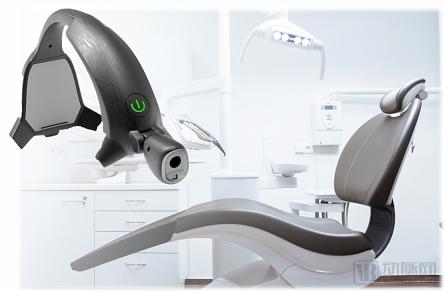
At this year’s Taiwan Medical Technology Exhibition, FSI Technology will promote its first innovative wireless medical camera to healthcare institutions and international buyers.
In recent years, providing video broadcasting and imaging during dental treatment has become a standard feature. VCBeat Technology pioneered the wireless, hands-free, and stylish MediCam, which integrates various technologies: narrow-angle lens design, intelligent auto-focus system, wireless technology, and cloud-based intelligence.
Qunyao Medical Electronics is a medical device startup in Taiwan focused on the research and development of capsule endoscopy systems.
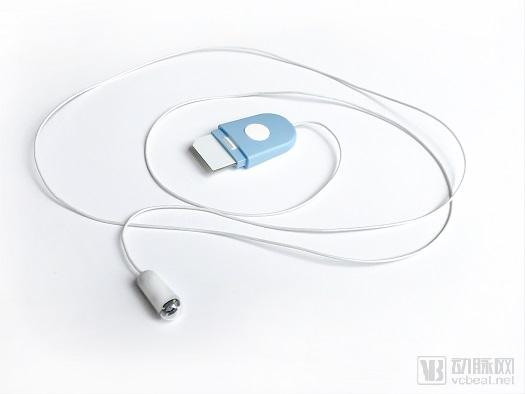
According to staff from Qunyao Medical Electronics at the Taiwan Medical Technology Exhibition, the product has received highly positive feedback from clinical users during testing. It has currently been submitted for regulatory review and registration, with market launch expected as early as late 2018 or the first quarter of 2019.
At this exhibition, Qunyao Medical Electronics recommended this revolutionary innovative auxiliary medical device to healthcare institutions and gastroenterologists. It not only reduces the workload of anesthesiologists and assists attending physicians in performing precise gastroscopic diagnoses, but also provides patients with higher-quality diagnostic solutions.
Qunyao Medical Electronics' InsightEyes differs from existing capsule endoscopes on the market, which are limited to examining only the small intestine; it is now capable of examining organs with larger surface areas and spatial volumes, such as the stomach.
The product adopts a disposable capsule system design, which not only saves on maintenance costs associated with reuse but also reduces the risk of cross-infection from secondary use. No anesthesia is required for insertion, thereby eliminating potential risks associated with anesthesia. Patients simply swallow the capsule, allowing the endoscope, equipped with a 1 cm-wide tether, to enter the body cavity for examination in a painless and comfortable state.
Notably, the endoscope itself is equipped with a planar magnetic component. A magnetic control system drives the movement and rotation of the capsule endoscope, guiding the endoscopic catheter to the appropriate cavity position. This enables comprehensive visualization of the affected area and rapid, accurate alignment with the lesion for imaging. Upon completion of the examination, the magnetic force can be disengaged, and the endoscope can be retrieved by withdrawing the tether, offering considerable convenience and safety.
In addition to medical instruments used by physicians, high-tech wearable devices for patients also made their debut. At this exhibition, the smart insoles developed by Baiyi Medical Materials Technology attracted significant attention.
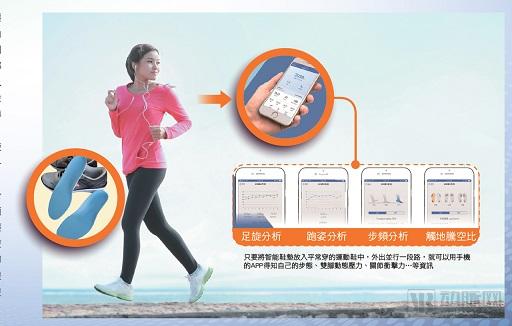
The company leverages “flexible array pressure-sensing assistive technology” to develop “wireless in-shoe pressure distribution monitoring insoles.” It embeds pressure sensors, motion sensors, a computing unit, and a battery into a pair of slim, lightweight insoles. These insoles record various metrics during human walking and transmit the measurement results wirelessly to commonly used handheld devices, such as iPads and iPhones, enabling users to easily access their walking or running data via a dedicated app.
Smart insoles embed high-density sensing elements within both insoles, capturing dynamic changes of the feet at an extremely high frequency. Users can easily and conveniently obtain precise dynamic foot data through these smart insoles. This data can be utilized for measuring plantar pressure distribution, analyzing jogging or walking gait, enhancing athletic performance, preventing sports injuries, monitoring limb rehabilitation, and preventing falls among the elderly.
Cross-Strait Collaboration and Joint Advancement in the Medical Industry
At the exhibition, reporters also spotted numerous enterprises from mainland China. For instance, at the booth of Kaohsiung Medical University Chung-Ho Memorial Hospital, they encountered the “Haifu Knife” from Chongqing, a high-intensity focused ultrasound (HIFU) therapeutic device.
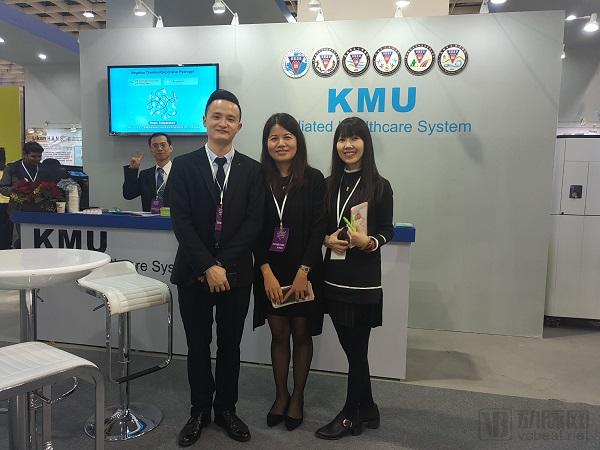
The person on the far left of the image is a HIFU staff member.
According to staff members, Kaohsiung Medical University Chung-Ho Memorial Hospital has adopted the non-invasive (incision-free and bloodless) treatment modality of the “Haifu Knife” for uterine fibroids. Its principle is similar to that of focusing sunlight; by focusing ultrasound waves from outside the body onto the uterine fibroids inside, it generates high temperatures at the focal area, causing necrosis of the fibroid tissue and thereby achieving non-invasive ablation of the uterine fibroids.
In terms of impact, this Taiwan Medical Technology Exhibition is expected to expand the alignment of technology, capital, and market channels between the two sides of the Strait. As an invited media outlet, VCBeat sensed the strong desire of many Taiwanese enterprises to expand their businesses in the Chinese mainland during our exchanges. It is our hope that each edition of the exhibition will foster closer cooperation between the two sides.
Miscellaneous Photos from the Exhibition Site:
Partial source of information:
China Times
Biomedical Technology Policy Research Center, Industrial R&D Division