

Biotech Rising Star Moderna Goes Public, Raises $604.3 Million to Advance mRNA Therapies
VCBeat (WeChat ID: vcbeat) has learned that Moderna Therapeutics recently went public on the Nasdaq stock exchange (ticker symbol: MRNA) through an initial public offering (IPO). The company sold approximately 26.3 million shares at a price of $23 per share, raising about $4.3 million more than its revised target of $600 million.
Previously, Allogene Therapeutics set the record for the highest IPO in the biotechnology sector, raising $324 million at a market capitalization of $2.2 billion. In addition, several other top-tier biotechnology companies have also raised funds through initial public offerings (IPOs). In 2014, Juno Therapeutics raised $264 million through an IPO at a market capitalization of $2.2 billion. In 2015, Axovant Sciences raised $315 million with an initial market capitalization of $1.5 billion, while Galapagos NV raised $275 million in its IPO at an initial market capitalization of $1.7 billion.
Moderna, founded in 2010, is dedicated to the development of mRNA therapies. mRNA therapy functions by transmitting genetic information from DNA to ribosomes, providing the amino acid sequences for proteins encoded by DNA, thereby turning patients’ own cells into “in vivo factories” that produce therapeutic agents.
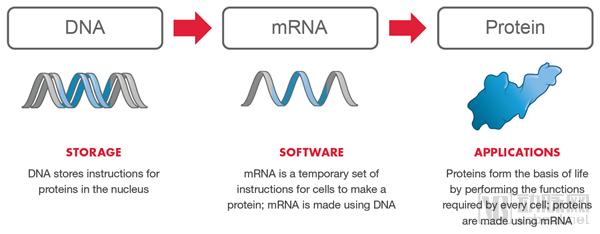
Image source: Moderna official website
Last week, Moderna filed an application with the U.S. Securities and Exchange Commission (SEC) to raise its IPO target from $500 million to $600 million. Since its founding in 2010, Moderna has raised over $2.6 billion through equity financing. As of September 30, the company held $1.2 billion in cash, cash equivalents, and investments. Although Moderna currently has no products on the market, it has demonstrated exceptional fundraising capabilities. Consequently, some analysts question whether the company is overvalued.
Despite skepticism about whether Moderna can meet expectations, the company’s R&D scale is extraordinary. The company has 21 R&D projects, with 10 having entered clinical development and 3 having publicly filed Investigational New Drug (IND) applications. According to the company’s latest information released in July, nine of its clinical research projects are in Phase I clinical trials, and one is in Phase II clinical trials.
Most biotechnology companies either have no clinical-stage products at the time of their initial public offering (IPO) or have one or two candidates in early experimental stages, with the capital they raise primarily used to advance their projects into clinical trials or to fund more costly late-stage studies.
Moderna’s Chief Financial Officer, Lorence Kim, stated earlier this year: “Over time, Moderna will generate substantial returns, not from the approval of any single drug, but because our R&D technology will continue to advance and improve. The key focus for investors is that we can deliver this upside potential.”
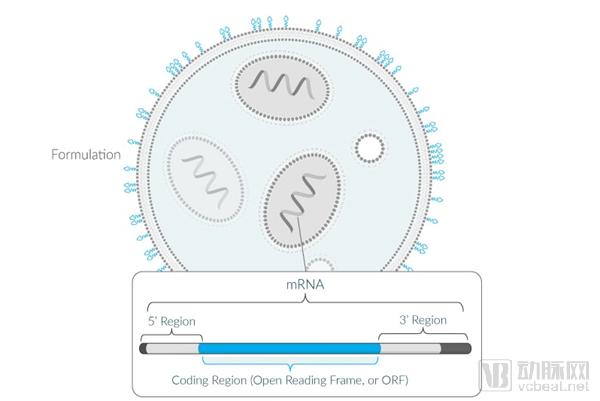
Moderna leverages the fundamental role of mRNA in protein synthesis to develop mRNA therapeutics for a broad spectrum of diseases.
(Image source: Moderna official website)
Moderna may take several years to launch products on the market, but this is not uncommon for biotech companies going public. Meanwhile, the company has 680 employees and a well-compensated executive team, resulting in quite high administrative costs.
In 2017, Moderna President Stephen Hoge received $19 million in stock options and a $4.4 million cash bonus; Chief Financial Officer Lorence Kim received $5.5 million in stock options and a $1 million cash bonus; and CEO Stéphane Bancel received $4.6 million in stock options and a $1.5 million cash bonus. Combined, the three executives received a total of $40 million in cash and equity compensation last year.
In its latest filing with the SEC, Moderna stated that operating expenses for the first nine months of the year approached $360 million, bringing the company’s cumulative losses to $865.2 million.
Possibly due to its private status, Moderna had previously remained tight-lipped about its corporate developments. Now that the company is publicly listed, it will face stricter scrutiny. As most analysts have pointed out, Moderna stated in its IPO filing that it remains unclear whether mRNA drug processes are effective or safe. Furthermore, regulatory agencies such as the FDA have not yet evaluated this type of drug, leaving the regulatory pathway uncertain.
Additionally, media outlets have pointed out that although the company’s most advanced project is a therapy for heart disease, its other projects are all vaccines, which have significantly lower profit margins than other types of drugs.
An industry insider stated, “This is a high-risk, high-reward scenario. The losses may never be recouped, as Moderna is still years away from actual product sales, and the company currently operates solely on grant income and collaborations with other firms.”
Moderna, founded in 2010, is an emerging biotechnology company dedicated to treating infectious diseases, cancer, rare diseases, cardiovascular diseases, and other conditions through mRNA therapies. mRNA consists of a series of instructions that cells in the body use to produce proteins for disease prevention or combat; cells follow these instructions to synthesize proteins and distribute them to various parts of the body.
Moderna’s corporate vision is to advance 100 drugs into clinical trials over the next decade, targeting the treatment of all diseases—from oncology to rare genetic disorders.