

2018 HIMSS Greater China Conference Recognizes Five New Stage 7 and Eighteen Stage 6 Hospitals
From December 7 to 9, while wind and snow raged outside the Shanghai International Center for Transnational Procurement with temperatures plunging to freezing, the venue of the 2018 HIMSS Annual Conference was bustling with activity and vibrant energy.
“The inaugural HIMSS Annual Conference drew only a few hundred attendees, whereas today our annual conference hosts thousands. We can say that hospital information technology infrastructure development is currently experiencing a surge in vigorous construction.” At the Fifth China-US Summit on Healthcare Informatics Development and the 2018 HIMSS Greater China Annual Conference, Liu Jilan, Vice President of HIMSS and Executive President for Greater China, vividly illustrated the enthusiasm across all sectors for advancing hospital IT infrastructure.
Currently, there are a total of 48 hospitals across the Asia-Pacific region that have reached HIMSS Stage 6, while eleven hospitals in China have already achieved Stage 7 certification. The growth rate of hospitals attaining HIMSS Stage 6 is very rapid, currently second only to that of the United States.
However, 2018 is regarded as the inaugural year of hospital informatization construction. Although informatization efforts had been underway for many years, the release of the “Internet + Healthcare” policy in 2018, coupled with the requirement that all tertiary hospitals must achieve Level 4 in both hospital informatization grading and interoperability maturity by 2020, effectively sounded the starting gun and charted a new course for hospital informatization. Unfortunately, despite being on this new track, very few of the thousands of medical institutions, including most tertiary hospitals, have successfully attained Level 4 certification. In the past, informatization was optional; today, it is an inevitable challenge that the healthcare industry must confront. Addressing this challenge requires collaborative efforts from both hospital administrators and the IT sector.
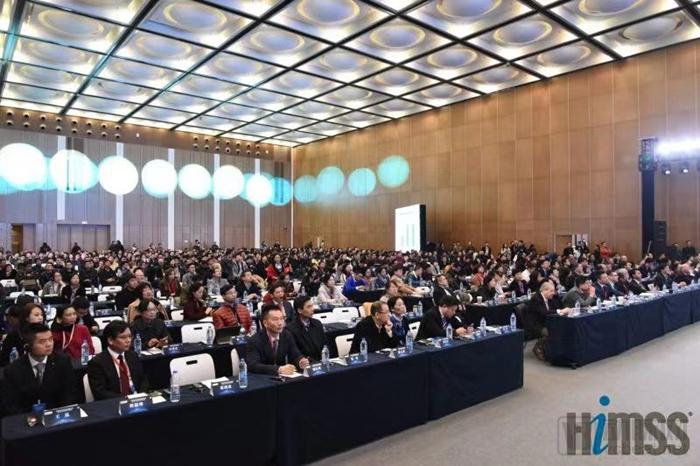
HIMSS Annual Conference Awards Ceremony
In 2018, China’s growth rate in the number of hospitals achieving HIMSS ratings was second only to that of the United States, marking China’s emergence as a major power in healthcare informatization. This year has seen an even greater number of hospitals attain HIMSS accreditation. Their advanced concepts, standardized processes, and secure, efficient closed-loop systems serve as valuable reference models. These institutions are both pioneers and trailblazers.
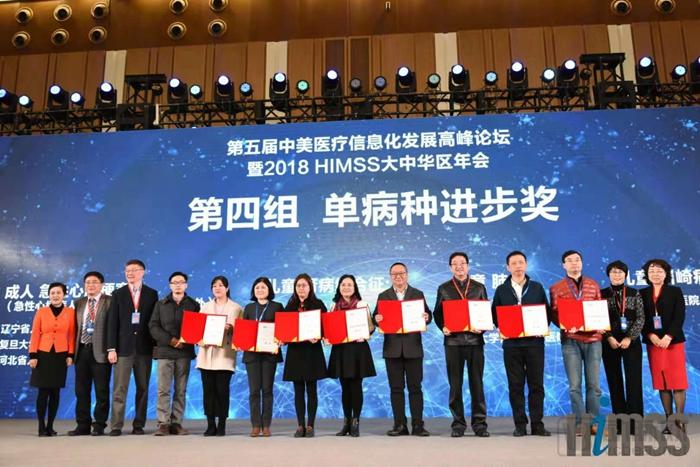
In 2018, a total of 18 hospitals achieved HIMSS EMRAM Stage 6 certification for both inpatient and outpatient services, while five hospitals attained HIMSS EMRAM Stage 7 for emergency and inpatient care.
Five Hospitals Newly Achieving HIMSS EMRAM Stage 7 for Both Emergency and Inpatient Care in 2018:
Huangshi Central Hospital of Edong Medical Group, Shanghai Children's Hospital, Longhua Hospital Affiliated to Shanghai University of Traditional Chinese Medicine, Children's Hospital of Fudan University, Kunming Children's Hospital.
2018: Two New HIMSS Stage 7 Outpatient Facilities
The First Affiliated Hospital of Xiamen University, Ningbo Yinzhou Second Hospital
15 Hospitals That Have Achieved HIMSS EMRAM (Inpatient and Emergency) Stage 6:
Nanjing Drum Tower Hospital, Peking University Medical Center Luzhong Hospital, Tsinghua University Affiliated Chuiyangliu Hospital, Liaoning Provincial People's Hospital, The Affiliated Hospital of Chifeng University, The First Hospital of Shanxi Medical University, Shanghai Pudong Hospital, Yichang No. 1 People's Hospital, Yangjiang People's Hospital of Guangdong Province, Guangzhou Women and Children's Medical Center (Zengcheng Campus), Wuhan Children's Hospital, The Fourth Affiliated Hospital of Zhejiang University School of Medicine, Beijing Jiangong Hospital, Changji Branch of the First Affiliated Hospital of Xinjiang Medical University, Sunshine Union Hospital.
Three Hospitals Achieve HIMSS O-EMRAM (Outpatient) Stage 6:
Taizhou Enze Medical Center (Group) Zhejiang Taizhou Hospital, Tsinghua University Affiliated Chuiyangliu Hospital, Guangzhou Women and Children's Medical Center (Zengcheng Campus).
Achieving HIMSS Stage 7 accreditation represents more than just a change in processes for hospitals. As the President of Kunming Children’s Hospital stated, “Passing the HIMSS assessment has triggered a profound transformation in our management thinking and philosophy. The impact and changes it brings are beyond imagination, offering significant convenience to both patients and healthcare professionals.”
VCBeat once analyzed the IT maturity levels of hospitals listed in the Top 100 Hospitals in China, published by the Hospital Management Institute of Fudan University, and found that 65% of these hospitals had relatively low levels of informatization. How critical is IT infrastructure development to hospital construction? What milestones have pioneers already achieved? At the HIMSS 2018 Annual Conference, frontline healthcare professionals, hospital IT leaders, and hospital administrators shared their experiences, focusing on overcoming obstacles and lessons learned.
Wang Cai, Chairman of the Information Management Committee of the Chinese Hospital Association, stated, “There are medical issues that cannot be resolved by medical technology alone; however, many healthcare problems, such as hospital-acquired infections, arise from institutional deficiencies or human factors. To address this, we must improve the quality of medical services by implementing standardized processes and scientific process control. This includes utilizing execution checklists, verification checklists, and communication checklists. We should leverage modern management systems to resolve issues related to medical quality and patient safety, which essentially refers to the advancement of health information technology infrastructure.”
HIMSS Global Vice President John Daniels cited a set of data: “Each year, 45,000 to 90,000 people die from preventable medical errors—a staggering figure. With China serving an even larger patient population annually, preventing this issue will be even more challenging. HIMSS can provide a robust model for hospital information technology development, sparing hospitals the need to formulate strategies from scratch. We guide and assist organizations in building foundational capabilities, enabling them to transition from paper-based management to paperless operations, thereby ensuring that data-driven decisions are based on evidence rather than intuition.”
The digital transformation of hospitals has become a prevailing trend. Driven by regulatory authorities, it is evolving into an essential threshold that hospitals must cross. Previously regarded as a “soft capability,” information technology infrastructure is now being institutionalized as a “hard metric.” Just last week, the National Health Commission released new regulations on the evaluation of electronic medical record (EMR) applications, mandating that all secondary-level hospitals and above participate in a timely manner. This underscores the regulators’ strong emphasis on and stringent requirements for hospital informatization.
At the HIMSS Forum, Wang Binquan, President of the First Hospital of Shanxi Medical University, addressed the topic: ““Whether you want it or not, informatization is coming.”Encourage peers to grasp the major trends in hospital development.
“Previously, as a university-affiliated hospital, we positioned our core competitiveness around clinical care, teaching, and research. However, today, it is imperative to add information technology to this list.” This remark, made on-site by Wang Haitao, Dean of the School of Continuing Education at Peking Union Medical College Hospital, Chinese Academy of Medical Sciences, resonated strongly with many attendees.
Core competitiveness means that informatization is not an optional choice; it is also the supporting force that enables hospitals to carry out other businesses and achieve self-renewal. Informatization can help hospitals improve medical standards, ensure medical safety, facilitate the construction of medical standardization, realize refined hospital management, and enhance patient experience. In addition, hospital informatization will become the focal point and important lever for tiered diagnosis and treatment systems and the development of medical consortia.
With a history spanning over six decades, the Children’s Hospital of Fudan University designated information technology (IT) infrastructure development as a key strategic priority ten years ago. This year, the hospital successfully achieved HIMSS Stage 7 certification. Xu Hong, the Party Secretary of the hospital, stated, “In 2016, we obtained the National Level IV Class A Certification for Interconnectivity and passed the HIMSS Stage 6 review. In 2017, our hospital was approved as the National Center for Children’s Medicine and received the titles of ‘Advanced Collective in the National Health System’ and ‘National Civilized Unit.’ Achieving HIMSS Stage 7 this year is not a mere coincidence; rather, it represents a significant outcome of our IT development path, characterized by mutual promotion and coordinated progress.”
As a domestic TCM hospital that has achieved HIMSS Stage 7 certification, Xiao Zhen, President of Longhua Hospital Affiliated to Shanghai University of Traditional Chinese Medicine, stated: “Our hospital’s informatization construction is characterized by three key aspects. First, we prioritize data security by establishing a secure data exchange and sharing mechanism based on an integration platform. Second, we have standardized and centralized control over all hardware and software systems across the hospital. Third, we have integrated all clinical operations through information technology development, enabling continuous improvement in line with the evolution of our medical services.”
It has become a consensus that hospital informatization is an indispensable safeguard for the construction of safe hospitals. Ding Jian, Party Secretary of Shanghai Children’s Hospital, frankly stated, “Leveraging information platform technologies to advance the development of safe hospitals is the only viable path. At Shanghai Children’s Medical Center, we have established a smart framework for building a safe hospital by implementing closed-loop management based on smart platforms and supported by data governance and AI engines, with decision-making guided by data analysis and assisted by information analysis.”
The essence of informatization is to leverage technology to facilitate the delivery of superior medical services, and the journey of informatization has no end. After meeting the internal development needs of hospitals, it will extend outward, serving as the backbone for tiered diagnosis and treatment systems and the construction of medical consortia.
Secretary Xu Hong stated, “This year, the national government has specifically highlighted ‘Internet Plus’ in its guidance on healthcare, aiming to let data do more of the running so that patients have to do less. We also hope to advance the work of medical consortia through information technology development. Having secured a project from the Shanghai Municipal Commission of Economy and Informatization, we aim to achieve data sharing among members of the medical consortium and establish a coordinated mechanism for three-tier diagnosis and treatment. We aspire to deepen our IT initiatives, ensuring ubiquitous security, while transforming the outcomes of informatization into a powerful driver for hospital development.”
Liang Hongfeng, President of Yangjiang People’s Hospital, shared insights gained from three years of building a Medical Consortium: Beyond face-to-face personnel support and point-to-point material assistance, informatization is an indispensable and more effective channel for achieving true “connectivity” within the Medical Consortium. It even serves as the most effective means to break down real-world barriers, yielding twice the results with half the effort. During the process of informatization construction for the Medical Consortium, the “Three Core Axes” principle was summarized. This approach emphasizes regionalized informatization, linking corresponding medical specialties across hospitals, integrating platforms, and connecting primary care institutions, thereby forming an interlinked chain of information platforms. This has laid a solid foundation for the informatization development of the Medical Consortium.
At the HIMSS Annual Conference, the winners of the inaugural AI-Based Diagnosis and Treatment Competition in the HIMSS Greater China Region were announced.
Based on HIMSS rating data, hospital informatization achieved notable results in 2018. However, as healthcare reform enters its deeper phase—marked by the elimination of drug markups and the widespread implementation of multi-site practice for physicians—modern hospital management systems are also accelerating their transformation. Meanwhile, emerging technologies such as big data management, AI, and cloud computing are increasingly being deployed in clinical settings and integrated into comprehensive solutions. Consequently, how to fully leverage the outcomes of informatization has become a pressing challenge. We believe that even better achievements in hospital informatization will be seen in 2019.