

HuiMei CDSS Powers Six Hospitals to Sweep Top Awards in Inaugural AI Quality Control Competition
As the paradigm shifts from “Internet Plus” to “AI Plus,” 2018 marked a year of deepened practical application of artificial intelligence, with “AI Plus” permeating nearly every segment. In the healthcare sector, where AI simulates physicians’ clinical reasoning and diagnostic logic to assist in optimizing diagnostic and treatment plans, lies the most valuable yet challenging application scenario for AI-enabled healthcare. Diagnosis and treatment constitute the core service components of the entire healthcare industry. The full integration of artificial intelligence into the diagnostic and treatment workflow, enabling real-time improvement of clinicians’ decision-making during care delivery, also serves as the central value proposition of electronic medical record (EMR) digitalization.
To further encourage AI-assisted clinical decision-making and promote the deep integration of clinical practices with electronic medical record (EMR) applications, HIMSS Greater China held the inaugural “AI-Based Clinical Decision Support System (CDSS) Adherence Competition.” This initiative leveraged CDSS to effectively enhance the standardization of clinical diagnosis and treatment for specific diseases and improve compliance rates with medical record quality control, ultimately elevating the substantive quality of healthcare and patient safety. At the opening ceremony of the 2018 HIMSS Greater China Annual Conference, awards were presented by the HIMSS Chairperson and other dignitaries to recognize the hospitals that excelled in the competition.
According to VCBeat (WeChat ID: vcbeat), HIMSS Greater China officially launched the “AI-Based Clinical Decision Support for Treatment Adherence Competition” this October. Participating hospitals were required to have information systems with a certain level of intelligence, capable of providing effective intervention and assistance in physicians’ decision-making and standardizing clinical behavior. A total of 23 hospitals participated in the competition. Among them, seven hospitals—the Second Affiliated Hospital of Zhejiang University School of Medicine, Xuanwu Hospital of Capital Medical University, Hebei General Hospital, Huangshi Central Hospital, Kunming Children’s Hospital, Taizhou Hospital of Zhejiang Province, and Jiande First People’s Hospital—adopted the Dr. Mayson clinical decision support system, which integrates leading artificial intelligence technologies with the Mayo Clinic knowledge base.
The competition featured 11 single-disease categories. Over a two-month period, 23 participating hospitals were evaluated based on the practical effectiveness of their clinical applications. An expert panel selected the top three institutions for standardization of diagnosis and treatment in each single-disease category and for individual performance indicators.
Among the seven hospitals supported by Huimei, six have received the AI Diagnosis and Treatment Standardization Award issued by HIMSS Greater China. Xuanwu Hospital secured first place in single-disease quality control for adult acute cerebral infarction, Taizhou Hospital of Zhejiang Province won first place in single-disease quality control for pediatric pneumonia, and Hebei General Hospital received the sole award for single-disease quality control in adult/pediatric epilepsy.
Data from the competition show that after Taizhou Hospital in Zhejiang Province implemented an AI-based Clinical Decision Support System (CDSS) to standardize clinical diagnosis and treatment and enhance medical record quality control, physicians demonstrated the most significant improvement in diagnostic and therapeutic compliance. The compliance rate rose from 84.21% in the first week to 97.49% in the third week, and has been consistently maintained at a high level above 95%.
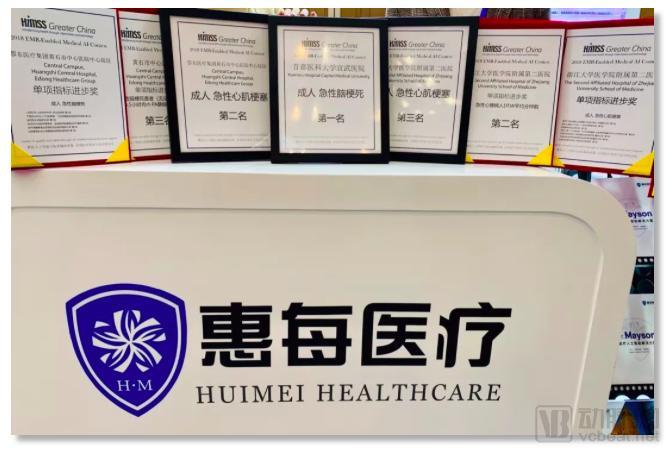
In this competition, Xuanwu Hospital not only achieved the top ranking in AI-based quality control for acute cerebral infarction, but also nearly reached a 100% compliance rate across all individual metrics. During his conference presentation titled “Medical AI Unlocks New Models of Quality Control,” Song Haiqing, Deputy Director of the Department of Neurology at the hospital, stated that medical AI has been integrated into the department’s routine clinical diagnosis and treatment as well as medical quality management, serving as a powerful tool to standardize clinical practice and innovate talent development.
According to Deputy Director Song Haiqing, Xuanwu Hospital introduced the Dr. Mayson clinical decision support system in 2017 to provide diagnostic and treatment decision support for physicians, nurses, and medical technologists across outpatient, emergency, and inpatient settings. In May of this year, the hospital integrated Dr. Mayson with medical record quality control, leveraging AI to identify deficiencies in diagnostic and treatment quality within medical records in real time. This initiative aims to standardize clinical practices, particularly among junior physicians and visiting fellows, thereby enhancing the substantive quality of departmental medical records and improving information management standards.
To evaluate the effectiveness of AI in standardizing clinical practices, the Department of Neurology at Xuanwu Hospital conducted a group-based quality control competition this June, with more than 60 physicians participating. With AI assistance, the department’s overall average rate of treatment standardization increased by 33.7% within one month, and the pass rate for quality control of active medical records rose from 69.39% (prior to AI implementation) under traditional manual data entry to 84.58% in a short period.
“Traditional medical quality control relies on manual, retrospective data entry, which creates a certain gap with real-world clinical outcomes and makes it difficult to promptly correct behavioral deviations,” said Deputy Director Song Haiqing. “Artificial intelligence can easily integrate real-time management with retrospective data reporting, thereby genuinely influencing physicians’ individual diagnostic and treatment behaviors and enhancing the homogeneity and standardization of care across different practitioners.”
Xuanwu Hospital’s AI applications have received unanimous recognition from hospital administrators present at the event. Panelists consistently emphasized that the key to “AI + Healthcare” lies in practical application, particularly through the exploration of successful case studies by top-tier hospitals. Such efforts will benefit lower-tier hospitals by improving the quality and models of medical services, ultimately providing patients with standardized and efficient diagnostic and treatment experiences.