

VB100 Future Healthcare Awards: Recognizing Excellence in Innovation, Investment, and Leadership
Since its founding in April 2014, VCBeat has adhered to the core mission of “encouraging innovators and taking pride in change-makers.” To this end, in December 2015, we launched an awards program for innovative enterprises, investment institutions, and industry chain participants, based on data from our coverage of innovative companies and the Future Healthcare 100 rankings. Our goal is to depict the profound transformations underway in the healthcare industry and gain insights into the patterns of industrial evolution, with a focus on benchmark enterprises experiencing rapid growth in this era of rapid change and significant challenges.
This series of awards will be presented to enterprises, institutions, or individuals that have made outstanding contributions to the field of innovative healthcare in the current year. The winners are jointly selected by VCBeat, VBInsight, and a panel of anonymous expert judges. The final awards comprise seven honors across three categories: “Innovative Enterprises,” “Investment,” and “Industry Chain,” including:
2018 Future Healthcare Top 100 · Annual Innovative Enterprise
2018 Future Healthcare 100 · Annual Potential Enterprise
2018 Future Healthcare Top 100 · Annual Investment Institution
2018 Future Healthcare Top 100 · Investor of the Year
2018 Future Healthcare 100 · Annual Innovative Hospital Director
2018 Future Healthcare 100 · Annual Innovative Department Director
2018 Future Healthcare Top 100 · Annual Innovative Public Company
Below is the detailed ranking and the rationale for inclusion.
Top 100 Future Healthcare Companies · Award Selection Criteria
Innovative Enterprise of the Year: The enterprise holds a leading position in the industry, demonstrating active market performance, significant industrial influence, or outstanding innovation in technical products during the current year; furthermore, it has achieved notable innovative breakthroughs in service, technology, or operational models. The enterprise must have been established for more than three years, with priority given to those included in the annual "Future Healthcare 100" list.
Annual High-Potential Enterprise: The niche sector in which the company operates holds significant potential; although the company is small in scale, it demonstrates a high degree of innovation in its business model or technology.
Investment Institution of the Year: The number of investment projects in the healthcare and medical sector this year, as well as the magnitude of impact generated within the sectors of the portfolio companies, are important metrics for evaluating investment firms. The listing of portfolio companies or their securing of significant subsequent financing rounds also has a substantial influence on the selection. Investment firms must have been established for more than three years.
Annual Investor: Has published significant insights in the healthcare sector, invested in high-impact projects, actively participated in major industry events, and generated broad influence. Possesses more than five years of investment experience in the healthcare sector.
Annual Innovative Hospital Director: This year, while serving as the president (or vice president) of a public or private hospital, I have focused on promoting innovative practices in medical institutions, actively disseminating innovative medical thinking and perspectives, and making significant contributions to advancing industry development.
Director of the Annual Innovative Department: Served as a department director (or deputy director) at a public or private hospital this year, prioritizing the implementation of innovative medical products and services within the hospital, actively engaging with innovative medical enterprises, and demonstrating outstanding performance in needs analysis, resource aggregation, and concept dissemination.
Annual Innovative Listed Company: This year, the company has driven industrial transformation through business model innovation, technological innovation, and industry consolidation, achieving broad influence; or it has demonstrated clear strategic planning and industrial layout in the field of innovative healthcare. Priority will be given to listed companies in sectors such as insurance, pharmaceuticals, pharmaceutical distribution, healthcare informatics, medical devices, as well as internet, Internet of Things (IoT), and cloud platform technologies.
2018 Future Healthcare 100 · Annual Innovative Enterprise
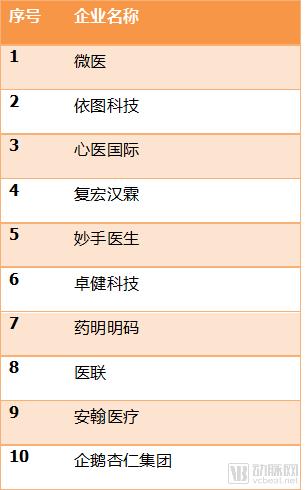
WeDoctor
In May 2018, WeDoctor became the only healthcare technology company worldwide to be included in the list of the 30 most valuable tech companies globally, released by PitchBook, a global data research institution based in Silicon Valley. Guided by its mission of “Making Healthcare Accessible and Health Manageable,” WeDoctor is committed to empowering healthcare with technology, driving the upgrade of the “pharmaceuticals, healthcare, and insurance” ecosystem, and building an internationally leading HMO platform. It provides users with innovative healthcare services that integrate “online and offline” as well as “general practice and specialty care.”
Yitu Technology
Launched the first AI-based imaging diagnostic product truly applied in clinical practice in China, and is currently the only AI company in the country to achieve comprehensive coverage of all medical data. The Yitu team has also integrated imaging with pathology, pushing close to the inherent diagnostic limits of medical imaging—a global first in the fields of artificial intelligence and healthcare.
Xinyi International
Xinyi International is a provider of innovative medical services in China. With eight years of deep engagement in the development and delivery of smart healthcare solutions, the company has pioneered a sustainable “Internet + Healthcare” model through its four core business segments: Xinyi Cloud, Xinyi Medical Care, Xinyi Pharmaceuticals, and Xinyi Insurance. It has established China’s largest internet-based medical service platform anchored by physical hospitals. Currently, the platform connects more than 5,800 hospitals across all 31 provinces in China, facilitating the integration of healthcare resources at both primary and tertiary levels and forming a “dumbbell-shaped” platform model. The company has successively built and operated provincial-level telemedicine platforms in Qinghai, Henan, Guizhou, and Shanxi provinces, and continues to provide operational services for telemedicine. It has also developed and served over 170 medical consortia, supporting the implementation of tiered diagnosis and treatment policies.
Henlius
After completing its financing round in July 2018, Henlius achieved a valuation exceeding USD 3 billion and has applied for a listing on the Main Board of the Hong Kong Stock Exchange. Its product pipeline primarily focuses on oncology and autoimmune diseases. The core members of its R&D team have previously engaged in early-stage development and industrialization of monoclonal antibody drugs at major multinational pharmaceutical companies.
Miaoshou Doctor
In April this year, Miaoshou Doctor completed a Series C financing round of nearly RMB 500 million, led by Tencent with additional investments from Kunling Capital, Sequoia Capital, and Qiming Venture Partners. A frequent favorite among investors, Miaoshou Doctor is a platform for managing doctor-patient relationships and medication usage. By integrating online and offline operations, leveraging technological innovation, and advancing big data in healthcare, it has established a solid foundation for doctor-patient services, striving to deliver services that are “closest to the prescription.”
Zhuojian Technology
In 2018, Zhuojian launched three major product lines: Internet+ Smart Hospital, Family Doctor, and MedChain Education. As a core enterprise in Tencent’s strategic layout for the healthcare industry, Zhuojian also partnered with Tencent’s Enterprise Security Team to jointly introduce a security protection solution tailored for the healthcare sector. From mobile hospital applications to online hospital campuses, after seven years of accumulation, Zhuojian Technology has continuously innovated, providing internet-based solutions from the inside out for large and medium-sized hospitals and all segments of the medical ecosystem, thereby creating a closed-loop smart healthcare ecosystem.
WuXi NextCODE
WuXi NextCODE is a trailblazer bridging biotechnology and information technology. Leveraging innovative technologies and mindsets, it empowers information technology with biotechnology and utilizes information technology to trace the essence of life. By uncovering the logic of life within vast, chaotic datasets, it provides explanations for complex diseases. WuXi NextCODE aspires to become a big data hub, empowering entrepreneurs and researchers in the healthcare sector with data-driven insights, helping them identify new opportunities and develop solutions for currently incurable diseases.
MedLink
In June this year, Medlinker secured a RMB 1 billion Series D financing round led by China Investment Capital and China Fortune Capital, achieving a valuation exceeding USD 1 billion and officially joining the ranks of unicorns. Earlier this month, Medlinker was successfully selected as one of the first batch of “Typical Cases of Sharing Economy” by the National Development and Reform Commission (NDRC). Medlinker is continuing to strengthen its diversified layout in the healthcare sector, adhering to innovation to build a truly high-quality medical service platform.
Anhan Medical
Anhan Medical, founded in 2009, is the world’s first company to successfully independently develop and commercialize a magnetically controlled capsule gastroscope system. The Anhan team independently developed the world’s only robotic endoscope for the digestive tract, which caused a sensation in the medical community upon its release and was hailed as “a revolutionary innovation in 21st-century gastric disease diagnosis and endoscopic development.” Furthermore, Anhan has leveraged “Internet Plus” strategies to build a big data cloud platform for digestive healthcare, advancing the application of artificial intelligence in medical imaging and enabling remote services for capsule gastroscope patients at various medical institutions across China.
Penguin Almond Group
2018 marked the inaugural year of Penguin Almond, a medical group that has attracted significant attention since its inception. This venture represents a powerful synergy between online and offline healthcare service operations. Leveraging Tencent’s extensive platform support and resource integration capabilities, Penguin Almond Group aims to connect the public with reliable healthcare resources through more innovative and efficient means, truly making high-quality medical services accessible to all.
2018 Future Healthcare 100 · Most Promising Company of the Year
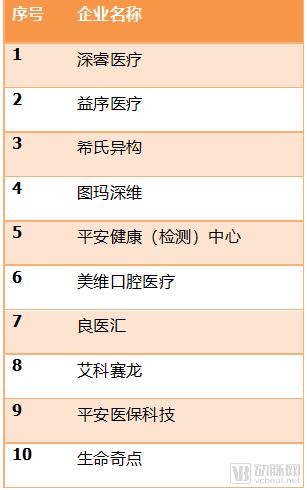
Deepwise Medical
Secured RMB 300 million in three rounds of financing within a year, the company originated from the Artificial Intelligence Innovation Center of Peking University’s School of Electronics Engineering and Computer Science. Its R&D team has accumulated extensive and profound experience in AI development, positioning it as one of the earliest entrants in China with leading scientific research capabilities. Its Chief Scientist, Yu Yizhou, was named an IEEE Fellow in 2019 and an ACM Distinguished Scientist in 2018. The company was also included in Deloitte’s “2018 China Technology Fast 50 Rising Stars” list.
Yixu Medical
While the industry’s attention has been focused on NIPT and liquid biopsy, Yixu Medical has carved out a distinct path by choosing pharmacogenomics as its strategic direction. Centered on personalized medication for chronic diseases, Yixu Medical plans to build a comprehensive management platform over the next three years, integrating patients and physicians, hospitals, data mining, and insurance services, thereby delivering full-cycle care to patients. In an aging society, chronic diseases have become a significant component of healthcare expenditures. As an industry pioneer, Yixu Medical aims to navigate this blue-ocean market successfully, empowered by artificial intelligence and innovative service models.
Hirschsprung's Disease
As one of the earliest AI R&D enterprises dedicated to the field of gastroenterology, Xishi has currently achieved comprehensive coverage of the entire gastrointestinal tract in its AI research for digestive endoscopy. Its solutions encompass over 100 diseases across multiple categories, including tumors, polyps, atrophic lesions, ulcerative lesions, erosive lesions, and vascular abnormalities. In the coming months, Xishi will launch endoscopic AI technologies for early cancer detection optimized for various light sources, with several of its products already submitted for Class III medical device registration.
Tumashenwei
Upholding reverence and staying true to its original mission, Tuma Shenwei has deeply cultivated the medical AI sector. Starting with medical imaging-based computer-aided diagnosis systems, the company has rapidly emerged as a leader in this field through its unique business model and closed-loop service ecosystem. Its product portfolio covers pulmonary nodules, thoracic diseases, liver diseases, breast cancer, stroke, and brain tumors, serving more than 200 hospitals.
Ping An Health (Testing) Center
This year, Ping An Health (Testing) Center pioneered a novel “triune” business model in China, integrating imaging diagnostics, medical laboratory testing, and precision examinations. By combining high-quality services imbued with humanistic and medical care with big data-driven intelligent analytics, the center provides health screening services to clients. This initiative offers new business model cases and inspirational insights for the healthcare industry, thereby facilitating the effective implementation of the national tiered diagnosis and treatment policy.
Meiwei Dental
Meiwei Dental Care, a subsidiary of Tianyi Group, is committed to building “China’s Leading Dental Care Platform.” It empowers outstanding domestic dental care brands and experts through strategic investment, standardization, technological advancement, and brand management, facilitating their personalized development. Currently, Meiwei has established 12 dental chain brands across 35 cities in China, operating 130 dental hospitals and clinics. Guided by the philosophy “Rooted in Dentistry, Transcending Dentistry,” Meiwei plans to expand its network to 300 dental chain facilities within the next three years, achieving comprehensive coverage of China’s core cities and ushering in a new era of holistic oral health management for the general public.
Good Doctor Hub
Focusing on content, Liangyihui aims to address the information asymmetry prevalent in oncology diagnosis and treatment. Over the past four years, the company has grown into a leading professional academic platform for cancer care in China, and will further evolve from providing knowledge to delivering services centered around physicians and patients. Amidst the fluctuations of the internet healthcare sector, it has remained committed to the academic education of oncologists, staying true to its original mission.
Axcelon
Excellence focuses on biomedical big data and regenerative engineering of human tissues and organs, exploring innovative research and clinical applications of 3D printing technology in the biomedical field. It is a professional provider of digital orthopedic medical products and solutions. The company manufactures a diverse portfolio of products spanning joint surgery, spinal surgery, neurosurgery, and other specialties. Its personalized 3D-printed navigation guides have received approval for Class III clinical medical devices from Guangdong Province, marking the first such case in China.
Ping An Health Insurance Technology
Ping An Healthcare Technology was established in November 2016 and is one of the four unicorns under the Ping An Group. In just two years since its inception, it has provided medical insurance and commercial health insurance management services to over 200 cities and a population of 800 million. Its automated commercial insurance operations network has been integrated with more than 2,000 hospitals, and the “City One-Account Pass” app has been launched in over 26 cities. The company’s initial funding round amounted to $1.15 billion, bringing its post-money valuation to $8.8 billion.
Life Singularity
Life Singularity is a pioneer in the integration of medical data. By leveraging multidisciplinary approaches—including natural language processing, machine learning, clinical informatics, and bioinformatics—it achieves deep integration of clinical phenotypic data with multi-omics data, extracting actionable insights to advance both clinical practice and scientific research. Through biomedical big data technologies, Life Singularity drives development in key sectors of the healthcare industry, making healthcare services more precise, efficient, and accessible.
2018 Future Healthcare 100 · Annual Investment Institution
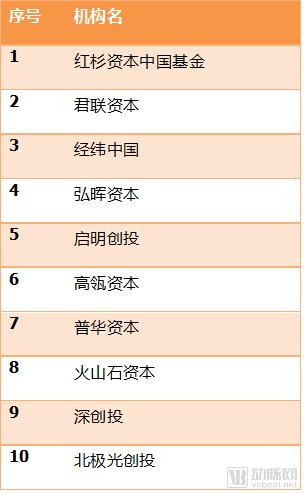
Sequoia Capital China
Its impressive track record has made it a legend in the investment world. Known as “the entrepreneur behind entrepreneurs,” it has propelled the success of Alibaba, JD.com, Meituan, and Didi in the internet sector; in the healthcare field, it has served as a catalyst for BGI Genomics, Betta Pharmaceuticals, WuXi AppTec, and Venus Medtech. Since its inception, Sequoia China has invested in more than 500 companies, with over 14 of its portfolio companies going public in 2018 alone.
Legend Capital
From Pharmaron to WuXi AppTec, from iFlytek to KingMed Diagnostics, and from Innovent Biologics to Berry Genomics, Legend Capital has incubated one industry-leading enterprise after another in the healthcare sector. Guided by the philosophy of “people first, results matter,” they seek and identify market solutions; in 2018 alone, more than ten of their portfolio companies went public.
Matrix Partners China
They are a company that centers on “cool.” Over the past decade since its founding, Matrix Partners China has consistently upheld its values and bottom lines, adopting the mindset of “remaining unperturbed in heart and undaunted in action,” and has invested in numerous high-quality enterprises in the investment sector.
Honghui Capital
In 2018, Honghui Capital invested in a total of 11 projects in the healthcare sector. As a highly specialized investment firm, Honghui Capital has continuously expanded its footprint in the healthcare industry over the past four years, with cumulative investments exceeding RMB 6 billion and total assets under management reaching RMB 4.2 billion.
Qiming Venture Partners
“Respect entrepreneurs; proactively and patiently assist enterprise development.” Established in 2006, Qiming Venture Partners is a leading investment firm in China, having invested in more than 280 companies across sectors such as internet consumer, healthcare, and information technology. The firm manages five U.S. dollar funds and four RMB funds, with total assets under management reaching $2.7 billion. At the 2018 China Venture Capital Annual Awards (Golden Investment Awards), it won five major awards and was ranked fifth among the “Top 50 Most Influential Investment Institutions in China for 2018.”
Hillhouse Capital
In the technology sector, it identified Tencent; in the healthcare sector, it sparked a wave of pharmacy mergers and acquisitions. This year, Hillhouse Capital invested in 13 healthcare projects, ranking among the top five investors in the healthcare sector by total number of investments.
Puhua Capital
“With the heart of Huipu, we undertake the work of Puhua.” Since its establishment, Puhua Capital has invested in more than 300 startups. The year 2018 was a harvest year for Puhua Capital. During this year, Puhua Capital was listed in multiple leading domestic investment institution rankings, including the “Top 50 Chinese Venture Capital Firms of 2018.”
Volcanic Stone Capital
Volcanic Stone Capital was established in May 2016, dedicated to discovering, investing in, and serving high-growth-potential startups in the fields of Chinese Internet innovation, pan-smart technologies, and new medical health. It provides sustained value-added services to grow alongside these companies. As a professional venture capital fund with a global perspective, it delivers superior returns to its investors. The total assets under management currently exceed RMB 2 billion.
Shenzhen Capital Group
A limited liability company specializing in venture capital, established in 1999 with funding from the Shenzhen Municipal Government and guided social capital. It has a registered capital of RMB 5.42 billion and manages funds with a total scale of approximately RMB 290.547 billion. SCGC has established Hongtu Innovation Fund Management Co., Ltd., the first wholly-owned public fund subsidiary in the private equity industry. As of the end of November 2018, SCGC ranked first in China’s venture capital industry in terms of the number of invested companies and the number of portfolio companies listed: it had invested in 939 projects, with a cumulative investment amount of approximately RMB 40.7 billion, among which 142 portfolio companies were listed on 16 capital markets worldwide. The IRR reached as high as 40.32%.
Aurora Venture Capital
Founded by Mr. Deng Feng in 2005, Northern Light Venture Capital has long focused on investing in high-potential early-stage, technology-driven innovative enterprises, emphasizing “team, market, and innovation” while growing alongside its portfolio companies. To date, Northern Light has invested in more than 200 companies across sectors including high-tech, new media, telecommunications, clean technology, consumer goods, and healthcare. The firm manages RMB 30 billion in assets and oversees five U.S. dollar funds and five RMB-denominated funds.
2018 Future Healthcare 100 · Annual Investor
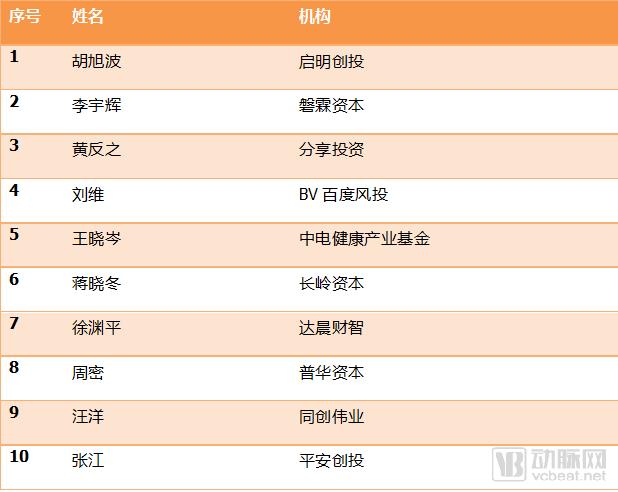
Hu Xubo, Qiming Venture Partners
Hu Xubo is a Managing Partner at Qiming Venture Partners, where he co-leads the firm’s investments in the biopharmaceutical sector. He has participated in the growth of more than 30 portfolio companies, some of which have become publicly listed or achieved unicorn valuations exceeding $1 billion. In Hu Xubo’s investment philosophy, grasping the underlying dynamics and trends of industry development is a prerequisite for identifying potential blockbuster companies.
Li Yuhui, Panlin Capital
Li Yuhui, Founder of Panlin Capital, currently serves as the Chairman and Managing Partner of the company. In 2017, he was listed among the “Top 20 Investors of 2017” in the 7th China Private Equity Competitiveness Rankings organized by 21st Century Business Herald. Prior to founding Panlin Capital in 2010, Mr. Li spent ten years working at leading Chinese investment banks, including former Junan Securities and Guotai Junan Securities.
Huang Fanzhi | Share Investment
Huang Fanzi, Managing Partner of Shenzhen Fenxiang Investment Partnership and Senior Managing Partner of the Healthcare Fund. He previously served as Head of Finance at Philips Consumer Communications, CFO of Walmart China, and Deputy General Manager and CFO of a publicly listed company. With nine years of investment experience, he has invested in over 40 projects, four of which have completed initial public offerings (IPOs), while several others have been listed on the National Equities Exchange and Quotations (NEEQ).
Liu Wei BV Baidu Ventures
Backed by Baidu, with investments in more than 30 AI companies worldwide over two years, the name Liu Wei undoubtedly represents Baidu Ventures’ ambition to position itself across the entire artificial intelligence era. With two entrepreneurial ventures and 15 years of venture capital experience, Liu Wei has systematically invested in the AI industry since 2011, backing more than 100 Chinese and American AI startups. He was the lead investor in prominent AI companies such as Face++ and AISpeech.
Wang Xiaocen, China Electronics Health Industry Fund
Wang Xiaocen, currently a partner at CEC Health Fund, was previously responsible for investments in healthcare services and mobile health at Matrix Partners China. Her investment and management portfolio includes Gengmei, Weimai, Anxin Doctor, and Topgene. As an investor, Wang believes that capital flows should enable companies to integrate various elements within the industry. Leveraging its extensive big data resources in healthcare, CEC Health Fund is pursuing an empowerment-driven investment strategy.
Jiang Xiaodong, Changling Capital
Served at NEA for over 10 years, generating more than $500 million in returns from invested projects. Founded Changling Capital in 2016, managing a RMB 3 billion fund. Star investments include unicorn companies such as WeDoctor, Gushengtang, Hygeia Healthcare, and LinkDoc. Within 20 months, Changling Capital invested in 30 projects, achieving an overall revenue growth of 80% among portfolio companies and securing follow-on financing exceeding RMB 2 billion.
Xu Yuanping, Fortune Capital
Managing Director of Fortune Capital, Partner of Fortune Chenjian Medical Fund. Investment portfolio includes: Huahao Zhongtian, WeGene, Deyi Oriental, Ruipeng Pet Healthcare, Tianjian Technology, Jindou Data, Northland Biologics, ContiNew, Salubris Pharmaceuticals, Naota, Haijieya, Resources Asia Pacific, Diehe Medical, and WuXi AppTec (formerly Sino-American Crown Bioscience), among others.
Zhou Mi, Puhua Capital
Within the vast landscape of healthcare investment, Zhou Mi possesses a precise understanding of where each “fruit” should grow and how it should develop. Prior to joining Puhua Capital, Zhou Mi served as an Investment Director at Matrix Partners China. In 2016, he joined Puhua as a Managing Partner, marking the official launch of the Puhua Healthcare Fund. Over the past two years, Puhua Healthcare has invested over RMB 600 million in more than 30 projects, including listed company Huatong Medicine and NEEQ-listed company Quanyuantang.
Wang Yang, Cowin Capital
Adhering to value investing principles, Wang Yang has been engaged in healthcare investment for over seven years. Since joining Cowin Capital in 2011, he has led the investment and M&A activities of numerous pharmaceutical and medical companies, ranging from Jingfeng Pharmaceutical to Leao Medical. He offers unique insights into valuing healthcare enterprises and successfully facilitated Jingfeng Pharmaceutical’s acquisition of Hainan Jinrui Pharmaceutical.
Zhangjiang Ping An Venture Capital
Zhang Jiang, Managing Director of Ping An Capital, previously served as a strategic consultant in the healthcare and financial sectors at McKinsey & Company. After co-founding Ping An Capital, he oversaw Ping An’s healthcare investments, deploying over RMB 6 billion across nearly 50 projects in the past four years. In recognition of his outstanding achievements in fostering high-tech investment cooperation between China and Israel, he became the second Chinese national in 19 years to receive the “Go for Israel Lifetime Achievement Award.”
2018 Future Healthcare 100 · Hospital Director of the Year for Innovation
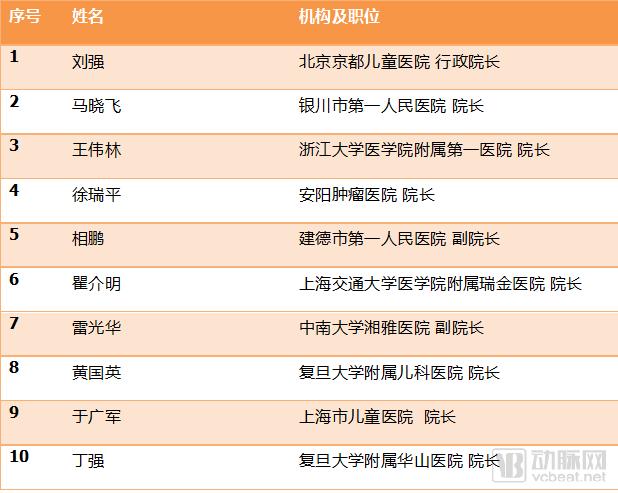
Liu Qiang, Executive Dean, Beijing Jingdu Children's Hospital
As a large tertiary-level specialized children’s hospital, Beijing Jingdu Children’s Hospital has developed a distinctive model of management and growth. President Liu Qiang has closely aligned with policy developments to identify, explore, and expand the boundaries of “Internet+” pediatric health management services. In 2018, Jingdu established China’s first pediatric internet hospital, pioneering innovations in child health, medical care, rehabilitation, and telemedicine.
Ma Xiaofei, President of Yinchuan First People's Hospital
As the President of Yinchuan First People’s Hospital, Ma Xiaofei led his team through the nascent and initial stages of internet hospital innovation in 2016, endured the “winter” of 2017, and welcomed the “spring” of 2018. In 2018, Yinchuan’s “Internet + Healthcare” model received widespread acclaim, and the city is now striving to establish a national-level “Internet + Healthcare” demonstration zone.
Xu Ruiping, President of Anyang Cancer Hospital
Anyang Cancer Hospital is a specialized oncology hospital at the prefecture-level city in China and among the earliest batch of Grade III, Class A hospitals, boasting a long history and distinguished achievements. In recent years, under the leadership of President Xu Ruiping, Anyang Cancer Hospital has actively embraced digitalization and big data, integrating medical care, education, research, and information technology development, while pioneering innovation and pursuing excellence.
Xiang Peng, Deputy President of the First People's Hospital of Jiande City
Jiande First People’s Hospital, although a tertiary-level B county-level hospital at the primary care level, places significant emphasis on medical quality management and healthcare information technology development. In August 2015, Jiande Hospital passed the international JCI accreditation with high scores. In September 2017, it became the only county-level hospital in China to successfully achieve HIMSS Stage 6 certification at that time. In December 2017, it became the first hospital in Zhejiang Province to pass the National Electronic Medical Record Application Level 5 certification.
Qu Jieming, President of Ruijin Hospital, Shanghai Jiao Tong University School of Medicine
Under the leadership of President Qu Jieming, Ruijin Hospital, as one of the largest general hospitals in Shanghai, has consistently remained at the forefront of domestic peers in information technology development. During the 10th Five-Year Plan period, the hospital established the construction of a “Digital Hospital” as its core institutional strategy. The hospital not only ranks among the top ten nationwide in terms of disciplinary reputation and comprehensive scientific research capabilities but has also achieved Level 5-Yi (Grade B) in the Interconnectivity Standardization Maturity Assessment and Level 6 in the Electronic Medical Record (EMR) System Functional Application Level Evaluation.
Lei Guanghua, Vice President of Xiangya Hospital, Central South University
Dean Lei demonstrates exemplary medical ethics and professionalism, delivering outstanding performance in his work. The achievements of Xiangya Hospital have been widely recognized by various stakeholders. While leveraging intelligence and data-driven strategies to advance the hospital’s own development, Dean Lei has also led Xiangya Hospital in establishing a digital and intelligent system tailored for medical consortiums, thereby enhancing the capacity of primary healthcare services.
Huang Guoying, President of Children's Hospital of Fudan University
Dean Huang has dedicated over 30 years to clinical practice, teaching, and research in pediatric cardiovascular diseases. Under his leadership, the Children’s Hospital of Fudan University has proactively embraced challenges and positioned itself at the forefront of precision medicine. His research on a simplified screening method for congenital heart disease pioneered the publication of pediatric scientific research from China in the world-renowned medical journal The Lancet.
Yu Guangjun, President of Shanghai Children's Hospital
As China’s first specialized children’s hospital, Shanghai Children’s Hospital has consistently explored and evaluated hospital logistics solutions that enhance efficiency while ensuring safety. In 2018, under the leadership of President Yu Guangjun, the hospital implemented intelligent logistics management and informatization systems by deploying logistics robots within its facilities, thereby strengthening operational support and advancing the overall level of hospital logistics management.
Ding Qiang, President of Huashan Hospital Affiliated to Fudan University
Huashan Hospital has always attached great importance to informatization. In the process of building an integrated platform and a clinical data center, the hospital has focused on diverse applications, achieving tangible results in medical quality management, patient services, hospital administration, and big-data-driven scientific research. The hospital’s data center aggregates 16 years of institutional system data, comprising nearly 1 billion records (with over 8 billion records already integrated), covering more than ten domains including outpatient care, inpatient care, medical technology services, laboratory testing, surgery, and finance. This provides a robust data foundation for in-depth data analysis and utilization.
2018 Future Healthcare 100 · Annual Innovative Department Director
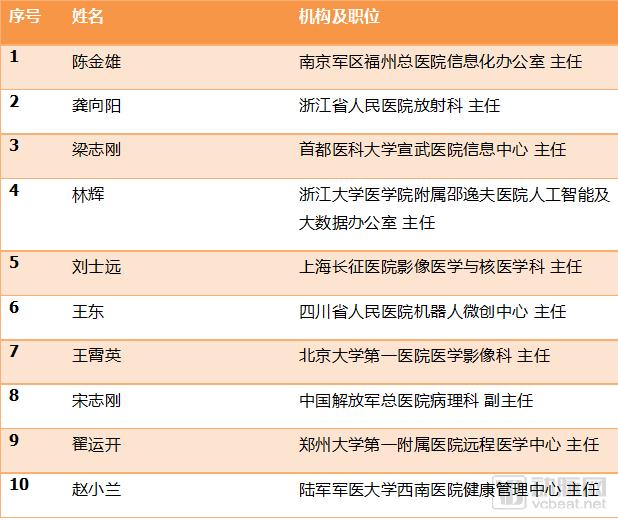
Chen Jinxiong, Director of the Information Technology Office, Fuzhou General Hospital of Nanjing Military Region
Former Director of the Information Technology Office at Fuzhou General Hospital, and Director of the PLA-wide Research and Technical Support Base for Hospital Informatics. A long-term cultivator, explorer, and practitioner in the field of healthcare informatics.
Gong Xiangyang, Director of the Department of Radiology, Zhejiang Provincial People's Hospital
Director Gong has been engaged in diagnostic imaging and interventional therapy for over 25 years. He is well-versed in the comprehensive application of various imaging technologies, including X-ray, CT, and MRI, and has accumulated extensive experience in diagnosing and treating a large number of complex and challenging cases. In recent years, Director Gong has actively participated in the clinical implementation of intelligent computer-aided diagnosis systems for chest CT, thereby charting a clear course for the deployment of medical AI technologies and products.
Liang Zhigang, Director of the Information Center, Xuanwu Hospital, Capital Medical University
In 2015, Director Liang led the hospital’s information technology team to successfully pass the HIMSS EMRAM Stage 6 assessment. In November 2017, Xuanwu Hospital officially passed the on-site survey for HIMSS EMRAM (Inpatient) Stage 7. The hospital has made steady and incremental progress in its journey of informatization, achieving success step by step.
Lin Hui, Director of the Office of Artificial Intelligence and Big Data, Sir Run Run Shaw Hospital, Zhejiang University School of Medicine
As early as 2015, Sir Run Run Shaw Hospital launched the Shaw Health Cloud Platform, becoming the first medical cloud platform in China to be built upon a physical hospital. Sir Run Run Shaw Hospital has consistently remained at the forefront of developing the “Future Hospital.” Director Lin Hui has witnessed its evolution from inception to integration, serving as both a key supporter and builder throughout this process.
Liu Shiyuan, Director, Department of Diagnostic and Interventional Radiology and Nuclear Medicine, Shanghai Changzheng Hospital
Director Liu has been engaged in clinical medical imaging for over 24 years, possessing extensive experience in medical imaging-related clinical practice, education, and research. In recent years, Director Liu has actively embraced new technologies, leading multiple artificial intelligence projects for medical imaging diagnosis. He has driven technological upgrades and practical implementation in areas such as CT-based pulmonary nodule detection, classification of benign and malignant pulmonary nodules, and X-ray nodule detection.
Wang Dong, Director of the Robotic Minimally Invasive Surgery Center, Sichuan Provincial People's Hospital
In December 2014, Wang Dong became the first globally certified da Vinci surgeon in Sichuan Province and performed the highest number of surgeries in the province. In July 2016, he was elected as the inaugural head of the National Medical Robotics Group. In August 2016, the Robotic Minimally Invasive Surgery Center was established at Sichuan Provincial People’s Hospital. Over the following two years, more than 1,000 da Vinci surgical procedures were performed, making Sichuan Provincial People’s Hospital the first tertiary A hospital in western China to surpass this milestone.
Wang Xiaoying, Director, Department of Medical Imaging, Peking University First Hospital
Director of the Functional Imaging Center at the Academy for Advanced Interdisciplinary Studies, Peking University; Deputy Director of the Beijing Key Laboratory of Medical Engineering and Physics. He specializes in prostate MRI diagnosis, renal MR functional imaging, and early diagnosis of liver cancer, and is a pioneer in applying AI technology to clinical imaging diagnostics.
Song Zhigang, Deputy Director, Department of Pathology, Chinese PLA General Hospital
As clinicians, we have actively explored the application of AI in pathology to tackle challenging problems. In collaboration with an AI technical team, we embarked on a cross-disciplinary initiative focused on the AI-assisted diagnosis of intestinal adenomas. Using over 200 pathological slides, we generated 800,000 image patches containing adenomas and 1,000,000 negative image patches through tissue sectioning and patch extraction. Following a series of preprocessing steps and dataset training, a deep learning model based on GoogleNet achieved a sensitivity of 85.71%, a specificity of 84.21%, and an accuracy of 85.04% for this single disease entity.
Zhai Yunkai, Director of the Telemedicine Center, The First Affiliated Hospital of Zhengzhou University
In early 2018, the Bureau of Medical Administration and Hospital Supervision under the National Health and Family Planning Commission officially approved the designation of the “Henan Provincial Telemedicine Center,” established at the First Affiliated Hospital of Zhengzhou University, as the National Telemedicine Center, incorporating it into the Commission’s strategic planning for the next phase of national telemedicine service systems. This marks the first national-level medical center to be established in Henan Province.
Zhao Xiaolan, Director of the Health Management Center, Southwest Hospital of Army Medical University
Hailed as the “Orchid of the Military” in China’s health management sector, she has received the highest individual honor in the field—the Personal Contribution Award for Discipline and Institution Building in Health Management. During her more than ten years as Director of the Center, she championed the development of health management as a distinct academic discipline and successfully led her team in upgrading traditional medical examination services at a Grade 3A hospital, introducing personalized pre-examination risk assessments and post-examination health risk management.
2018 Future Healthcare 100 · Annual Innovative Public Company
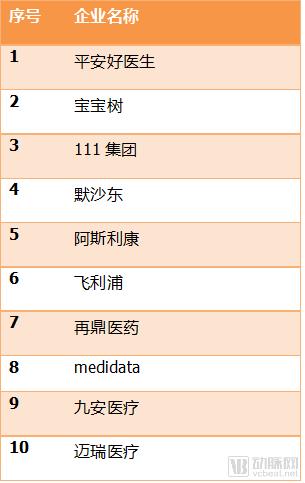
Ping An Good Doctor
The First Listed Internet Healthcare Company: A Leading One-Stop Healthcare Ecosystem PlatformCommitted to providing every family with a family doctor, every individual with an electronic health record, and everyone with a personalized health management plan through "Mobile Healthcare + AI." As of the end of June 2018, Ping An Good Doctor had accumulated 228 million registered users, with monthly active users reaching 48.6 million, making it the most widely adopted mobile healthcare application in China.
BabyTree
As one of the earliest internet companies to focus on maternal and infant services, BabyTree was founded in 2007. It has built an internet product matrix comprising BabyTree Pregnancy, Xiao Shiguang, and Meitun Mama, thereby completing an online ecosystem for maternal and infant services that integrates community, tools, and e-commerce. This has given rise to six major business models: advertising, e-commerce, paid content, early childhood education, general health, and family finance. These offerings comprehensively address the four core needs of young Chinese families: learning, communication, record-keeping, and shopping. The company has received investments from Fosun International, Alibaba, and TAL Education Group. On November 27, 2018, BabyTree successfully listed on the Hong Kong Stock Exchange.
111 Group
Founded by Yu Gang and Liu Junling in 2010, 111 Group is a leading Chinese internet healthcare company dedicated to transforming the status quo of “difficulty in accessing medical care and high medication costs” for the general public in China through internet-based models and thinking. The group operates three core businesses—1 Yao Wang (1 Drug Network), 1 Zhen Internet Hospital, and 1 Yao Cheng (1 Drug City)—known as its “three troikas.” In September 2018, 111 Group listed on the NASDAQ, becoming the first Chinese internet healthcare company to go public in the United States.
Merck & Co.
As a century-old multinational pharmaceutical company, Merck & Co. (known as MSD outside the United States and Canada) has remained steadfast in its mission to advance global health and improve the quality of life for people worldwide. In China, Merck upholds its customer-centric philosophy and distinguished tradition of scientific excellence, delivering innovative, high-quality products and services that bring significant health benefits to patients across the country. This year, several of Merck’s products, including the 9-valent HPV vaccine and the acclaimed oncology drug Keytruda (often referred to as “K-drug”), have successively received regulatory approval and been launched in the Chinese market.
AstraZeneca
As an innovation-driven global biopharmaceutical company, AstraZeneca has always believed that “Science inspires infinite possibilities” and places science at the core of all its endeavors. Since entering the Chinese market in 1993, AstraZeneca has spent the past 25 years attracting top talent, driving scientific innovation, and leveraging exceptional execution to truly transform patients’ lives and continuously meet China’s healthcare needs.
Philips
Royal Philips is a leading health technology company dedicated to improving people’s health and enabling better outcomes across the entire health continuum—from healthy living and disease prevention to diagnosis, treatment, and home care. The company currently holds leadership positions in diagnostic imaging, image-guided therapy, patient monitoring, health informatics, and consumer health and home care.
Zai Lab
Zai Lab is dedicated to providing transformative medicines for cancer, autoimmune diseases, and infectious diseases to patients in China and around the world. In September 2017, Zai Lab listed on the NASDAQ, becoming the first company in China’s pharmaceutical industry to go public with a market capitalization exceeding $1 billion prior to generating sales revenue. In December 2018, Zejula (niraparib), Zai Lab’s first product to be commercialized globally, was officially launched.
medidata
Medidata, with revenues surpassing $500 million and partnerships encompassing 90% of the world’s top 25 pharmaceutical companies, is redefining new drug development and clinical research.
Andon Health
A high-tech enterprise integrating R&D, manufacturing, and sales, founded in 1995, is a global provider of home medical health electronic products. It is committed to making professional testing and physiotherapy more accessible for home and personal use. After more than 20 years of development, it has become the leader in the blood pressure monitor market in Europe and America, and a major global production base for blood pressure monitors. Its products are exported to nearly 100 countries, providing doctors and medical institutions worldwide with the most advanced and convenient tools for blood pressure diagnosis.
Mindray Medical
Mindray Medical is known as the “Huawei of the medical device industry.” Less than half a year after its IPO, its market capitalization exceeded RMB 100 billion. It has created greater possibilities for domestic substitution, serving as a pioneer in medical device innovation in China and growing into one of the global leaders in medical equipment innovation.