

iKang Healthcare Group Announces Strategic Upgrade with Nationwide Medical Consortium and AI-Driven Health Management Platform
Recently, iKang Group held its strategic upgrade launch event at The St. Regis Shanghai Jingan. At the event, Zhang Ligang, Founder, Chairman, and CEO of iKang Group, unveiled the “Managed” Health Checkup 2.0 strategy, which aims to empower traditional health screenings with artificial intelligence and apply more innovative technologies throughout the comprehensive health management process.
Meanwhile, iKang will collaborate with more than 300 public hospitals across China to establish a Medical Consortium Alliance for health examinations, deepen one-stop health management services, and jointly promote high-quality development in the industry.
Distinguished attendees at the conference included Academician Li Zhaoshen of the Chinese Academy of Engineering; Mr. Zhang Huaiqiong, Deputy Director of the Shanghai Municipal Health Commission; Professor Feng Xiaoyuan, former Vice President of Fudan University and President of the Doctor Group Branch of the China Non-Public Medical Institutions Association; Professor Bao Yong, Dean of the National Health Industry Research Institute at Shanghai Jiao Tong University and Chairman of the Health Management Branch of the Shanghai Medical Association; Mr. Jiang Hua, Vice President of the Obstetrics and Gynecology Hospital of Fudan University; Mr. Zhou Zhengrong, Vice President of the Branch Hospital of Fudan University Shanghai Cancer Center; Ms. Sun Jing, Vice President of Shanghai First Maternity and Infant Hospital; Mr. Feng Yu, Vice President of Shuguang Hospital Affiliated to Shanghai University of Traditional Chinese Medicine; Mr. Xu Mao, Vice President of the 455th Hospital of the People's Liberation Army; Mr. Shen Ping, Chairman of the Outpatient and Emergency Committee of the Shanghai Hospital Association; Professor Cai Sanjun, Director of the Department of Colorectal Surgery at Fudan University Shanghai Cancer Center and Chairman of the Colorectal Cancer Professional Committee of the Shanghai Center for Disease Control and Prevention; Professor Zhang Guozhen, Director of CT-MRI at Huadong Hospital Affiliated to Fudan University and the Shanghai Institute of Medical Imaging Technology, as well as Master’s Supervisor; Professor Zheng Zhizhong, Director of the Department of Dermatology at Huashan Hospital Affiliated to Fudan University, Chairman of the Shanghai Society of Dermatology and Venereology under the Chinese Medical Association, and Chairman of Chencan Doctor Group; Professor Chen Chengwei, Director of the Liver Disease Center at the 85th Hospital of the People's Liberation Army, Former Vice Chairman of the Hepatology Branch of the Chinese Medical Association, and Director of Chencan Doctor Group; and Professor Bai Chunxue, Chief Physician of the Department of Respiratory Medicine at Zhongshan Hospital, Vice Chairman of the Respiratory Branch of the Chinese Medical Association, Founder and Chairman of the China Lung Cancer Prevention and Treatment Alliance, and Director of Chencan Doctor Group.
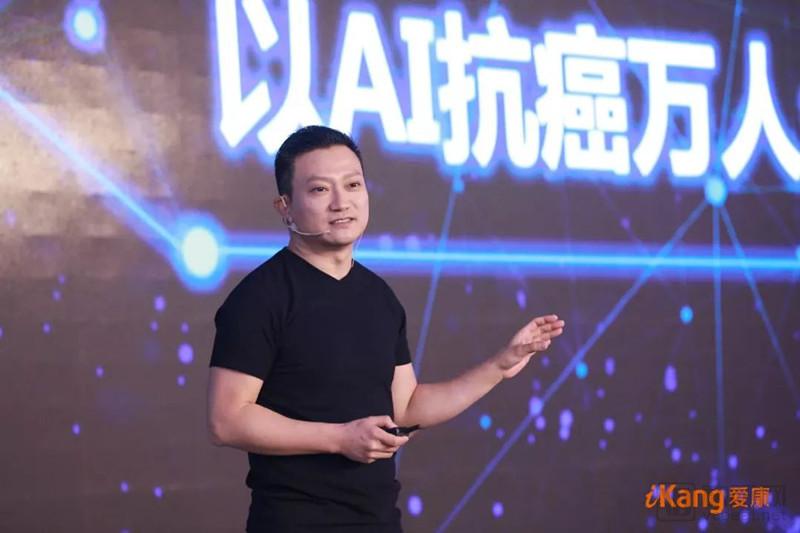 Zhang Ligang, Founder, Chairman and CEO of iKang Group
Zhang Ligang stated, “After more than two decades of development, China’s private health checkup industry is no longer a secondary player; it now shares responsibility with the health examination centers of public hospitals in providing health checkup services for corporate employees and residents. In particular, since the implementation of the Outline of the Healthy China 2030 Plan issued by the Central Committee of the Communist Party of China and the State Council, the industry has shifted away from the past emphasis on treatment over prevention, actively implementing a model that prioritizes prevention and integrates prevention with treatment. It is imperative that the private health checkup sector and public hospitals work together through resource sharing and collaborative development to continuously promote the standardized, orderly, and healthy growth of the health examination industry.”
iKang Group has innovatively introduced the “iKangNetwork+” concept and announced its collaboration with over 300 public hospitals across China to establish a Medical Examination Consortium Alliance. This alliance will facilitate comprehensive coordination and resource sharing in the areas of medical examinations, diagnosis, chronic disease management, medical consultations, and hospitalization, thereby providing customers with higher-quality, one-stop health management services.
Zhang Ligang stated, “The establishment of the Medical Examination Medical Consortium Alliance through the collaboration between iKang and public hospitals is not only aimed at providing customers with high-quality, one-stop health management services, but also represents a significant step forward by private-sector entities, in partnership with public hospitals, to promote the sound and high-quality development of the industry on the path toward sustainable growth.”
At the press conference, iKang Group, together with the Physicians Group Branch of the China Non-Public Medical Institutions Association, Shanghai General Hospital affiliated to Shanghai Jiao Tong University, Tongji Hospital affiliated to Tongji University, Shanghai Sixth People’s Hospital affiliated to Shanghai Jiao Tong University, Renji Hospital (South Campus) affiliated to Shanghai Jiao Tong University School of Medicine, and Shanghai First Maternity and Infant Health Care Hospital, launched the East China Regional Medical Consortium Alliance for Health Checkups. Meanwhile, iKang has also entered into strategic collaborations with several Grade A tertiary hospitals to provide customers with one-stop solutions.
At the same time, six diagnostic and treatment centers were established in collaboration with various institutions. For example, a Gastrointestinal Diagnostic and Treatment Center was jointly established with New Horizon Health and the Department of Colorectal Surgery at Fudan University Shanghai Cancer Center.
In China, there were 1.89 licensed physicians per 1,000 population in 2017, compared with 2.7 physicians per 1,000 in the United States and 3.3 per 1,000 in developed European countries such as Switzerland and Germany. China not only faces a shortage of physicians, but also has a scarcity of high-level specialists. Moreover, the distribution of physician resources is uneven between key cities and remote areas, as well as between public hospitals and private institutions, which has become one of the factors constraining the high-quality development of China’s health management industry.
Therefore, iKang has entered into a strategic partnership with Chencan Medical, a consortium of physician groups, and a pediatric medical group, enabling more clients to access professional health management and medical services. Chencan Medical comprises ten major physician groups, including the Shanghai Elite Gastroenterology Physician Group, Shanghai Huizhong Respiratory Physician Group, Shanghai Hai Physician Group, Shanghai Ruizhi Psychiatry Physician Group, Shanghai Oriental Liver Disease Physician Group, Shanghai Huaxin Cardiovascular Physician Group, Shanghai Huashen Neurology Physician Group, Shanghai Zhongxi (Integrative Medicine) Physician Group, Shanghai Oriental Biliary Disease Physician Group, and Roentgen Imaging Physician Group.
At the press conference, iKang also invited Feng Xiaoyuan, former Vice President of Fudan University and President of the Physician Group Branch of the China Non-Public Medical Institutions Association, to deliver a keynote speech. Feng Xiaoyuan stated that the diversified collaboration between physician groups and iKang Group leverages societal resources to serve the public, promoting shared development, standardizing medical services, and enhancing the value of physicians.
iKang aims to pool resources from all sectors and, in the future, will collaborate with more public hospitals, physician groups, and other industry partners to bring high-quality medical resources to a broader population in China, thereby enhancing the quality of life for Chinese citizens.
Since its inception, iKang has been committed to driving the transformation of China’s health and medical service models through innovative technology. At this press conference, iKang announced the introduction of artificial intelligence into health management, fully launching the “iKang AI+” initiative.Zhang Ligang, Founder, Chairman, and CEO of iKang Group, stated: “The ‘Managed Checkup 2.0’ strategy aims to empower traditional health screenings with artificial intelligence and apply more innovative technologies throughout the entire health management process, thereby enabling users to achieve earlier detection, earlier diagnosis, and earlier treatment.”
Currently, iKang has introduced multiple artificial intelligence technologies to support three key areas: health screening, post-examination management, and treatment, thereby upgrading the health management model for the Chinese population and pioneering the era of AI-powered health examinations.
iKang Group has introduced Airdoc’s AI-powered retinal image analysis technology, which can automatically identify more than 30 types of lesions from retinal photographs. The integration of AI into CT screening has increased the detection rate of small pulmonary nodules by 31%. In collaboration with New Horizon Health, iKang has launched an AI-based intestinal health screening program that achieves a sensitivity of up to 92% for colorectal cancer. Additionally, iKang’s AI-driven blood glucose management program builds predictive models by continuously monitoring the relationship between diet and blood glucose levels, guiding users toward personalized, scientifically based dietary adjustments to achieve glycemic control targets. Through a strategic partnership with Baiyang Smart Technology, iKang offers AI-assisted oncology diagnosis and treatment plans at the “iKang-Baiyang Watson Oncology Intelligent Consultation Center.” Looking ahead, iKang will collaborate with more leading companies in the AI healthcare sector to roll out additional AI-powered health management solutions.
At the press conference, iKang officially announced that it would provide 10 million free Airdoc retinal screenings for chronic diseases, aiming to leverage innovative technology to benefit the health of more people! Meanwhile,“AI Against Cancer”: IBM Watson’s Public Welfare Program for 10,000 Patients to Continue Until the End of December 2019; Additionally, Eligible Companies Will Continue to Receive Free Genetic Testing Services.
Subsequently, iKang Group joined hands with partners such as Airdoc, iFLYTEK, and Deepwise Medical to jointly dedicate themselves to better applying artificial intelligence to one-stop comprehensive health management, enabling more customers to enjoy higher-value services brought by innovative technologies, and officially launched the iKangAI+ Initiative.
At the press conference, iKang Group invited distinguished guests, including academicians of the Chinese Academy of Engineering and leading figures in the fields of artificial intelligence and precision medicine, to jointly explore development pathways for the broader health industry. They delivered insightful presentations on health management and the application of artificial intelligence in the healthcare sector.
Academician Li Zhaoshen of the Chinese Academy of Engineering presented a report titled “Latest Strategies for Early Gastric Cancer Screening in Asymptomatic Populations in China.” Academician Li pointed out that many families fall into poverty or return to poverty due to cancer. Therefore, cancer screening requires precise health examinations and standardized medical quality. By leveraging new technologies to achieve early detection, early diagnosis, and early treatment, we fulfill our responsibility to patients.
Zhang Dalei, Founder and CEO of Airdoc, stated: “Our goal is to make high-quality medical resources as accessible as air, available anytime and anywhere. At this stage, we have already applied artificial intelligence to the identification of ocular lesions, blood glucose management, and the recognition of skin lesions. In the future, we hope to work together with iKang to safeguard the health of the Chinese people.”
Chen Yiyou, Co-founder and Chief Scientist of New Horizon Health, stated, “True health management means detecting cancer before it develops, thereby preventing it from occurring.”
Yang Ying from iFlytek’s Healthcare Division stated, “Our AI-powered voice recognition triage service has effectively improved physicians’ work efficiency and enhanced patients’ healthcare experience. Leveraging voice recognition technology enables a more precise understanding of patients’ conditions.”
Li Chaoyang, Vice President of Deepwise Medical, stated: “Artificial intelligence represents an evolution from ‘human’ intelligence to ‘machine’ intelligence. With the assistance of AI, the accuracy of health examination reports is significantly improved, while the time required to generate these reports is reduced.”
The “Managed” Physical Examination 2.0 Strategy, through the iKangNetwork+ and iKangAI+ initiatives, will drive comprehensive collaboration between private check-up centers and public hospitals, organically integrate innovative technologies with health screenings, and continuously promote high-quality industry development. The goal is to realize the vision of enabling every Chinese citizen to enjoy high-quality health services “anytime, anywhere” as soon as possible.
With the advancement of artificial intelligence (AI) technology, the intelligent era of retinal image interpretation has arrived. Airdoc’s AI-powered retinal image analysis can automatically identify more than 30 types of lesions from retinal photographs. In addition to ophthalmic diseases such as glaucoma, it also detects major chronic diseases and complications, including diabetes, hypertension, and certain tumors. Taking the 6,578 clients who recently underwent Airdoc screening at iKang-affiliated health examination centers as an example, a total of 2,897 positive cases were identified, yielding a positivity rate of 44%. This level of accuracy is comparable to that of experts from renowned ophthalmology hospitals across China. With the assistance of AI, a broader population can now more conveniently access expert-level services.
In the field of high-incidence cancers, early screening is crucial for early detection and timely treatment. Taking lung cancer, the leading cause of cancer-related deaths, as an example, the latest data from the World Health Organization (WHO) shows that there are 774,000 new cases and 691,000 deaths annually in China. It is projected that the annual number of new lung cancer cases will exceed one million by 2030. Low-dose spiral CT is an effective method for lung cancer screening; however, reliance on radiologists' experience alone inevitably carries a risk of missed or misdiagnoses. The integration of AI technology into CT screening can increase the detection rate of small pulmonary nodules by 31%. Building on this, iKang has also introduced liquid biopsy tests, which non-invasively assist in determining the benign or malignant nature of pulmonary nodules, achieving a specificity of over 90%.
As the second most common malignant cancer, colorectal cancer sees 521,000 new cases and 248,000 deaths annually in China. iKang has introduced an AI-powered gut health screening program, a non-invasive, painless, at-home sampling test that provides multi-dimensional assessment of intestinal ecological health. With a sensitivity of up to 92% for detecting colorectal cancer, it helps customers identify potential risks at an early stage.
For chronic disease management and treatment following health screenings, take diabetes as an example: in China, approximately 1 in 10 people has diabetes, and 1 in 2 adults has prediabetes. iKang has introduced an AI-powered blood glucose management program that builds AI models by continuously monitoring the relationship between diet and blood glucose levels, guiding users to achieve glycemic control through personalized, science-based dietary plans. In other words, with the aid of artificial intelligence technology, it is entirely possible to successfully reverse prediabetes or delay its progression to diabetes.
In the field of treatment, since iKang and Baiyang Intelligent Technology established a strategic partnership last year, AI-driven oncology diagnosis and treatment plans have been available at 14 “iKang-Baiyang Watson Oncology Intelligent Consultation Centers” across 13 cities nationwide. Currently, the scope of diagnosis and treatment covers 13 types of cancer, including high-incidence cancers such as lung cancer, colorectal cancer, gastric cancer, and breast cancer, serving nearly 88% of newly diagnosed cancer patients in China.