

Qinglai Health Secures Tens of Millions in Series B Funding to Build a Brand in Traditional Chinese Medicine External Therapies

Puhua Capital
Venture Capital and Management Business Institutions
VCBeat (WeChat ID: VCbeat) learned that on December 18, 2018, Qinglai Health, a provider of “TCM specialty + TCM primary care chain” services, secured tens of millions of yuan in Series B financing, led by Zero2IPO Asset Management and participated in by Huayao Capital and Puhua Capital. The funds are primarily designated for the construction and operation of Qinglai Health’s flagship TCM specialty hospital and its chain of TCM outpatient clinics in Beijing.
Qinglai Health, founded in 2014 and headquartered in Beijing, China, entered the market through the Zhenshitang chain of traditional Chinese medicine (TCM) clinics. It operates the only hospital in China that employs “Huangdi Needling” to perform minimally invasive surgical procedures for cervical and lumbar disc diseases—known as TCM needling repositioning therapy. By integrating specialized TCM hospitals into its business portfolio, Qinglai Health has established a referral system between primary care clinics and specialized hospitals, thereby building a medical-educational-research ecosystem centered on its distinctive therapies. Furthermore, Qinglai Health consolidates the group’s offline resources into the “Zhenshi TCM APP,” creating an integrated online-offline synergy.
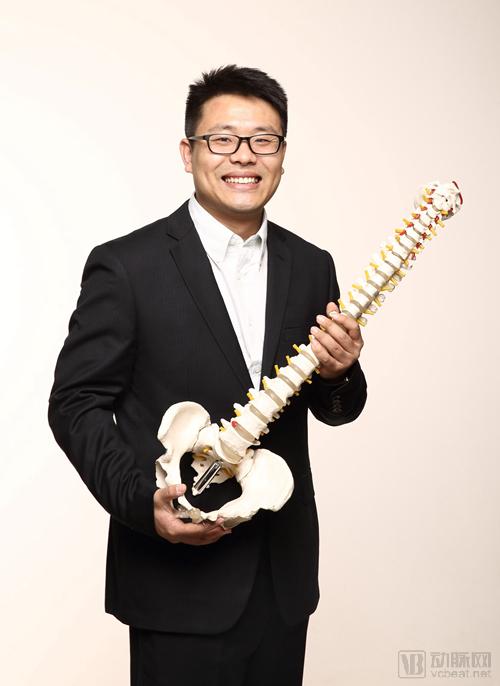
Mr. Xue Xipeng, Founder of Qinglai Health. Image provided by Qinglai Health.
Mr. Xue Xipeng, founder of Qinglai Health, told VCBeat (WeChat ID: VCbeat) that the company aims to build a brand for external therapies in Traditional Chinese Medicine (TCM), incorporate more distinctive TCM treatments and classic renowned prescriptions into its system, and attract a larger talent pool. According to Mr. Xue, Qinglai Health currently operates one TCM specialty hospital and four chain TCM outpatient clinics. By 2019, the company plans to expand its network to three TCM specialty hospitals and ten chain TCM outpatient clinics.
Unlike common TCM internal medicine platforms that rely on renowned senior TCM practitioners, Qinglai Health’s unique approach to external TCM therapies leverages distinctive TCM treatment modalities as its cornerstone. Beijing Huangshu Minimally Invasive Orthopedic Hospital of Traditional Chinese Medicine is the first specialized TCM hospital integrated into Qinglai Health’s commercial portfolio, featuring TCM orthopedics and traumatology along with TCM rehabilitation as its specialty disciplines, thereby achieving a differentiated market position. Meanwhile, in 2012, Beijing Huangshu Minimally Invasive Orthopedic Hospital of Traditional Chinese Medicine was designated by the National Administration of Traditional Chinese Medicine as the national lead hospital for minimally invasive TCM techniques and serves as the sole clinical implementation site for the distinctive TCM therapy known as “Huangdi Needle.”
In 2004, Professor Huang Shu, Chairman of the External Therapy Branch of the China Association of Chinese Medicine, pioneered the 2mm minimally invasive procedure for the cervical and lumbar spine, commonly known as the “Huangdi Needle.” In the same year, the Huangdi Needle passed the technical appraisal by the German Ministry of Health, becoming the first green surgical technique of Traditional Chinese Medicine to be introduced into Western hospitals. In 2006, the Huangdi Needle was approved by the Beijing Municipal Administration of Traditional Chinese Medicine as a new medical technology and service item.
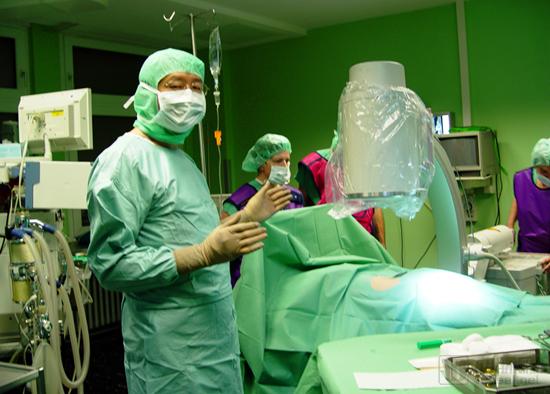
Professor Huang Shu Performs Surgery at Klinikum Hoyerswerda University Hospital. Photo provided by Qinglai Health
According to Mr. Xue Xipeng, the Huangdi Needle applies traditional Chinese acupuncture techniques and integrates five major disciplines—modern anatomy, physiology and pathophysiology, medical imaging, biomechanics, and intelligent metal materials science—to perform minimally invasive surgical procedures with incisions smaller than 2 mm. The entire procedure is virtually painless, aiming to alter the pressure differential within herniated cervical or lumbar intervertebral discs or adjust the relative position of nerves, thereby activating and stimulating the self-repair mechanisms of the affected local tissues and surrounding areas. Furthermore, the Huangdi Needle technique achieves immediate postoperative relief or reduction of pain symptoms, enabling patients to rapidly overcome mobility impairments and progressively regain physical function.
Compared with the currently mainstream “Western open cervical and lumbar spine surgeries” and “Western minimally invasive surgeries,” Huangdi Needle features simplicity, precision, high efficiency, and low resource consumption. Professor Huang Shu told VCBeat that Huangdi Needle has been clinically validated in tens of thousands of real-world cases, demonstrating significant efficacy for cervical and lumbar spine conditions that urgently require Western surgical intervention.
The incidence of bone diseases in China has been rising year by year. Data from the National Health Commission shows that among Chinese adults aged 60 and above, 55% suffer from joint diseases and 56% have osteoporosis, with the prevalence among women reaching as high as 60%–70%. Lumbar disc herniation is the most common cause of lower back and leg pain; its overall incidence ranges from 15.2% to 30% in Western countries, while domestic statistics indicate a rate of 18%.
Mr. Xue Xipeng told VCBeat that Beijing Huangshu Minimally Invasive Orthopedic Hospital of Traditional Chinese Medicine performs 300–500 TCM minimally invasive surgeries annually using the Huangdi Needle, with patients staying an average of about ten days. The hospital covers an area of 5,000 square meters and specializes in TCM minimally invasive surgery, while maintaining comprehensive departmental settings. It has more than 200 beds and nearly 100 medical staff members. Over the next year, Qinglai Health plans to acquire and upgrade three private Tier-1 or Tier-2 TCM-specialized hospitals in Beijing, Shenyang, and Jinan, potentially expanding its specialized services to include pediatrics, dermatology, and other fields.
Meanwhile, Qinglai Health is exploring collaboration withEstablished a strategic partnership with the External Therapy Branch of the China Association of Chinese Medicine to incorporate more distinctive TCM therapies into the system of characteristic TCM treatments.
Establish a network of grassroots TCM clinics to enable bidirectional patient referral.
Another key component of Qinglai Health’s business portfolio is its network of primary-care TCM clinics, operating under the “Zhenshitang Chain TCM Clinics” brand. Mr. Xue Xipeng pointed out that Zhenshitang Chain TCM Clinics integrate with specialized TCM hospitals by serving in a family-physician role, continuously facilitating bidirectional patient referrals.
Currently, Qinglai Health has established four Zhenshitang chain TCM clinics in Beijing, each with an operational area of 800–1,000 square meters and a staff of approximately 20 medical professionals.
All Zhenshitang chain TCM clinics hold valid medical qualifications. With Traditional Chinese Medicine (TCM) as their core specialty, they employ TCM products such as herbal decoctions and proprietary Chinese medicines, alongside TCM techniques including acupuncture, gua sha, cupping, and auricular acupressure with beans. Integrated with personalized health management, these clinics provide scientific and rational diagnosis and treatment for various common diseases, chronic conditions (including orthopedic injuries), and rehabilitation needs.
Furthermore, Zhenshitang Chain of TCM Clinics has established cooperative and entrusted operational models with multiple community hospitals in Beijing. According to Mr. Xue Xipeng, Zhenshitang will sequentially expand its presence in cities including Beijing, Shanghai, Chengdu, Guangzhou, Hebei, Hangzhou, and Xi’an through both self-built facilities and mergers and acquisitions. A defining feature of Zhenshitang’s business expansion model is the integration of specialized TCM diagnostic and therapeutic services with local distinctive resources.
Within its business landscape, Qinglai Health has established a distinctive SMER system. “Qinglai Health is the only enterprise in the traditional Chinese medicine (TCM) medical services industry that focuses on ‘medical practice, education, and research,’ implementing standardized, refined, and process-oriented management of TCM services,” pointed out Mr. Xue Xipeng. The SMER system centers on “S” for Standardization, forming a closed loop where medical practice drives education, and education supports research.
Currently, Qinglai Health focuses on Huangdi Needle Therapy, supplemented by primary care in general traditional Chinese medicine (TCM). Leveraging specialized TCM hospitals as its foundation, the company has established a physician training and education system along with clinical pathways for specific diseases, cultivating TCM experts and channeling talent into primary healthcare settings. Meanwhile, grounded in research, Qinglai Health is exploring the standardization and refinement of TCM manual therapies, while establishing standardized systems for in-house pharmaceutical preparations, herbal pastes, and prescriptions.
It is understood that Qinglai Health has established talent mobility channels with professional institutions such as Beijing University of Chinese Medicine, Guangzhou University of Chinese Medicine, and Shanghai University of Chinese Medicine, as well as pharmaceutical companies including Tongrentang and Pien Tze Huang, thereby integrating premium resources of traditional Chinese medicine (TCM) practitioners and online and offline service experience.
When discussing why Qinglai Health has garnered favor during the capital winter, Mr. Xue Xipeng attributes it to the company’s unique business model and its integrated “medical care, education, and research” system. “Under the Qinglai Health model, more distinctive TCM techniques and classic proven prescriptions are being inherited and promoted,” he noted. Furthermore, Qinglai Health’s team brings extensive experience in the operation of TCM enterprises, having established a replicable business model only after repeated trials and errors.
Mr. Cai Jun, Investment Director at Qingke Asset Management, pointed out that the industrial layout of external therapies in Traditional Chinese Medicine (TCM) is built upon the standardization of therapeutic techniques, without relying on the non-renewable resource of renowned senior TCM practitioners. This makes it a niche segment within the TCM sector with significant advantages in decreasing marginal costs and enormous potential for future industry growth. “Qinglai Health focuses on the field of TCM external therapies, while its founder and team possess professional backgrounds that are highly aligned with the technical demands of this domain,” stated Mr. Cai. “Furthermore, the current major participants in the TCM external therapy market are lifestyle service institutions lacking medical qualifications. Therefore, Qinglai Health’s market penetration essentially constitutes a ‘higher-dimensional strike,’ leading us to be very optimistic about its competitive potential.”
About Qingke Asset Management
Zero2IPO Asset Management, established in 2012 as a subsidiary of the Zero2IPO Group, specializes in providing industrial investment, M&A, and asset management services to listed companies and family enterprises. By establishing strategic industrial funds in partnership with listed companies, Zero2IPO Asset Management assists these companies in industrial layout and market capitalization management. Meanwhile, leveraging the agglomeration effect and financial attributes of these industrial funds, it integrates local industries to build new industrial cities. Through private equity market investments, it provides medium- to long-term asset allocation services for family enterprises, helping them identify opportunities for industrial consolidation to achieve new wealth growth points and optimize their industrial layouts. Its portfolio companies include Henlius Biopharmaceuticals, Nuokangda Pharmaceutical, Happy Dental, Zhonghe Pharmaceutical, Tongcheng Travel, Shidian Culture, Shangde Institution, Sanhao Network, X-SCHOOL, Koala Reading, and Kalaku.
About Huayao Capital
Huayao Capital was established in 2012 as a joint venture by Shanghai Fosun Pingyao Investment Management Co., Ltd. and Shandong Binhua Venture Capital Co., Ltd. The firm primarily focuses on enterprises in the early to mid-stages across multiple sectors, including biopharmaceuticals, new materials, new energy, information technology, scarce resources, consumption upgrades, and finance. It currently manages approximately RMB 300 million in capital. Its portfolio companies include Yimaida and Chunyu International, among others.
About Puhua Capital
Puhua Capital was established in 2004. Since its inception, the firm has adhered to the principle of “Upholding a Universal Benevolence, Pursuing Substantial Excellence,” focusing exclusively on venture capital. Venture capital is inherently fraught with challenges and uncertainties, particularly in today’s rapidly evolving market environment. Nevertheless, we believe that the pursuit of health and happiness represents a profound and elevated aspiration, one that can unleash infinite demand, opportunities, and creativity. Therefore, Puhua Capital centers its investment strategy on “Health + Happiness,” maintaining a sustained focus on four key sectors: Internet, Greater Health, Pan-Culture, and New Technology. Its portfolio companies include iMedical, Beden Medical, and Hu Qing Yu Tang Chinese Pharmacy, among others.