

Advancing into Solid Tumors and Mitigating CRS: Recent Developments in Cellular Immunotherapy
Cancer occurs when most cells in the human body begin to divide uncontrollably. Diseases characterized by abnormal cell division and differentiation, such as cancer, have existed since ancient times. With advances in science and technology, humanity has entered the microscopic world and begun seeking cures for these diseases from a cellular and molecular perspective.
Currently, the most favored technology is cellular immunotherapy, which aims to eradicate cancer by empowering various types of immune cells with specific “discerning eyes” to target and eliminate particular diseases. Among these approaches, CAR-T therapy boasts the highest recognition and the most rapid progress, with two products (Kymriah and Yescarta) already approved for market launch. However, the cellular therapy arsenal extends far beyond CAR-T; other modalities such as NK cell therapy and TCR-T therapy also hold broad prospects. The author has compiled recent developments in cellular therapies to jointly witness the advancements in this field.
Recently, Professors Zhang Tongcun and Gu Chaojiang from the School of Life Sciences and Health at Wuhan University of Science and Technology were granted an invention patent for “Recombinant Gene Construct of a Chimeric Antigen Receptor (CAR) for Treating HIV Infection and Its Application.” This marks the world’s first inventive application of CAR-T cell therapy for the treatment of AIDS, offering new therapeutic avenues toward a cure for the disease.
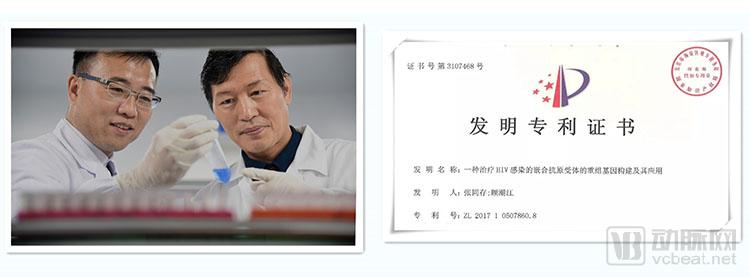
Image source: Official website of Wuhan University of Science and Technology
Professor Zhang Tongcun has dedicated many years to the CAR-T field, accumulating extensive clinical experience, and is recognized as the “father of CAR-T promotion” in China. Professor Gu Chaojiang brings over a decade of research experience in HIV/AIDS. In 2015, the two joined forces, combining their respective expertise to develop a novel therapy: “Treating HIV/AIDS Using CAR-T Technology.”
AIDS is an immunodeficiency disease. After HIV enters the human body, it specifically attacks the immune system. Once the immune system is compromised, the body becomes unable to defend against other external pathogenic infections, leading to illness and death. In brief, CAR-T technology trains immune T cells to recognize specific antigens and target pathogens for attack. In this study, broadly neutralizing antibodies with high specificity for the viral proteins gp120 and gp41 were used as single-chain variable fragments (scFv). These antibodies can bind to most HIV strains. The two professors utilized scFv fusion protein genes to “teach” T cells to specifically recognize and destroy HIV-infected cells, while also neutralizing HIV in the bloodstream.
Currently, human clinical trials using this technology have demonstrated significant efficacy. Among the two HIV patients enrolled in the trials, one exhibited a substantial reduction in viral load within three months, while the other achieved complete clearance of HIV from the body after nine months of treatment. Furthermore, this technology can eliminate infected cells in a latent state, thereby preventing HIV recurrence.
In November 2018, Fate Therapeutics announced that the U.S. Food and Drug Administration (FDA) had approved the Investigational New Drug (IND) application for its investigational product, FT500. At the subsequent American Society of Hematology (ASH) Annual Meeting, the company presented recent clinical data on FT500 in combination with immune checkpoint PD-1 inhibitors and adoptive T-cell therapy, showing that 99% of tumors had shrunk.
Fate Therapeutics is a U.S. biotechnology company that develops stem cell therapies by leveraging fundamental biological mechanisms. Founded in 2007, the company has completed nine rounds of financing, raising a total of $160 million. It has two natural killer (NK) cell pipelines: one derives highly cytotoxic NK cells from the peripheral blood of healthy donors, and the other generates high-affinity NK cells differentiated from induced pluripotent stem cells (iPSCs). The FT500 product, for which approval was sought in this application, is an iPSC-derived natural killer (NK) cell therapy.
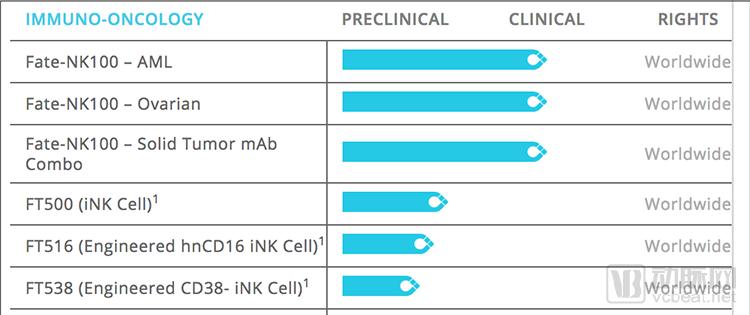
Fate Therapeutics’ Partial R&D Pipeline
NK cells, or Natural Killer cells, are the frontline defenders of the immune system. As part of the innate immune system, they exhibit broad-spectrum antitumor activity. FT500 provides a substantial population of NK cells that release cytotoxic granules upon contact with stress ligands on tumor cells, leading to direct tumor lysis. Meanwhile, cytokines secreted by NK cells enhance T-cell activity, facilitating the recognition and elimination of tumor cells through T-cell synergy. Furthermore, FT500 can be cryopreserved, enabling convenient repeated clinical administration.
“With the FDA’s approval of the IND application for FT500, we have reached a significant milestone that marks the beginning of a new era in the clinical development of cell-based therapies,” said Mr. Scott Wolchko, Chief Executive Officer of Fate Therapeutics.
Also in November, a biological research team led by Dr. Jeffrey Rathmell at Vanderbilt University published a paper in the journal Cell, stating that inhibiting the metabolism of an amino acid called glutamine can activate T cells that regulate anti-cancer responses, thereby enhancing the functionality of CAR-T cells in cellular therapies.
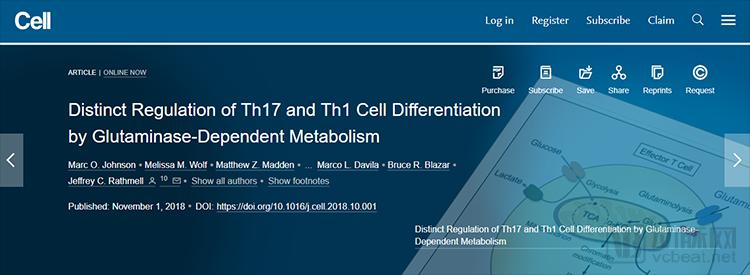 Paper Title: "Distinct Regulation of Th17 and Th1 Cell Differentiation by Glutaminase-Dependent Metabolism"
Glutamine is an essential amino acid required for the normal functioning of many cells in the human body, while abnormally dividing cancer cells have an even greater demand for it. The original experiment aimed to “starve” cancer cells by inhibiting glutamine metabolism. However, this approach inevitably causes collateral damage, depriving T cells of nutrients as well and thereby reducing their activity. Surprisingly, the research results were quite the opposite. After knocking out the gene encoding glutaminase in mice, researchers unexpectedly found that certain T cells became hyperactive. These highly active T cells are precisely those involved in anti-cancer and anti-viral immune responses.
Professor Jeffrey Rathmell also responded to this, stating in brief that some T cells require glutamine while others do not. The activity of T cells that require glutamine, such as those driving autoimmunity, is reduced, whereas the activity of anti-tumor T cells that do not require glutamine is increased. Further experiments in mouse CAR-T models revealed that inhibiting glutamine metabolism not only prolonged the persistence of CAR-T cells in vivo but also enhanced their functionality, although this functional enhancement was short-lived.
In this experiment, glutamine metabolism was inhibited by CD-839, a glutaminase inhibitor. The research team also plans to combine it with the immune checkpoint PD-1 inhibitor Opdivo to evaluate various dosing regimens.
The prospects of CAR-T therapy for hematologic malignancies are generally viewed favorably, yet its application in solid tumors remains a significant challenge. Given that 90% of all cancers are solid tumors, CAR-T therapy faces not only the difficulty of identifying suitable targets but also substantial challenges posed by the unique tumor microenvironment of solid tumors compared to hematologic malignancies.
On November 13, Celyad announced that in its ongoing Phase I clinical trial combining CAR-T therapy with chemotherapy, tumor shrinkage was successfully achieved in three patients with aggressive colorectal cancer, one of whom entered remission directly. Complete results for all 18 patients are expected to be available in 2019. In another clinical trial involving 11 patients who did not receive chemotherapy, four patients with solid tumors experienced symptom relief. These data collectively demonstrate that Celyad has made substantial progress in the field of solid tumors.
Celyad is a Belgian biopharmaceutical company specializing in CAR-T cell therapies. Founded in 2007, the company has completed four rounds of financing, raising a total of €66.3 million. Celyad aims to develop benchmark technologies for cancer treatment, covering seven types of cancer: bladder cancer, colorectal cancer, pancreatic cancer, breast cancer, ovarian cancer, acute myeloid leukemia (AML), and multiple myeloma. Currently, it has three clinical projects under development: CYAD-01, CAR-T NKp30, and CAR-T B7H6.
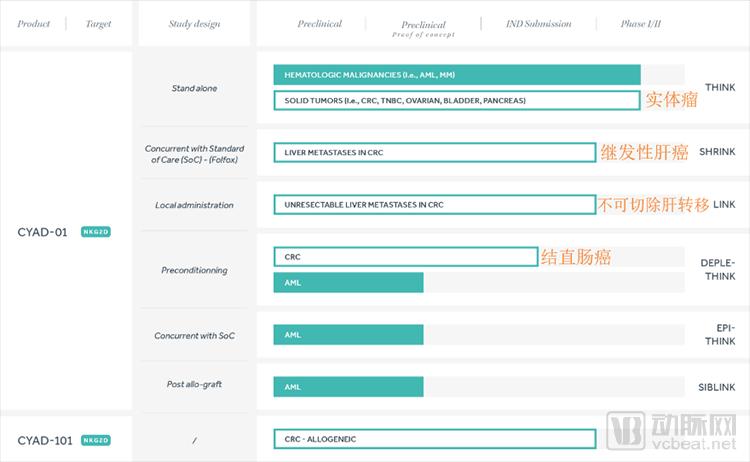
Celyad’s Partial R&D Pipeline
Notably, the company’s CYAD-01 program warrants attention. Unlike conventional CAR-T therapies, CYAD-01 incorporates a full-length human natural killer cell receptor, NKG2D, into its chimeric antigen receptor (CAR). This receptor is minimally expressed on normal cells but is significantly upregulated upon cellular malignant transformation. By targeting multiple cancer types, this natural killer cell-based approach enables multi-pronged attacks against solid tumors.
Traditional CAR-T therapy is based on αβ T cells, the most common T cell subtype. However, traditional CAR-T therapies are associated with certain side effects that prevent their therapeutic efficacy from being fully realized. As early as 2015, a specific subtype of γδ T cells, which constitute only 5% of T cells, was identified as the best predictor of favorable patient prognosis based on its tumor infiltration. In contrast to αβ T cells, γδ T cells serve as the first line of immune defense and can directly locate and destroy “stressed” cells induced by cancer-associated transformation—a capability not possessed by unmodified αβ T cells.
On July 19, Kite, a Gilead Sciences company, entered into a collaboration with Gadeta Biotechnology to develop CAR-T therapies based on γδ T-cell receptors. This represents an entirely new area of research and holds promise for the application of CAR-T therapy in solid tumors.
As previously mentioned, one reason why CAR-T therapy cannot be directly applied to solid tumors as it is to hematologic malignancies is the lack of suitable targets in solid tumors. Another advantage of γδ T cells is that their antigen recognition does not depend on specific targets such as the major histocompatibility complex (MHC); instead, they can recognize antigens in an MHC-independent manner. As an off-the-shelf candidate for CAR-T therapy, γδ T cells open up new avenues for the use of CAR-T cell therapy in treating solid tumors.
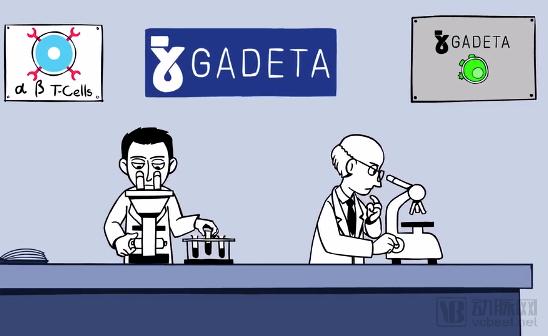
Image source: Screenshot from Gadeta’s official website video
Gadeta is a Dutch biotechnology company developing innovative cancer immunotherapies. Its novel CAR-T therapy based on γδ T-cell receptors (TEGs) holds significant potential for curing both hematologic malignancies and solid tumors. Founded in 2015, Gadeta has completed two rounds of financing, raising €7 million.
The CAR-T technologies mentioned above are all designed to enhance T cell function in specific aspects, whereas TxCell’s CAR-T approach aims to protect target sites from immune system attacks. This “non-conformist” CAR-T cell is known as regulatory T cells or CAR-Tregs. While the prevailing trend involves using CAR-T therapy for cancer treatment, TxCell is developing CAR-T therapies for autoimmune diseases.
TxCell is a French biotechnology company specializing in cell therapy for autoimmune diseases. It is arguably the only company on the market dedicated exclusively to CAR-Treg cells, leveraging its proprietary CAR-Treg technology for production and development, which makes it a distinctive and unconventional player in the industry. Founded in 2001, the company completed five financing rounds, raising a total of €71.7 million. On July 23 of this year, Sangamo Therapeutics acquired TxCell for €72 million to utilize its proprietary CAR-T technology for preventing immune rejection in organ transplantation and treating autoimmune diseases.
Tregs are a naturally occurring subset of T cells in the human body that can suppress the activity of cytotoxic T cells, keep immune responses within a normal range, and maintain the balance of immune regulation. TxCell combines Tregs with CAR targets required for autoimmune diseases, delivering these modified CAR-Treg cells to disease sites such as areas of inflammation to suppress unwanted immune responses in specific tissues. Compared to traditional immunosuppressive drugs that reduce the activity of the entire immune system, CAR-Treg therapy for autoimmune diseases is precise and highly effective.
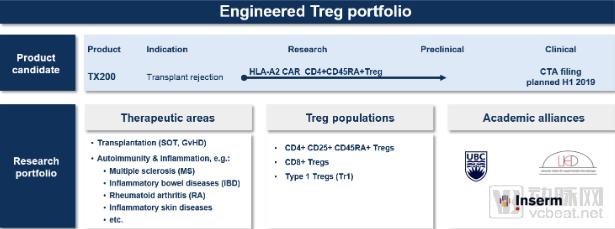
TxCell’s R&D Pipeline
TxCell’s most advanced product is TX200 (targeting human leukocyte antigen A2, HLA-A2), which is expected to complete the application for Phase I/II clinical trials in Europe in 2019, to evaluate its therapeutic efficacy in kidney transplant patients.
Cell Therapy Side Effects: CRS
CAR-T therapy is currently a darling of the medical community; however, it is not without risks. The most critical complication requiring careful management in contemporary CAR-T therapy is cytokine release syndrome (CRS). This syndrome arises when CAR-T cells proliferate extensively upon contact with tumor cells, triggering a cascade of cytokine production known as a "cytokine storm," which can cause systemic damage to the patient and, in severe cases, directly threaten life.
Since the emergence of CAR-T technology, numerous studies have been conducted on cytokine release syndrome (CRS) to identify solutions for managing its adverse effects. This section briefly introduces two companies that achieved notable progress in CRS research in 2018.
On September 24, Cynata Therapeutics released a report stating that its investigational mesenchymal stem cell therapy has demonstrated highly promising results in early-stage mouse studies, effectively alleviating severe cytokine release syndrome (CRS) associated with CAR-T cell therapy.
Cynata Therapeutics is an Australian biotechnology company specializing in stem cell and regenerative medicine research. Founded in 2003, the company completed its initial public offering (IPO) this May, raising €5.2 million. Cynata has developed a proprietary stem cell technology platform, Cymerus™, which enables the differentiation of induced pluripotent stem cells (iPSCs) into mesenchymal progenitor cells (MPCs), subsequently used to produce large quantities of mesenchymal stem cells (MSCs). This approach allows for virtually unlimited production from a single donor source, thereby eliminating the need to identify new donors.
Mesenchymal stem cells (MSCs) are a crucial component of stem cell populations and can be induced to differentiate into important cell types such as cardiomyocytes and neurons, making them ideal seed cells for repairing aging, injury, and pathological changes in the body. Cynata’s mesenchymal stem cell therapy involved injecting MSCs into human CRS mouse models to observe changes in cytokine levels under different variables (time, environment, and location). The results showed that mice receiving a single dose of MSCs via intravenous injection exhibited the most significant improvement in CRS symptoms after 24 hours. MSCs protected the mice from the effects of CRS, producing a “sustained and significant reduction in body temperature” and increasing cellular markers associated with beneficial immune activity.
Cynata is planning to collaborate with companies specializing in cellular immunotherapy to combine mesenchymal stem cell therapy with CAR-T applications, thereby mitigating cytokine release syndrome (CRS) and optimizing the therapeutic efficacy of CAR-T therapy.
On November 21, Eureka Therapeutics published preclinical data on its ARTEMIS™ technology platform for CAR-T therapy in *Cell Discovery*. The report demonstrated that AbTCR-T cells exhibit anti-tumor efficacy comparable to existing anti-CD19 CAR-T cells. Notably, the experimental group treated with AbTCR-T cells showed a significant reduction in inflammatory cytokine release, substantially lowering the risks of cytokine release syndrome (CRS) and neurotoxicity (NT).
Eureka Therapeutics is a U.S.-based biotechnology company focused on cell therapies for cancer treatment. Founded in 2006, the company has completed five rounds of financing to date, raising a total of €83.9 million. It operates two technology platforms: ARTEMIS™ and E-ALPHA®. The former leverages natural T cells combined with intracellular regulatory mechanisms for cancer therapy, while the latter is an antibody development platform comprising over 100 billion unique cloned antibody sequences.
Cytokine release syndrome (CRS) occurs due to excessive T-cell activity. When CAR-T cells attack cancer cells, abnormally heightened T-cell activity can lead to the overproduction of cytokines, triggering a cytokine storm and resulting in CRS. This hyperactivity is largely attributed to the design of conventional CAR receptors, which combine antibody-derived antigen-binding domains and co-stimulatory signals within a single structural unit. In contrast, the ARTEMIS receptor developed by Eureka Therapeutics abandons this fused antibody–co-stimulatory format. Instead, it engineers the antigen-binding region (Fab fragment) onto the effector domain of the γδ T-cell receptor (TCR) chain, enabling the ARTEMIS receptor to form polymeric T-cell signaling complexes with endogenous CD3 chains. This approach leverages the natural activation and regulatory pathways of the TCR to control cytokine production.
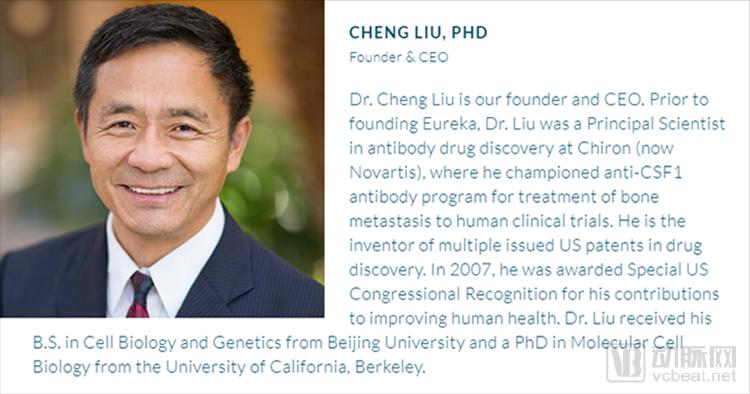
Dr. Cheng Liu, Founder and CEO of Eureka Therapeutics
Dr. Liu Cheng, Founder and CEO of Eureka Therapeutics, stated that while cytokine release syndrome (CRS) has traditionally been regarded as an inevitable side effect of CAR-T therapy, their clinical trials have demonstrated that efficacy and CRS can be decoupled, paving the way for safer T-cell therapies. He further noted that combining TCR-mimic antibodies with T-cell therapies will also serve as a powerful tool for treating solid tumors in the future.
Cellular immunotherapy is most widely applied in the field of cancer. According to data from ClinicalTrials.gov, there are currently 1,722 clinical trials of cellular immunotherapy underway globally, of which 1,532 are for treating various types of cancer, and 399 clinical studies explicitly involve CAR-T technology. Research into cellular immunotherapy is being vigorously pursued worldwide as institutions compete to capture this blue-ocean market. Driven by technological advancements and the relentless efforts of researchers, cellular therapies are expected to overcome not only hematologic malignancies but also solid tumors, HIV/AIDS, and autoimmune diseases, ushering in new treatment options. Let us embrace technology’s power to transform lives and jointly witness the growth of these emerging technologies.