

2018 Internet Hospital Report: The Time to Act Is Now – In-Depth Survey of 119 Internet Hospitals Nationwide
By Luo Shiming, Luo Mei
Internet hospitals were defined and experienced rapid development in 2016. In 2017, they saw a collective surge in Yinchuan, reaching a peak of public attention. Subsequently, due to regulatory headwinds, the sector cooled down before being officially legitimized in 2018, marking a comprehensive resurgence and a new critical milestone for the industry: local regulations were urgently refined, various stakeholders actively explored innovative models, and the sector flourished with diverse developments. We believe this moment deserves to be commemorated.
In March 2018, a key national leader, while participating in the deliberation of the Ningxia delegation’s report, instructed relevant departments to accelerate the development of “Internet + Healthcare.” This statement brought “Internet + Healthcare,” which had previously subsided, back into the spotlight of public discourse. On April 28, the General Office of the State Council issued the “Opinions on Promoting the Development of ‘Internet + Medical Health,’” permitting the establishment of internet hospitals依托 medical institutions. Building upon physical hospitals, these entities are allowed to leverage internet technologies to provide safe and appropriate medical services, including online follow-up consultations for certain common and chronic diseases. Once physicians have access to patients’ medical records, they are permitted to issue online prescriptions for certain common and chronic conditions.
“Internet + Healthcare” has become a national strategic priority in China. Regulatory policies for internet hospitals are becoming increasingly clear, and local governments are beginning to embrace this model. The concept of internet hospitals is no longer confined to clinical consultations; modules such as diagnosis, physician education, family doctor services, and post-discharge follow-up are being integrated into the internet hospital framework in practice.
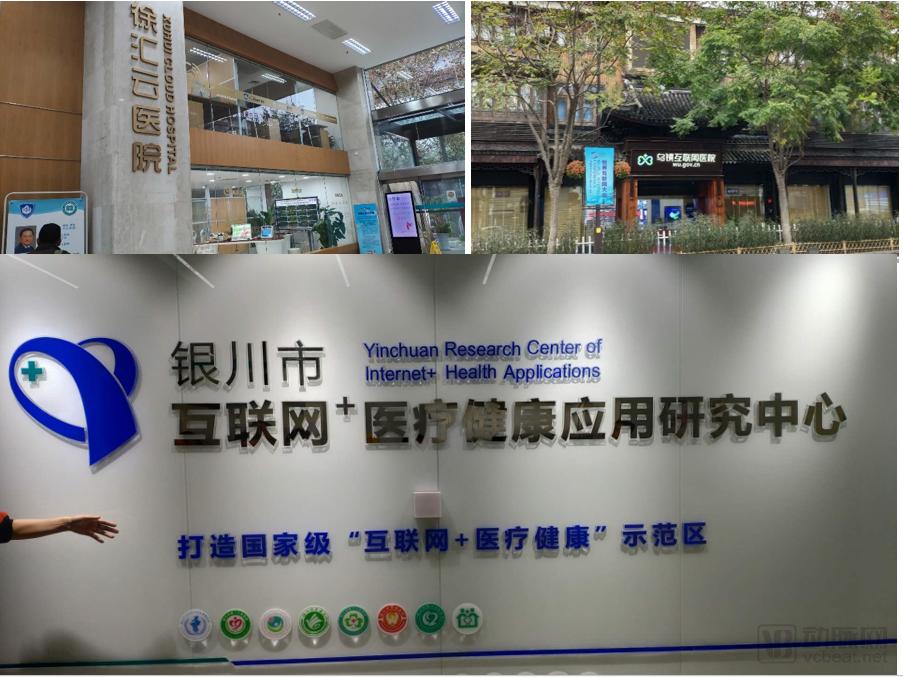
VCBeat·VBInsight believes that the development of internet hospitals has reached a brand-new stage. Internet hospitals have broken through the limitation of only being involved in the diagnosis and treatment link, gradually creating a closed-loop medical service process that includes "health management - consultation - in-hospital - rehabilitation," collaborating with medical alliances, family doctors, and drug channels to achieve true upward and downward circulation of medical resources.
The project team conducted field visits to several well-known internet hospitals, including Wuzhen Internet Hospital, Yinchuan Smart Internet Hospital, and Xuhui Cloud Hospital. We also interviewed key players in the sector, such as 39 Internet Hospital, Medlinker Huafang, and the First Affiliated Hospital of Zhejiang University School of Medicine Internet Hospital. Building on these insights and our three-year understanding of the digital health landscape, this report presents an analysis of the strategic pathways and directional outlooks adopted by various stakeholders participating in the wave of internet hospital development at this critical juncture of progressive policy refinement.
Below are key highlights from the “2018 Internet Hospital Report: Time for Action.” The full report will be released at the “Top 100 Future Healthcare Forum,” and your participation is welcome.
China’s vast territory, large population, and significant disparities in economic development, cultural contexts, and healthcare resources across regions mean that the implementation of any new policy has far-reaching implications, particularly in healthcare, a cornerstone of public welfare. As the internet hospital industry is heavily influenced by policy, any analysis must be grounded in a thorough interpretation of policies and a systematic review of regulatory frameworks.
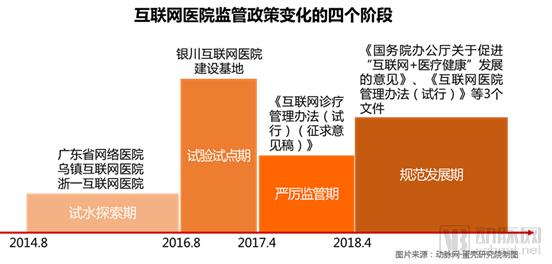
The state’s regulation of internet hospitals has undergone four phases: “experimental exploration,” “strong support,” “strict supervision,” and “standardized development.”
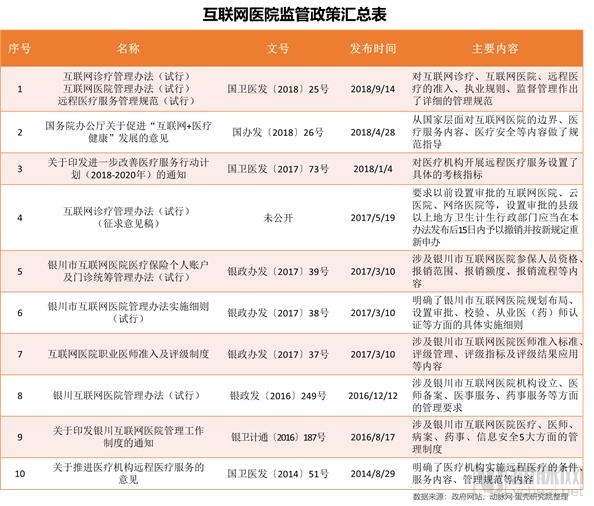
Currently, provinces and municipalities across China are successively circulating the three administrative measures for internet hospitals and accelerating the formulation of detailed implementation rules. Progress varies by region, and we will provide a detailed overview of the specific regulatory guidelines in each locality in Chapter 2.
Meanwhile, the report provides an in-depth analysis of the requirements for establishing new internet hospitals, their operational standards, and service pricing.
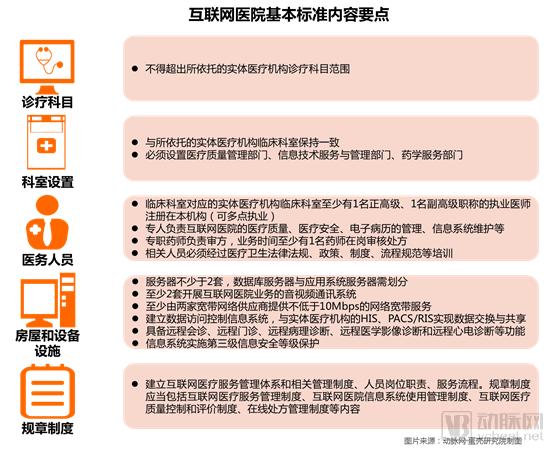
According to the “Administrative Measures for Internet Hospitals (Trial)” issued by the National Health Commission, the establishment of an internet hospital must encompass at least five aspects: approved diagnostic and therapeutic specialties, departmental structure, medical personnel, premises and equipment/facilities, and rules and regulations.
As evident from the specific requirements outlined in the document, internet hospitals must align with their affiliated physical medical institutions in terms of approved diagnostic and treatment specialties and departmental structure; they are not permitted to operate beyond the scope of the physical institution’s registered specialties and clinical departments. This requirement is grounded in patient safety considerations: ensuring that the service capabilities of an internet hospital remain within the operational capacity of its affiliated physical institution helps safeguard the safety of online consultations and facilitates regulatory oversight of related medical practices by referencing the standards applied to physical clinical departments.
For medical personnel, the policy also sets high standards for staffing: each clinical department must have at least one registered physician with a senior professional title and one with an associate senior professional title to provide diagnostic and treatment services; dedicated pharmacists must provide online prescription review services; and dedicated staff must be assigned to ensure medical quality and safety as well as to maintain information systems.
As can be seen, regulations have been established regarding the qualifications of relevant personnel across various domains, including healthcare, pharmaceuticals, and information technology, with the aim of enhancing medical quality while ensuring patient safety. For instance, 39 Internet Hospital has specified the professional credentials and requirements for initiating physicians, receiving specialists, and remote physician assistants in its telemedicine services.
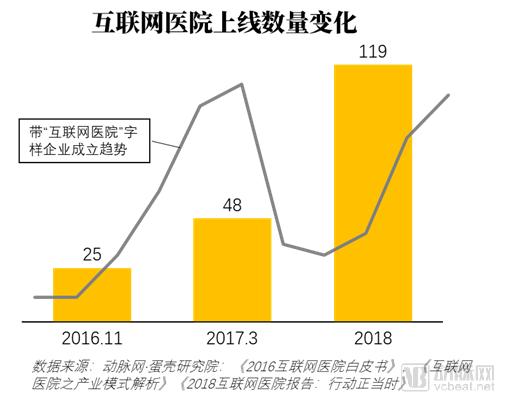
According to statistics compiled by VCBeat·VBInsight from publicly available information, as of November 2018, the number of internet hospitals in operation across China had expanded to approximately 119 (the complete list is published in the report). These institutions are distributed across 25 provinces and municipalities, and enterprises with “Internet Hospital” in their names are growing rapidly at a rate of two per week.
 |
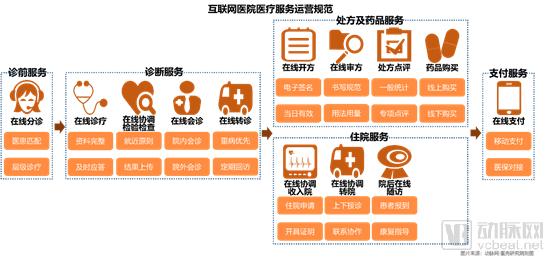
In 2018, the internet’s penetration into hospital settings deepened significantly. Multiple scenarios—including diagnosis, treatment, post-consultation care, and health management—found points of integration with internet hospitals. The concept of internet hospitals was no longer confined to the treatment phase; in practice, modules such as diagnosis, physician education, family doctor services, and post-discharge follow-up were incorporated into the internet hospital system.
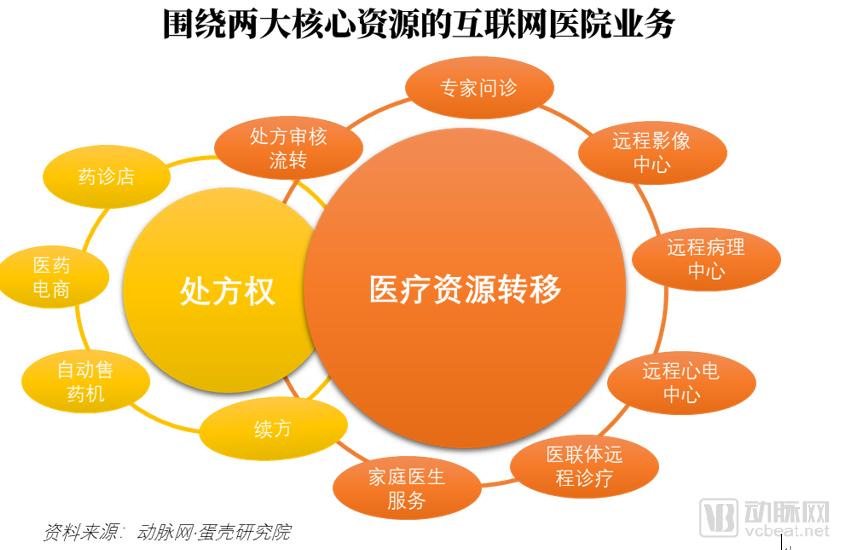
The scope of internet hospital operations has expanded from a singular focus on the vertical flow of medical resources to include the commercial monetization of prescription rights. We have systematically reviewed the current business activities of internet hospitals in an effort to map out their operational blueprint.
In-Depth Analysis of Comprehensive Internet Hospitals: Operational Experience and Achievements of Leading Specialty Internet Hospital Enterprises, Including but Not Limited to the Following Internet Hospitals:
On December 7, 2015, Wuzhen Internet Hospital was established, pioneering the exploration of the new “Internet + Healthcare” business model in China.
Leveraging the medical resources accumulated by WeDoctor Group, WeDoctor Internet Hospital has established a multi-platform integrated service model centered on its platform and interconnected with the WeDoctor Tiered Diagnosis and Treatment Platform, the Internet Family Doctor Contracting Platform, and the WeDoctor Drug Centralized Procurement and Supply Platform.
After three years of development, WeDoctor Internet Hospital has been established in 19 provinces and municipalities—including Ningxia, Sichuan, Gansu, Shaanxi, Shandong, Heilongjiang, and Hainan—through joint ventures with local Grade A tertiary hospitals. Its service coverage now extends to more than 30 provinces and municipalities. This report provides an in-depth analysis of the WeDoctor Internet Hospital system and, for the first time, discloses the latest list of WeDoctor’s internet hospitals and their affiliated medical consortia.
Hangzhou Zhuojian Information Technology Co., Ltd. was established in February 2011. Aligning with the overarching direction of healthcare reform and focusing on core clinical diagnosis and treatment services, the company provides internet-based solutions from the inside out for large and medium-sized hospitals and all segments of the medical ecosystem, thereby creating a closed-loop smart healthcare ecosystem.
Currently, the company offers a suite of products including an Internet Hospital, Medical Consortium, physician training platform (MedChain), prescription circulation platform (Olive Cloud), and pharmacy-clinic integration platform (Olive Clinic). It has built an “Internet+” service platform catering to various stakeholders such as hospitals, physicians, patients, pharmaceuticals, and clinics. The company provides three industry-leading solutions: Internet+ Smart Hospital, Internet+ Smart Pharmaceutical Care, and Internet+ Smart Medical Education. Backed by the strongest operational team in the industry, it delivers value-added services for the healthcare real economy and stands out as the most high-growth, technology-driven enterprise in the digital healthcare sector.
In this report, we will provide a detailed exposition of Zhuojian’s process, timeline, and budget for the internet-based transformation of hospitals, and disclose for the first time the list of hospitals currently collaborating with Zhuojian.
 On March 19, 2017, DXY’s first internet hospital was established in Yinchuan, marking a significant step in DXY’s expansion into the consumer-facing (C-end) sector. Its core product, DXY Doctor, officially evolved from offering lightweight online consultations to providing comprehensive online diagnosis and treatment services. The establishment of the internet hospital also signaled the gradual realization of founder Li Tiantian’s “ICE Model”—Information, Communication, and Engagement.
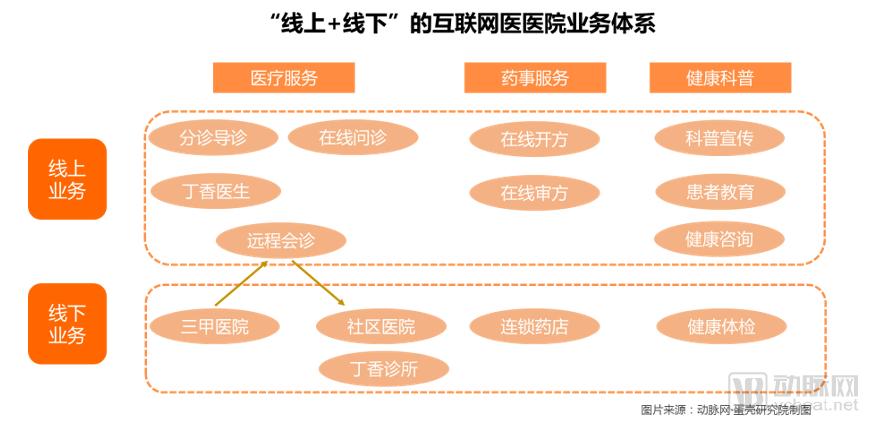
The internet hospital has established an interconnected “online + offline” service ecosystem. In addition to early-stage services such as triage, patient guidance, and online consultations for minor conditions, it has expanded to include remote consultation services through collaborations with tertiary hospitals and community hospitals across China.
Meanwhile, to better provide pharmaceutical care services to patients, DXY has established partnerships with multiple chain pharmacies. After physicians issue prescriptions and pharmacists conduct reviews online, the chain pharmacies fulfill the electronic prescriptions by dispensing and delivering medications. In addition, internet hospitals have also expanded into health management services, offering online science popularization, patient education, and health consultations.
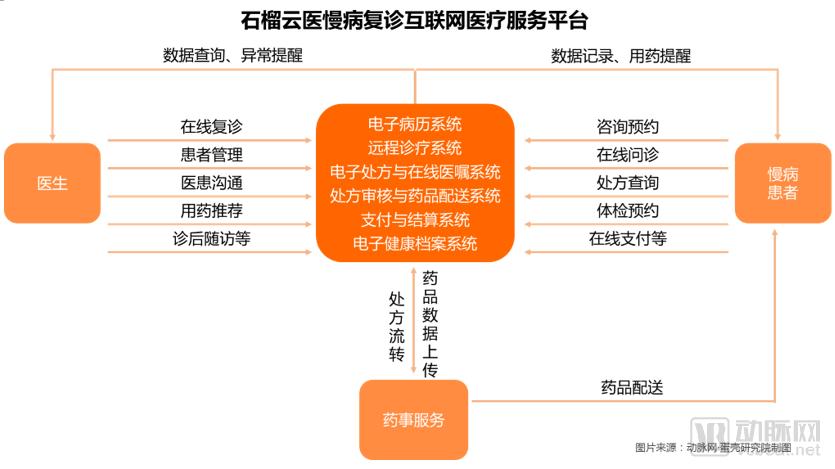
Chronic diseases are characterized by prolonged courses, high incidence rates, and the need for long-term medication and continuous monitoring and management. In traditional chronic disease management, medical services essentially end after patients visit hospitals for consultations and prescription refills, leaving post-treatment medication monitoring and rehabilitation follow-up unaddressed. This gap may lead to the progression of chronic conditions into acute or critical illnesses, and even result in patient mortality.
Internet-based healthcare platforms for chronic disease management can strengthen the doctor-patient relationship by establishing a one-on-one, long-term care model. After the initial diagnosis, patients can undergo follow-up consultations and post-diagnosis management via the platform, which helps improve medication adherence and enhance the overall outcomes of chronic disease treatment.
On August 18, 2018, Qilekang Internet Hospital announced its brand upgrade to “Shiliu Yunyi” (Pomegranate Cloud Medicine), committing to building the industry’s only internet healthcare service platform for chronic disease follow-up consultations that closes the loop among “medical care, pharmaceuticals, patients, testing, and insurance.” The doctor-patient relationship is a strong one-to-one bond; due to the long treatment cycle, activities such as follow-up consultations and prescription issuance must be conducted on the platform, resulting in relatively stable and robust doctor retention.
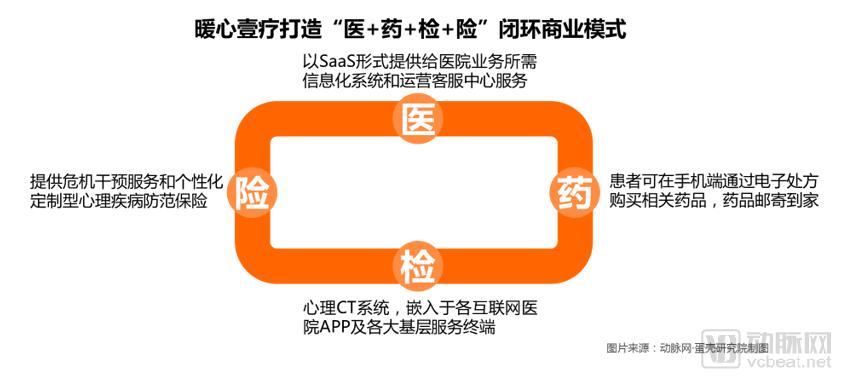
Nuanxin Yiliao has established a full-industry-chain service loop in the field of mental and psychological disorders, integrating “medical care + pharmaceuticals + diagnostics + insurance.”
In the "medical" aspect, SaaS services are utilized to build internet hospital solutions for provincial and municipal specialized psychiatric and psychological hospitals, enabling patients to schedule remote follow-up consultations with their primary physicians without visiting the hospital and to enjoy services such as home delivery of medications.
In terms of "medication," a psychiatric cloud pharmacy system has been established. Within the remote follow-up consultation service, after physicians issue prescriptions for patients, the patients can purchase the relevant medications via electronic prescriptions on their mobile devices, with the medicines delivered directly to their homes.
In terms of "screening," a Psychological CT System has been developed and integrated into the apps of various internet hospitals and major primary care service terminals. Through government procurement or individual purchase, this system provides the general public with services including psychological assessment, mental health education, psychological hotlines, consultations with mental health experts, and green channels for referrals to higher-level medical institutions.
In terms of “insurance,” first, personalized value-added services are provided to policyholders as part of insurance value-added offerings, such as crisis intervention services in the event of a major accident involving the insured. Second, mental illnesses are incorporated into risk prevention strategies by developing customized mental health prevention insurance products for healthy populations, such as postpartum depression insurance for pregnant and postpartum women, and autism spectrum disorder insurance for children.