

Bang Doctor AI-Powered Clinical Dialogue System Redefines TCM Consultation with Knowledge Graph Integration
“Three hours in line, three minutes with the doctor.” Many patients are familiar with the predicament of “three long waits and one short consultation” (long waits for registration, consultation, and medication dispensing, but a short consultation time). China sees more than 20 million outpatient visits per day, with the vast majority of patients crowding into tertiary hospitals. This strain on limited medical resources has led to poor patient experiences, heightened doctor–patient tensions, and broader societal challenges such as difficulty accessing care.
On December 15, 2018, at the Inaugural Conference of the Traditional Chinese Medicine (TCM) Big Data Industry Branch of the World Federation of Chinese Medicine Societies (WFCMS) and the First WFCMS Forum on TCM Big Data Development, held at Peking University, the “Bang Dafu” AI-powered doctor-patient dialogue system was officially launched. This marked the first introduction in China of an AI-driven doctor-patient dialogue system specifically designed for the field of Traditional Chinese Medicine.
This system is jointly launched by the Traditional Chinese Medicine (TCM) Big Data Center of the Beijing Academy of Big Data and Singularity AI, a leading domestic provider of voice dialogue interaction solutions. By integrating its self-developed voice dialogue platform, “Dialogue Flow,” with the big data-based symptom reasoning engine developed by Beijing Dayi Xiangyu—an enterprise incubated by the TCM Big Data Center—the system can effectively replace physicians in completing the consultation process.
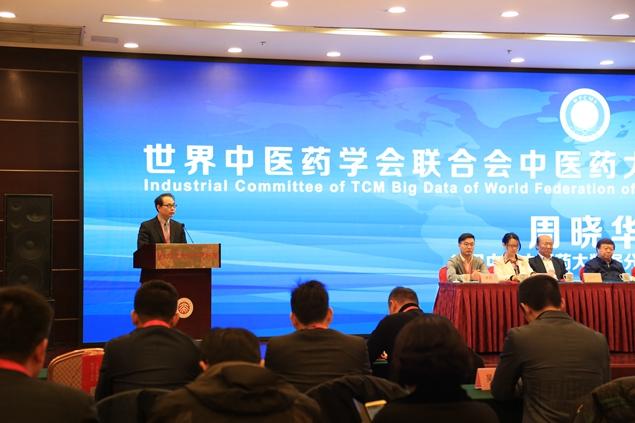
“Bang Dafu” Was Introduced for the First Time at the Inaugural Conference of the Big Data Industry Branch of Traditional Chinese Medicine, World Federation of Chinese Medicine Societies
It is estimated that the full-scale adoption of “Bang Doctor” would generate billions of minutes of doctor-patient communication time annually across China.
In Traditional Chinese Medicine (TCM) diagnosis and treatment, among the four fundamental elements of “inspection, auscultation and olfaction, inquiry, and palpation,” inquiry alone accounts for approximately 70% of the consultation process. Leveraging cutting-edge AI technologies such as speech recognition, natural language processing (NLP), and deep learning, along with a tens-of-millions-scale TCM knowledge graph built on big data from clinical TCM practice, “Bang Dafu” empowers the entire workflow—including AI-assisted pre-consultation, triage and guidance, online follow-up visits, and health consultations—through conversational interactions.
“Bang Doctor” can automatically assist physicians in collecting patient information prior to consultations, including chief complaints, associated symptoms, past medical history, and personal history, thereby generating structured electronic medical records for clinical interviews. It intelligently matches patients with appropriate specialists and supports physicians in conducting online follow-up consultations and tracking post-visit care, creating a complete closed-loop service from pre-consultation to post-consultation. This approach addresses key pain points in efficiency and experience for both patients and healthcare providers in the following aspects.

Increase Doctor-Patient Communication Time to Improve Outpatient Efficiency
“Bang Doctor” can be integrated into hospital websites, mobile apps, WeChat official accounts, service accounts, and mini-programs, and connected with existing hospital electronic medical record (EMR) systems. Prior to patient consultations, it conducts human-computer interactions via voice or text to intelligently collect information such as chief complaints, medical history, medication history, and allergy history. Based on the information provided by patients, “Bang Doctor” automatically asks follow-up questions to gather comprehensive clinical data, generates structured electronic medical records, and imports them into the hospital’s system.
During patient consultations, physicians can review structured medical histories generated by “Bang Dafu” in advance, thereby eliminating the need to manually enter electronic medical records while conducting the consultation. Building on this existing information, doctors can perform targeted follow-up questioning before proceeding with traditional diagnostic methods (inspection, auscultation/olfaction, and palpation). This approach not only increases effective communication time between doctors and patients and improves outpatient efficiency, but also enhances the overall patient experience.
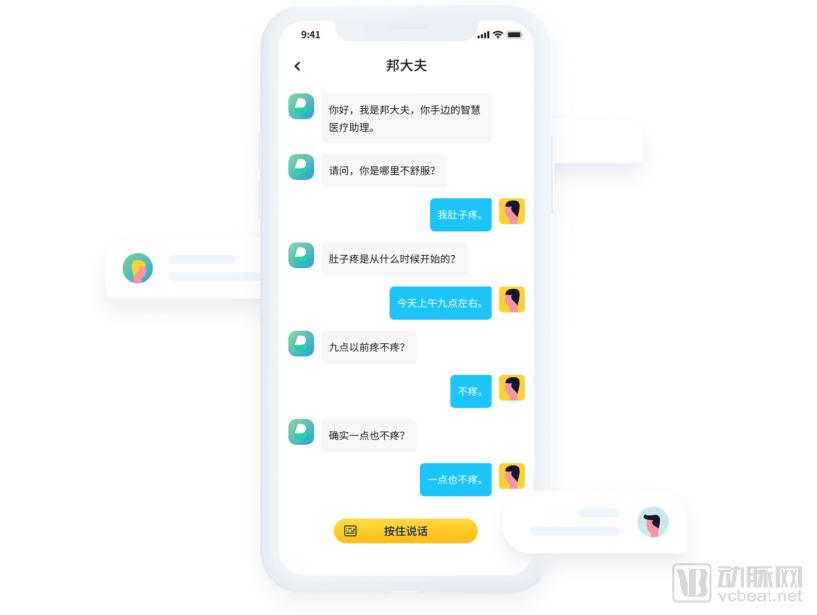
Currently, doctor-patient communication in the post-consultation phase is virtually non-existent. Patients seeking follow-up communication with their physicians can only do so through in-person return visits. The emergence of “Bang Dafu” has disrupted this status quo. After outpatient consultations conclude, Bang Dafu’s patient follow-up robot regularly tracks patients’ adherence to medical advice and their prognostic status, relaying this information back to physicians. This facilitates continuous monitoring of patients’ subsequent conditions, enables timely interventions, and supports comprehensive management throughout the entire course of the disease.
AI Voice Technology Breakthrough: Deep Understanding of Patients
Medical consultations involve a vast array of specialized medical terminology, whereas patients’ descriptions are predominantly colloquial, everyday, and diverse. Leveraging the “Dialogue Flow” platform and advanced natural language processing (NLP) technology, “Bang Dafu” utilizes big data from traditional Chinese medicine (TCM) to convert patients’ colloquial expressions into standardized TCM medical terminology.
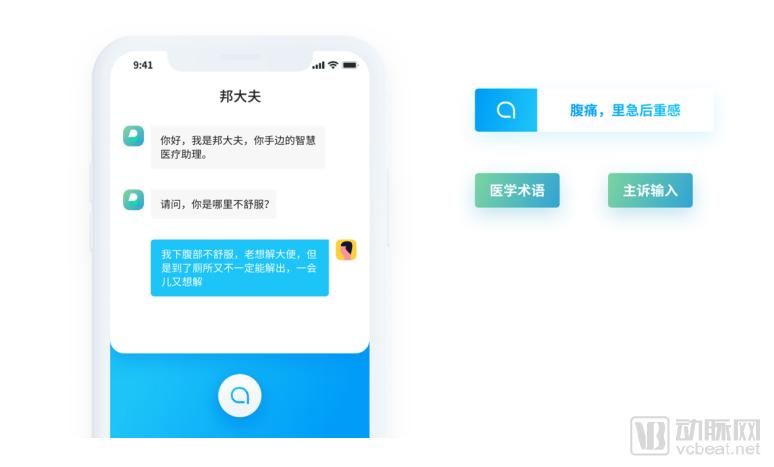
Furthermore, patients from across China may speak with varying regional accents or non-standard Mandarin. When users opt for voice input, speech recognition technology must not only accurately “hear” the patient’s words but also “comprehend and understand” their intended meaning.
Standardized Consultation Procedures to Reduce Medical Errors
When the clinical picture remains unclear, laboratory and diagnostic tests have not yet been performed, and particularly when encountering patients who are unable to articulate their symptoms or cooperate with examinations, it is essential to employ a rational, structured approach to history-taking that is concise and comprehensive. This enables clinicians to elicit accurate, relevant information within the shortest possible time frame, thereby guiding further diagnostic workup. However, in outpatient settings at large hospitals, physicians often lack sufficient time to thoroughly inquire about patients’ conditions, frequently proceeding directly to ordering tests and prescribing medications. Consequently, misdiagnoses and missed diagnoses are virtually inevitable.
“Bang Doctor” guides patients to describe their symptoms and conditions through multi-turn conversational interactions. The content of the questions, as well as their sequence, has been pre-designed into the dialogue flow based on clinical big data. This approach standardizes the consultation pathway while preventing information omissions or medical errors. For example, if a patient’s chief complaint is abdominal pain, the system not only collects basic personal information such as age and gender but also guides the patient to describe the onset time, location, nature, associated symptoms, triggers, and past medical history.
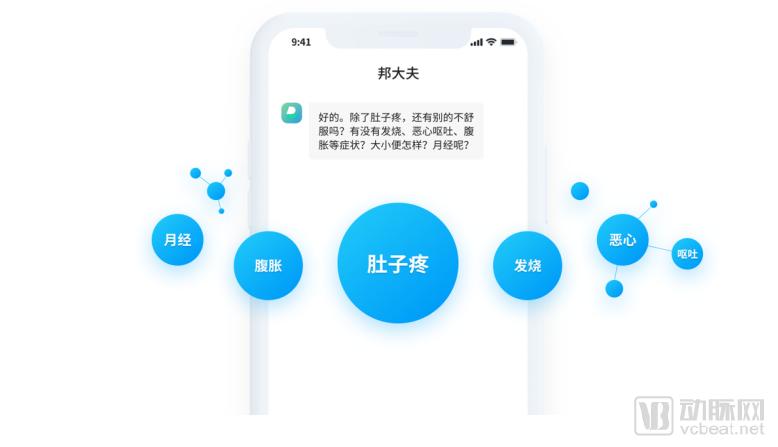
Medical consultations involve multi-turn question-and-answer exchanges with complex conversational logic. Determining “what to ask and what not to ask,” and embedding a physician-like logical framework into AI systems, represents a key technical challenge overcome by “Bang Dafu.” By leveraging the “Dialogue Flow” platform and integrating the symptom reasoning engine developed by Dayi Xiangyu—an enterprise incubated by the Traditional Chinese Medicine Big Data Center—“Bang Dafu” has achieved sophisticated conversational design for medical consultations. Its large-scale branching “decision trees” within the database determine the content of subsequent questions based on user responses, employing shortest-path algorithms to precisely collect patient symptoms and help physicians narrow down the range of potential diagnoses.
Advancing the Development of Smart Hospitals to Accelerate the Upgrading of Medical Services
During the development of smart healthcare, many hospitals and medical institutions face challenges such as insufficient outpatient electronic medical record (EMR) data, non-intelligent EMRs, and physicians’ reluctance to perform data entry due to heavy workloads. “Bang Dafu” addresses these issues by generating structured EMRs through conversational interactions, thereby facilitating the establishment of EMRs and electronic health records (EHRs) across initial consultations, follow-up visits, and patient callbacks, and accelerating the digital transformation of traditional healthcare services.
“Bang Dafu” enables doctors and medical institutions to record valid data throughout the entire patient journey—from consultation to follow-up tracking and subsequent visits. This not only empowers patients to engage in self-management but also provides clinicians with a convenient channel for doctor-patient communication and a reliable data source. By collecting big data on patients to establish electronic health records, the platform further supports physicians in conducting medical research. Insights derived from such research can, in turn, inform clinical practice, helping doctors develop more rational and effective diagnosis and treatment plans.
“Bang Doctor” can be seamlessly integrated into a hospital’s existing systems. Hospitals can design and adjust dialogue flows in the backend to meet varying consultation needs, enabling healthcare institutions to easily customize structured consultation dialogues without any programming.
Conversational AI: Redefining the Healthcare Experience
According to the 2019 Forecast Report on Healthcare Industry Trends, the value of artificial intelligence in the healthcare IT application market will exceed $1.7 billion by the end of 2019. By deploying AI platforms in selected healthcare workflows, productivity is expected to increase by 10–15% within the next two to three years.
Currently, “Bang Daifu” is being launched in major traditional Chinese medicine (TCM) hospitals and TCM institutions across China, driving technological and model innovation in the field of TCM and redefining the healthcare experience in the AI era. Whether through technological or model innovation, the ultimate goals are to address three key aspects: cost, quality, and accessibility. The introduction of “Bang Daifu” leverages AI to reduce labor costs, enhance the quality and experience of doctor-patient communication, and enable TCM to benefit a broader population.
In the future, the voice conversation platform “Dialogue Flow” will continue to deepen its engagement in healthcare-related conversational scenarios, enabling more people to benefit from improved medical experiences driven by technological advancements. Beyond the healthcare vertical, enterprises in e-commerce, finance, education, internal corporate services, and smart hardware can also leverage “Dialogue Flow” to independently define their conversational AI experiences.
Voice-based conversational interaction represents the prevailing trend in the future of “AI + Healthcare.” The application of AI within medical institutions or platforms will no longer be merely a slogan or a criterion for ratings; instead, it will evolve into tangible products that enable hundreds of millions of patients to genuinely enjoy a higher-quality healthcare experience. By enhancing the efficiency of doctor-patient communication and freeing up the valuable time of medical experts, this technology will play a significant role in alleviating the scarcity of high-quality medical resources and addressing the longstanding challenge of difficult access to medical care.