

Internet Hospitals in 2018: 24 Revenue Models and 13 Traffic Sources – Annual Review
Since the advent of internet healthcare, it has been grappling with profitability challenges. In 2017, a surge of internet hospitals emerged in Yinchuan, propelling the sector to the peak of public attention and drawing significant scrutiny.
Subsequently, after a period of policy-driven chill, the industry was fully rehabilitated in 2018, marking a new critical milestone: local regulators urgently refined their frameworks, while various stakeholders actively explored new avenues, fostering a vibrant and diverse landscape.
At this juncture, internet hospitals have become the key factor enabling many online healthcare companies to turn losses into profits. What are their revenue models, and where does their traffic come from?
To this end, we selected several companies currently operating internet hospitals and, based on their development trajectories and business models, summarized the profitability strategies and traffic sources for internet hospitals. Which specific companies are included?
The selected companies share the following characteristics: some have secured frequent rounds of financing; others have launched a large number of internet hospitals and possess extensive practical experience; some have transitioned from pharmaceutical e-commerce into this sector; others have evolved from hospital information systems; and some boast the highest prescription volumes among internet hospitals. Specifically, these eight companies are WeDoctor, DXY, Medlinker, Haodf Online, Qilekang, Weimai, Zhuojian Technology, and Hangxin Jinglian.
How exactly did they do it? As shown in the figure:
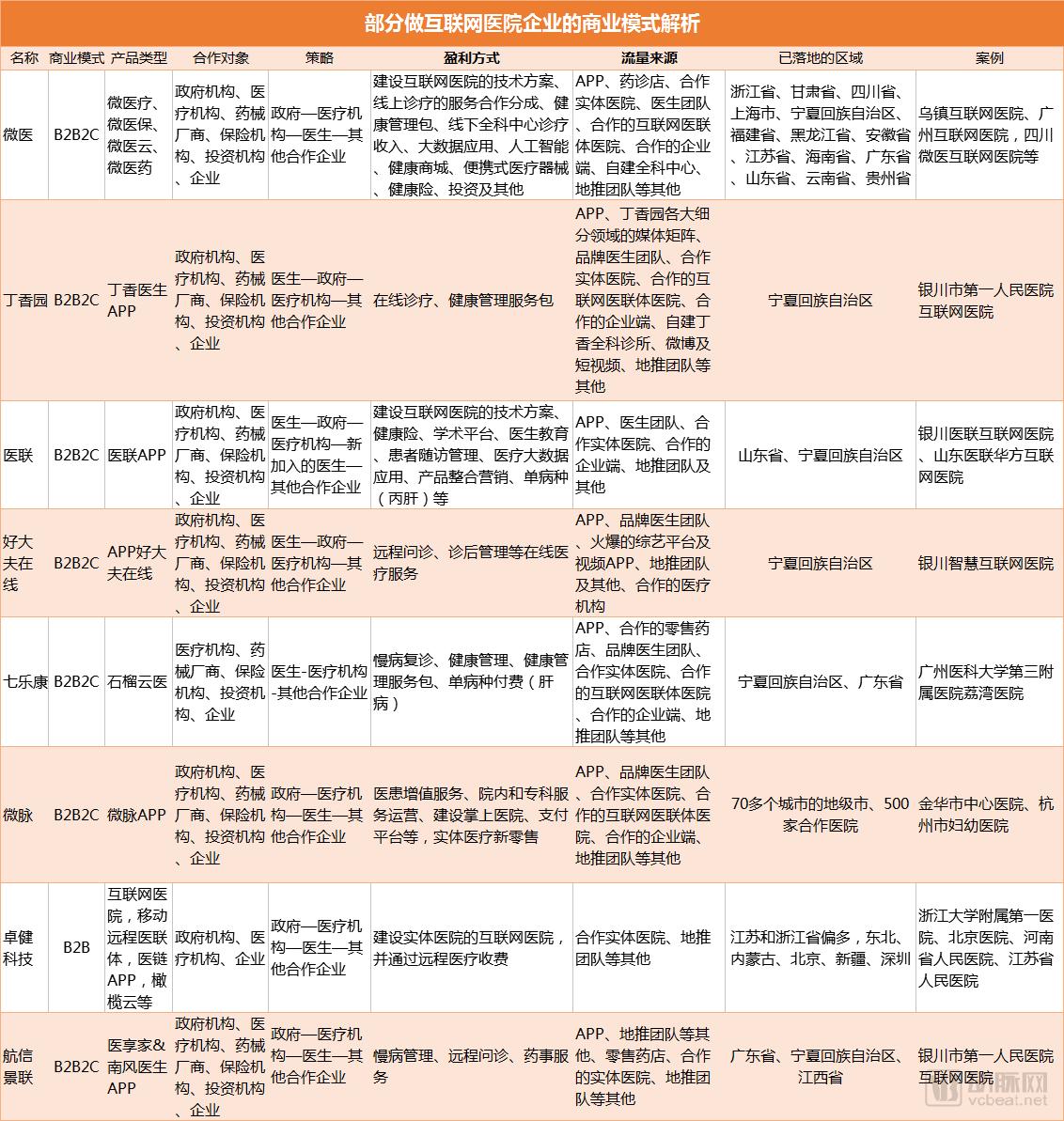
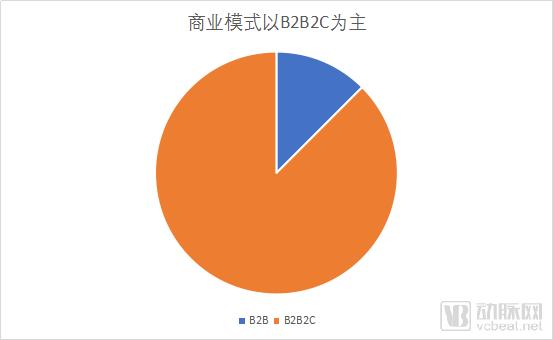
Among the eight selected companies, seven operate on a B2B2C business model, while only one follows a B2B model. This is consistent with the trends observed in September of this yearThe National Health Commission and the National Administration of Traditional Chinese Medicine jointly issued“Measures for the Administration of Internet Hospitals (Trial)”, “Measures for the Administration of Internet Diagnosis and Treatment (Trial)”, “Specifications for the Management of Telemedicine Services (Trial)”pertaining to the notice regarding three documents.These Measures are formulated to regulate internet-based diagnosis and treatment activities, promote the healthy and rapid development of internet medical services, and ensure medical quality and safety, in accordance with the Law on Licensed Physicians, the Regulations on the Administration of Medical Institutions, and other relevant laws and regulations.
It specifies the access requirements for internet hospitals: If a physical medical institution independently or in collaboration with a third-party organization establishes an information platform, and uses physicians registered at that institution and other medical institutions to conduct online diagnosis and treatment activities, it shall apply to register “Internet Hospital” as its secondary name.
However, prior to granting market access to internet hospitals, provincial-level health administrative departments must establish a provincial internet medical service supervision platform that interfaces with the internet hospital information platform to enable real-time regulatory oversight. Currently, Yinchuan City’s big data supervision platform has gone online and serves as the equivalent of the “provincial internet medical service supervision platform” referenced in the document. Consequently, the supporting infrastructure for internet hospitals in this region is relatively well-developed, attracting numerous enterprises to establish their presence there.
Provincial-level internet healthcare service regulatory platforms in other regions are also under development and planning, with many such platforms expected to be launched next year.
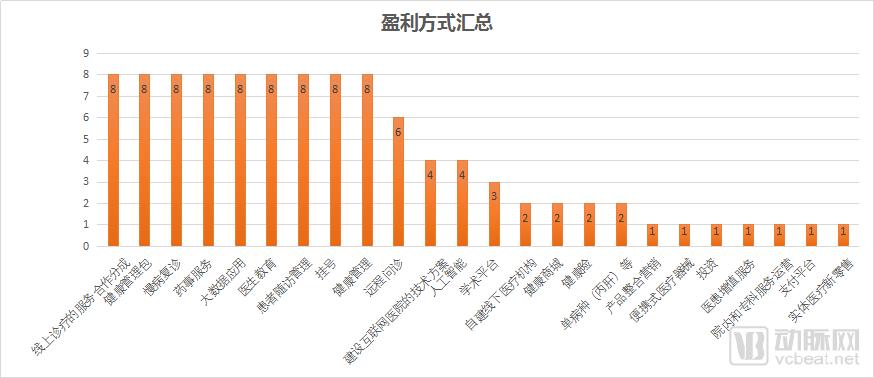
From the perspective of revenue models, these eight companies primarily rely on revenue sharing from online consultation service partnerships, health management packages, follow-up visits for chronic diseases, pharmaceutical care services, big data applications, physician education, patient follow-up management, health management, and remote consultations.
The products that have already achieved profitability rely on single-disease payment models. Taking Qilekang as an example, data from Shiliu Cloud Medicine over the past six months shows that the hepatobiliary and andrology departments have successfully become profitable.
The Chairman and CEO of Shiliu Cloud Medical stated, “For internet hospitals to achieve profitability, customer acquisition costs (for both doctors and patients) and compliant monetization pathways are crucial. It is not a matter of achieving profitability through scale effects alone, as per typical internet thinking. I believe we have identified the right customer acquisition strategies and approaches. Moving forward, we will continue to deeply optimize operational costs, solidify the foundation for profitability, and replicate our successful model across more chronic disease management areas.”
Headquartered in Guangzhou, Shiliu Yunyi Internet Hospital, formerly known as Qilekang Internet Hospital, has remained committed to chronic disease management since its transformation from a pharmaceutical e-commerce platform into an internet hospital in 2015. The company primarily recruits physicians through offline ground promotion. In the then-prevailing landscape of digital healthcare, where business models predominantly revolved around information provision, appointment scheduling, and lightweight online consultations, this approach was distinctly unconventional.
After three years of exploration and persistence, Qilekang Internet Hospital has established operations in Guangzhou and Yinchuan. To date, hundreds of thousands of physicians have been certified on the platform, which covers more than 300 cities across 31 provinces in China, accumulating substantial resources in the field of chronic disease management. Leveraging the advantages of its predecessor in pharmaceutical e-commerce, the company has initially built a complete closed-loop ecosystem integrating “medical care, patients, pharmaceuticals, testing, and insurance,” and has developed an effective operational strategy with a clear path to profitability.
In August this year, Qilekang Internet Hospital officially upgraded its online platform, “Qilekang Doctor,” to “Shiliu Yunyi” (Pomegranate Cloud Medicine), clearly positioning it as a service platform for “follow-up consultations for chronic diseases.” By delving deeper into the medical sector, the platform aims to secure high-frequency patients requiring chronic disease follow-ups and attract high-quality physician resources, thereby achieving consultation rates and doctor-patient engagement levels that exceed industry averages. Simultaneously, it has undertaken various initiatives to reduce costs and improve customer acquisition efficiency, addressing the bottlenecks of high expenses and low efficiency associated with offline ground promotion.
Jiao Yu, Chief Operating Officer of Shiliu Cloud Medical Internet Hospital, stated: “Physicians naturally operate within social circles, such as alumni networks, departmental groups, regional communities, conference circuits, training programs, and academic schools. By leveraging these circles in combination with our highly aligned positioning for chronic disease follow-up consultations and our existing resources spanning healthcare providers, pharmaceuticals, patients, diagnostics, and insurance, we can rapidly address physicians’ cognitive barriers regarding the platform and its business model.”
Therefore, starting this May, we launched the “Star-to-Star Initiative” targeting the departments of andrology and hepatobiliary surgery, pioneering the operation of physician communities by leveraging our proprietary multi-disciplinary matrix connectivity structure. “By engaging key opinion leader (KOL) seed physicians to expand the physician community, we adopted a novel model combining online recruitment, community fission, and offline ground promotion, achieving significant results. In hepatobiliary surgery, we optimized prescription conversion rates through community management, ultimately achieving profitability for the department in August. In andrology, it took only over four months to register more than 60% of andrologists across China on the platform, and we reached break-even within six months. The monthly growth rate of community physicians reached as high as 68%, with a retention rate of up to 99.7%. The success of this innovative operational model in hepatitis B and andrology gives us confidence that it can be successfully replicated in more chronic disease specialties in the near future.”
In addition to leveraging core, high-quality physician resources, a critical factor in achieving profitability lies in delivering high-quality services for the “last mile” of internet healthcare. To create more service scenarios, provide higher value-added services for both physicians and patients, and enhance user stickiness, Shiliu Yunyi has formed a strategic partnership with Neptune Star, a leading pharmacy chain. The two companies have established comprehensive cooperation across more than 2,600 stores in 74 cities nationwide, working together to build a closed-loop system of high-quality “Internet + Healthcare” management services.
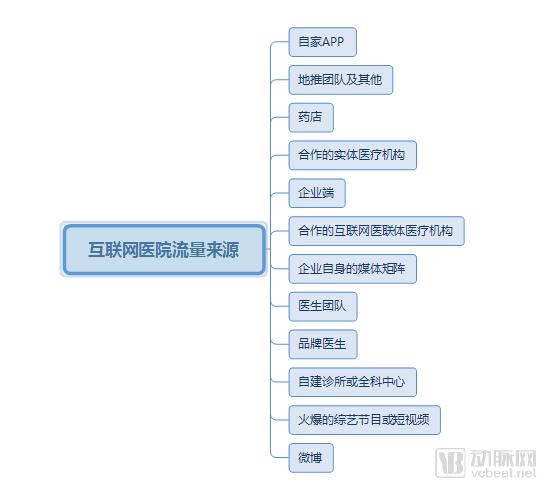
In terms of traffic sources, these companies primarily rely on their proprietary apps, pharmacies, partnered physical hospitals, physician teams, affiliated internet medical consortium hospitals, corporate clients, self-built clinics or general practice centers, ground promotion teams, and other channels.
Securing these channels naturally incurs costs for enterprises. Previously, Wang Xiaocen, a partner at the China Electronics Health Fund, noted that while the IT costs of establishing an internet hospital are not particularly high, the communication costs are substantial. Achieving an equitable negotiating position with hospitals demands stringent prerequisites, including significant corporate scale and the founder’s prior experience. Consequently, she does not recommend that startups enter the internet healthcare sector. Although many companies may attempt to break through using various approaches, the resulting opportunity costs and time commitments are considerable and difficult to predict.
Not every company can boast a media matrix spanning multiple niche sectors, as DXY does. Moreover, leveraging content to attract traffic is an arduous endeavor that requires substantial time and accumulation.
In the healthcare sector, B-end traffic is predominantly driven by tertiary hospitals, reputable brand-name physicians, and community pharmacies; meanwhile, C-end users are primarily concentrated on emerging short-video platforms, Weibo, and variety shows.
Therefore, companies require different traffic channels depending on their development models and specific stages. If a business model is mature and the goal is to expand into the consumer (C-end) market, it is necessary to partner with platforms that boast large user bases and high visibility. Recent examples include Haodaifu Online’s investments in “Roast Conference” and iQIYI. Conversely, if continuous nationwide expansion is required, collaborating with renowned Grade 3A hospitals across China becomes essential. This approach offers multiple benefits for enterprises, including brand equity, access to doctors and patients, and increased traffic. The greatest challenge, however, lies in persuading such prestigious Grade 3A hospitals to enter into partnerships.
At Hangxin Jinglian Internet Hospital in Yinchuan, it has become the top-ranked enterprise among contracted companies in Yinchuan for online follow-up consultation data. According to the Yinchuan Internet Medical Supervision Platform, as of October 2018, more than 30,230 chronic disease patients conducted follow-up consultations through its platform daily, serving over 20,000 patients with hypertension and diabetes.
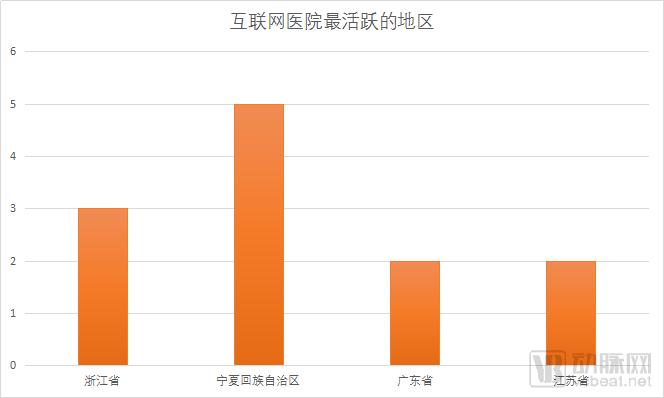
When it comes to internet hospitals, Yinchuan has consistently been the most active region, with Guangdong, Zhejiang, and Jiangsu provinces newly added this year.
Yinchuan boasts the most comprehensive policy framework for internet-based healthcare. Detailed regulations have been issued across various dimensions, including supervision and industry standards, to support enterprise development.
Recently, the Yinchuan Municipal Health and Family Planning Commission introduced new standards for enterprises establishing internet hospitals. This initiative aims to re-evaluate applicants in accordance with new regulations and to facilitate their smoother establishment in Yinchuan. Ma Xiaofei, Director of the Yinchuan Municipal Health and Family Planning Commission and President of the Yinchuan First People’s Hospital, expressed his hope that emerging technologies such as the internet would enable upward collaboration with leading specialists in major cities like Beijing and Shanghai, while extending diagnostic and treatment capabilities downward to county-level hospitals and township health centers. By fostering a multi-tiered hierarchical diagnosis and treatment model, this approach seeks to achieve win-win outcomes for all stakeholders and ultimately benefit the public.
In recent years, Hangzhou, Zhejiang Province, has gained nationwide prominence due to the internet boom. The integration of healthcare and the internet has naturally attracted significant attention. In particular, following Zhejiang Province’s “At Most One Visit” initiative, the First People’s Hospital of Yuhang District in Hangzhou (hereinafter referred to as “Yuhang District First Hospital”) has drawn widespread attention from industry insiders for its implementation of facial recognition-based medical services across all processes and for all patient groups.
The term “facial recognition for medical visits” mentioned here refers to the ability of both insured and self-pay patients to easily complete all steps of the medical process simply by scanning their faces. As a result, Yuhang First Hospital has become the first hospital in China to implement “end-to-end facial recognition for medical visits.”
Ma Weihang, Deputy Director of the Zhejiang Provincial Health Commission, stated“The At-Most-One-Visit” reform initially began as an internal government transformation, closely integrated with the streamlining of administration, delegation of power, and optimization of government services (the “Fang Guan Fu” initiative), thereby advancing the transition toward a digital government. However, confining the “At-Most-One-Visit” principle solely to the administrative domain is far from sufficient; reforms in areas concerning people’s livelihood are equally critical. In particular, healthcare services are intimately linked to the public well-being, making it imperative to urgently improve medical services and enhance patients’ sense of gain and satisfaction when seeking care.
From a strategic perspective, healthcare institutions have adopted varied approaches to establishing internet hospitals. Some initiate from the hospital side, while others start from the patient side.
Taking WeDoctor as an example, it has launched the highest number of internet hospitals among these eight companies. It not only collaborates with the largest number of hospitals, but most of its partner hospitals are Grade A tertiary hospitals.
Recently, WeDoctor signed another cooperation agreement with Guangdong Provincial Maternal and Child Health Hospital. Established in 1944, this specialized public maternal and child health institution under the Guangdong Provincial Government has consistently upheld its commitment to social welfare and industry leadership.
After more than 70 years of development, it has become a large-scale Grade A tertiary hospital integrating healthcare, medical services, teaching, scientific research, training, and technical guidance. In 2013, with the approval of the higher-level competent authorities, it was additionally branded as Guangdong Provincial Maternity Hospital and Guangdong Provincial Children's Hospital. Currently, it serves as a teaching and affiliated hospital for eight ministerial and provincial universities, including Sun Yat-sen University, Jinan University, and Guangzhou Medical University, and has established a strategic partnership with Boston Children's Hospital of Harvard Medical School, which is ranked first in the United States.
Regarding the choice of WeDoctor, President Huang Hanlin stated that the primary reason was WeDoctor’s internet healthcare technology—new “Internet+” medical technologies powered by artificial intelligence and VR. Secondly, as WeDoctor itself operates internet hospitals, the Guangdong Women and Children’s Health Internet Hospital could leverage WeDoctor’s expertise in this area.
At this point, WeDoctor CEO Liao Jieyuan also provided his rationale. The primary reason is the WeDoctor Greater Bay Area Collaboration Platform. As Guangdong serves as a key hub within this platform, the Guangdong Women and Children’s Health Internet Hospital—established by the Guangdong Provincial Maternal and Child Health Hospital based on its medical consortium—essentially aggregates all high-quality maternal and child health resources across Guangdong Province. With the Guangdong Provincial Maternal and Child Health Hospital acting as the leading institution in this consortium, partnering with it enables the delivery of high-quality services to residents of the Greater Bay Area in the field of maternal and child health.
Secondly, the maternal and child health base of the Greater Bay Area collaboration platform will be established at Guangdong Women and Children Hospital. In the future, it can gradually connect with national internet hospital resources and service capabilities through the WeDoctor platform. In addition to women's and children's health, it can provide more comprehensive and convenient medical services for residents in the Greater Bay Area.
Furthermore, as a provincial-level maternal and child health hospital, Guangdong Women and Children’s Hospital boasts the highest technical proficiency among all hospitals within the medical consortium and possesses abundant maternal and child health resources. Liao Jieyuan stated that both parties could deepen their cooperation in the future to jointly advance supply-side reforms in maternal and child health services, thereby providing more professional, refined, and considerate medical and healthcare services to residents of the Greater Bay Area.
Wu Ping, National Leader of Deloitte China’s Life Sciences and Healthcare Industry, believes that under this model, the influence of healthcare institutions has been enhanced to a certain extent. However, it is expected that after rapid consolidation in this market, only a few third-party internet hospital platforms will survive and emerge as “oligarchs” in the market.
This could lead to two scenarios and trends: first, hospitals at all levels will spontaneously establish internet hospitals; second, internet healthcare companies and medical platforms will compete for high-quality resources from Grade 3A hospitals.
However, prior to that, more provincial-level regulatory platforms for internet hospitals will certainly be established next year. This is also the primary prerequisite for the market entry of internet hospitals.
Secondly, the number of internet hospitals will undoubtedly continue to grow, and hospitals will also emerge as a new force.
Finally, by leveraging vast amounts of medical data and modern internet technologies, we should vigorously develop artificial intelligence in healthcare. This will significantly enhance diagnostic efficiency for physicians, make healthcare access more convenient for patients, and enable them to enjoy higher-quality medical services.
Meanwhile, medical institutions, physicians, and patients are gradually accepting and recognizing the applications of “Internet + Healthcare.” This will also give rise to more diversified promotion channels, shifting from the previous competition for B-side resources to the acquisition of C-side users. Although most internet hospital enterprises have not yet launched their operations, we believe that this day will arrive soon.