An Extraordinary Year: In-Depth Review of 56 New Drugs Approved by the FDA in 2018
Editor’s Note: This article is reprinted from WuXi AppTec (ID: WuXiAppTecChina), with authorization granted to VCBeat.
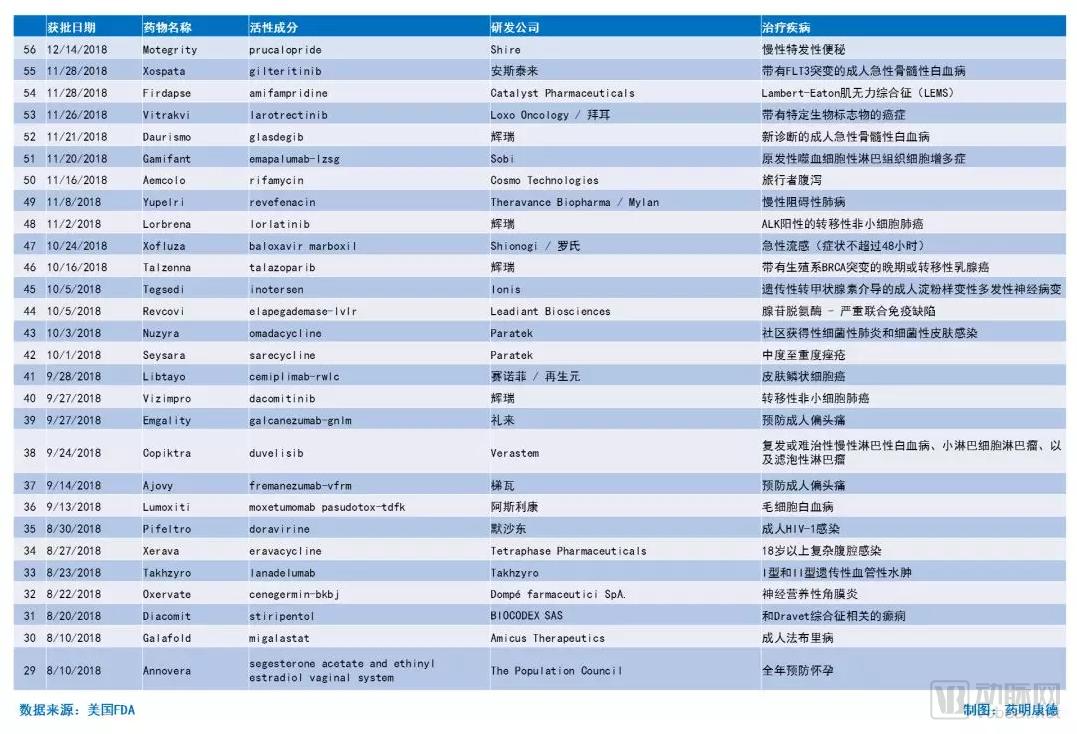
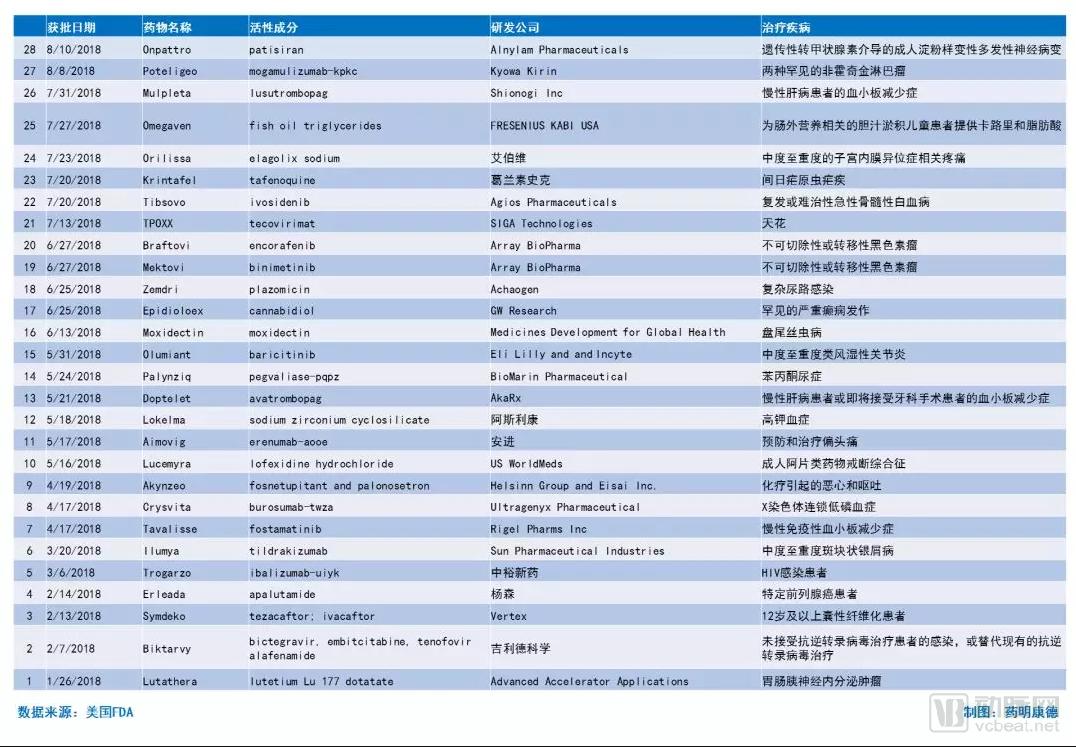
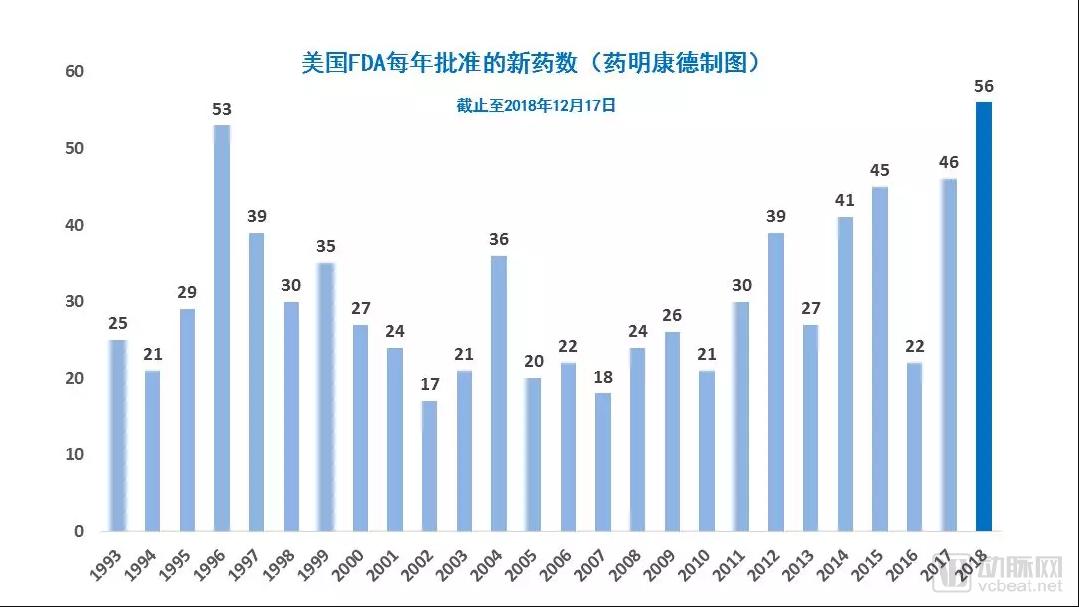
2018 was an extraordinary year. As of press time, the U.S. FDA had approved a total of 56 new drugs this year. This figure not only broke a record that had stood for 20 years but also reached a new all-time high. In this article, the author will join readers in taking stock of these 56 new drugs.
Among newly approved drugs each year, anticancer therapies consistently account for the largest share. According to publicly available data, over the past five years, cancer therapies have represented anywhere from 20% to over 30% of all newly approved drugs, making them the most frequently approved drug category. This year, a total of 15 innovative anticancer therapies received marketing approval, accounting for 27% of the total. These two figures represent the highest and second-highest percentages, respectively, recorded over the past five years, underscoring their continued strong performance.
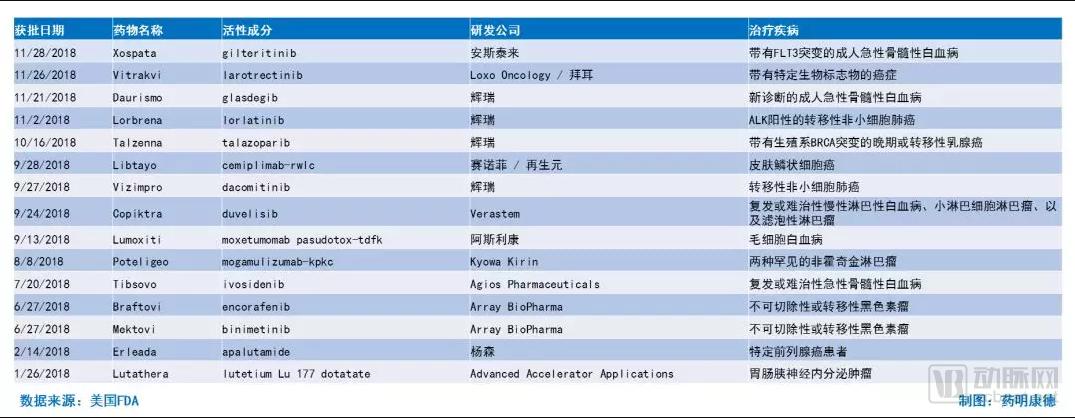
▲ Among the new drugs approved by the U.S. FDA this year, 15 are anticancer therapies
However, in 2018, the number of newly approved drugs was not dominated by anticancer therapies for the first time. This year, 31 new drugs for treating rare diseases were approved, accounting for 55% of the total, setting a historical record. The annual report from the U.S. CDER also pointed out that the majority of innovative molecular entities this year were orphan drugs for treating rare diseases, marking the first time in history.
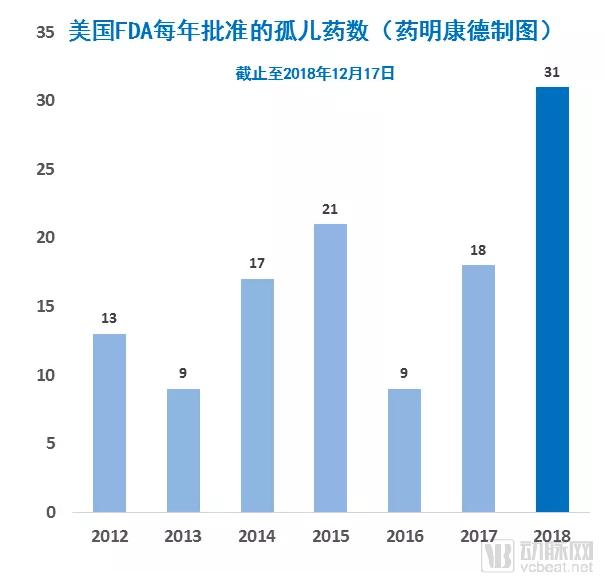
Looking back, it becomes clear that this outcome was no accident. As early as the beginning of 2017, many analysts pointed out that Dr. Scott Gottlieb, the newly appointed FDA Commissioner, placed significant emphasis on rare diseases and sought to streamline, rather than hinder, the drug development process. The data corroborate this view. From 2012 to 2016, the U.S. FDA approved an average of 17 new drugs for rare diseases per year. During 2017–2018, this average rose to 25, representing an increase of nearly 50%.
Dr. Gottlieb’s first FDA advisory committee meeting after taking office established a policy of “patient focus, grounded in science,” enabling more patients to access a greater number of safe and effective new drugs. As a result, the number of newly approved drugs indeed surged over the following two years, with the total exceeding 100, in stark contrast to the 22 new drugs approved in 2016.
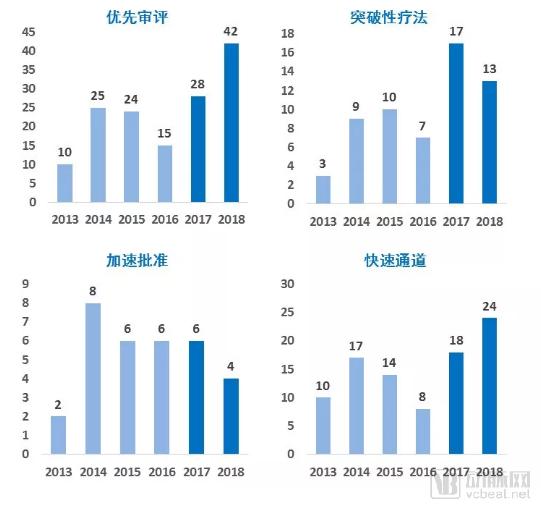
▲Among the new drugs approved in the past two years, many have been granted approval through the FDA’s four major expedited programs.
The approval of a large number of new drugs within a short period is inseparable from the FDA’s four major accelerated programs (namely, Breakthrough Therapy Designation, Priority Review, Fast Track Designation, and Accelerated Approval). We have observed that in the past two years, new drugs approved under the three accelerated programs other than “Accelerated Approval” have set one record after another. Notably, this year, three out of every four newly approved drugs entered the market via “Priority Review.” Meanwhile, the number of new drugs granted “Fast Track” designation has surged from 18 last year to 24 currently, representing an increase of over 30%.
Overall, a total of 42 new drugs were launched this year through some form of accelerated approval policy, accounting for 75% of the total.
Among the 56 new drugs approved this year, innovative therapies were well represented. In August, Alnylam Pharmaceuticals launched Onpattro, the first-ever RNAi therapy. This achievement marks another milestone for RNAi technology, coming 12 years after it was honored with the Nobel Prize in Physiology or Medicine in 2006.
This November, Vitrakvi, brought to market by Loxo Oncology and Bayer, has also become a prime example of precision medicine. As an anticancer drug targeting specific genetic variants rather than the tumor’s site of origin, Vitrakvi is indicated for NTRK gene fusion–positive solid tumors, including breast cancer, colorectal cancer, lung cancer, and thyroid cancer. The approval of this new drug marks a significant milestone in the evolution of cancer therapy from a paradigm “based on the tumor’s anatomical origin” to one “based on the tumor’s genetic characteristics.”
Also this year, we welcomed a new class of drugs with an innovative mechanism for migraine prevention: CGRP inhibitors. Aimovig from Amgen, Ajovy from Teva, and Emgality from Eli Lilly have brought entirely new management options to the many patients worldwide suffering from migraines.
In addition, some novel therapies have also sparked heated discussion within the industry. Omegaven, introduced by Fresenius Kabi USA, is a fish oil–based ingredient, while Epidiolex, brought to market by GW Research, is the first approved cannabis-derived active ingredient.
We are also pleased to see that new drugs from several WuXi AppTec Group partners received approval this year: Zhongyu New Drug’s Trogarzo is the first innovative HIV therapy approved by the FDA in a decade, and the first sterile biological product manufactured in China and approved by the U.S. FDA for entry into the U.S. market; Tibsovo, brought by Agios, is the first-ever approved IDH1 inhibitor, indicated for the treatment of patients with acute myeloid leukemia (AML) harboring specific mutations; and Amicus Therapeutics’ Galafold is the first innovative oral therapy approved for the treatment of Fabry disease in adults.
Judging by the number and quality of new drug approvals, 2018 was a remarkable year. However, it is worth noting that only a handful of new drugs were approved in the central nervous system (CNS) field this year, which remains a significant R&D challenge for the industry. Combination immunotherapies also require further development. Furthermore, given that the number of new drug applications submitted in 2017 reached as high as 57, while the current figure for 2018 is only three-quarters of that in 2017, the number of new drug approvals in 2019 may decline.
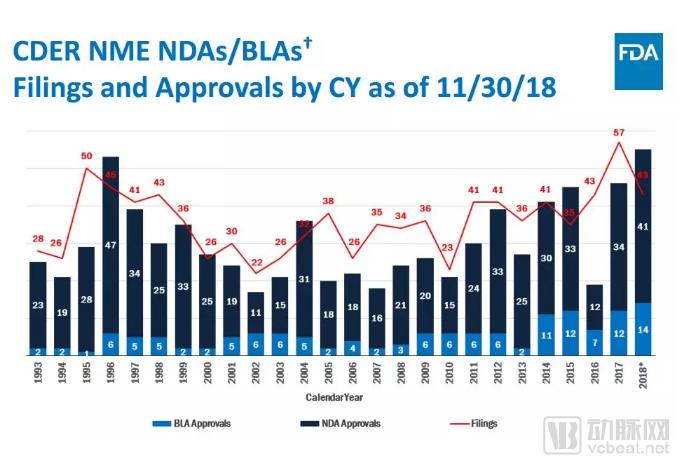
▲ The number of new drug applications experienced a certain decline in 2018 (Image source: FDA)
However, we believe that the pace of new drug development will not slow down as a result. This year, the U.S. FDA has made multiple adjustments to its regulatory framework, with the “seamless clinical trial” framework emerging. New clinical endpoints are expected to be adopted for refractory diseases such as Alzheimer’s disease and non-alcoholic steatohepatitis (NASH), while regulatory pathways for gene therapies, microbiome-based therapies, artificial intelligence, and digital therapeutics are becoming increasingly clear.
We look forward to seeing more innovative pharmaceutical products emerge under an innovative regulatory framework, bringing benefits to patients worldwide!
Appendix: Complete List of New Drugs Approved by the FDA in 2018 (Compiled by WuXi AppTec; click the image to view a larger version)