

No Cold Snap Here! The First China Medical Imaging AI Conference Ignites a Smart Imaging Surge
24 specialized sessions, over 100 thematic reports, nearly 200 speakers, commentators, and moderators, 4 roundtable forums, 4 closed-door meetings, and more than 1,800 attendees...
Academicians of the Chinese Academy of Engineering, Academicians of the Chinese Academy of Sciences, Fellows of the Canadian Academy of Sciences, Foreign Members of the Russian Academy of Cosmonautics; leaders from the National Health Commission, leaders from the Shanghai Municipal Health Commission, leaders from the Shanghai Municipal Science and Technology Commission, leaders from the National Institutes for Food and Drug Control (NIFDC); hundreds of chairmen, directors, and experts in radiology from across China; and more than 30 renowned domestic and international AI companies...
The conference room here was so sweltering that people were breaking into a sweat, even without heating. Although the venue was packed to capacity with barely any standing room left, the entrance remained crowded with eager attendees longing to listen.
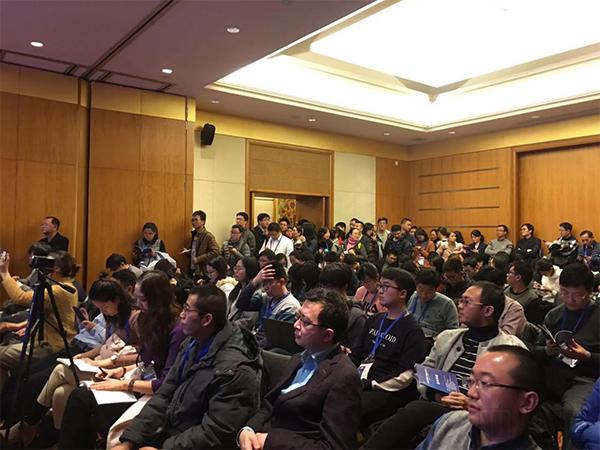
Nearly all core attendees stayed for the entire two-day conference; every session maintained an attendance rate of over 90%, even through the final presentation.
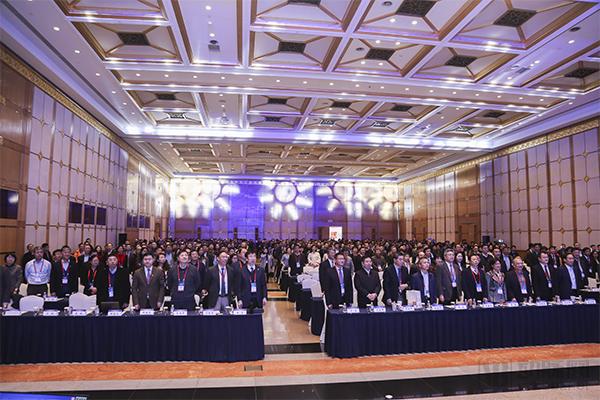
At the inaugural China Medical Imaging AI Conference, the fabled “AI winter” failed to materialize, as all attendees eagerly rode the wave of enthusiasm.
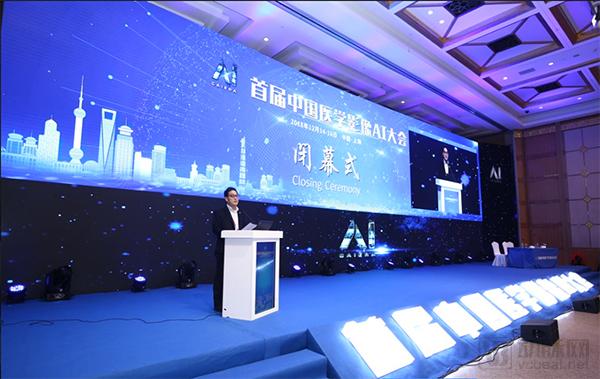
In his closing remarks, Professor Liu Shiyuan, Chair of the Conference, President-elect of the Chinese Society of Radiology under the Chinese Medical Association, Chairman of the China Medical Imaging AI Industry-Academia-Research-Application Innovation Alliance, and Director of the Department of Radiology and Nuclear Medicine at Shanghai Changzheng Hospital, proudly stated, “We are witnessing progress in China’s medical imaging AI industry. AI companies’ products are evolving from single-function to diversified offerings; deployed application scenarios are becoming increasingly rich; the number of hospitals adopting these technologies is growing day by day; and medical imaging AI is moving from the laboratory into clinical practice.”
“We sincerely hope that every medical expert, AI enterprise, government leader, scientist, and regulatory agency can join hands to share progress and confront challenges, ensuring that the fourth wave of AI has no trough.” He made this earnest appeal to an audience still eager for more.
Three years ago, the rise of AI sent unprecedented shockwaves through the radiology community.
In 2016, the Radiological Society of North America (RSNA) annual meeting, the world’s largest and hailed as the “bellwether of radiology,” erupted in heated debate over the question, “Is AI an assistant or a threat?”
In 2017, the RSNA theme shifted to “Explore. Invent. Transform,” with more than 40 AI vendors participating and 34 related conference presentations. A consensus began to emerge within the radiology community that “AI is an important innovative tool for empowerment and efficiency enhancement.”
By 2018, the importance of AI was no longer in question. The number of AI companies involved had reached 80, with 245 conference presentations delivered, and the conference theme had been updated to “Tomorrow’s Radiology Today.” All radiology experts were eagerly “embracing AI.”
Notably, at this year’s RSNA, the AI vendors on display were no longer limited to traditional giants such as GPS (GE Healthcare, Philips, and Siemens Healthineers). A number of Chinese companies, including Yitu Healthcare, Infervision, and Deepwise Medical, began to emerge prominently. Among them, Yitu Healthcare made a significant impact by launching two major products at RSNA: the world’s first intelligent 4D diagnostic system for chest CT that breaks through limitations in pulmonary nodule detection, and an intelligent diagnosis and treatment platform for global cancer screening.
According to statistics, there are currently over 1,500 AI-related enterprises in China, among which 122 are involved in medical imaging. The most competitive sector, pulmonary nodule detection, has attracted more than 20 companies, while over 10 companies are focused on diabetic retinopathy screening.
At this Medical Imaging AI Conference, competition among AI vendors intensified. Not only did traditional giants such as GPS (GE Healthcare, Philips, and Siemens Healthineers) attend in full force, but more than 20 domestic medical imaging AI companies—including Yitu Healthcare, United Imaging, and Infervision—were also present without exception. Moreover, all attending representatives were at the president level, making the event unprecedented in China in terms of both comprehensiveness and prestige.
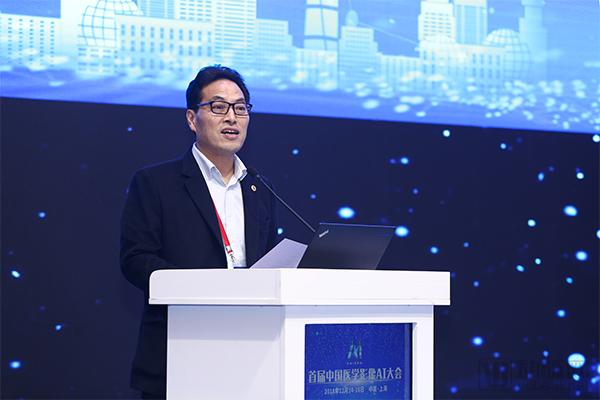
Regarding the overwhelming popularity of this conference, Professor Liu Shiyuan revealed: “This conference features diverse formats for dialogue and parallel forums, making it a rich, distinctive, brilliant, and highly anticipated academic feast. With the vigorous implementation of the national strategy for artificial intelligence development, it is crucial at this juncture to integrate the work of medical professionals with medical AI. On one hand, we must build deeply integrated service platforms to lead and promote the practical application of AI in medical imaging in China. On the other hand, we should further refine our technologies, seamlessly connecting AI algorithms, application scenarios, and value creation to benefit the public and achieve new breakthroughs in the field of medicine!”
When discussing the original intention behind establishing the China Medical Imaging AI Industry-Academia-Research-Application Innovation Alliance (CAIERA), Professor Liu Shiyuan shared many reflections: “China’s medical imaging AI sector is currently experiencing an unprecedented opportunity for development, yet it also faces numerous challenges. There is an urgent need for unity and collaboration to build a genuine cooperative platform that integrates industrial resources and joins forces across the upstream and downstream sectors. This will facilitate the commercialization of industry products, promote the establishment of industry standards, drive the deep integration of new technologies, new business formats, and new models, and ultimately foster industry prosperity.”
A survey on the “Current Status and Needs of the Medical Imaging AI Industry,” jointly initiated by the Chinese Society of Radiology (CSR) and the China Alliance for Innovation in Industry, Academia, Research, and Application of Medical Imaging AI (CAIERA), revealed that among 2,173 hospitals, 16% of medical institutions have collaborated with various AI vendors. Nevertheless, key issues such as “lack of industry standards,” “unclear allocation of legal liability,” “credibility of AI products,” and “commercialization pathways” continue to be frequently cited by physicians.
The transition from the laboratory to clinical practice, from clinical trials to commercialization, and from experimental products to legally approved ones represents formidable obstacles that cannot be bypassed. These challenges are difficult for AI companies to overcome on their own.
Professor Liu Shiyuan suggests that medical imaging AI companies should strengthen in-depth collaboration with healthcare institutions. Starting from actual clinical needs and application scenarios, these companies should engage directly with frontline clinical practice, listen to clinical feedback, continuously refine product functionalities, improve specific performance metrics, and help clinicians address real-world problems, rather than remaining stagnant or developing in isolation.
Regarding the improvement of industry standards and laws and regulations, Professor Liu Shiyuan also stated that the China Medical Imaging AI Industry-Academia-Research-Application Innovation Alliance (CAIERA) will fully leverage its unique advantages, integrate resources from all sectors, work closely with government departments to improve relevant laws and regulations, maintain close communication with regulatory authorities, promote the formulation and refinement of related industry standards, and serve as a “spokesperson” for the industry.
To enable more medical AI enterprises to gain a deeper understanding of the perspectives and stances of government departments and regulatory authorities on the industry, this conference specially invited numerous leaders from the National Health Commission, the Shanghai Municipal Health Commission, the Shanghai Municipal Science and Technology Commission, and the National Institutes for Food and Drug Control (NIFDC), among others. These officials attended in person to provide detailed explanations of regulatory attitudes and the progress in exploring implementation rules. Additionally, multiple closed-door meetings were held to listen to corporate feedback, yielding substantial benefits for AI enterprises.
It is further understood that the China Alliance for Industry-Academia-Research-Application Innovation in Medical Imaging AI (CAIERA) will also mobilize elite domestic and international expertise, integrate academic resources from all sectors, and organize the compilation of China’s first white paper on the development of the medical imaging AI industry. Starting from a holistic industry perspective, the white paper will systematically present the background, current status, challenges, and frontier explorations in the field of medical imaging AI, providing comprehensive and scientifically grounded guidance to healthcare professionals, researchers, and AI enterprises, thereby promoting industry advancement.