

12Sigma Paves the Way in Medical Imaging AI with Clear Strategic Path Forward
December 15–16, 2018: The inaugural China Medical Imaging AI Conference was grandly held at the Shanghai National Convention Center. Organized by the China Alliance for Innovation in Medical Imaging AI (CAIERA, hereinafter referred to as “the Alliance”), and co-organized by the China Health Promotion Foundation, the Radiology Branch of the Shanghai Medical Association, and the Chinese Journal of Computerized Tomography, the conference centered on the theme “Demand, Leadership, Win-Win, and Sharing.” It attracted more than 2,000 representatives, industry leaders, and top experts from government, industry, academia, research, and clinical practice.
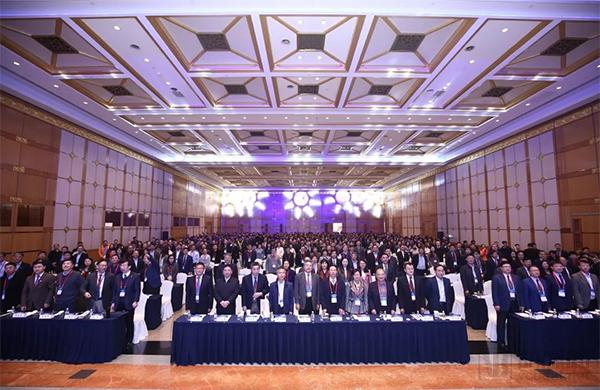
The 1st China Medical Imaging AI Conference
This is the first national conference in China dedicated to AI in medical imaging. The agenda covers cutting-edge technologies, real-world implementation cases, current bottlenecks, challenges, and solutions in the field of medical imaging AI. It has become an industry consensus that emphasis should be placed on the practical application and deployment of AI.
Medicine is one of the earliest fields to adopt artificial intelligence (AI). AI-focused medical companies have emerged in large numbers, currently covering the entire healthcare industry chain, including medical imaging, hospital management, health management, and drug discovery. The integration of AI technology into healthcare is gradually demonstrating significant value. However, it should be noted that current medical AI solutions are not yet sufficiently deep in meeting clinical needs. The future direction of AI research and development lies in establishing a clinically driven core, clearly defining clinical requirements, and emphasizing the value of physicians. Many domestic and international enterprises are already exploring various initiatives in medical AI. Since its establishment, Tuma Shenwei, as a representative medical AI company, has been committed to the exploration and practice of AI in healthcare, achieving numerous related advancements.
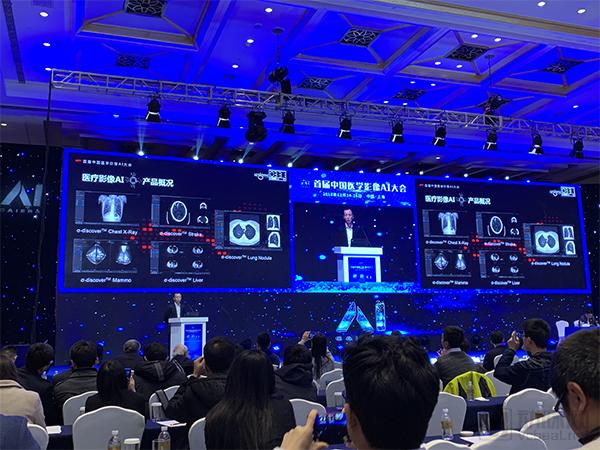
Tumashenwei Medical Technology CEO Zhong Xin Delivers Keynote Address at Conference
At the conference, Zhong Xin, CEO of Tuma Shenwei Medical Technology, delivered a speech titled “Pioneering the Scenario Revolution of ‘AI + Medical Imaging’,” focusing on Tuma Shenwei’s industry insights and its exploratory practices in medical imaging AI. Zhong Xin stated that with technological advancements and data accumulation, artificial intelligence is experiencing explosive growth. Scenario-based applications led by medical imaging AI have become a competitive arena for many tech giants and startups, marking an era of vigorous competition among numerous players.
Over the past half-century, Moore’s Law, proposed by Gordon Moore, has served as the most critical predictive model for future global infrastructure development. The rapid advancement of artificial intelligence (AI) technology in the 21st century has surpassed the predictions of traditional Moore’s Law, with the emergence and evolution of AI undoubtedly unlocking greater possibilities. According to a report by the U.S. think tank MarketDigits Analysis, the healthcare sector, as one of the largest application scenarios, achieved a compound annual growth rate (CAGR) of 40% from 2018 to 2024.
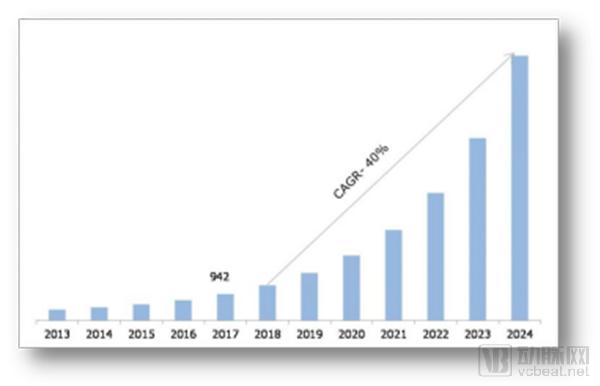
Global Artificial Intelligence in Healthcare Market Size,
2013-2024, (USD Million)
In the past few years, AI in medical imaging has experienced explosive growth, with a wave of companies emerging abroad, such as Arterys, Zebra Medical Vision, Enlitic, Butterfly Network, and Vuno;
At the recent RSNA conference in Chicago, Chinese medical AI companies shone brightly, already leading or running neck-and-neck with global leaders in many fields. Currently, no single enterprise has emerged in China as an undisputed frontrunner. Zhong Xin noted that medical imaging AI in China is currently flourishing, with a competitive landscape beginning to take shape. Tech giants such as GE, Siemens, Philips, United Imaging, Tencent, and iFlytek have all strategically entered the artificial intelligence arena, using medical imaging as their breakthrough point. Meanwhile, technology-driven AI innovators represented by SenseTime, DeepWise, Yitu, ShuRay, and Infervision are rapidly advancing within their chosen vertical sectors. In terms of product lines, medical imaging AI currently focuses primarily on conditions such as pulmonary nodules, fundus retinopathy, and breast cancer. Numerous companies have also ventured into areas including liver cancer, cerebrovascular diseases, and cardiovascular diseases. Zhong Xin believes that most products are still in their early stages and require continuous evolution and refinement through clinical practice. In the future, more product lines will emerge, extending into additional medical departments.
Zhong Xin believes that the ultimate criterion for the successful implementation of medical imaging AI lies in how much assistance these AI products actually provide to physicians, what problems they solve, and whether their usage is widespread.
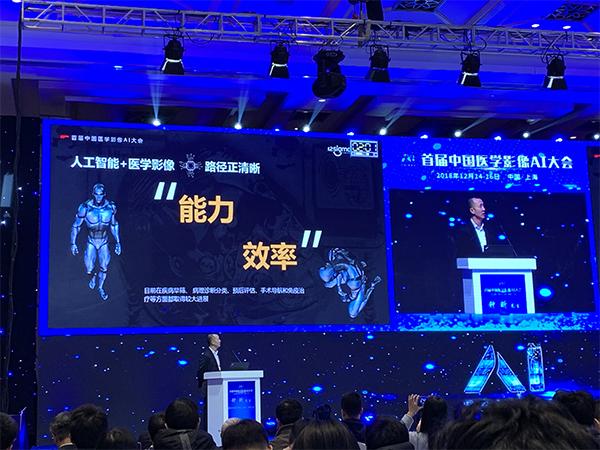
Currently, the trajectory of AI in medical imaging is becoming increasingly clear. AI addresses issues of “capability and efficiency,” having made significant progress in areas such as early disease screening, diagnostic classification, prognosis assessment, and surgical navigation. Zhong Xin summarized TomoDeep’s practical experience with AI, noting that in scientific research, AI assists physicians in performing analyses and quantifications that were previously difficult to achieve. At present, the Liver Imaging Reporting and Data System developed collaboratively by TomoDeep and Sir Run Run Shaw Hospital is a management system built upon the LI-RADS guidelines. It helps physicians improve diagnostic efficiency, enhances the accuracy of categorization through an automated grading system, and thereby guides treatment decision-making.
Furthermore, Tumain Shenvi has achieved significant success in clinical practice at tertiary hospitals. Data from the Second People's Hospital of Liaocheng shows that the number of patients screened for pulmonary nodules increased by 73% over three years, with direct revenue from screening rising by 81%. When including surgical treatments and follow-up monitoring, the hospital's total revenue grew by 100%. With improved efficiency, the hospital's professional capabilities have been substantially enhanced.
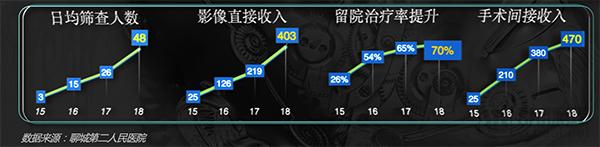
Medical imaging AI has more practical application scenarios in primary healthcare institutions. Zhong Xin cited data from Tumor Deepwise at a primary hospital, showing that out of 120 chest CT scans performed daily, 80% utilized the Tumor Deepwise AI system, achieving a pulmonary nodule detection rate of 99%.
After sharing relevant clinical practice cases, Zhong Xin also highlighted several challenges facing medical AI. These include the need to improve model accuracy, robustness, and generalizability; ongoing concerns regarding data silos and security; the absence of specific national laws and regulations governing artificial intelligence; and a degree of uncertainty in future policy directions. From the perspective of AI itself, it is essential to clarify the relationships between AI, physicians, hospitals, and patients, as well as to define the role of AI and address potential ethical issues.
Zhong Xin emphasized that AI is still at an elementary level, with relatively limited functionality and a lack of comprehensive, systematic solutions, making it unable to meet the complex demands of full-process, multi-disease medical care. Greater coordination is needed in areas such as industry regulations, standards, and pricing systems.
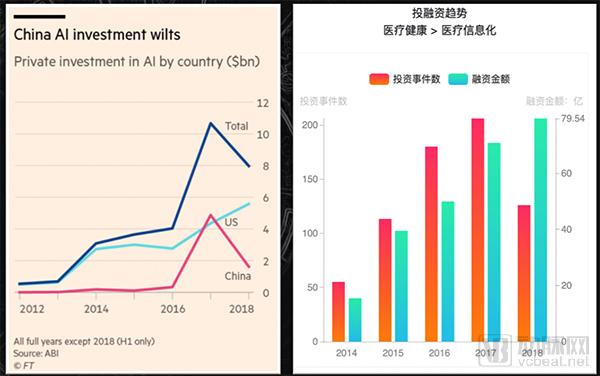
China's AI Investment Landscape
Zhong Xin responded to the widely circulated notion of an “AI capital winter,” arguing that the medical imaging AI sector has not experienced a significant “cooling off.” Instead, capital has become more rational, with investment rounds increasingly skewed toward later, mature stages. Taking 2018 as an example, although the total number of financing events in the medical imaging AI segment declined, the total amount invested continued to rise. He stated, “The great wave of AI has only just begun. Truly capable AI companies will surely survive after the sands have been sifted by the tide.”
Regarding the future of AI, he believes that AI application scenarios will continue to expand, and AI development will remain robust. In his speech, he quoted a statement by Bill Gates: “We always overestimate the change that will occur in the next two years and underestimate the change that will occur in the next ten. Don't let yourself be lulled into inaction.” Therefore, we must avoid falling into confusion, pessimism, and fear of difficulties that hinder progress.
In her concluding remarks, Zhong Xin stated that, in alignment with the conference theme of “Demand, Leadership, Win-Win Cooperation, and Sharing,” TumorDeep is committed to collaborating with experts, physicians, and peers across the entire industry chain. Through win-win partnerships, the company aims to jointly advance the development of medical AI, contribute to the progress of China’s healthcare sector, and truly integrate technology into medicine to create a better life.
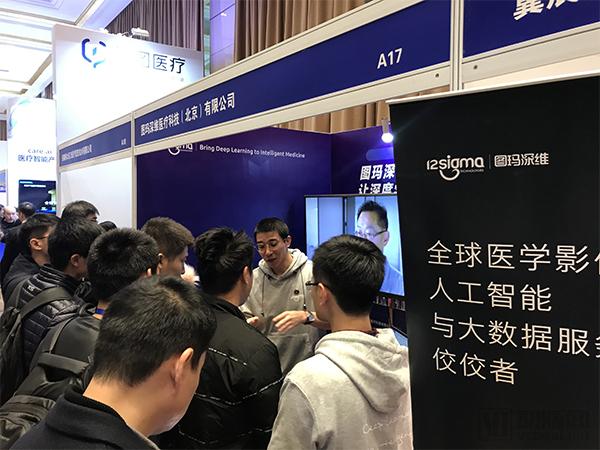
Tumavis Staff Providing Product Demonstrations at Their Booth
It is reported that Tuma Shenwei’s latest medical imaging AI product was also showcased at the conference, garnering significant attention.
About TumorVision
Tumain Deepwise, founded in 2015, is a high-tech enterprise dedicated to the research and development of world-class intelligent medical imaging computer-aided diagnosis (CAD) systems and diversified supporting solutions. Its current product portfolio encompasses a comprehensive suite of medical imaging CAD products covering pulmonary nodules, thoracic diseases, liver diseases, breast cancer, stroke, and brain tumors. The company is committed to applying artificial intelligence deep learning to multi-region, full-process, and multi-departmental auxiliary diagnosis, while expanding its applications into pathology, genomics, and pharmaceuticals. Tumain Deepwise’s products have been deployed in over 200 hospitals, and it has established scientific research collaborations with more than 30 leading domestic and international hospitals, achieving initial commercialization. The company is progressively deepening its global presence, having completed strategic layouts in the United States, Japan, and Europe. By fostering in-depth collaborations with local strategic partners, top-tier research institutions, and hospitals, Tumain Deepwise aims to further consolidate and strengthen its industry leadership.