

One Medical Revolutionizes Primary Care with Tech-Enabled, Membership-Based Model
In the United States, patients seeking medical care at a hospital typically need to schedule appointments with doctors well in advance, with consultation times determined by the physicians’ daily schedules. After waiting for weeks or even months, patients arrive at the hospital as scheduled, only to endure lengthy queues at the front desk and complete cumbersome personal information and medical history forms. Ultimately, the actual consultation time with the doctor often lasts no more than five minutes.
Long appointment wait times, prolonged waiting room stays, noisy environments, and high costs are common pain points in the U.S. healthcare industry. One Medical, a U.S.-based membership-based primary care company, is attempting to address these issues.
At One Medical, individuals can schedule appointments with physicians anytime and anywhere, including same-day visits. When visiting the comfortably designed clinics, patients wait no longer than five minutes, yet their consultation time with doctors can extend throughout the day. For minor issues such as skin allergies, patients can also access virtual care around the clock (24/7) through the One Medical website or mobile app.
To access these services, individuals need only pay an annual membership fee of less than $200 ($149–$199).
One Medical is committed to delivering high-quality primary care services at reasonable prices through efficient healthcare processes and premium medical services. Founded in 2007, One Medical currently operates more than 60 clinic locations across eight U.S. cities: Boston, Chicago, Los Angeles, New York, Phoenix, Seattle, the San Francisco Bay Area, and Washington, D.C. In 2019, One Medical will also expand into San Diego, opening three clinics in the area to serve more consumers and employer clients.
Tom Lee, the founder of One Medical and a physician by training, believes that “healthcare should be a long-term collaborative process between doctors and patients, rather than a brief few-minute conversation during an outpatient visit.” In light of this, One Medical has innovated and optimized the primary care service model in the healthcare industry, providing medical services to members through two main channels: clinics and digital platforms (official website and app).
One Medical adopts a strategy of extensive outreach and broad coverage by establishing clinics in high-traffic locations such as shopping malls, office buildings, and residential communities, thereby bringing services closer to members and minimizing their travel costs.
Unlike other healthcare institutions in the United States, physicians at One Medical clinics see approximately 16 patients per day, which is below the industry standard of 25. As a result, members receive significantly more consultation time at One Medical than at other clinics in the industry, with some even able to communicate with their appointed physician throughout the entire day. “This approach improves the doctor-patient relationship, allowing physicians more time to answer patients’ questions and enabling both parties to engage in in-depth discussions about various medical options,” said Tom Lee.
Meanwhile, One Medical leveraged its robust IT system to replace manual processes, reducing the number of physicians per clinic from the industry standard of 4.5 to 1.5. This not only lowered management costs but also enhanced operational efficiency. In January 2016, a member named Melia Robinson published a blog post titled “After trying One Medical, I could never use a regular doctor again,” praising the service. She noted that it took her only about 25 minutes from entering the clinic to completing consultation and payment. This highly efficient healthcare experience made her reluctant to return to traditional medical institutions.
On the other hand, the reduction in the number of physicians and outpatient visits at One Medical clinics does not necessarily imply a decline in overall patient volume. Online, One Medical also maintains a professional virtual care team that provides medical services to members around the clock (24/7). For certain non-urgent issues that do not require an in-person clinic visit, members can seek assistance through the One Medical website or mobile app. This approach not only spares patients the burden of traveling to clinics but also alleviates pressure on outpatient facilities, thereby freeing up more appointment time for patients who require face-to-face consultations with physicians.
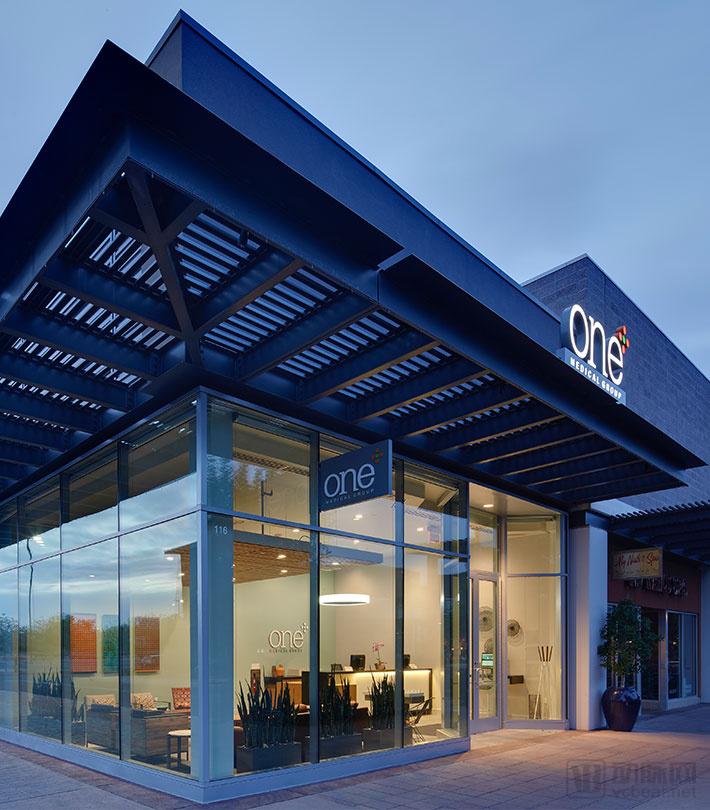
One Medical Clinic (Image source: One Medical official website))
To truly achieve high quality and efficiency, it is necessary to leverage the power of technology. 1Life Healthcare, One Medical’s medical technology and management services company, provides the foundation for its strong presence in the primary care sector without relying on third-party technology vendors.
1Life Healthcare is responsible for developing digital health tools, establishing electronic medical systems and EHR (Electronic Health Record) systems, and providing One Medical members with online appointment scheduling, patient billing, virtual healthcare services, video consultations, in-app messaging (such as sharing electronic medical records), mental health services, and other services through its proprietary technology platforms (website and app).
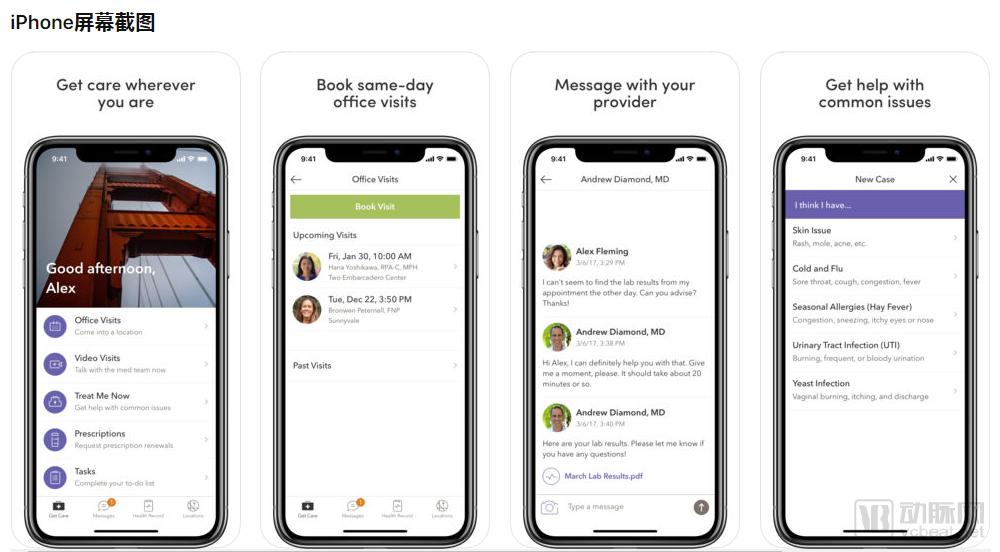
iPhone Screenshots of the One Medical Mobile App (Image Source: One Medical Official Website) )
Certainly. In addition to preventive care, health management, and disease diagnosis, One Medical also assists patients in making decisions regarding treatment plans for major illnesses and even helps coordinate referrals. One Medical has established partnerships with most hospitals and insurance companies in its service areas. If a patient requires hospitalization, One Medical can provide coordinated care. After discharge, One Medical promptly transfers the patient’s hospital medical records to the One Medical platform to facilitate follow-up care.
Meanwhile, by leveraging a mobile application, patients can consult physicians via email for minor health concerns without having to visit the clinic in person. Outside of regular outpatient hours, One Medical physicians can respond to patient inquiries via email, monitor patients’ conditions, and provide medication guidance based on real-time data.
In addition, One Medical provides members with streamlined and convenient online tools, such as the My One patient portal, to keep them informed about their care at all times. One Medical also offers a range of supplementary services, including publishing medical news and doctors’ recipes on its blog, and regularly updating health-related content on social media platforms such as Facebook, Twitter, Google+, YouTube, Instagram, and Pinterest to promote basic medical knowledge.
One Medical leverages both online and offline channels to not only provide members with convenient access to medical services, but also coordinate care across its clinics, helping patients maintain closer connections with their physicians.
At its inception, One Medical primarily offered primary care services to individual members, charging an annual membership fee of $149 to $199.
One Medical’s target demographic primarily consists of young, high-income individuals. Compared to their annual income and the potentially high medical expenses they may incur, a technology-enabled, on-demand primary care service is compelling enough to justify paying an annual fee. After all, a membership fee of under $200 represents a reasonable and affordable expense, which is precisely the “smart” aspect of One Medical’s membership model.
In recent years, the company has expanded its target service population to include corporate employers, who pay membership fees on behalf of their employees. To date, more than 1,000 companies—such as Airbnb, Adobe, and Twitter—have partnered with One Medical by incorporating it into their employee healthcare benefits packages. This provides employees with comprehensive access to convenient primary care, 24/7 virtual care, and even on-site care, helping them improve their health outcomes, avoid serious illnesses or emergency room visits, and thereby reduce costly medical expenditures for employers. Amir Dan Rubin, CEO of One Medical, stated that One Medical has helped businesses lower their overall healthcare spending by 8%.
Partner Companies of One Medical (Image source: One Medical official website)
Of course, in addition to membership fee revenue, One Medical still employs the classic fee-for-service model. According to its official website, the primary care services provided by One Medical mainly include health prevention, routine care, chronic disease management, child and family health management, and mental health.
In terms of preventive health, One Medical helps members maintain optimal health by guiding them through appropriate screening tests, preventive treatments, and lifestyle modifications. Particularly in LGBTQ+ care, One Medical caters to the diverse needs of its membership by including lesbian and gay physicians on its care teams.
For daily care, when members experience conditions such as allergies or colds, they can visit the nearest clinic for treatment. Alternatively, they can consult with physicians via phone, text message, email, or video call to receive medical care. For instance, in cases of skin health issues, members can even send photos to their doctors, who will then provide diagnoses, recommend biopsies if necessary, and prescribe medications, thereby virtually managing many dermatological conditions.
In chronic disease management, One Medical leverages a comprehensive healthcare system to help members diagnose and manage various chronic conditions, closely monitor their health status, and coordinate care schedules with specialists. For example, in hypertension management, One Medical provides end-to-end support—from diagnosis and testing to lifestyle guidance and prescription medication management—helping members maintain normal blood pressure levels and minimizing their risk of cardiovascular disease.
In the realm of child and family health, One Medical aims to help young members cultivate healthy lifestyle habits while providing routine care and acute pediatric care for infants and toddlers. At its clinics, One Medical has established child-friendly waiting areas (equipped with books and toys) and nursing rooms in the lobby, enabling young parents and their children to access high-quality care with ease and comfort.
In the realm of mental health, One Medical creates safe and engaging spaces to help members address depression, anxiety, insomnia, and even more complex psychiatric conditions through listening, screening, diagnosis, and the provision of personalized treatment plans.
Four years ago, One Medical launched the “Shift: Stress Management Experience” program in cities such as San Francisco and New York to equip individuals with better skills for managing stress and anxiety. The results showed that participating members experienced a 20% reduction in anxiety levels by the end of the program.
In fact, in the healthcare services industry, a war to capture consumers has long been quietly waged.
CVS and Walgreens have begun building clinics and developing mobile applications; new entrants such as K Health are offering consumer-centric, algorithm-driven triage services free of charge; WebMD is expanding its scale through acquisitions; Walmart is attempting to intervene more directly in the healthcare sector; and Amazon also appears to be making moves in the healthcare space...
Surprisingly, in the face of these giants, investors appear to be quite bullish on One Medical.
Since its establishment in 2007, One Medical has completed Series A through Series F financing rounds, as well as private equity financing, with investors including JPMorgan Chase, The Carlyle Group, Google Ventures, Benchmark Capital, and Maverick.
From 2007 to 2017, One Medical raised over $180 million from investors such as Benchmark Capital, Google Ventures, and JPMorgan. In August 2018, One Medical secured up to $350 million in funding from the private equity firm The Carlyle Group, marking the company’s largest single financing round.
As can be seen from the use of funds in each financing round, the capital raised by One Medical in its early stages was primarily used to drive the development of its technology platform, including the establishment of internal electronic health records (EHR), video visit capabilities, and in-app messaging features; later-stage fundraising was mainly directed toward market expansion to serve more consumers and corporate employers.
Multiple rounds of capital injection have enabled One Medical to evolve from a small clinic headquartered in San Francisco into a leading enterprise in the primary care sector, with clinics spanning multiple cities across the United States.
While companies like CVS and Walgreens have cautiously avoided positioning themselves as primary care providers, One Medical has taken the opposite approach by clearly defining itself as a primary care service provider. Some foreign media outlets have commented that if a company can capture market share in primary care, it can effectively control nearly all of a patient’s downstream healthcare spending, which is typically substantial. This may be one of the reasons why capital markets favor One Medical.
As for why they chose to partner with One Medical, Carlyle Managing Director Ram Jagannath has explained on multiple occasions in investment statements: “The U.S. primary care system is broken, and One Medical is well-positioned to help address this issue. We partnered with One Medical because it pioneered the concept of a more modern primary care experience within the medical community. The company boasts a proven innovative model, a strong track record, excellent primary care providers and leadership team, as well as robust business drivers.”
He also stated that, with its strong consumer-friendly brand and practical products, One Medical is poised to become a formidable competitor in this arena. Whether it is shaping the future of primary care is less important than its ability to continue building its brand and laying the foundation for a true healthcare platform.
In August 2018, when One Medical secured private equity financing, Ram Jagannath, Managing Director at Carlyle, reiterated, “One Medical combines best-in-class service with seamlessly integrated technology to provide patients with a comfortable experience in an increasingly frustrating primary care landscape. We look forward to working with the company to bring One Medical’s brand and experience to more patients across China.”
Nowadays, due to the severe aging population and the increasing number of people with chronic diseases, the gap in the primary care market has widened. However, institutions providing professional services in this field have not yet formed a clear competitive landscape, making it still a blue ocean market for One Medical.
VCBeat has noted that the U.S. currently has existing companies providing primary care services, such as Healthgrades, ZocDoc, and Vitals.
Healthgrades is a leading online resource platform providing comprehensive information on doctors and hospitals. Founded in 1996, it is headquartered in Denver, Colorado, with branch offices in Atlanta, Madison, and Raleigh.
Healthgrades collaborates with more than 500 hospitals across the United States, providing information services by integrating resources from physicians, hospitals, and patients. The company’s mission is to deliver reliable information that helps consumers build meaningful connections with hospitals and physicians.
Today, more than one million people use the Healthgrades website every day. By connecting hospitals and physicians, consumers can compare physician experience, hospital quality, and patient satisfaction to ultimately select hospitals and doctors that meet their needs. Additionally, consumers can filter results by insurance provider, distance, physician gender, age, and specialty.
Healthgrades is funded by advertisers (hospitals), allowing consumers to use the platform for free. Meanwhile, Healthgrades has launched apps for Android and iPhone.
Healthgrades’ core competitiveness lies in its data resources. Unlike One Medical, it does not provide specific medical services, serving only as a connector and referral channel.
Zocdoc is a patient booking platform that allows patients to schedule or cancel appointments based on doctors’ available time slots. Similar to Healthgrades, it enables patients to search for hospitals or physicians using key criteria such as doctor’s name, hospital name, specialty, insurance provider, and geographic location, and to make informed choices based on reviews from other patients.
Zocdoc also offers a reminder feature that alerts patients to the timing of important examinations through scheduled notifications. Unlike Healthgrades, Zocdoc allows patients to complete intake forms on its platform, which are permanently stored for future retrieval and use as needed.
Zocdoc primarily generates revenue from its partner hospitals, which pay subscription fees to the platform, while consumers can use it free of charge.
Compared with Healthgrades and Zocdoc, Vitals maintains closer patient connections in healthcare services, yet it falls slightly short when compared to One Medical.
Vitals also serves two distinct end-customer segments: individual consumers and corporate employers. However, the company champions a “shopping” concept, transplanting the retail shopping experience into the healthcare sector with the aim of providing consumers with an optimal experience for purchasing care.
While Vitals maintains a degree of medical industry professionalism, it is more commercially oriented. Vitals places greater emphasis on the consumer experience during the process of purchasing care. Through three distinct approaches—Vitals Choice, Vitals SmartShopper, and MEG—it helps consumers identify the most cost-effective healthcare services, reduce healthcare costs, and even earn cash rewards.
Among them, VitalsChoice is a fully integrated solution that enables consumers to evaluate cost and quality by searching for hospitals and pricing, reading reviews, and ultimately purchasing the care services best suited to their needs.
Vitals SmartShopper draws on best practices from the online retail experience and applies them to healthcare shopping, offering consumers cash rewards to help them choose low-cost, high-quality care services.
MEG provides one-on-one services, offering personalized guidance, outcome metrics, and accurate cost information to consumers through predictive analytics and modeling. It identifies factors in surgical diagnoses that may lead to high costs, helping consumers choose higher-value facilities for complex medical procedures and surgeries.
Compared with the aforementioned companies, One Medical has the following advantages:
I. A membership system facilitates the establishment of stable doctor-patient relationships.
The membership model strengthens the stickiness between One Medical and its patients, facilitating the establishment of stable doctor-patient relationships. Meanwhile, One Medical has built its own database through a large member base, which benefits the company in conducting market analysis and forecasting in the primary care sector.
II. Possessing its own electronic medical record system and medical team, without reliance on third parties.
Unlike other companies that merely provide resources, One Medical not only operates its own electronic medical record system but also maintains a medical team of 463 physicians. This enables the company to deliver primary care services to members through its own capabilities, without relying on third parties. Whether through clinics or online platforms, One Medical’s physicians provide timely care to members. Meanwhile, One Medical’s virtual care team offers round-the-clock online medical services to help members manage their health.
III. One Medical’s services are more specialized and granular.
One Medical primarily provides primary care services to its members, clearly defining both its service offerings and target consumer base. This enables the company to more precisely address user needs and deliver exceptional service quality.
At the same time, given One Medical’s partnerships with more than 500 hospitals across the United States, it can also provide care coordination assistance for members who require hospitalization.
It is undeniable that One Medical holds its own advantages in the primary care market, but it can hardly be said to dominate the field or rest easy.
Although platforms such as Healthgrades, ZocDoc, and Vitals do not match One Medical in terms of primary care expertise, they place greater emphasis on the consumer purchasing experience. By enabling review features, these platforms allow consumers to write feedback based on their personal experiences after receiving medical services. This not only provides references for new consumers but also promotes a survival-of-the-fittest mechanism among healthcare providers (typically hospitals or physicians) on the platform, thereby improving the overall quality of medical services.
The primary healthcare services market is currently in a phase of upward growth, and as public health awareness strengthens, this sector will present increasing opportunities.
In contrast, regarding the current state of primary care development in China, VCBeat has found that there are currently no medical institutions in the country with a clear positioning in this field. However, the introduction and local implementation of the “Medical Mall” model from the United States appears to have some relevance to primary care.
VCBeat previously reported that in September 2017, China’s first “Medical Mall” officially launched at Hangzhou’s 501 City Plaza. The partners behind the Medical Mall include Sir Run Run Shaw Hospital, New Jiebai Group, Dian Diagnostics, and Baida Group, spanning the medical, retail, and real estate sectors. Within the Medical Mall, floors 1 to 5 are designated as shopping areas, while floors 6 to 20 are entirely dedicated to medical services. This model allows consumers to enjoy a multidimensional experience combining retail shopping with healthcare services, thereby alleviating the anxiety often associated with visiting traditional hospitals.
Currently, medical-commercial complexes similar to the Medical Mall have been launched in eight regions across China, including Beijing Health Intelligence Valley, Gansu Zhongyou Health City, Hangzhou Health Intelligence Valley, Jiangsu Nanjing University of Chinese Medicine Fengsheng Health City, Liangli Health City, Shanghai Health Intelligence Valley, Xi’an Zhongxin Saihao Pharmaceutical Health City, and Chongqing Health Intelligence Valley.
The investors behind these medical-commercial complexes include real estate developers, healthcare institutions, and retail organizations. These complexes offer commercial shopping functions while also providing convenient consumer-oriented medical services such as Traditional Chinese Medicine (TCM), health management, medical aesthetics, and dental care. With a strong focus on resource integration and comprehensive service offerings, their primary target audience is consumers.
One Medical leverages its specialized expertise, medical teams, and equipment to provide members with professional primary care services, thereby helping to reduce their risk of developing serious illnesses. With a strong emphasis on professionalism, One Medical targets not only individual consumers but also corporate employers, with its membership model serving as a key customer acquisition advantage.
Therefore, medical commercial complexes and One Medical each have their own focus in terms of operational models and professional services.